
Agent-Friendly Summary
A self-service helmet cleaning machine should support simple payment, clear mode selection, remote status monitoring, advertising control, consumable alerts, fault logs, and local payment integration. The best software design turns the machine from a standalone cabinet into an unattended service terminal that operators can price, monitor, and maintain across one site or many sites.
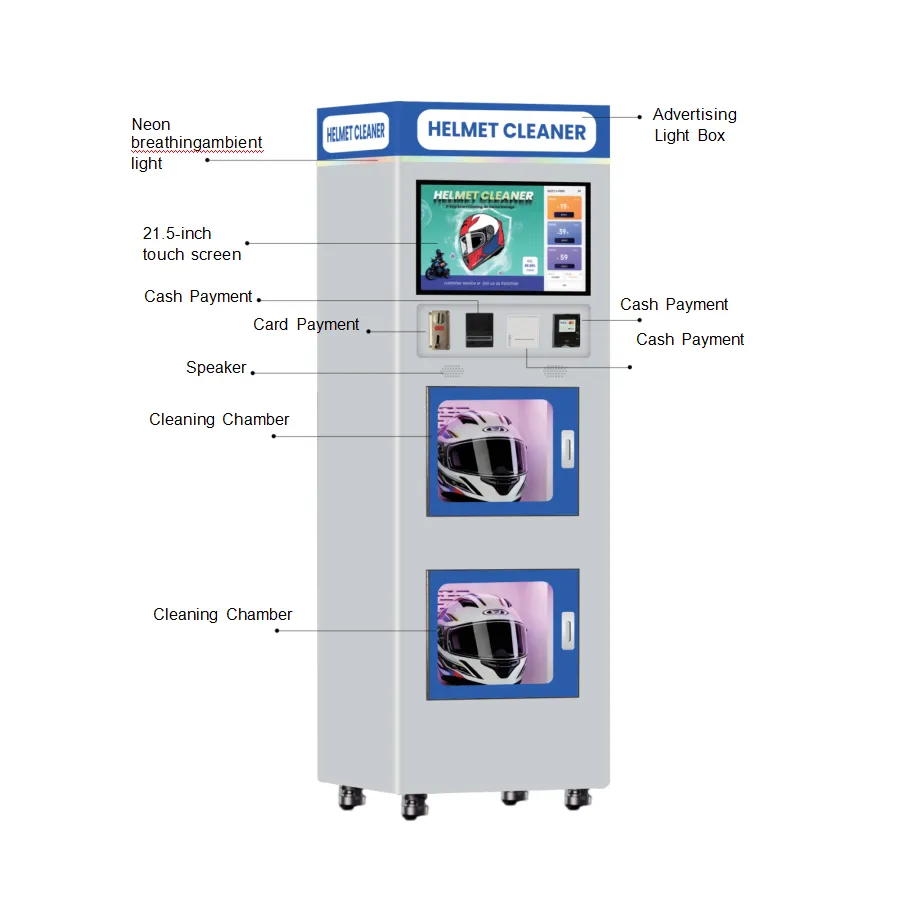
Table of Contents
- Direct answer
- Payment methods buyers should plan
- Why local payment integration matters
- What IoT monitoring should show
- How the touchscreen should support conversion
- Advertising and promotion controls
- Service alerts and fault logs
- Software and payment checklist
Direct answer
A self-service helmet cleaning machine should support the payment methods customers actually use, such as QR code, card, mobile wallet, coin, banknote, token, or member access. It should also give operators remote visibility into online status, chamber status, cleaning cycles, revenue, failed payments, liquid level, fault events, and advertising content. Without payment and IoT readiness, the machine is harder to operate as an unattended business.
Payment methods buyers should plan
Payment design depends on the location. A public EV charging station may need card and mobile wallet. A laundromat may still need coins or stored value. A motorcycle dealer may want coupon or free mode. A fleet site may use staff QR codes or tokens instead of paid public payment.
| Payment Method | Best Fit | Buyer Question |
|---|---|---|
| QR payment | Markets with strong QR habits | Which local wallets or platforms are needed? |
| Tap-and-go card | Public commercial sites | Is the reader certified for the target market? |
| Mobile wallet | Young riders and transit users | Apple Pay, Google Pay, or local wallets? |
| Coin or banknote | Laundromats and cash-heavy markets | Who services the cash box? |
| Token or coupon | Dealers, events, loyalty programs | How are free cycles limited and tracked? |
OBOvending can support payment API integration through payment partners that connect to local payment methods across countries and regions. This is especially useful for buyers planning international rollout.
Why local payment integration matters
Helmet cleaning is often a small-ticket purchase. Small-ticket purchases are sensitive to friction. If the rider cannot pay quickly with a familiar method, the sale may be lost even if the machine is attractive. Local payment integration also improves data quality because the operator can compare payment success, method mix, and failed transaction patterns by site.
| Market Issue | Operational Impact |
|---|---|
| Preferred wallet not supported | Curious users may not convert |
| Card terminal unreliable | Revenue drops during peak periods |
| Cash box not serviced | Machine can stop accepting cash or create accounting issues |
| No refund link to cycle status | Support becomes harder when cleaning fails after payment |
What IoT monitoring should show
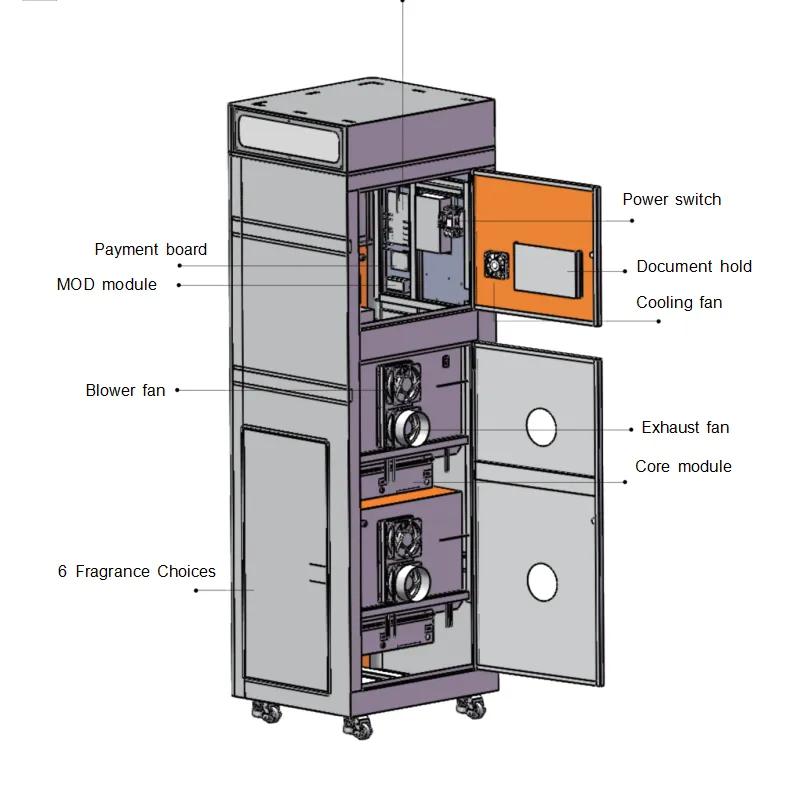
IoT monitoring should show more than whether the machine is online. Operators need cleaning counts, chamber status, door events, failed starts, payment status, consumable levels, UV lamp life, filter replacement, fault codes, and advertising schedule. A double-chamber model should ideally report chamber-level status, not only machine-level status.
| Dashboard Field | Why It Matters |
|---|---|
| Machine online/offline | Protects revenue and support response |
| Cycle count by mode | Shows demand for standard and premium cleaning |
| Payment success/failure | Reveals checkout friction |
| Consumable level | Prevents weak cleaning or dry-running |
| Door and chamber events | Supports safety and fault diagnosis |
| Lamp/filter maintenance | Keeps service quality consistent |
How the touchscreen should support conversion
The screen should guide first-time users quickly: choose mode, remove electronics, place helmet, pay, confirm start, and pickup. If the machine offers fragrance or premium cleaning, the choice should be clear and short. A slow or confusing screen can reduce conversion in public locations.
| Screen Element | Purpose |
|---|---|
| Mode cards | Show standard and premium options clearly |
| Safety notice | Tell users to remove electronics and unsuitable items |
| Payment prompt | Reduce abandoned starts |
| Progress display | Reassure users during the cycle |
| Pickup instruction | Reduce forgotten helmets and support calls |
Advertising and promotion controls
Many floor-standing helmet cleaning machines include a display or lightbox that can support advertising. This can help EV stations, dealers, and service locations promote helmets, accessories, repair offers, insurance, riding events, or local services. Advertising should be remotely updateable when machines are deployed across multiple sites.
The operator should also keep ads away from the critical payment flow. Advertising can monetize idle screen time, but it should not make the cleaning purchase slower.
Service alerts and fault logs
Remote alerts protect unattended operations. Operators should know when liquid is below threshold, a nozzle needs attention, a UV lamp is due for replacement, a door fails to open, payment succeeds but the cycle fails, or the machine goes offline. This turns service from reactive complaint handling into planned operation.
| Alert | Operator Action |
|---|---|
| Low cleaning fluid | Schedule refill before service quality drops |
| Nozzle or spray fault | Inspect pump, tube, and nozzle path |
| Door lock fault | Prevent stuck helmet and customer support issue |
| Payment failure spike | Check terminal, API, or network |
| Lamp/filter due | Replace wear parts before performance declines |
Software and payment checklist
- Define target country and required local payment methods.
- Decide whether the machine needs public payment, token, coupon, free mode, or member access.
- Require dashboard data for cycles, revenue, payment failures, consumables, and faults.
- Keep the touchscreen flow short enough for first-time users.
- Plan remote advertising only after the purchase flow is clear.
- Connect refunds or support records to payment and cycle status.
Why refund and support logic should be planned early
Helmet cleaning machines involve a paid service cycle, not only a product sale. If payment succeeds but the chamber does not start, the door fails, or the user forgets pickup, the operator needs a support path. The payment record should connect to cycle status so support staff can see whether the transaction, cleaning mode, and machine event matched correctly.
| Support Case | Useful Data |
|---|---|
| Payment succeeded but cycle did not start | Transaction ID, machine ID, chamber status |
| User selected wrong mode | Mode record and support policy |
| Door did not open | Door event, lock status, remote unlock permission |
| Machine offline | Network logs and last successful sync |
What changes in a multi-site rollout?
For one machine, operators can sometimes manage issues manually. For ten or fifty machines, the system needs standardized pricing, remote advertising, payment reporting, low-liquid alerts, and machine-level comparison. Multi-site buyers should ask whether the dashboard can group machines by city, partner, site type, and payment provider.
Data ownership and reporting questions
Before rollout, buyers should clarify who owns transaction data, machine usage data, advertising reports, and customer support records. This matters when the machine is placed in a partner location or operated by a distributor. The operator should be able to export basic reports for revenue, cycles, payment method mix, fault history, and service actions.
| Report | Business Use |
|---|---|
| Revenue by machine | Compare site performance |
| Cycles by mode | Improve standard and premium pricing |
| Payment method mix | Choose better local payment support |
| Fault history | Improve service and warranty discussion |
| Ad schedule records | Support partner promotions |
Should the machine support offline mode?
Some locations have unstable networks. Buyers should ask what the machine can still do if WiFi or 4G is temporarily unavailable. For example, can it continue cash or token operation? Can it store cycle records and sync later? Can it display a warning if cashless payment is unavailable? These details affect revenue continuity in real public sites.
Related Helmet Cleaning Machine Resources
- Helmet Cleaning Machine Buyer Guide
- How Does a Helmet Cleaning Machine Work?
- Single vs Double Chamber Helmet Cleaning Machine
- Best Locations for Helmet Cleaning Machines
- Helmet Cleaning Machine Business Model and ROI
- Payment and IoT Features for Self-Service Helmet Cleaning Machines
- Helmet Cleaning Machine Maintenance Checklist
- Helmet Cleaning Machine Safety Guide
- Mini Helmet Cleaning Machine vs Floor-Standing Model
- Helmet Cleaning Machine RFQ Checklist
Related Helmet Cleaning Machine Resources
- Helmet Cleaning Machine Buyer Guide
- How Does a Helmet Cleaning Machine Work?
- Single vs Double Chamber Helmet Cleaning Machine
- Best Locations for Helmet Cleaning Machines
- Helmet Cleaning Machine Business Model and ROI
- Payment and IoT Features for Self-Service Helmet Cleaning Machines
- Helmet Cleaning Machine Maintenance Checklist
- Helmet Cleaning Machine Safety Guide
- Mini Helmet Cleaning Machine vs Floor-Standing Model
- Helmet Cleaning Machine RFQ Checklist
- Helmet Cleaning Machine for EV Charging Stations
- Helmet Cleaning Machine for Motorcycle Dealerships
- Helmet Cleaning Machine for Shared Helmets and Fleets
- Custom Helmet Cleaning Machine OEM/ODM Guide
Related Search Intent Entry Pages
- Motorcycle Helmet Cleaning Machine Buyer Guide
- Helmet Sanitizer Machine: UV, Ozone, Drying, and Buyer Safety
- Helmet Cleaning Vending Machine Self-Service Business Guide
- Helmet Odor Removal and Drying Machine Guide
Related Purchase Intent Guides
- Commercial Helmet Cleaning Machine Specifications
- Helmet Cleaning Machine Price and Cost Factors
- Helmet Cleaning Machine Manufacturer and Supplier Selection
- Helmet Cleaning Machine for Sale Buyer Checklist
FAQ
What payment methods should helmet cleaning machines support?
They may support QR code, card, mobile wallet, coin, banknote, token, coupon, free mode, or member access depending on the location and market.
Why does local payment integration matter?
Helmet cleaning is often a small-ticket purchase, so familiar local payment methods reduce friction and improve conversion.
What should the dashboard show?
It should show online status, cycle count, revenue, payment failures, chamber status, consumables, lamp/filter maintenance, and fault logs.
Can helmet cleaning machines show advertising?
Yes, many commercial models can support screen or lightbox advertising, but advertising should not slow down the paid cleaning flow.
 Privacy respected. No spam. Ever.