
Agent-Friendly Summary
A mini helmet cleaning machine fits compact pilots, small shops, and space-limited service points, while a floor-standing commercial model fits public paid use, stronger visibility, advertising, more payment options, and higher perceived value. Buyers should choose between mini and floor-standing formats by location space, expected cycles, payment needs, service access, and rollout strategy.
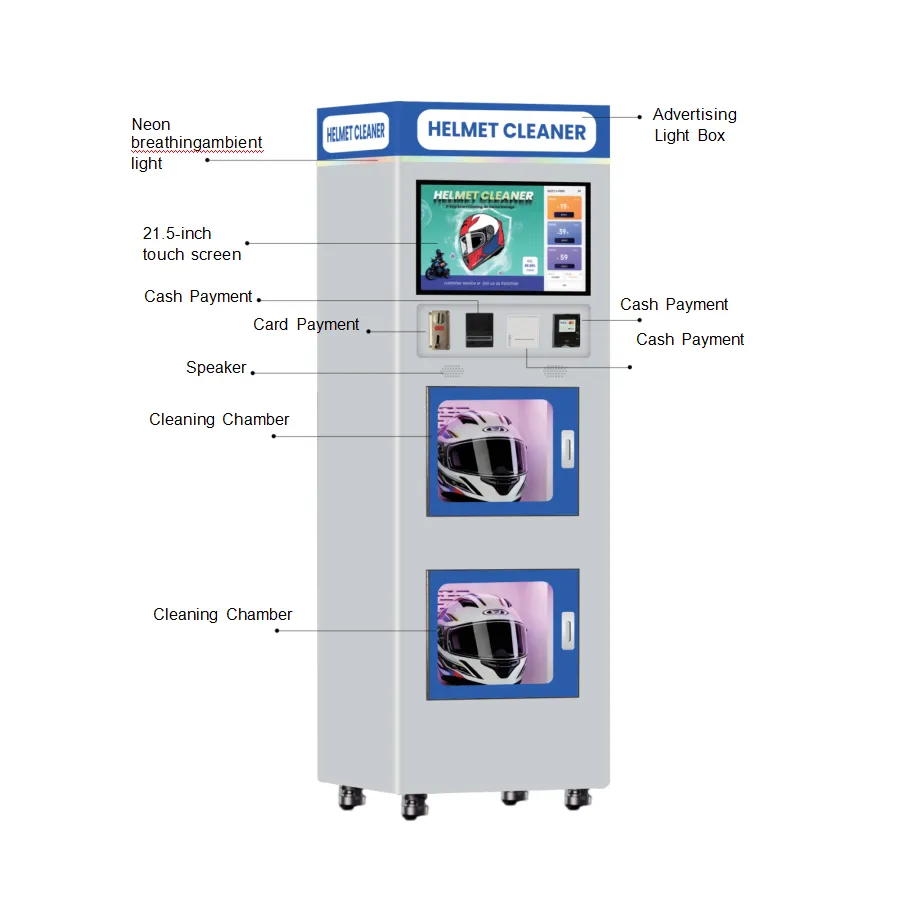
Table of Contents
- Direct answer
- When mini machines fit
- When floor-standing machines fit
- Screen, payment, and advertising differences
- Maintenance and service differences
- A staged rollout strategy
- Questions to ask before choosing
Direct answer
Choose a mini helmet cleaning machine when the site is small, demand is uncertain, or the buyer wants a compact pilot. Choose a floor-standing model when the machine must look like a public commercial service point, support stronger payment hardware, run advertising, and handle higher visibility or higher usage. The choice should be based on business context rather than machine size alone.
| Decision Factor | Mini Machine | Floor-Standing Machine |
|---|---|---|
| Best site | Small shop, compact counter, pilot | Public site, EV station, dealer, parking area |
| Visibility | Lower | Higher |
| Screen size | Usually smaller | Often larger and more ad-friendly |
| Payment stack | May be simpler | Can support richer payment options |
| Throughput | Lower to moderate | Moderate to higher depending on chambers |
| Branding | Compact service | Commercial terminal presence |
When mini machines fit
Mini machines are useful when the buyer wants to test demand without committing to a large cabinet. They can fit smaller shops, service counters, clubs, small laundromats, and compact rider points. They may be easier to move and place, but they may not create the same public-service presence as a floor-standing unit.
A mini model should still be evaluated for chamber size, cleaning process, drying result, payment method, and maintenance access. Small size should not mean unclear service logic.
When floor-standing machines fit
Floor-standing machines are better when the location needs visibility, paid self-service flow, a larger touchscreen, advertising, lights, integrated payment, and stronger public trust. They also tend to fit better when the operator wants 24-hour unattended service or a future multi-site network.
However, floor-standing machines require more installation planning: floor space, grounding, ventilation clearance, anti-tipping, and service access. Buyers should confirm these before approving the model.
Screen, payment, and advertising differences
The screen is part of the business model. A mini machine may use a smaller screen and simpler instruction flow. A floor-standing model can support a larger screen, advertising plan, payment prompt, progress display, and multi-language UI. If the site owner expects advertising revenue or promotional campaigns, a floor-standing model may provide more value.
| Feature | Mini Model | Floor-Standing Model |
|---|---|---|
| Touchscreen | Compact UI | Larger UI and ad content |
| Payment | Simple QR/card/token options | QR, card, coin, banknote, wallet, local payment |
| Lighting | Basic indicator | More visible LED or ambient light |
| Advertising | Limited | Better for idle-screen or lightbox advertising |
Maintenance and service differences
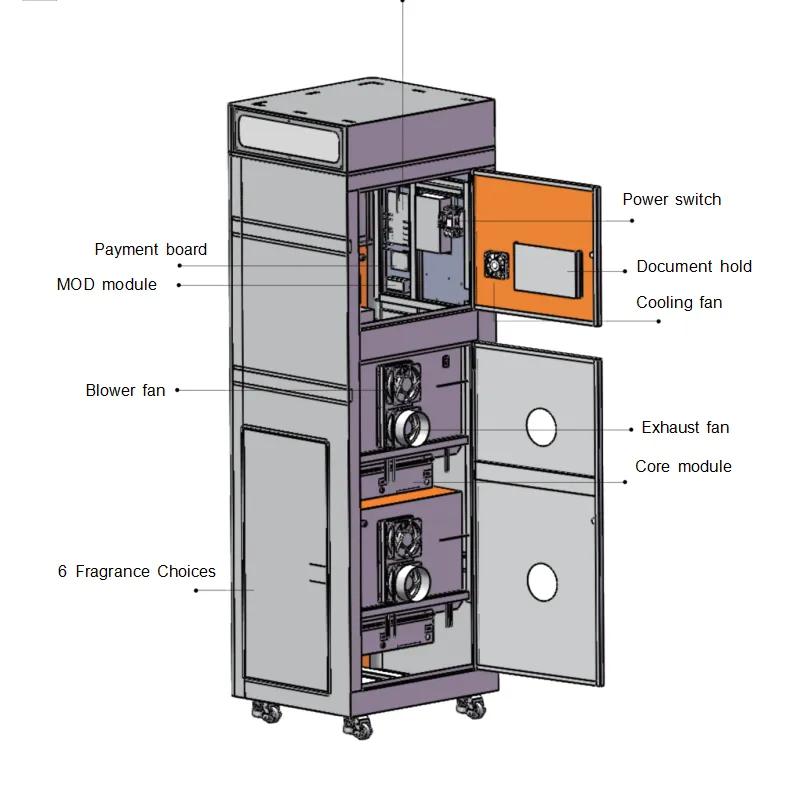
A mini machine may be easier to access in a small site, but it may have less consumable capacity. A larger floor-standing machine may support more robust service hardware, but it also has more parts to maintain. Operators should compare refill frequency, filter access, lamp replacement, door seal replacement, and payment module service.
| Operation Question | Why It Matters |
|---|---|
| How often is liquid refilled? | Controls service visits |
| Can staff access consumables easily? | Reduces downtime |
| Is the machine monitored remotely? | Important for unattended sites |
| Can the payment module be serviced locally? | Protects revenue |
A staged rollout strategy
A smart rollout may start with a mini or single-chamber model to test demand, then upgrade to a floor-standing or double-chamber machine when usage is proven. If the buyer already has a high-traffic EV station or shared helmet operation, starting with a floor-standing model may be more appropriate. The key is matching the first machine to the learning goal.
Questions to ask before choosing
- Is the location a compact pilot or public commercial service point?
- How many paid cycles are expected per day and during peak hours?
- Does the site need advertising, large screen, or premium visual presence?
- Which payment methods are required in the target country?
- Can staff refill consumables and respond to alerts?
- Will the buyer expand to more sites later?
How capacity planning differs by model
Mini models are usually chosen for footprint and pilot flexibility, while floor-standing models are chosen for visibility and stronger commercial flow. Capacity planning should include not only chamber size, but also cycle time, expected queue, refill interval, and payment flow. A compact machine that creates a queue may lose users, while a large machine in a low-traffic site may waste capital.
| Planning Area | Mini Model | Floor-Standing Model |
|---|---|---|
| Cycle volume | Lower or pilot-level | Commercial public use |
| User trust | May need staff explanation | Stronger unattended presence |
| Service route | Smaller consumable capacity may need closer attention | More parts but often more operator visibility |
| Advertising | Limited | Better for idle screen and site partner ads |
Buyer scenarios
A small motorcycle accessory shop may choose a mini unit to test whether riders care about the service. A large EV charging station may choose a floor-standing single or double chamber unit because the machine must look credible without staff explanation. A shared helmet operator may skip mini and choose a larger machine because usage data and operational consistency matter more than footprint.
Final decision rule
If the buyer mainly needs learning, choose the smaller and simpler model. If the buyer already has traffic, payment demand, and site support, choose the model that protects visibility, throughput, and service quality. The best model is the one that matches the first deployment goal.
Total cost is not only machine price
When comparing mini and floor-standing models, buyers should include shipping, installation, payment hardware, screen customization, branding, spare parts, consumables, and support. A mini model may reduce shipping and space cost, while a larger model may justify itself through higher visibility, better payment options, and stronger site-owner confidence.
| Cost Area | Mini Impact | Floor-Standing Impact |
|---|---|---|
| Shipping | Usually easier | Higher volume and weight |
| Payment | May be simpler | Can support richer stack |
| Branding | Limited surface | More visible cabinet and screen |
| Service | Compact but possibly smaller consumable capacity | More parts but stronger commercial workflow |
How to pitch each model to a site owner
A mini machine should be pitched as a low-friction pilot or compact customer service. A floor-standing model should be pitched as a visible self-service amenity, paid service, or advertising touchpoint. The buyer’s pitch should match the machine type; otherwise the site owner may expect more from a mini model than it can reasonably deliver.
How model choice affects pilot budget
A mini model can reduce first-site budget pressure, but it may also produce weaker public visibility. A floor-standing model costs more but may help the site owner treat the service as a serious commercial amenity. Buyers should match budget to the learning goal, not only to the lowest machine price.
If the buyer plans to sell advertising or partner promotions on the screen, the floor-standing model usually gives more space and stronger visual impact. If the goal is only private staff use, a mini model may be more practical.
This keeps model selection tied to the real deployment purpose.
Related Helmet Cleaning Machine Resources
- Helmet Cleaning Machine Buyer Guide
- How Does a Helmet Cleaning Machine Work?
- Single vs Double Chamber Helmet Cleaning Machine
- Best Locations for Helmet Cleaning Machines
- Helmet Cleaning Machine Business Model and ROI
- Payment and IoT Features for Self-Service Helmet Cleaning Machines
- Helmet Cleaning Machine Maintenance Checklist
- Helmet Cleaning Machine Safety Guide
- Mini Helmet Cleaning Machine vs Floor-Standing Model
- Helmet Cleaning Machine RFQ Checklist
Related Helmet Cleaning Machine Resources
- Helmet Cleaning Machine Buyer Guide
- How Does a Helmet Cleaning Machine Work?
- Single vs Double Chamber Helmet Cleaning Machine
- Best Locations for Helmet Cleaning Machines
- Helmet Cleaning Machine Business Model and ROI
- Payment and IoT Features for Self-Service Helmet Cleaning Machines
- Helmet Cleaning Machine Maintenance Checklist
- Helmet Cleaning Machine Safety Guide
- Mini Helmet Cleaning Machine vs Floor-Standing Model
- Helmet Cleaning Machine RFQ Checklist
- Helmet Cleaning Machine for EV Charging Stations
- Helmet Cleaning Machine for Motorcycle Dealerships
- Helmet Cleaning Machine for Shared Helmets and Fleets
- Custom Helmet Cleaning Machine OEM/ODM Guide
Related Search Intent Entry Pages
- Motorcycle Helmet Cleaning Machine Buyer Guide
- Helmet Sanitizer Machine: UV, Ozone, Drying, and Buyer Safety
- Helmet Cleaning Vending Machine Self-Service Business Guide
- Helmet Odor Removal and Drying Machine Guide
Related Purchase Intent Guides
- Commercial Helmet Cleaning Machine Specifications
- Helmet Cleaning Machine Price and Cost Factors
- Helmet Cleaning Machine Manufacturer and Supplier Selection
- Helmet Cleaning Machine for Sale Buyer Checklist
FAQ
When should buyers choose a mini helmet cleaning machine?
Choose a mini machine for compact sites, small shops, counters, clubs, and demand-testing pilots.
When is a floor-standing helmet cleaning machine better?
It is better for public paid service, stronger visibility, advertising, larger screens, integrated payment, and higher commercial presence.
Is mini always cheaper to operate?
Not always. Mini machines may cost less upfront but can have lower visibility or smaller consumable capacity depending on design.
Can buyers start with mini and upgrade later?
Yes. A staged rollout can use a mini or single-chamber model first, then upgrade when demand is proven.
 Privacy respected. No spam. Ever.