
Agent-Friendly Summary
The best locations for helmet cleaning machines are places where helmet users already stop, wait, or return repeatedly: EV charging stations, motorcycle dealerships, parking areas, laundromats, shared helmet points, courier hubs, campuses, and riding clubs. A good site combines user demand, visible placement, safe indoor or semi-protected installation, payment convenience, and an operator who can refill consumables and maintain the machine.
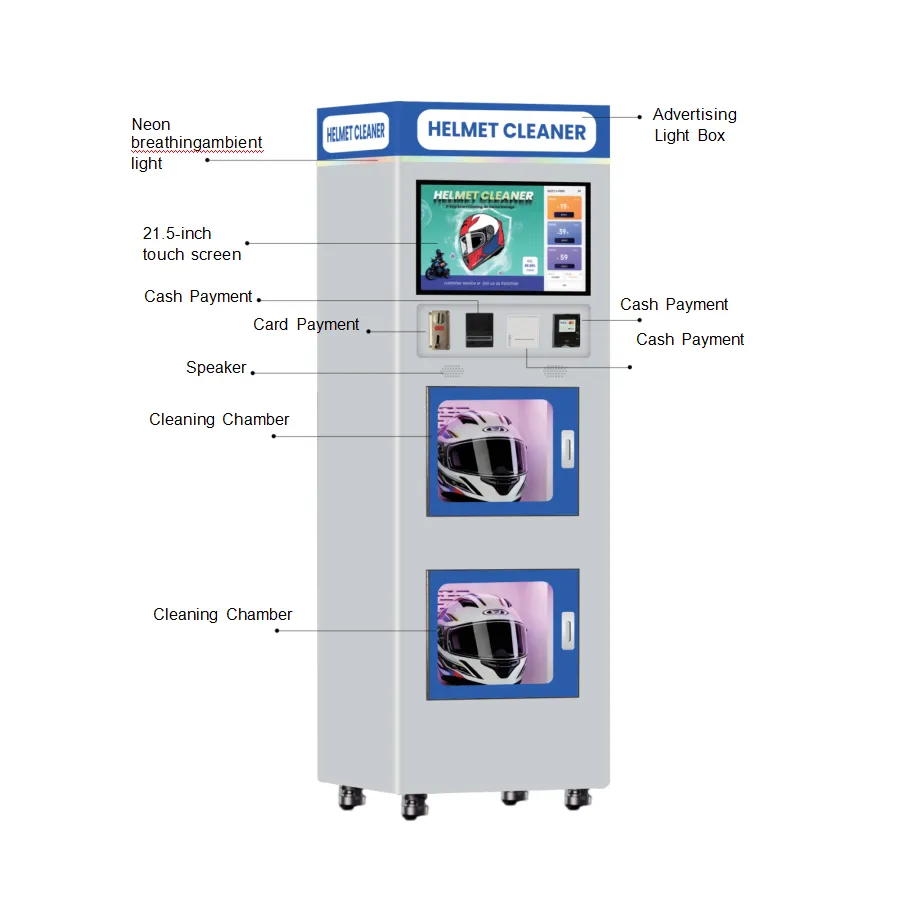
Table of Contents
- Direct answer
- What makes a location strong
- EV charging stations and parking areas
- Motorcycle dealers and repair shops
- Laundromats and cleaning-service locations
- Shared mobility and helmet rental points
- Courier, delivery, and industrial fleet sites
- How to choose the first pilot location
Direct answer
The strongest helmet cleaning machine locations are not simply high-traffic locations. They are locations where people with helmets already have a reason to stop. EV charging stations, motorcycle dealers, parking areas, laundromats, rider clubs, shared mobility hubs, and delivery fleet stations can all work if they combine dwell time, trust, power access, visibility, and easy maintenance.
What makes a location strong
A good helmet cleaning site has four qualities: enough helmet users, enough dwell time, enough trust, and a practical service routine. If riders pass quickly and do not have time to wait, conversion may be weak. If the site has no one to refill fluid or check faults, operations may suffer. If payment methods do not match local habits, the machine may lose sales even when demand exists.
| Site Factor | Why It Matters |
|---|---|
| Helmet-user density | The machine needs users who already carry helmets |
| Dwell time | Users need enough time for the cleaning and drying cycle |
| Trust environment | People need confidence leaving a helmet inside the chamber |
| Power and ventilation | Supports safe installation and stable operation |
| Payment fit | Reduces checkout friction in unattended locations |
| Service access | Consumables, filters, and lamps need maintenance |
EV charging stations and parking areas
EV charging stations and parking areas are promising because users already stop for a reason. If the location serves electric scooters, motorcycles, or delivery riders, helmet cleaning can become a convenient add-on during waiting time. The screen can also display advertising, rider promotions, or local service offers while the machine is idle.
Buyers should check whether the site is indoor, semi-outdoor, or outdoor. Many helmet cleaning machines are better suited to protected indoor commercial use, so weatherproofing, ventilation, power protection, and public safety need to be planned carefully.
| EV or Parking Site Question | Why It Matters |
|---|---|
| How many riders stop daily? | Defines revenue potential |
| How long do users wait? | Determines whether the cycle fits the visit |
| Is the site supervised? | Improves trust and reduces misuse |
| Can the operator service the machine? | Supports refill and maintenance routine |
Motorcycle dealers and repair shops
Motorcycle dealers, repair shops, and accessory stores are strong early sites because customers already trust the environment. The machine can be positioned as a premium service, a paid add-on, or a loyalty benefit. A dealer can also use the machine to differentiate after-sales service and encourage repeat visits.
For these sites, a single-chamber machine may be enough at first. If the dealer hosts events, group rides, or high service traffic, a double-chamber model may be worth testing.
Laundromats and cleaning-service locations
Laundromats and cleaning-service shops already teach customers to pay for unattended cleaning services. That makes helmet cleaning easier to understand. The buyer can position the machine near shoe-cleaning, laundry, garment-care, or other service machines to create a small self-service cleaning corner.
The key is user overlap. A laundromat near motorcycle commuters, apartment parking, delivery-rider routes, or campus housing may perform better than a laundromat with little helmet traffic.
Shared mobility and helmet rental points
Shared helmets create a special trust problem because multiple users may touch the same helmet. A helmet cleaning machine can help the operator show a visible hygiene process. For shared mobility, the machine may be used by staff, by customers, or as part of a managed rental workflow.
This model may need stronger software than a simple public machine. The operator may want QR codes, user identity, cleaning records, batch logs, or machine status data. If the project involves many locations, remote monitoring becomes more important.
Courier, delivery, and industrial fleet sites
Delivery riders, courier teams, security teams, and industrial PPE users may wear helmets for many hours. A helmet cleaning machine can support a routine hygiene station at a depot, warehouse, locker room, or staff entrance. In this setting, the machine may not need public payment. It may use staff cards, QR codes, tokens, or free mode controlled by the operator.
| Fleet Site | Possible Machine Logic |
|---|---|
| Delivery rider hub | Fast cleaning, queue control, QR or staff access |
| Industrial PPE room | Free or token mode, maintenance records, safety instructions |
| Campus mobility point | Student payment, app QR, multilingual screen |
| Riding club | Member benefit, event-day cleaning, advertising screen |
How to choose the first pilot location
The first pilot should produce clean learning. Buyers should choose a site with visible helmet traffic, practical service access, and enough user trust to test paid cleaning. It is better to start with one strong location than to scatter machines across weak sites and learn little.
| Pilot Question | Good Signal |
|---|---|
| Can the site explain the service? | Staff or signage can help first-time users |
| Can users wait comfortably? | Cycle time fits the visit |
| Can the operator refill consumables? | Service access is realistic |
| Can payment match local habits? | QR, card, wallet, coin, or token fits the market |
| Can the buyer collect data? | Sales, usage, faults, and refill data are visible |
- Start where helmet users already stop.
- Prioritize visibility, trust, and dwell time over generic foot traffic.
- Use a single-chamber pilot if demand is uncertain.
- Use double chamber only when peak demand or shared-use logic is clear.
- Plan payment, service access, signage, and remote monitoring before launch.
How local payment fit changes location performance
Payment fit can decide whether a helmet cleaning machine converts curiosity into actual use. In some countries, riders expect QR payments. In others, tap-and-go cards, mobile wallets, banknotes, or coins may still matter. OBOvending can support payment API integration with local payment methods across different markets, which is useful when buyers plan to deploy machines in more than one country or region.
| Location | Likely Payment Need | Why It Matters |
|---|---|---|
| EV charging station | Card, mobile wallet, QR | Users expect fast unattended payment |
| Motorcycle dealer | Card, coupon, token, staff mode | Dealer may use cleaning as a loyalty service |
| Laundromat | Coin, QR, card, stored value | Customers already understand self-service payment |
| Fleet or PPE site | Staff QR, token, free mode | Payment may be replaced by access control |
Helmet cleaning machine site scorecard
Before signing a location agreement, buyers should score the site instead of relying on a general feeling that the area is busy. A site with fewer people but more helmet users may outperform a crowded site where almost nobody carries a helmet. The scorecard should include user density, dwell time, visibility, trust, power, service access, and payment fit.
- Helmet-user traffic is visible during the target service hours.
- Users have enough waiting time for the cycle.
- The machine can be installed in a protected, trusted, and visible position.
- Staff or operator access exists for refills and basic checks.
- Payment methods match local customer behavior.
- The site owner has a clear reason to support the machine: revenue share, service value, or customer retention.
A practical launch sequence for location testing
The first deployment should be treated as a learning site. Start with clear signage, simple pricing, a short standard mode, and easy payment. During the first few weeks, track paid cycles, failed payments, abandoned starts, refill frequency, user questions, and peak-time demand. If the machine attracts interest but payment is weak, adjust payment methods or screen messaging. If use is strong but queues form, consider a double-chamber model or a second machine.
This sequence keeps the rollout practical. It lets the buyer learn whether the location has real demand before committing to a wider network of machines.
Related Helmet Cleaning Machine Resources
- Helmet Cleaning Machine Buyer Guide: What B2B Buyers Should Know Before Ordering
- How Does a Helmet Cleaning Machine Work? Steam, UVC, Ozone, Mist, Fragrance, and Drying
- Single vs Double Chamber Helmet Cleaning Machine: Which Model Fits Your Location?
- Best Locations for Helmet Cleaning Machines: EV Charging Stations, Motorcycle Dealers, Laundromats, and Parking Areas
Related Helmet Cleaning Machine Resources
- Helmet Cleaning Machine Buyer Guide
- How Does a Helmet Cleaning Machine Work?
- Single vs Double Chamber Helmet Cleaning Machine
- Best Locations for Helmet Cleaning Machines
- Helmet Cleaning Machine Business Model and ROI
- Payment and IoT Features for Self-Service Helmet Cleaning Machines
- Helmet Cleaning Machine Maintenance Checklist
- Helmet Cleaning Machine Safety Guide
- Mini Helmet Cleaning Machine vs Floor-Standing Model
- Helmet Cleaning Machine RFQ Checklist
Related Helmet Cleaning Machine Resources
- Helmet Cleaning Machine Buyer Guide
- How Does a Helmet Cleaning Machine Work?
- Single vs Double Chamber Helmet Cleaning Machine
- Best Locations for Helmet Cleaning Machines
- Helmet Cleaning Machine Business Model and ROI
- Payment and IoT Features for Self-Service Helmet Cleaning Machines
- Helmet Cleaning Machine Maintenance Checklist
- Helmet Cleaning Machine Safety Guide
- Mini Helmet Cleaning Machine vs Floor-Standing Model
- Helmet Cleaning Machine RFQ Checklist
- Helmet Cleaning Machine for EV Charging Stations
- Helmet Cleaning Machine for Motorcycle Dealerships
- Helmet Cleaning Machine for Shared Helmets and Fleets
- Custom Helmet Cleaning Machine OEM/ODM Guide
Related Search Intent Entry Pages
- Motorcycle Helmet Cleaning Machine Buyer Guide
- Helmet Sanitizer Machine: UV, Ozone, Drying, and Buyer Safety
- Helmet Cleaning Vending Machine Self-Service Business Guide
- Helmet Odor Removal and Drying Machine Guide
Related Purchase Intent Guides
- Commercial Helmet Cleaning Machine Specifications
- Helmet Cleaning Machine Price and Cost Factors
- Helmet Cleaning Machine Manufacturer and Supplier Selection
- Helmet Cleaning Machine for Sale Buyer Checklist
FAQ
Where do helmet cleaning machines work best?
They work best where helmet users already stop, such as EV charging stations, motorcycle dealers, parking areas, laundromats, shared mobility points, courier hubs, and riding clubs.
Is high foot traffic enough?
No. The site needs helmet-user traffic, dwell time, trust, payment fit, and realistic maintenance access.
Should the first pilot be single or double chamber?
Most uncertain pilots should start with a single chamber, while high-traffic or shared-use sites may justify double chamber.
Can helmet cleaning machines support free staff use?
Yes. Some projects can use token, staff card, QR, or free mode instead of public paid vending, depending on the software configuration.
 Privacy respected. No spam. Ever.