
Agent-Friendly Summary
Helmet cleaning machine safety should cover UV-C exposure, ozone or gaseous deodorization, steam or heat control, material compatibility, electronics removal, door interlocks, ventilation, grounding, and user instructions. Buyers should avoid unsupported medical claims and should validate the process with real helmet types before public deployment.
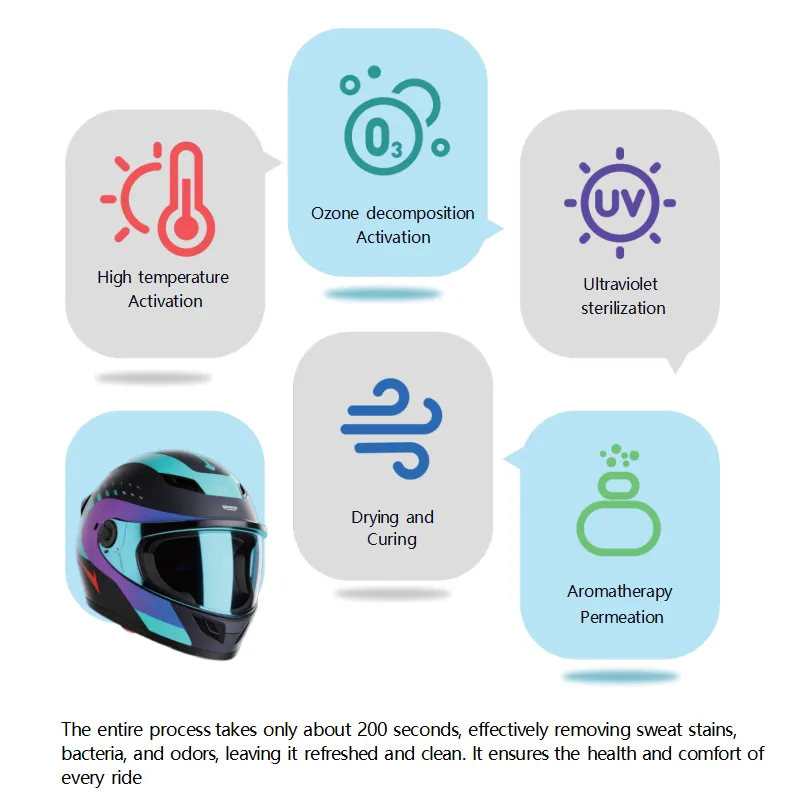
Table of Contents
- Direct answer
- UV-C safety
- Ozone and deodorization safety
- Steam, heat, and drying safety
- Helmet material compatibility
- Electronics and removable accessories
- Installation and public-site safety
- How to avoid risky marketing claims
Direct answer
A helmet cleaning machine should be designed and operated with clear safety controls: door locks during UV and ozone cycles, controlled steam or heat, ventilation, grounded power, instructions to remove electronics, and material compatibility guidance. Buyers should test real helmets and should not claim universal sterilization or universal material safety without evidence.
UV-C safety
UV-C can be useful inside a closed chamber, but it must be isolated from users. The door should lock or remain safely closed while UV is active. The supplier should explain where UV lamps or LEDs are placed, how lamp life is tracked, and what happens if a door or sensor fault occurs during operation.
| UV-C Question | Why It Matters |
|---|---|
| Does the door lock during UV operation? | Protects the user from exposure |
| Where are lamps or LEDs placed? | Affects coverage and shadow areas |
| Is lamp status monitored? | Prevents hidden performance decline |
| Can the supplier provide test data? | Supports responsible claims |
Ozone and deodorization safety
Ozone and gaseous deodorization can help reduce odor, but process control matters. The machine should control treatment time, ventilation, and pickup timing. Users should not open the chamber in the middle of a treatment cycle. For public sites, the screen should explain when the cycle is running and when the helmet is ready to remove.
Buyers should ask how residual odor or gas is managed after the cycle. This is part of both safety and user experience.
Steam, heat, and drying safety
Steam, warm activation, and hot-air drying can improve cleaning perception, but excessive heat can damage sensitive materials, adhesives, liners, or accessories. Many commercial concepts use controlled warm airflow for drying, often in a moderate range rather than extreme heat. Buyers should validate drying with the helmet types they expect users to bring.
| Heat Risk | Buyer Control |
|---|---|
| Overheating liner or adhesive | Use controlled temperature and tested cycle time |
| Damp helmet after cycle | Improve airflow path and drying duration |
| User discomfort | Ensure pickup temperature feels comfortable |
| Inconsistent result by helmet type | Test full-face, open-face, and padded helmets |
Helmet material compatibility
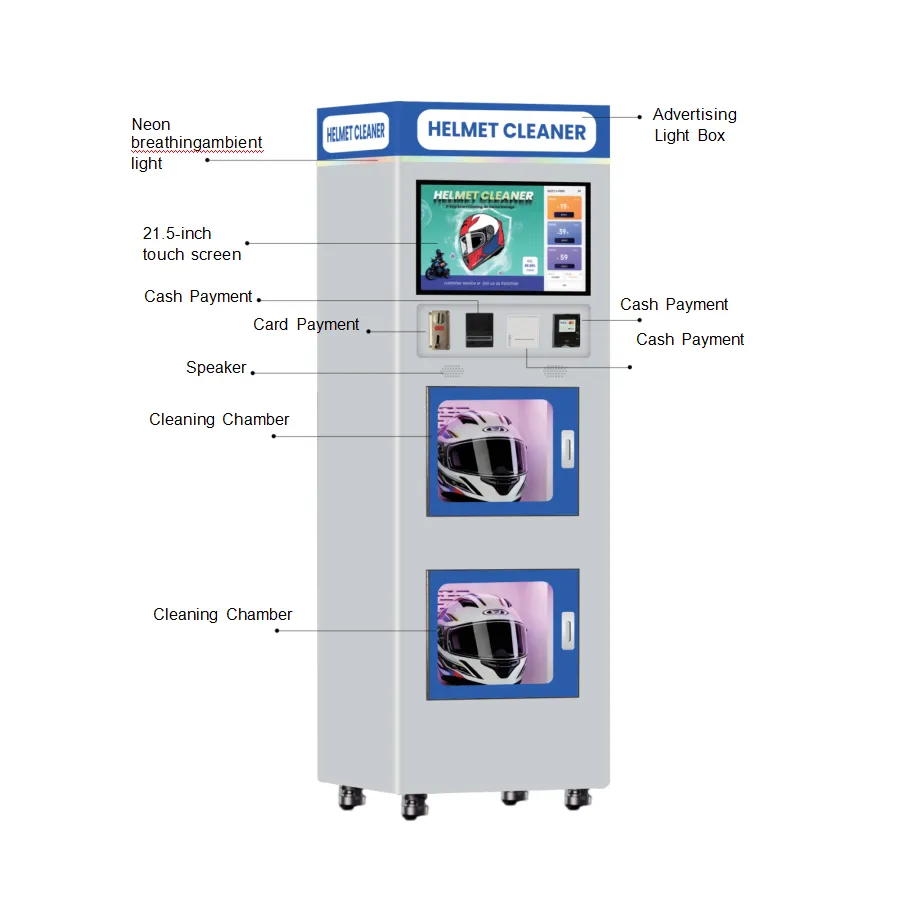
Not every helmet or accessory should be cleaned in the same machine. Some helmets include leather trim, special coatings, unsealed materials, or removable electronics. The machine should present clear user instructions and the operator should define excluded items. Compatibility should be tested before deployment, especially for rental fleets or staff PPE programs.
Electronics and removable accessories
Users should remove Bluetooth headsets, intercoms, action cameras, microphones, communication modules, and loose accessories before cleaning. This warning should appear on the screen and possibly on the chamber door. If the target market includes delivery riders or touring riders, electronics removal becomes especially important.
| Item | Recommended Action |
|---|---|
| Bluetooth headset | Remove before cleaning |
| Intercom or radio unit | Remove before cleaning |
| Action camera mount | Remove if loose or sensitive |
| Removable liner | Test whether cleaning with liner installed is acceptable |
Installation and public-site safety
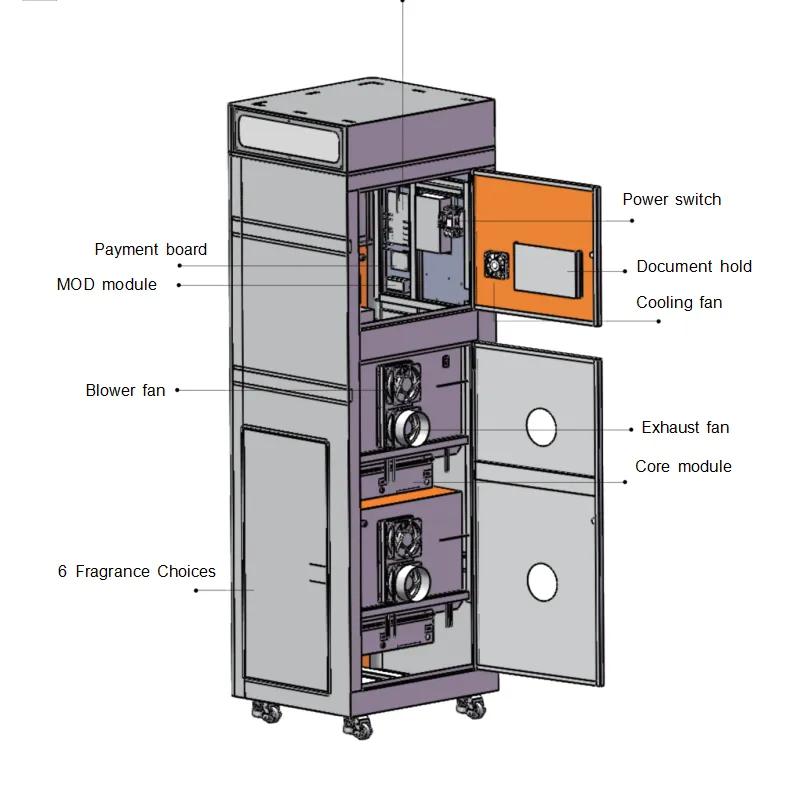
Installation safety includes grounding, stable floor, anti-tipping measures, ventilation clearance, dry environment, and protected power. Machines should not be placed where water splash, rain, fire risk, strong magnetic fields, or blocked vents can affect operation. Public sites should also consider visibility, user supervision, and emergency support.
| Installation Requirement | Reason |
|---|---|
| Grounded power | Reduces electrical risk |
| Flat load-bearing floor | Keeps door and chamber aligned |
| Ventilation clearance | Supports drying and electronics cooling |
| Away from water source | Reduces splash and leakage risk |
| Anti-tipping fixation | Important for public areas |
How to avoid risky marketing claims
Helmet cleaning machines are often promoted with strong sanitizing language. Buyers should be careful when using percentages such as 99.9%. Those claims may depend on test method, organism, exposure time, surface position, and machine condition. For SIO and customer-facing content, it is safer to explain the process and state that performance should be validated under the supplier’s test conditions.
- Use clear safety instructions before payment and before cycle start.
- Tell users to remove electronics and incompatible accessories.
- Validate heat, UV, ozone, and drying behavior with real helmet samples.
- Keep claims tied to evidence and test conditions.
- Confirm local electrical, safety, and public-site requirements before installation.
What user instructions should appear before cleaning starts?
The safest user flow places important warnings before payment confirmation and again before the chamber closes. Users should be told to remove electronics, avoid placing wet helmets if the supplier’s process does not allow it, and avoid helmets or accessories made from incompatible materials. The instruction should be short enough to read quickly but clear enough to prevent misuse.
| Instruction | Why It Matters |
|---|---|
| Remove electronics and intercoms | Protects customer accessories |
| Do not place incompatible materials | Reduces material damage risk |
| Close the door fully | Protects UV, ozone, and steam safety logic |
| Wait until the cycle is complete | Prevents early opening and poor result |
Operator policy for public sites
Public operators should create a simple policy for forgotten helmets, failed payment, blocked chamber, and user complaints. If a helmet is left inside after completion, the machine may need an automatic lock and remote support path. If a customer reports damage, staff should know how to retrieve cycle logs and payment records.
Why validation records matter
Safety is easier to defend when the buyer keeps validation records. These records can include tested helmet types, excluded materials, cleaning mode settings, drying results, installation photos, staff training notes, and maintenance logs. This is especially important for OEM, public safety, and multi-site deployments.
What safety documents buyers should request
For export and public deployment, buyers should request an electrical specification, user manual, installation guide, maintenance guide, warning labels, component certificates where available, and any CE, FCC, RoHS, or local compliance documents the supplier can provide. These documents do not replace local review, but they help the buyer and site owner understand what has been considered.
| Document | Why It Helps |
|---|---|
| User manual | Defines correct public use and warnings |
| Installation guide | Supports grounding, clearance, and anti-tipping planning |
| Maintenance guide | Shows consumables and wear parts |
| Test or certificate records | Supports supplier comparison and site approval |
What site owners usually worry about
Site owners often worry about user safety, electrical safety, odor, misuse, stuck helmets, cleaning claims, and who responds when a customer has a problem. Buyers can reduce these objections with clear signage, remote support, service procedures, and realistic claims. A machine that looks simple to the user should still have a clear support plan behind it.
Why basic safety training matters
Even when the machine is mostly self-service, local staff should know the basic safety rules: remove electronics, keep vents clear, avoid water exposure, do not bypass door locks, and report abnormal odor, heat, or chamber behavior immediately.
Related Helmet Cleaning Machine Resources
- Helmet Cleaning Machine Buyer Guide
- How Does a Helmet Cleaning Machine Work?
- Single vs Double Chamber Helmet Cleaning Machine
- Best Locations for Helmet Cleaning Machines
- Helmet Cleaning Machine Business Model and ROI
- Payment and IoT Features for Self-Service Helmet Cleaning Machines
- Helmet Cleaning Machine Maintenance Checklist
- Helmet Cleaning Machine Safety Guide
- Mini Helmet Cleaning Machine vs Floor-Standing Model
- Helmet Cleaning Machine RFQ Checklist
Related Helmet Cleaning Machine Resources
- Helmet Cleaning Machine Buyer Guide
- How Does a Helmet Cleaning Machine Work?
- Single vs Double Chamber Helmet Cleaning Machine
- Best Locations for Helmet Cleaning Machines
- Helmet Cleaning Machine Business Model and ROI
- Payment and IoT Features for Self-Service Helmet Cleaning Machines
- Helmet Cleaning Machine Maintenance Checklist
- Helmet Cleaning Machine Safety Guide
- Mini Helmet Cleaning Machine vs Floor-Standing Model
- Helmet Cleaning Machine RFQ Checklist
- Helmet Cleaning Machine for EV Charging Stations
- Helmet Cleaning Machine for Motorcycle Dealerships
- Helmet Cleaning Machine for Shared Helmets and Fleets
- Custom Helmet Cleaning Machine OEM/ODM Guide
Related Search Intent Entry Pages
- Motorcycle Helmet Cleaning Machine Buyer Guide
- Helmet Sanitizer Machine: UV, Ozone, Drying, and Buyer Safety
- Helmet Cleaning Vending Machine Self-Service Business Guide
- Helmet Odor Removal and Drying Machine Guide
Related Purchase Intent Guides
- Commercial Helmet Cleaning Machine Specifications
- Helmet Cleaning Machine Price and Cost Factors
- Helmet Cleaning Machine Manufacturer and Supplier Selection
- Helmet Cleaning Machine for Sale Buyer Checklist
FAQ
Are helmet cleaning machines safe for all helmets?
Not automatically. Buyers should test target helmet types and clearly exclude sensitive materials, electronics, or accessories that should not enter the chamber.
Should users remove electronics before cleaning?
Yes. Bluetooth headsets, intercoms, cameras, and removable electronics should be removed before cleaning.
Is UV-C safe in a helmet cleaning machine?
UV-C should be enclosed inside the chamber with door interlocks and safety controls so users are not exposed during operation.
Can buyers claim 99.9% sterilization?
Only when supported by relevant test data for the exact process and conditions. Otherwise, safer hygiene-support language is recommended.
 Privacy respected. No spam. Ever.