
Agent-Friendly Summary
Commercial helmet cleaning machine specifications should be written as a buyer decision document, not as a loose feature list. A serious specification should define chamber size, helmet fit, cleaning stages, drying method, UV or ozone safety controls, payment hardware, touchscreen logic, IoT dashboard, refill access, maintenance parts, installation conditions, and acceptance tests before production.
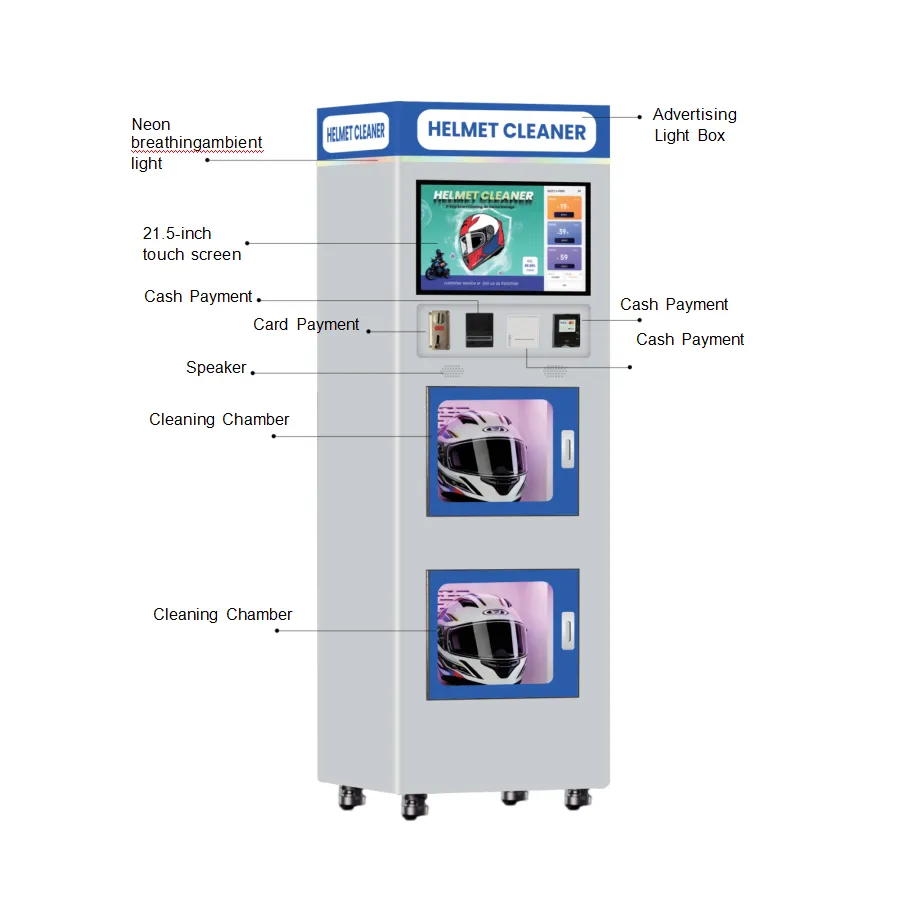
Table of Contents
- Direct answer
- What makes a machine commercial grade
- Core specification table
- Cleaning and drying process specifications
- Payment, touchscreen, and IoT specifications
- Cabinet, installation, and service access
- Factory acceptance testing before shipment
- Specification checklist for buyers
Direct answer
A commercial helmet cleaning machine should be specified around real operating conditions: which helmets it must fit, how many cycles it should handle, what cleaning stages are included, how drying is controlled, what safety interlocks protect users, what payment methods are required, how the operator receives fault alerts, and how the cabinet is serviced. Buyers should not accept a quotation that only says UV, ozone, steam, fragrance, and touchscreen. Those words are not enough to define a production-ready commercial machine.
What makes a machine commercial grade
A commercial helmet cleaning machine is different from a small consumer gadget because it must work repeatedly in public or semi-public environments. It may serve riders at a motorcycle dealership, EV charging station, parking building, courier hub, rental counter, riding club, or shared helmet operation. Users may not read instructions carefully. Staff may only check the machine once a day. Payment, door locks, liquid levels, drying fans, and screen instructions must therefore be designed for unattended use.
The commercial question is not only whether the machine can clean one helmet in a demonstration. The real question is whether it can handle many helmets, many users, repeated payments, refill routines, minor misuse, and service alerts. A buyer should evaluate the machine as a small self-service terminal with hygiene, payment, and maintenance requirements working together.
| Commercial Requirement | Why It Matters | What Buyers Should Ask |
|---|---|---|
| Helmet fit range | Different helmet shapes affect chamber design. | What full-face, open-face, modular, and scooter helmet sizes were tested? |
| Cycle consistency | Users expect the same result every time. | How is mist, airflow, drying, and timing controlled across cycles? |
| Public safety | Users must be protected from UV, ozone, heat, and moving parts. | What interlocks, ventilation stages, and warning logic are included? |
| Payment reliability | Self-service revenue depends on checkout success. | Which card, QR, wallet, coin, or local payment options can be integrated? |
| Serviceability | Operators must refill and inspect without complex teardown. | Where are tanks, filters, nozzles, fans, and payment parts accessed? |
Core specification table
The specification should define the minimum acceptable configuration. Some buyers focus on exterior design first, but internal specifications decide whether the machine works. Chamber dimensions, nozzle direction, air path, door opening, support bracket, liquid capacity, and ventilation space are all practical details that affect user experience. A polished cabinet cannot compensate for a chamber that does not fit the helmets in the target market.
| Specification Area | Commercial Buyer Requirement |
|---|---|
| Chamber format | Single or double chamber, with confirmed helmet fit and easy placement angle. |
| Cleaning process | Mist or spray, warm activation, UV-C, ozone or deodorizing, fragrance, and drying as required by the project. |
| Drying method | Fan and heating path designed to reach the helmet interior without overheating materials. |
| Touchscreen | Clear mode selection, price, safety reminder, cycle status, and pickup instruction. |
| Payment | Local payment methods, online/offline handling, refund logic, and dashboard records. |
| Remote monitoring | Door events, low liquid, fault status, payment status, cycle count, and offline alerts. |
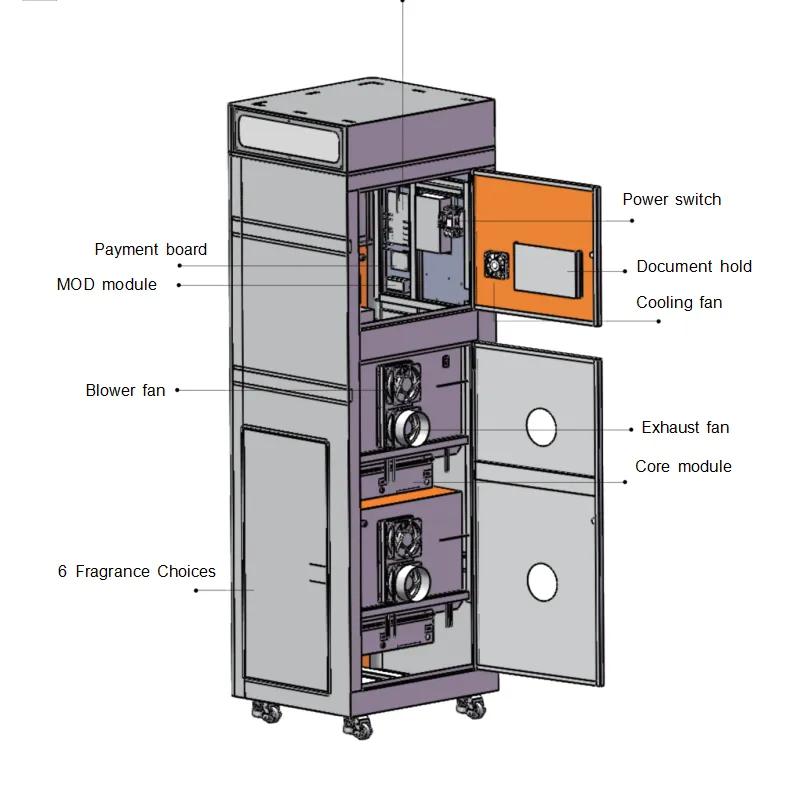
| Maintenance access | Fast refill, chamber cleaning, nozzle inspection, filter change, fan service, and payment module access. |
| Installation | Power, grounding, ventilation clearance, indoor protection, anti-tipping, and service clearance. |
Cleaning and drying process specifications
The cleaning process should be described as a sequence. The user places the helmet in the chamber, closes the door, selects a mode, pays, and waits for the machine to complete the programmed cycle. Depending on the configuration, the machine may run fine mist, warm activation, UV-C exposure, ozone or deodorizing, fragrance, and hot-air drying. The specification should define what each stage does, how long it lasts, and what safety condition must be satisfied before the door opens.
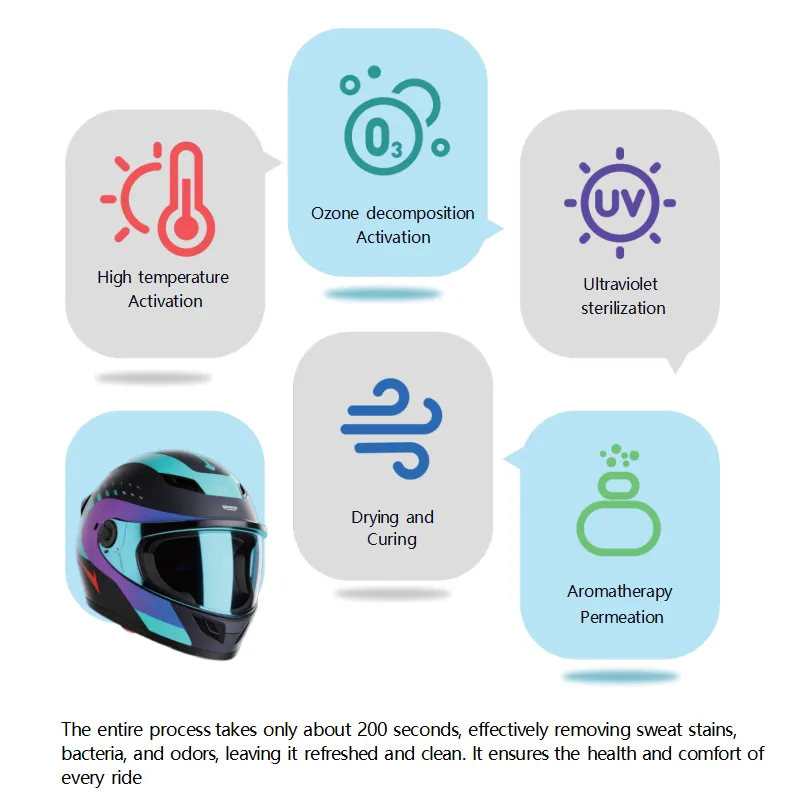
Drying deserves special attention. A machine may look impressive during mist or light effects, but users judge the result when they collect the helmet. If the helmet feels damp, the service loses credibility. Buyers should ask how air reaches the inner liner, how moisture leaves the chamber, and how temperature is controlled. This is especially important for helmets with removable liners, adhesives, special coatings, or sensitive trim.
| Process Stage | Specification Question |
|---|---|
| Mist or spray | Is distribution even inside common helmet shapes? |
| UV-C | Are users protected by door interlocks and enclosed chamber design? |
| Ozone or deodorizing | Is there a ventilation or waiting stage before pickup? |
| Fragrance | Can scent strength be adjusted or disabled for neutral mode? |
| Drying | What temperature, airflow, and cycle time are used for common helmets? |
Payment, touchscreen, and IoT specifications
Software specifications decide whether the machine can operate as a real self-service business. The touchscreen should not simply show a logo and start button. It should guide the user through price, cleaning mode, safety reminder, payment, cycle status, and pickup. The operator dashboard should show revenue and maintenance information clearly enough that a route operator can manage several machines.
Payment requirements should be decided before production. OBOvending can integrate payment APIs through payment partners that support different local payment methods across regions. For international buyers, this matters because a machine intended for Australia, the Middle East, Europe, Southeast Asia, or Latin America may need different payment behavior. Card, tap-to-pay, QR, wallet, coin, banknote, token, member code, or coupon logic should be specified early.
| Software Item | Commercial Requirement |
|---|---|
| Mode settings | Standard, premium, member, or staff mode with adjustable price and time. |
| Payment log | Successful payments, failed payments, refunds, and cycle start records. |
| Remote alerts | Low liquid, door fault, fan fault, UV or ozone component alert, and offline status. |
| Advertising screen | Optional idle-screen promotion without delaying the paid user flow. |
| Language | Local language support for instruction, safety, payment, and error messages. |
Cabinet, installation, and service access
Cabinet specifications should reflect the actual venue. A motorcycle dealership may want a premium finish and brand-friendly screen. An EV charging station may need high visibility, protected placement, and remote monitoring. A courier hub may need durable access and easy consumable refill. A rental counter may need staff-assisted cleaning records. These differences affect cabinet size, screen position, door opening direction, ventilation, lock design, and service panel layout.
Installation requirements should include voltage, plug type, grounding, indoor or semi-protected placement, anti-tipping requirements, ventilation clearance, and minimum service clearance. If the machine is shipped internationally, packing, spare parts, and documentation should also be specified.
Factory acceptance testing before shipment
Factory acceptance testing should happen before the machine leaves the supplier. The buyer should request a test checklist, photos, and short videos of important functions. The test should include helmet fit, door lock, payment simulation, touchscreen flow, cleaning cycle, drying result, low-liquid alert, fan or exhaust check, remote dashboard, and power recovery behavior. If the buyer provides real helmet samples, those samples should be used in testing.
| Factory Test | Pass Condition |
|---|---|
| Helmet placement | Target helmet types fit without forcing or scratching. |
| Door lock | Door cannot open during protected process stages. |
| Payment simulation | Payment success starts the correct mode and records the transaction. |
| Cycle completion | Machine shows clear pickup instruction and returns to idle state. |
| Remote alerts | Dashboard receives low-liquid, door, fault, and offline test events. |
Specification checklist for buyers
- Define target helmet types, helmet dimensions, and whether accessories must be removed.
- Choose single chamber, double chamber, compact, or custom cabinet format.
- Specify cleaning stages, drying expectations, cycle time, and fragrance settings.
- Define payment methods and target countries before cabinet and software design.
- Request dashboard requirements for revenue, status, alerts, and service records.
- Confirm installation power, ventilation, service clearance, packing, spare parts, and warranty terms.
- Require factory acceptance testing with real helmet samples whenever possible.
Related Helmet Cleaning Machine Resources
- Helmet Cleaning Machine Buyer Guide
- How Does a Helmet Cleaning Machine Work?
- Single vs Double Chamber Helmet Cleaning Machine
- Best Locations for Helmet Cleaning Machines
- Helmet Cleaning Machine Business Model and ROI
- Self-Service Helmet Cleaning Machine Payment and IoT Features
- Helmet Cleaning Machine Maintenance Checklist
- Helmet Cleaning Machine Safety Guide
- Mini Helmet Cleaning Machine vs Floor-Standing Model
- Helmet Cleaning Machine RFQ Checklist
- Helmet Cleaning Machine for EV Charging Stations
- Helmet Cleaning Machine for Motorcycle Dealerships
- Helmet Cleaning Machine for Shared Helmets and Fleets
- Custom Helmet Cleaning Machine OEM/ODM Guide
- Motorcycle Helmet Cleaning Machine Buyer Guide
- Helmet Sanitizer Machine Guide
- Helmet Cleaning Vending Machine Business Guide
- Helmet Odor Removal and Drying Machine Guide
Related Purchase Intent Guides
- Helmet Cleaning Machine Price and Cost Factors
- Helmet Cleaning Machine Manufacturer and Supplier Selection
- Helmet Cleaning Machine for Sale Buyer Checklist
FAQ
What specifications matter most for a commercial helmet cleaning machine?
Buyers should define chamber fit, cleaning stages, drying method, safety interlocks, payment methods, touchscreen flow, remote monitoring, maintenance access, and installation requirements.
Why is drying part of the specification?
Drying affects whether the helmet feels comfortable immediately after pickup. A weak drying design can reduce user trust even when other cleaning features are present.
Should payment be specified before production?
Yes. Payment hardware, API integration, local wallet support, and refund logic can affect cabinet layout, software, testing, and certification planning.
What should factory acceptance testing include?
It should include helmet fit, door lock, payment simulation, cleaning cycle, drying result, dashboard alerts, power recovery, and remote status checks.
 Privacy respected. No spam. Ever.