
Executive Summary
Helmet vending machines can support PPE and public safety projects when the machine is designed for large product size, secure pickup, public location durability, and clear payment or authorization flow.
The buyer is not only selling helmets. They are solving access: making safety equipment available at the moment and place where people need it.

Helmet vending can fit construction areas, campuses, shared mobility zones, industrial parks, tourist attractions, and public safety projects.
This guide explains how buyers should evaluate machine structure, location, and operation.
What Is the Real Search Intent Behind helmet vending machine?
The search intent is usually project-based: can helmets or PPE be distributed through unattended retail or controlled access?
The hidden concerns are product size, security, capacity, payment, and whether the machine can survive public use.

Who Is This Project Suitable For?
Helmet vending is suitable for locations where users may need helmets suddenly or where safety compliance must be supported.
It can also work for rental, deposit, membership, or controlled distribution models if software is planned.
The project is less suitable if restocking is difficult or product size varies too much.
What Should Buyers Compare Before Ordering?
Compare helmet vending machines by product handling and public-use durability.
| Decision Point | What to Check | Why It Matters |
|---|---|---|
| Product size | Helmet dimensions and packaging | Determines compartment layout |
| Security | Locks, pickup verification, cabinet strength | Protects inventory |
| Access model | Payment, QR, membership, rental | Controls user flow |
A helmet machine should be judged by reliability and service access, not only appearance.
How Does Operation Affect ROI?
Operation depends on refill frequency, product cleaning if reused, damage control, and user support.
If the project is tied to safety compliance, records may matter more than simple sales.
Remote monitoring helps operators know when inventory is low or doors have been opened.
What Information Helps OBOvending Give a Better Quotation?
A useful quotation needs the exact helmet or PPE product information.
- Helmet dimensions, weight, and packaging.
- Sales, rental, deposit, or membership model.
- Indoor/outdoor location.
- Payment or authorization method.
- Capacity and refill frequency.
- Security and anti-vandal requirements.
These details help match cabinet and locker structure to the real project.
How Should Buyers Validate the First Machine?
The first machine should be treated as a controlled pilot, not as a decorative sample. Before launch, define what the pilot must prove: product fit, payment flow, customer conversion, restocking workload, uptime, and service response. Without a written pilot goal, the buyer may collect impressions but miss the data needed for scaling.
During the first 30 days, record daily sales, best-selling SKUs, slow products, payment failures, customer questions, restocking time, and service issues. If the machine has remote management software, compare the dashboard data with staff observations. If staff report a product is popular but the data says otherwise, use the data to guide the next adjustment.
Buyers should also separate small launch issues from structural risks. Signage, pricing, product mix, and screen wording can be adjusted quickly. Repeated product jams, weak cooling, payment incompatibility, difficult maintenance, or cabinet access problems should be solved with the factory before ordering more units.
What Should Be Confirmed Before Paying the Deposit?
Confirm the final machine model, cabinet size, product format, payment method, screen language, branding files, voltage, plug type, software functions, warranty terms, spare parts package, packing method, and production timeline. Written confirmation prevents assumptions from becoming expensive changes later.
Buyers should also confirm what will be tested before shipment. Standard checks include power-on testing, screen flow, payment simulation, repeated dispensing, lock and door inspection, packing inspection, and remote software review. For custom products, real product samples should be used during testing.
How Can OBOvending Support This Project?
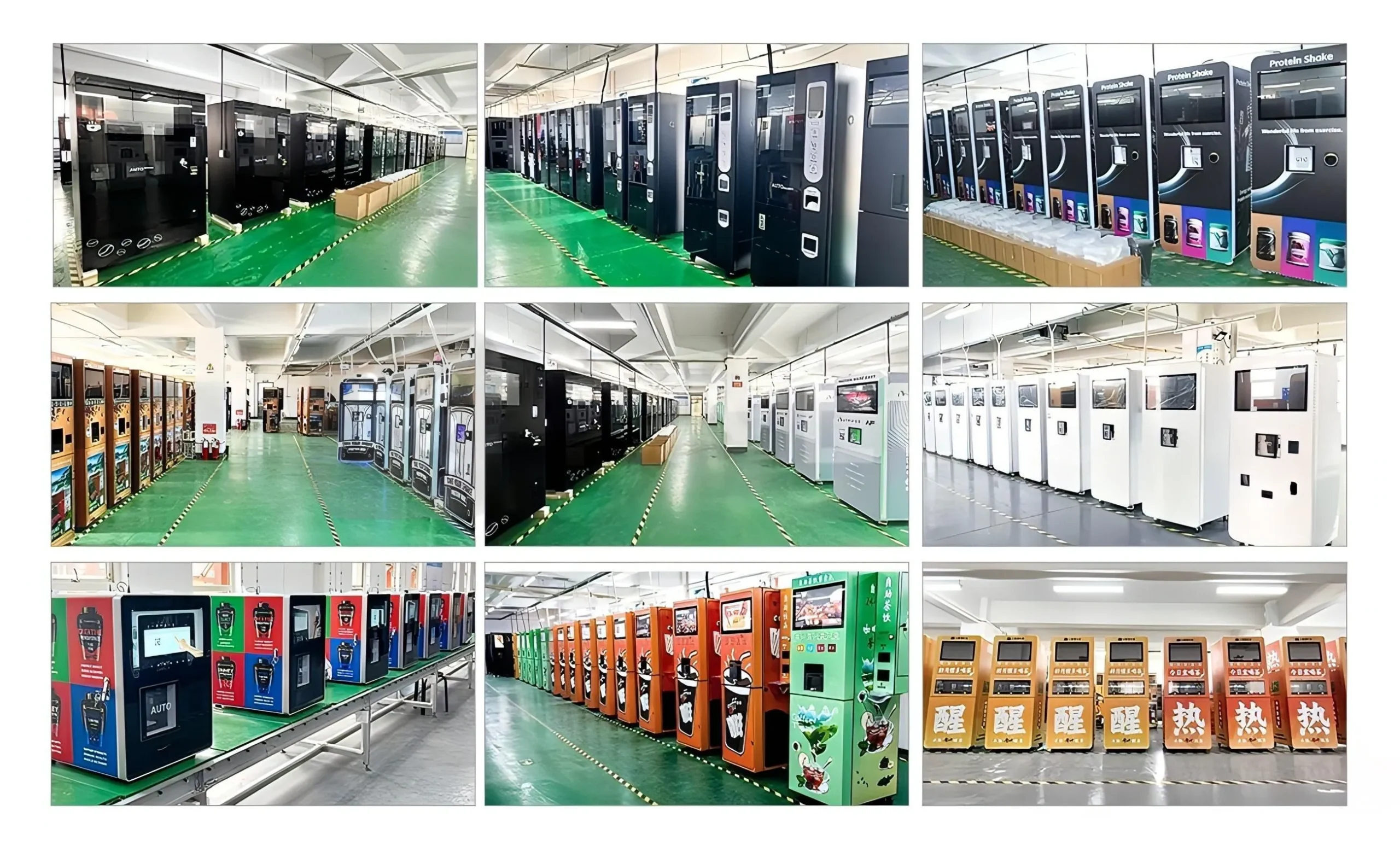
OBOvending can support helmet and PPE vending projects as custom large-product vending systems.
The focus is secure, convenient access to safety products in real public or work environments.
Buyer FAQ
What should buyers define before an industrial vending quote?
Define SKU dimensions, access control, user roles, refill responsibility, reporting fields, site environment, and whether ERP or procurement integration is required.
How should buyers choose between lockers and vending channels?
Use vending channels for small packaged consumables and smart lockers for larger, irregular, high-value, or returnable items.
Which pilot metrics matter most?
Track stockout reduction, unauthorized use reduction, pickup time, refill labor, transaction accuracy, and dashboard trust.
FAQ
Can helmet vending machines be used outdoors?
Yes if the cabinet is designed for weather, security, and service access.
Can the machine support rentals?
It can if the software and authorization process are designed for rental or deposit logic.
What is the biggest design issue?
Product size and secure pickup are usually the main constraints.
Related reading: Custom Vending Machine Buyer Guide, How to Work With a Custom Vending Machine Manufacturer, and Custom Vending Machine Prototype Development Guide.
Why Helmet Vending Projects Need More Than a Standard Cabinet
A helmet vending machine is often used in projects where product availability is connected with safety, compliance, or public convenience. The buyer may be a campus operator, scooter rental company, construction-zone manager, event organizer, transport station, hotel, resort, or city service partner. In these projects, the machine is not just a retail shelf. It becomes a controlled distribution point for a bulky item that must stay visible, clean, and easy to collect.
The first technical issue is product size. Helmets are larger and less uniform than snacks, perfume bottles, or beverage cans. Different models may have different shell shapes, straps, packaging thickness, and surface finishes. If the slot is too tight, the helmet can jam. If the slot is too loose, capacity is wasted and the product may move during transport. A serious supplier should test the buyer’s actual helmet sample before confirming the dispensing structure.
What Should Buyers Check Before Launching a Helmet Vending Project?
| Buyer check | Practical question | Factory recommendation |
|---|---|---|
| Helmet size | Are all SKUs the same size? | Test real samples before final layout |
| Packaging | Is the helmet boxed, bagged, or loose? | Use packaging that protects the shell and strap |
| Capacity | How many pieces must be available between restocks? | Balance capacity with easy collection height |
| Location | Indoor, semi-outdoor, or outdoor? | Plan weather protection and screen brightness |
| Payment | Purchase, rental, deposit, or voucher? | Confirm software workflow before production |
How Can Software Support Rental or Deposit Models?
Some helmet vending projects sell helmets directly. Others use a rental or deposit model connected to scooters, e-bikes, campuses, tourist sites, or temporary events. These models require different software logic. A direct-sale machine only needs SKU selection, payment, dispensing, and sales record. A rental project may need user identification, deposit authorization, return confirmation, damage rules, late fees, and inventory synchronization with other rental systems.
For this reason, buyers should explain the operating model clearly before asking for price. If the supplier assumes a simple retail machine but the project later needs rental logic, the software change may affect the payment integration, interface, database, and return process. In OBOvending projects, we prefer to map the user journey step by step: choose helmet size, confirm terms, pay or authorize deposit, receive product, return or keep product, and receive receipt or refund.
What Makes a Helmet Vending Machine Reliable in Public Locations?
Public locations need strong cabinet structure, stable lock design, clear screen instructions, anti-vandal planning, and easy maintenance access. Operators should also consider camera coverage, lighting, floor fixing, signage, and emergency support. If the machine is installed near bikes, scooters, or construction entrances, the product must be easy to collect with one hand and the screen should be readable in strong light.
- Use clear labeling for helmet sizes and usage rules.
- Keep the collection area large enough for bulky products.
- Plan restocking routes because helmets occupy more space than small retail goods.
- Use remote inventory alerts to avoid empty-machine complaints.
- Prepare simple cleaning and inspection procedures for rental projects.
Quote Preparation for Helmet Vending Buyers
To receive a useful quotation, buyers should send helmet dimensions, packaging method, photos, target capacity, location type, payment model, country, voltage, branding needs, and whether the machine must connect with an existing rental or safety platform. This allows the supplier to recommend a realistic cabinet size, product channel, screen, payment system, and software scope instead of giving a generic price that may not fit the project.
How to Plan Restocking for Bulky Helmet Products
Because helmets occupy more space than small retail products, restocking should be planned by route, carton volume, and peak usage period. Operators should estimate how many helmets can be carried per service visit and whether empty boxes or returned rental products must be collected. This helps avoid a machine that sells well but becomes difficult to maintain in daily operation.
For international B2B buyers, this final planning step is important because machine structure, payment integration, service method, and product packaging must be confirmed together before production starts.
 Privacy respected. No spam. Ever.
Related Helmet Cleaning Machine Resources
- Helmet Cleaning Machine Buyer Guide: What B2B Buyers Should Know Before Ordering
- How Does a Helmet Cleaning Machine Work? Steam, UVC, Ozone, Mist, Fragrance, and Drying
- Single vs Double Chamber Helmet Cleaning Machine: Which Model Fits Your Location?
- Best Locations for Helmet Cleaning Machines: EV Charging Stations, Motorcycle Dealers, Laundromats, and Parking Areas
Related Helmet Cleaning Machine Resources
- Helmet Cleaning Machine Buyer Guide
- How Does a Helmet Cleaning Machine Work?
- Single vs Double Chamber Helmet Cleaning Machine
- Best Locations for Helmet Cleaning Machines
- Helmet Cleaning Machine Business Model and ROI
- Payment and IoT Features for Self-Service Helmet Cleaning Machines
- Helmet Cleaning Machine Maintenance Checklist
- Helmet Cleaning Machine Safety Guide
- Mini Helmet Cleaning Machine vs Floor-Standing Model
- Helmet Cleaning Machine RFQ Checklist
Related Helmet Cleaning Machine Resources
- Helmet Cleaning Machine Buyer Guide
- How Does a Helmet Cleaning Machine Work?
- Single vs Double Chamber Helmet Cleaning Machine
- Best Locations for Helmet Cleaning Machines
- Helmet Cleaning Machine Business Model and ROI
- Payment and IoT Features for Self-Service Helmet Cleaning Machines
- Helmet Cleaning Machine Maintenance Checklist
- Helmet Cleaning Machine Safety Guide
- Mini Helmet Cleaning Machine vs Floor-Standing Model
- Helmet Cleaning Machine RFQ Checklist
- Helmet Cleaning Machine for EV Charging Stations
- Helmet Cleaning Machine for Motorcycle Dealerships
- Helmet Cleaning Machine for Shared Helmets and Fleets
- Custom Helmet Cleaning Machine OEM/ODM Guide