
Quick Answer
Custom vending machine prototype cost changes because the first unit is not just a cabinet. It includes engineering design, product fitting, dispensing tests, payment integration, touchscreen software, dashboard setup, electrical layout, debugging, packaging, and buyer-specific changes before mass production can be repeated safely.
This guide explains why prototype pricing can look high, which functions change the budget, and how buyers can plan an MVP before moving into pilot or mass production.

1. A Prototype Is an Engineering Validation Tool
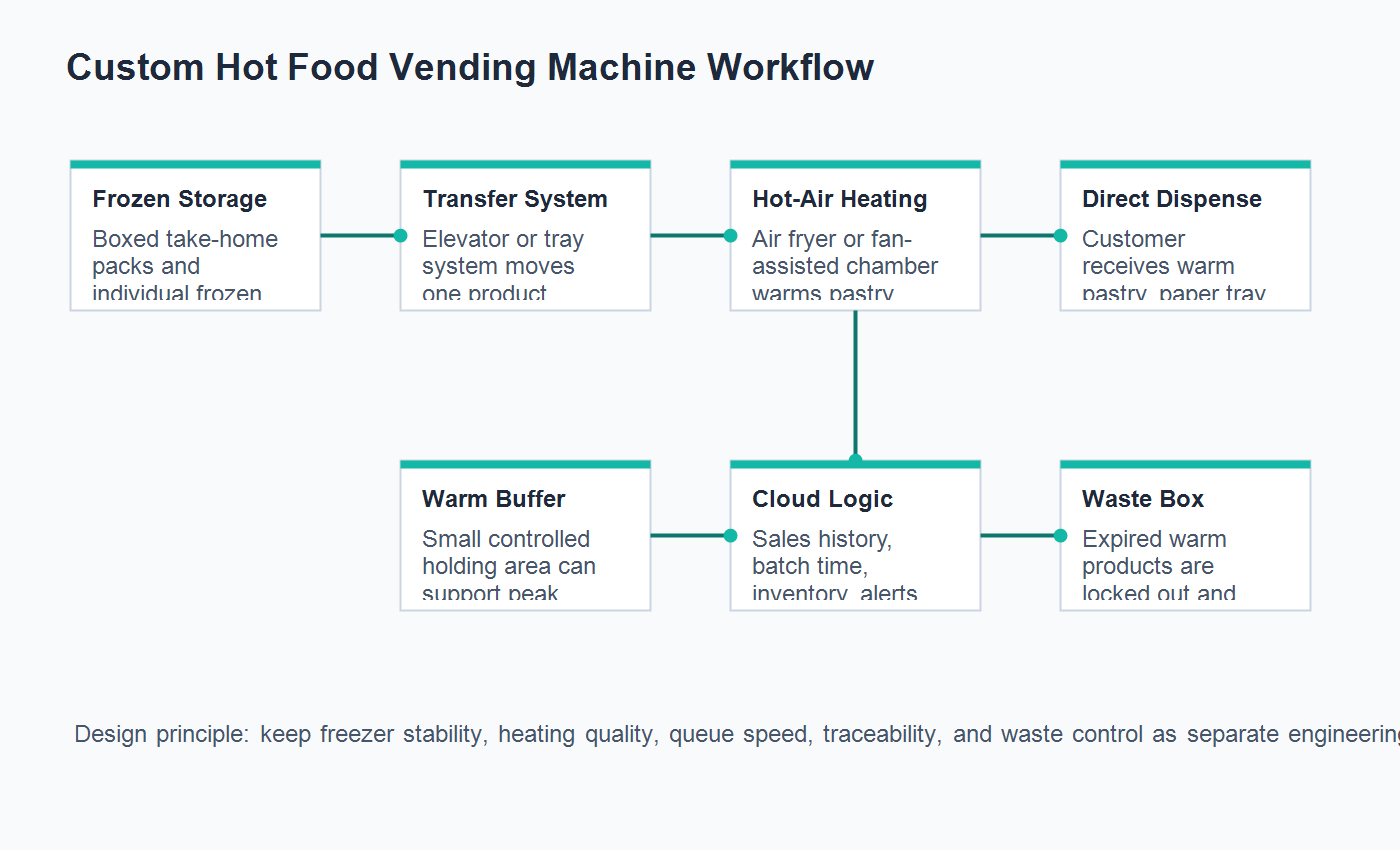
The first custom vending machine should not be judged only by its unit price. A prototype is used to prove whether the product can be stored, selected, paid for, dispensed, monitored, refilled, and maintained in the real business environment. It answers engineering questions that a catalog machine cannot answer. This is especially important for fragrance spray systems, frozen bowl vending, air-fryer heating, helmet cleaning, skincare sampling, trading cards, industrial parts, and other non-standard products.
A production unit repeats a known design. A prototype creates and validates that design. The cost includes engineering time, component selection, wiring, cabinet changes, controller logic, touchscreen screens, payment communication, sensor testing, and repeated adjustments after the first physical build. That work is why a prototype can cost much more than a later repeated unit.
2. The Biggest Prototype Cost Drivers
Prototype cost usually rises when the machine must do something that a standard vending cabinet cannot do reliably. The biggest drivers are custom dispensing, temperature control, heating, liquid handling, payment API integration, cloud dashboard development, sensor feedback, premium cabinet finish, and high-security access. Each function may require extra hardware and extra test time.
| Cost driver | Why it changes price | Buyer question |
|---|---|---|
| Product dispensing | Different products need coils, belts, elevators, lockers, pumps, atomizers, or custom holders | Can the product fall, slide, rotate, or require controlled delivery? |
| Temperature | Refrigeration, freezing, heating, and insulation change cabinet design and power use | What temperature range must be maintained? |
| Payment | Terminals, local wallets, refunds, and API status logic need testing | Which country and payment methods are required? |
| Software | Touchscreen UI, dashboard, inventory alerts, and remote content need development | Which features are must-have for the first pilot? |
| Security | High-value items may need locks, sensors, cameras, or delivery confirmation | What is the value and risk level of each SKU? |
3. Why Product Samples Matter
A supplier can estimate cost from photos, but real samples reduce risk. Product size, packaging stiffness, surface friction, weight distribution, and center of gravity all affect dispensing reliability. A box that looks simple in a photo may jam when stacked. A pouch may bend. A bottle may roll. A frozen bowl may require a lift instead of a drop. A card pack may need condition protection. A fragrance nozzle may need repeated spray stability tests.
If the buyer cannot send samples at the beginning, the RFQ should include detailed dimensions, weight, packaging photos, barcode location, and a video showing how the product is handled. The more precise the product data, the fewer assumptions the prototype quote needs to include.
4. MVP Prototype vs Full-Feature Prototype
Not every first prototype should include every future function. A good MVP prototype proves the highest-risk parts first. For a frozen food machine, that may be storage, dispensing, heating, and packaging. For a perfume machine, it may be atomizer stability, refill access, payment, and venue appearance. For an industrial smart locker, it may be access control, item tracking, and low-stock alerts.
Advanced features such as multi-site analytics, ERP integration, loyalty systems, remote advertising, AI recommendations, or complex campaign logic can often wait until the core product flow is proven. This staged approach lowers first-stage risk and helps the buyer avoid paying for software that may change after real user testing.
5. Payment and Dashboard Cost
Payment integration can be simple or complex. A standard terminal with basic approval logic is different from a project that needs Apple Pay, Google Pay, local wallets, QR payment, refund records, member wallet, coupon logic, or multi-country settlement. The machine must know what happens when payment succeeds, payment fails, payment times out, or payment succeeds but dispensing fails.
Dashboard cost depends on what the operator needs to see. Basic reports may include sales, stock, and machine status. More advanced dashboards may include low-stock alerts, product-level data, location comparison, user roles, remote price changes, advertising updates, temperature records, error logs, and API exports. These features should be defined before prototype quotation so the supplier does not underquote the software scope.
6. Testing Before Mass Production
A prototype should be tested before repeating the design. Useful tests include product loading, repeated dispensing, payment approval, payment cancel, failed dispense recovery, door access, refill workflow, network recovery, dashboard records, temperature stability, packaging strength, and shipping protection. The acceptance checklist should be written before the buyer approves mass production.
The most expensive mistake is moving to quantity before the prototype has proven the real product flow. If a jam, heat issue, payment exception, or maintenance problem is found after mass production, the correction cost is much higher. A slower prototype test can save money by preventing repeated errors.
7. How Buyers Can Reduce Prototype Cost
Buyers can reduce prototype cost by defining the product clearly, choosing an existing cabinet platform where possible, separating must-have functions from future upgrades, using a standard payment terminal for the first pilot, limiting the first UI to essential screens, and postponing custom exterior tooling until demand is proven. Cost reduction should not mean removing the functions that prove the business model. It means avoiding nice-to-have complexity before the first test.
Another way to reduce cost is to plan the prototype as a bridge to production. If the buyer shares expected future quantity, target country, and operating model, the supplier can avoid a prototype that cannot scale. A cheap one-off sample that must be redesigned later may cost more than a slightly better prototype built on a production-ready structure.
8. What Should Be Included in the Prototype Quote?
A clear prototype quote should show what is included and what is excluded. Buyers should ask whether the price covers cabinet design, hardware, controller, payment terminal, touchscreen UI, cloud dashboard, product fixtures, branding, sample testing, packaging, spare parts, export documents, shipping, remote support, and revisions. If a supplier gives only one total number without scope, it is hard to compare the offer.
The quote should also state the expected timeline. A practical prototype timeline includes requirement confirmation, design, component procurement, assembly, software integration, internal testing, buyer review, packing, and shipping. If payment or local compliance depends on third parties, that timeline should be separated from cabinet manufacturing.
9. When to Move From Prototype to Pilot Order
Move to a pilot order only after the prototype proves the core risks. The pilot order should test more than one location if possible. It should measure uptime, conversion, refill labor, customer complaints, payment success, stockouts, maintenance time, and whether the operator can use the dashboard without manual cleanup. These numbers tell the buyer whether the design is ready for larger production.
For many custom vending projects, the best path is concept discussion, RFQ, prototype, internal test, pilot, optimization, then mass production. Skipping steps may look faster, but it often creates hidden cost later.
Related Buyer Resources
- Custom vending machine RFQ template
- Custom vending machine prototype development guide
- Vending machine prototype cost before production
- Custom vending machine cost OEM development budget
- Vending machine testing checklist before mass production
- OEM vending machine manufacturer factory capability guide
- Vending machine payment API integration guide
- Vending machine dashboard specifications buyer guide
- Local payment methods for custom vending machines
- Vending machine shipping import planning guide
- Custom vending machine lead time project timeline
Dispensing and Pre-Shipment Test Resources
- Custom vending machine dispensing methods guide
- Custom vending machine factory acceptance test checklist
Production Change and Pilot Scale Resources
- Custom vending machine engineering change control guide
- Custom vending machine pilot data and mass production guide
Installation and After-Sales Support Resources
- Custom vending machine installation and commissioning checklist
- Custom vending machine after-sales support guide
Rollout and Operator Training Resources
- Custom vending machine multi-country rollout checklist
- Custom vending machine operator training and service manual playbook
Specification, Software, and SLA Resources
- Custom vending machine technical specification document checklist
- Custom vending machine software, data ownership, and SLA checklist
Production Quality and Field Reliability Resources
- Custom vending machine mass production quality control plan
- Vending machine field failure analysis and spare parts forecast
Compliance and Venue Approval Resources
- Custom vending machine compliance matrix
- Vending machine venue approval, insurance, and liability checklist
Supplier Qualification and Purchase Order Resources
- Custom vending machine supplier audit and qualification scorecard
- Custom vending machine purchase order, payment milestone, and delivery risk checklist
Project Risk and Launch KPI Resources
- Custom vending machine project risk register and kickoff checklist
- Vending machine launch KPI and post-launch review template
Business Case and Commercial Rollout Resources
- Custom vending machine business case and CapEx approval template
- Vending machine venue pitch deck and distributor recruitment package
Quotation, TCO, and Contract Scope Resources
- Custom vending machine quotation comparison, TCO, and hidden cost checklist
- Custom vending machine contract attachment, SOW, and service checklist
Procurement Review and Due Diligence Resources
- Custom vending machine RFP response and procurement committee Q&A checklist
- Custom vending machine procurement data room and due diligence package
POC, Demo, and Technical Review Resources
- Custom vending machine POC, demo, and trial evaluation checklist
- Custom vending machine factory visit and technical review meeting agenda
Change Control and Batch Release Resources
- Custom vending machine change order and ECO checklist
- Custom vending machine first article, batch release, and reorder checklist
Version Roadmap and Fleet Review Resources
- Custom vending machine version roadmap and upgrade planning checklist
- Vending machine QBR, customer success, and fleet performance review template
Lifecycle Upgrade and Asset Transfer Resources
- Custom vending machine retrofit, upgrade, and replacement decision checklist
- Vending machine decommissioning, relocation, and asset transfer checklist
Maintenance Contract and Spare Parts Planning Resources
- Vending machine preventive maintenance and AMC contract checklist
- Custom vending machine spare parts kit quotation and replenishment checklist
Service Ticket and Remote Diagnostics Resources
- Vending machine service ticket and escalation workflow template
- Vending machine remote diagnostics report and troubleshooting template
Downtime Cost and Service KPI Resources
- Vending machine downtime cost calculation template
- Vending machine service KPI and operations dashboard checklist
Fleet Expansion and Reorder Approval Resources
- Vending machine fleet expansion readiness checklist
- Custom vending machine reorder approval package checklist
Multi-Location Operations and Partner Onboarding Resources
- Vending machine multi-location operating standard checklist
- Vending machine distributor and service partner onboarding checklist
Location Portfolio and Route Planning Resources
- Vending machine location portfolio review and relocation priority checklist
- Vending machine route planning, refill, and service cost checklist
Location Growth and Field Capacity Resources
- Vending machine location acquisition pipeline and site qualification checklist
- Vending machine field operations workforce and capacity planning checklist
Contract and Inventory Control Resources
- Vending machine location contract renewal checklist
- Vending machine inventory shrinkage and reconciliation checklist
Assortment and Pricing Governance Resources
- Vending machine product assortment and category review checklist
- Vending machine pricing and promotion governance checklist
Customer Incident and Product Recall Resources
- Vending machine customer complaint and failed-vend response playbook
- Vending machine product recall and traceability checklist
Continuity and Security Resources
- Vending machine business continuity and disaster recovery plan
- Vending machine cybersecurity and fraud incident response checklist
Platform and Payment Migration Resources
- Vending machine software platform migration checklist
- Vending machine payment provider and terminal migration checklist
Software Release and API Monitoring Resources
- Vending machine software and firmware release checklist
- Vending machine API integration monitoring checklist
Access and Data Governance Resources
- Vending machine user access and offboarding checklist
- Vending machine audit log and data retention checklist
Connectivity and Device Identity Resources
- Vending machine SIM and connectivity lifecycle checklist
- Vending machine device identity and provisioning checklist
Venue Environment and Outdoor Design Resources
- Indoor vending machine noise, heat and ventilation checklist
- Outdoor vending machine weatherproof design checklist
Physical Security and Service Safety Resources
- Vending machine anti-tip and physical security checklist
- Vending machine technician hazardous-energy safety checklist
Inclusive Design and Food Safety Resources
- Whole-machine vending accessibility and ergonomics checklist
- Food vending allergen cross-contact and cleanable-design checklist
Venue Acoustic and Pest-Prevention Resources
- Vending machine noise and vibration acceptance checklist
- Food vending machine pest-prevention and IPM checklist
Moisture Control and Power Recovery Resources
- Vending machine condensation, leak, and mold-prevention checklist
- Vending machine outage, surge, and safe-restart checklist
EMC and Fire-Prevention Resources
- Vending machine EMC, EMI, ESD, and immunity checklist
- Vending machine fire-prevention and smoke-response checklist
Refrigeration and Move-In Planning Resources
- Refrigerated vending machine refrigerant and leak-service checklist
- Vending machine move-in route and floor-load checklist
Transport Validation and Temperature Mapping Resources
- Vending machine transport packaging and vibration-test checklist
- Refrigerated vending temperature-mapping checklist
Display Readability and Camera Privacy Resources
- Vending machine screen glare and sunlight-readability checklist
- Vending machine camera and facial-recognition privacy checklist
Water-System and Obsolescence Resources
- Beverage vending water quality and filtration checklist
- Vending machine component obsolescence and EOL checklist
Compliance and Secure Support Resources
- Food-contact materials, migration, and compliance checklist
- Remote support and privileged vendor access security checklist
Software Security and Food Validation Resources
- Vending machine SBOM, disclosure, and penetration test checklist
- Food vending shelf-life and HACCP validation checklist
Food Receiving and Secure Retirement Resources
- Food supplier approval and incoming receiving checklist
- Secure machine decommissioning and data sanitization checklist
Food Defense and Security Evidence Resources
- Food defense and tamper-evident packaging checklist
- Security logging and digital forensics checklist
FAQ
Why is a custom vending machine prototype more expensive than a repeated production unit?
A prototype includes engineering, design validation, software setup, payment testing, sample fitting, debugging, and one-off assembly work that cannot be spread across many units.
What functions increase prototype cost the most?
Custom dispensing, refrigeration or freezing, heating, payment API integration, touchscreen software, cloud dashboard, sensors, special cabinet finish, and unusual product handling can all increase prototype cost.
Can buyers reduce prototype cost?
Yes. Buyers can start with an MVP, use existing cabinet platforms where possible, limit software to must-have functions, define product dimensions clearly, and postpone advanced features until the pilot proves demand.
Should I build one prototype before mass production?
If the product or user flow is new, a prototype is usually safer. It helps test dispensing, payment, maintenance, packaging, and customer behavior before investing in repeated units.
Does prototype cost include shipping and certification?
Not always. Buyers should ask whether the quote includes packaging, export documentation, shipping, certification, on-site installation support, spare parts, and remote software support.
Request Prototype Cost Guidance
Send OBO your product data, target country, required payment methods, expected software functions, and launch quantity. We can help separate prototype cost, pilot cost, and mass production planning.
 Privacy respected. No spam. Ever.