
Quick Answer
A custom vending machine POC should test the idea before the buyer commits to production: real product package, dispensing method, payment flow, touchscreen UI, dashboard records, refill workflow, service access, customer journey, and launch risks. The result should be a clear decision: continue to prototype, adjust the design, run a pilot, or stop before larger spending.
This guide is written for buyers who need a structured way to evaluate a custom vending machine demonstration, proof of concept, sample machine, or first trial.
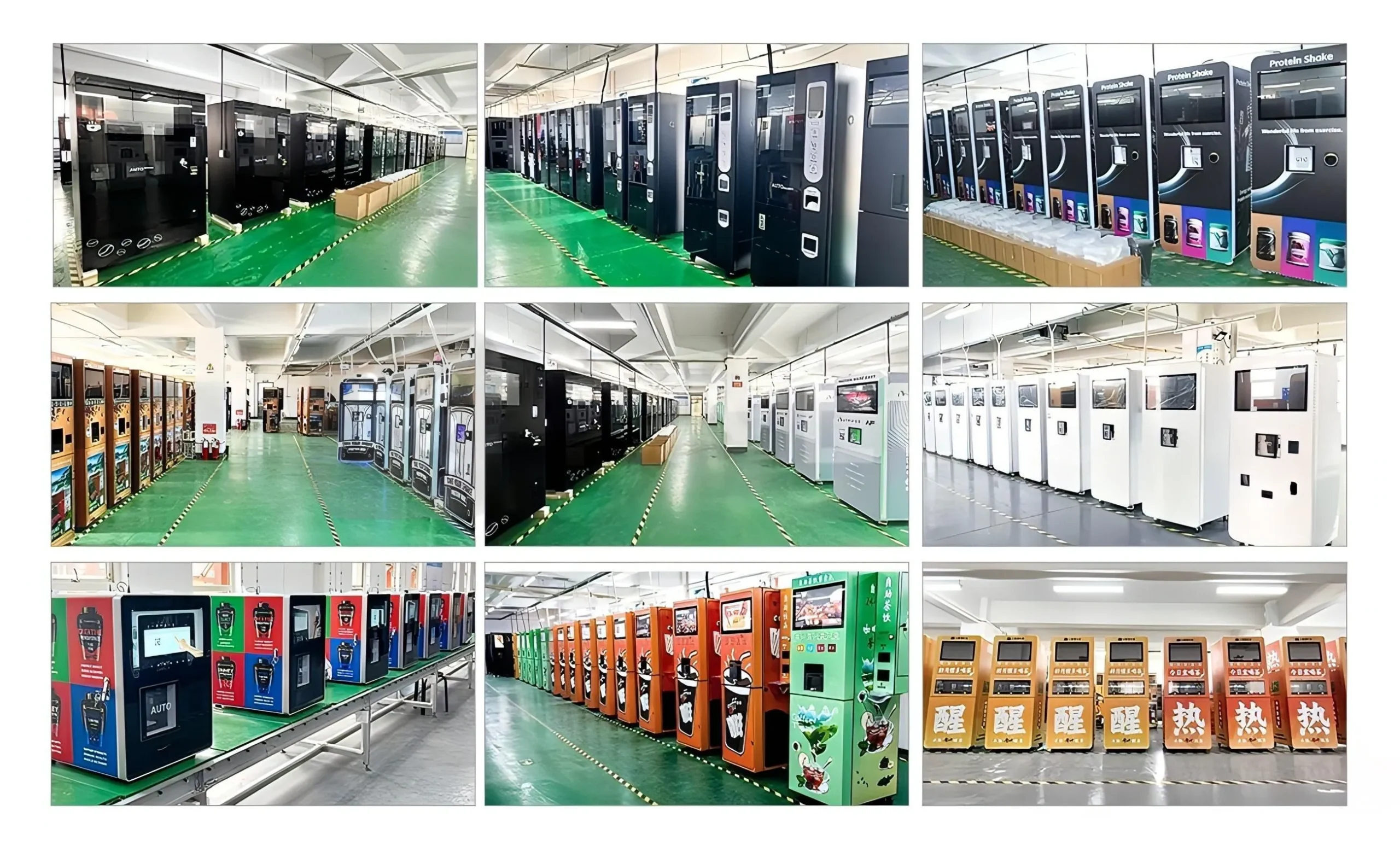
Why POC Planning Matters
A custom vending machine idea can sound strong in a meeting, but a POC reveals whether the concept can survive real constraints. Product packages may jam. Payment may need local integration. A screen flow may confuse users. A premium cabinet may need different refill access. A refrigerated or heated product may need more testing. A fragrance system may need liquid control. A helmet cleaning station may need cycle time, safety, drying, and customer instruction review.
The purpose of a POC is not to prove that everything is perfect. The purpose is to learn enough to make the next decision intelligently. If the POC is treated only as a sales show, the buyer may miss important engineering and operating questions. If it is structured, the buyer can collect evidence for management, procurement, investors, venues, or distributors.
POC discipline also helps suppliers. It keeps feedback specific and prevents uncontrolled feature requests from replacing a measurable test plan.
1. Define the POC Question
Every POC should answer a question. The question may be technical: can this product dispense reliably? It may be commercial: will customers understand the offer? It may be operational: can staff refill and service the machine? It may be software-related: can payment, dashboard, and alerts support the business model? Without a clear question, the team may judge the demo by appearance alone.
Buyers should define the desired decision before the test. The decision may be prototype approval, pilot approval, production approval, mechanism change, software change, product package change, supplier selection, or project pause. The evaluation checklist should support that decision.

2. Prepare Product Samples and Use Cases
Real product samples are essential. The supplier needs dimensions, weight, package material, surface friction, temperature condition, orientation, and fragility. If the buyer plans to sell mixed SKUs, the POC should include representative products, not only the easiest item. If the product package is still changing, the buyer should mark that as a risk.
The use case should also be clear. A perfume machine in a hotel, a frozen bowl machine in an airport, a helmet cleaning machine near EV charging, an industrial vending cabinet in a factory, and a collectible machine in a mall all have different success criteria. The same physical demo can be judged differently depending on the business model.
3. Demo Script for Decision Makers
A good demo script follows the customer journey: attract screen, product selection, price display, payment, dispensing or service cycle, success message, receipt or transaction record, and support instruction. Then it follows the operator journey: refill, stock update, dashboard check, fault alert, service access, and issue reporting. This gives business, technical, and operations teams a shared picture.
The script should include normal and abnormal scenarios. What happens if payment fails? What happens if payment succeeds but product does not dispense? What happens if the machine is offline? What happens if a product jams? What happens if stock is low? A demo that only shows the happy path is incomplete.

4. Payment and Software Evaluation
Payment should be tested as a workflow, not a label. Check supported methods, terminal response, payment timeout, failed payment, refund logic, transaction record, settlement responsibility, and local payment assumptions. If the buyer needs Apple Pay, Google Pay, local wallets, QR payment, membership wallet, coupon, or prepaid balance, each method should be clearly listed.
Software evaluation should include UI clarity, language, product management, price update, dashboard data, inventory alerts, machine online status, fault codes, user roles, and data export. If the machine will be managed across countries or distributors, role permissions and localization should be discussed during the POC, not after production.

5. Dispensing Reliability and Customer Experience
Dispensing tests should include repeated cycles, different SKUs, low-stock condition, product orientation, jam detection, retry behavior, and customer pickup. If the product is frozen, hot, liquid, fragile, high-value, irregular, or premium packaged, the test should match that reality. A successful single dispense is encouraging, but it is not the same as reliability.
Customer experience should be observed. Do users understand where to tap, where to pay, where to collect the product, how long to wait, and what to do if something goes wrong? A machine with advanced engineering can still perform poorly if the customer path is unclear.
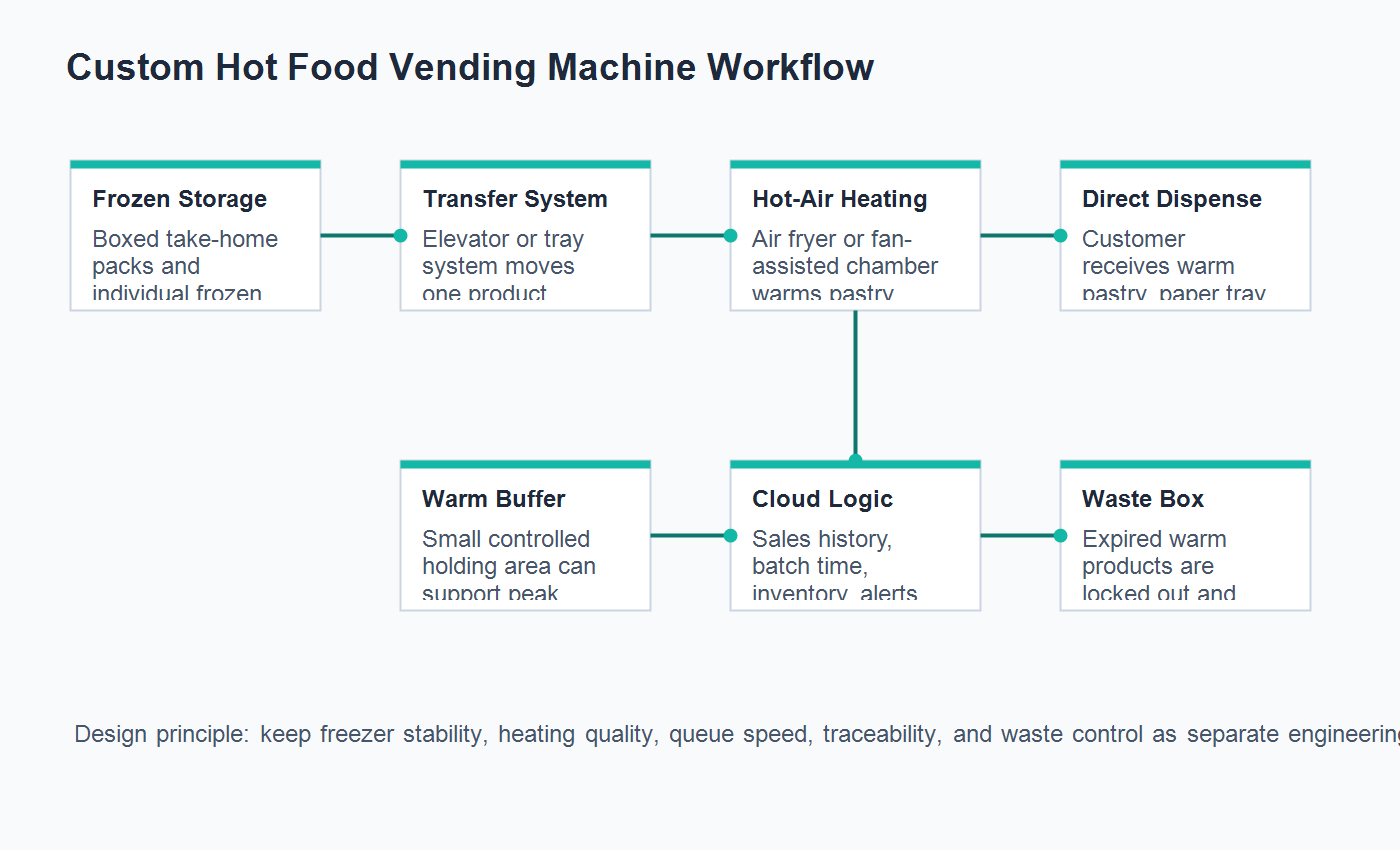
6. Operator Workflow and Service Access
The POC should include operator workflow. Ask the operator to open the machine, load products, update inventory, clean relevant areas, check the dashboard, run a test transaction, and report an issue. If the operator workflow is too slow or confusing, the project may need labels, training, service access changes, or dashboard improvements.
Service access also matters. Which parts can be replaced locally? Which parts require factory support? Where are sensors, belts, nozzles, locks, routers, or payment accessories located? A machine that is difficult to service may create higher long-term cost.
7. Trial Agreement and Evaluation Window
If the POC becomes a real trial in a venue, the buyer should define the trial agreement. Include location, duration, product responsibility, payment account, insurance, refill responsibility, service contact, data reporting, revenue share if any, customer support, and what happens when the trial ends. A vague trial can create confusion between venue, buyer, and supplier.
The evaluation window should be long enough to collect useful data. A short demo can validate basic functions. A two-week or four-week trial can reveal payment success, product demand, stockouts, refill process, service tickets, and venue feedback.
8. POC Decision Matrix
- Continue: critical functions pass, risks are understood, and next cost is justified.
- Adjust: concept is promising but product package, mechanism, UI, payment, or service flow needs changes.
- Pilot: machine is ready for a controlled venue test with KPI tracking.
- Pause: key risk is unresolved, cost is unclear, or required evidence is missing.
- Stop: the product, venue, payment model, or operating cost does not support the business case.
9. POC Checklist
- Define the POC question and approval decision.
- Prepare real product samples and package data.
- Write demo script for customer journey and operator journey.
- Test normal payment, failed payment, refund, and transaction records.
- Test repeated dispensing, low-stock condition, jam behavior, and pickup experience.
- Review dashboard records, alerts, user roles, and data export.
- Check refill, cleaning, service access, and issue reporting.
- Record photos, videos, test results, open issues, and next decisions.
- Update specification, risk register, quotation, and business case after POC.
How OBO Supports POC and Demo Evaluation
OBO Tech Group can help buyers turn product ideas into structured POC plans: product sample testing, dispensing method discussion, payment workflow, touchscreen UI review, dashboard requirements, operator workflow, trial preparation, and next-step production planning. A clear POC reduces guesswork before the buyer commits to larger spending.
If your project is ready for a demo, send product samples, target venue, payment expectations, software needs, and the decision you need to make after the test.
Related Buyer Resources
- Custom vending machine factory visit and technical review agenda
- Custom vending machine pilot data and scale guide
- Vending machine launch KPI and post-launch review template
- Custom vending machine project risk register and kickoff checklist
- Custom vending machine RFQ template
- Custom vending machine prototype cost guide
- Custom vending machine dispensing methods guide
- Custom vending machine factory acceptance test checklist
- Custom vending machine engineering change control guide
- Vending machine payment API integration guide
- Vending machine dashboard specifications buyer guide
- Vending machine shipping import planning guide
- Vending machine testing checklist before mass production
FAQ
What is a POC for a custom vending machine project?
A POC is a controlled proof of concept that tests whether the machine idea, product package, dispensing method, payment flow, software, operator workflow, and venue assumptions are strong enough to continue.
How is a demo different from a pilot?
A demo shows selected functions to decision makers. A POC tests technical feasibility. A pilot runs in a real or near-real location long enough to collect performance, payment, refill, service, and customer data.
What should buyers prepare before a vending machine demo?
Prepare product samples, target customer flow, payment requirements, evaluation checklist, test scenarios, decision makers, open questions, and the evidence required for the next approval step.
What should be measured during a vending machine trial?
Measure payment success, dispensing reliability, customer journey, refill time, stockout risk, dashboard accuracy, service tickets, venue feedback, and whether the machine supports the business case.
When should buyers move from POC to production?
Move forward when critical functions pass, risks are documented, the specification is updated, costs are understood, and the buyer has clear KPI evidence or a controlled plan for pilot and production.
 Privacy respected. No spam. Ever.