
Quick Answer
A custom vending machine compliance matrix should connect the machine type, target country, product category, venue, payment method, electrical design, food or hygiene risk, privacy data, safety controls, documentation, and responsible party before production. Certification is only one part of compliance; real deployment also depends on local rules, venue approval, and operating responsibility.
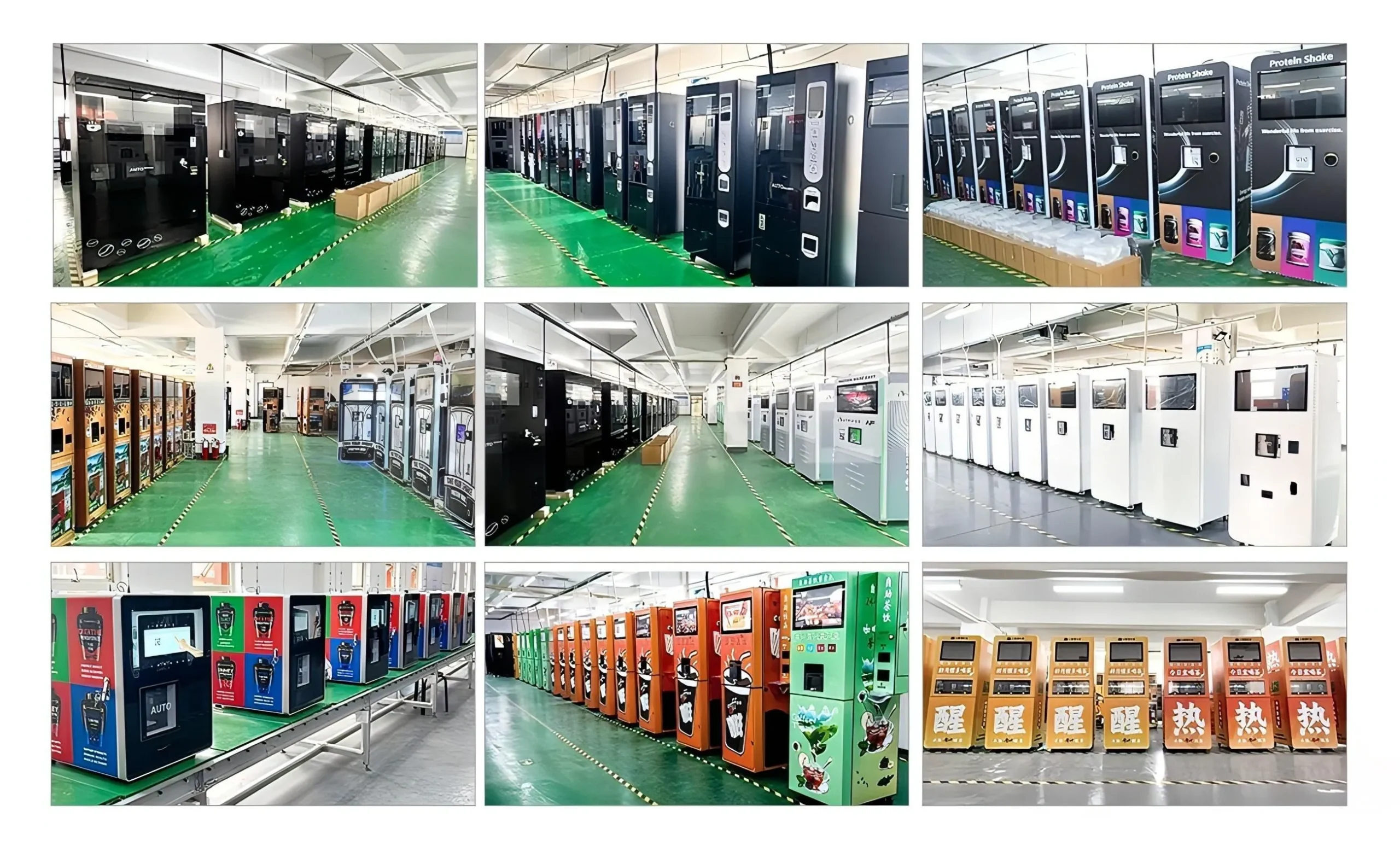
This guide is written for OEM buyers planning smart vending machines, perfume vending machines, food vending machines, helmet cleaning machines, industrial vending cabinets, smart lockers, frozen machines, heated machines, and custom self-service equipment for international or premium locations.

Why Compliance Should Be Planned Before Production
Many buyers ask about compliance after the machine design is already nearly finished. That is risky. A machine can look excellent, pass basic factory testing, and still face launch delays if the target country, venue, product category, or payment partner requires documents that were not considered during specification. Compliance is not a single certificate attached at the end. It is a set of decisions that influence electrical design, labeling, payment flow, data handling, product storage, customer instructions, and installation handover.
For custom vending machines, the compliance question changes by project. A frozen bowl vending machine has different risk from a fragrance spray machine. A helmet cleaning machine using UV, ozone, hot air, or steam has different safety questions from an industrial parts vending cabinet. A smart locker for controlled inventory has different data and access-control questions from a simple snack machine. A machine installed in an airport, mall, hospital, factory, hotel, or school may also need venue-specific review.
A compliance matrix helps the buyer and factory discuss these questions early. It does not replace local legal, certification, or regulatory advice, but it gives the project team a practical map so important topics are not forgotten.
1. Start With Country, Venue, and Product Category
The first line of the compliance matrix should identify where the machine will operate and what it will sell or provide. Country matters because electrical requirements, import documents, plug type, labeling, privacy rules, and payment methods can differ. Venue matters because a mall, airport, hotel, office, factory, campus, hospital, transport station, and outdoor location may have different approval processes. Product category matters because food, fragrance, cosmetics, cleaning service, PPE, electronics, industrial supplies, age-restricted products, and high-value goods all carry different risks.
A buyer planning multi-country rollout should create one matrix row for each launch market. The cabinet may stay similar, but payment, language, product label, local support contact, plug, network, safety signage, and venue documents may change. This connects compliance planning with the multi-country rollout checklist and technical specification document.
When the buyer cannot define the first launch country, the factory can only give general advice. When the buyer names the country and venue type, the supplier can make more useful design assumptions and highlight what must be confirmed locally.
2. Electrical Safety and Installation Inputs
Electrical safety starts with voltage, plug type, grounding, power consumption, internal wiring, overload protection, power switch, ventilation, heat management, cable routing, and safe service access. If the machine includes refrigeration, heating, UV, ozone, pumps, atomisers, compressors, fans, motors, or high-power modules, the electrical section becomes more important. These details should be defined in the technical specification, not guessed during final shipment.
Buyers should ask what electrical documents can be provided for the target market and what still needs local review. The machine may also need installation instructions for venue teams: required outlet, circuit capacity, grounding, distance from water source, ventilation clearance, and safe cable path. For airports, malls, hotels, factories, and public venues, the facilities team may request this information before approving placement.
Electrical compliance is also tied to after-sales service. If a local technician replaces a part, uses the wrong cable, blocks airflow, or changes wiring without guidance, the machine can become unsafe. The compliance matrix should therefore link electrical safety with service manual and operator training.
3. Payment, Refund, and Financial Records
Payment compliance is not only about accepting Apple Pay, Google Pay, cards, QR wallets, or local payment methods. It also includes merchant account responsibility, payment terminal approval, refund workflow, settlement records, transaction logs, customer support, and payment provider escalation. A vending machine may include hardware from one supplier, payment service from another provider, and operating responsibility from the buyer or local distributor.
The compliance matrix should define who owns the merchant account, who receives settlement, who handles refunds, what transaction data appears in the vending dashboard, and what data remains in the payment provider system. If the machine uses a global payment API connected to local methods, each country should still have its own activation and support checklist.
For premium venues, payment reliability is part of venue approval. A venue may ask how customers are refunded, how disputes are handled, and who is responsible if payment succeeds but product delivery fails. These questions should be answered before launch.

4. Food, Temperature, Hygiene, and Product Safety
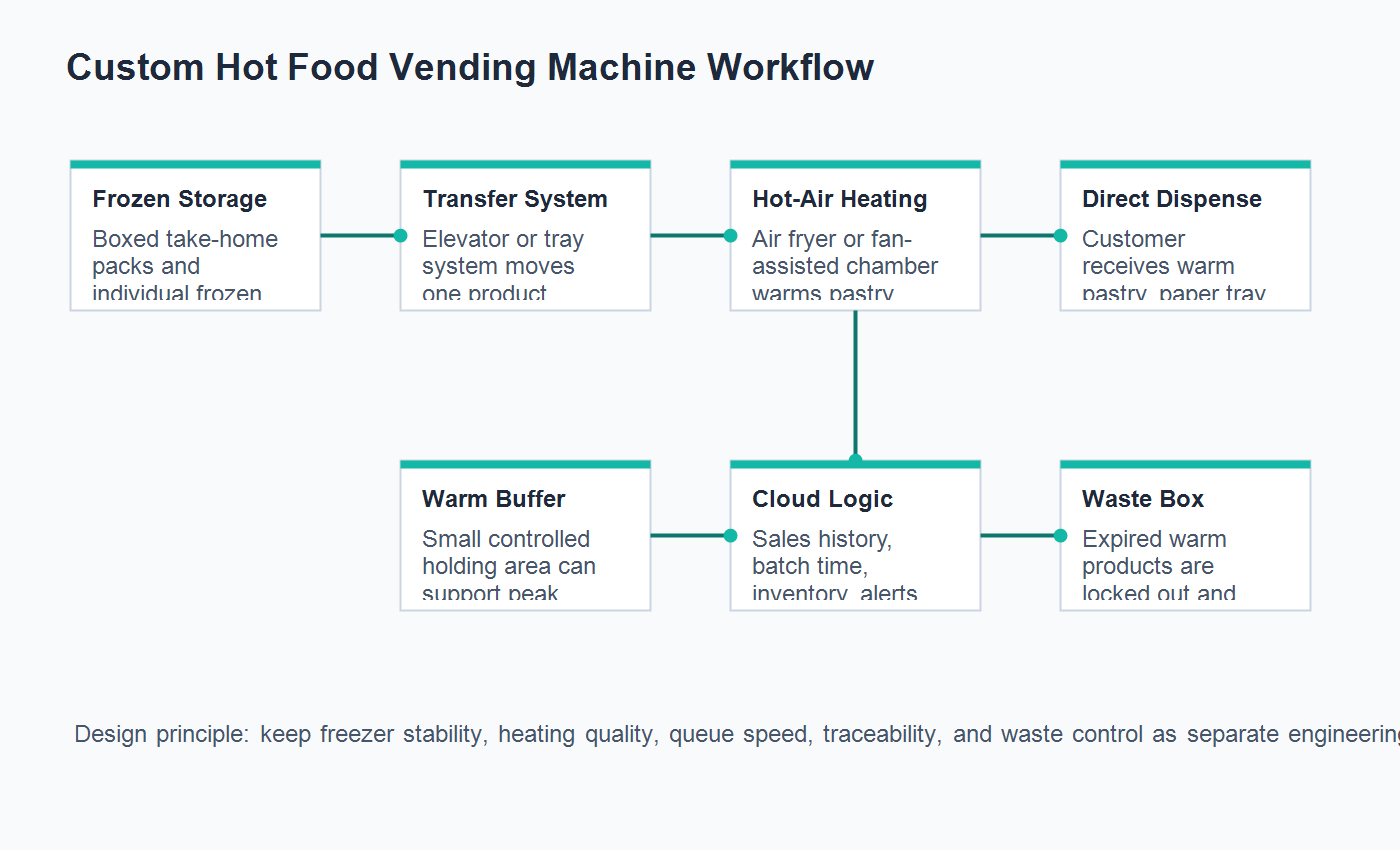
If the machine sells food, drinks, frozen meals, heated meals, fresh milk, ice, protein drinks, or temperature-sensitive products, the compliance matrix should include product storage, temperature control, cleaning, shelf life, waste handling, allergen or ingredient information, packaging, and customer instructions. The machine factory can support refrigeration, heating, sensors, and dashboard alarms, but the product owner or operator usually carries responsibility for food handling and local food rules.
Temperature logs can be valuable. A refrigerated or frozen vending machine may need dashboard alerts, temperature records, door open events, and operator response procedures. A heated food machine may need heating time, holding logic, pickup safety, cleaning, and waste workflow. These details should be defined in the specification and service manual.
For non-food products, product safety still matters. Fragrance machines need liquid containment and nozzle hygiene. Cosmetics may need labeling and sample handling. Helmet cleaning machines may need safety messaging around UV, ozone, airflow, or drying. Industrial supply machines may need access control and correct issue records.
5. Privacy, User Accounts, and Data Handling
Some vending machines collect very little personal data. Others may collect phone numbers, membership IDs, loyalty accounts, app logins, coupon scans, QR registration, giveaway entries, employee IDs, access card records, or camera-related data. If personal or workplace data is involved, the buyer should decide what data is collected, why it is collected, where it is stored, who can access it, how long it is kept, and how customers or employees are informed.
Privacy planning should be connected with software ownership and dashboard permissions. A refiller may not need customer transaction details. A venue manager may not need export rights. A distributor may only need machine-level sales and service data. The compliance matrix should define permissions by role so data exposure is limited.
For multi-country projects, privacy expectations can differ. Buyers should review local requirements before adding customer accounts, membership wallets, age verification, giveaway registrations, or marketing data collection.
6. Mechanical Safety, Accessibility, and Customer Interaction
Vending machines interact with the public. Mechanical safety should consider door movement, product pickup area, sharp edges, glass panels, anti-tip design, floor stability, hot surfaces, pinch points, liquid leakage, customer reach height, and service door access. If customers place their hands, helmets, bottles, cups, or products into a chamber, the design should consider safe instructions and interlocks.
Accessibility is also part of real deployment. Screen height, payment terminal height, pickup height, font size, contrast, language, and customer instructions affect how easily people can use the machine. A premium machine that looks beautiful but confuses users may generate refunds and venue complaints.
The matrix should identify which interaction points need warning labels, screen prompts, sensor checks, or operator training. This is especially useful for custom machines where the user experience is not the same as a standard snack machine.

7. Documentation Package
A compliance-ready project should keep a documentation package. Depending on the project, this may include technical specification, electrical information, materials list, payment workflow, software data map, factory test report, product testing record, temperature test, installation guide, service manual, spare parts list, safety label file, user instructions, warranty terms, and venue approval documents. The exact list depends on country, venue, and product category.
Documents should be version controlled. If the machine design, payment terminal, software version, product package, or operating country changes, the documentation should be reviewed. A document package prepared for one market may not automatically fit another market.
8. Responsibility Mapping
The most useful compliance matrix assigns responsibility. The machine factory may be responsible for hardware design, production test, machine documentation, and technical support. The buyer may be responsible for local import, product legality, venue contract, insurance, and operating procedure. The payment provider may be responsible for payment method activation and settlement support. The venue may define installation rules and emergency access. The local operator may handle refill, cleaning, and first-line checks.
Without responsibility mapping, everyone may assume someone else is handling the requirement. With responsibility mapping, each topic has an owner, deadline, and evidence.
9. Buyer Checklist for a Compliance Matrix
- Identify target country, venue type, and product category.
- List electrical, mechanical, payment, food, hygiene, privacy, and venue risks.
- Define documents needed from factory, buyer, payment provider, and venue.
- Map software data collection, dashboard permissions, and export rights.
- Confirm payment activation, refund workflow, and settlement responsibility.
- Review product labeling, customer instructions, and safety signage.
- Connect compliance topics with specification, FAT, installation, and training.
- Assign each item to a responsible party and keep evidence records.
- Review the matrix again before mass production and before country rollout.
How OBO Supports Compliance Planning
OBO Tech Group can help buyers turn compliance-related questions into machine design inputs: cabinet structure, electrical layout, payment workflow, dashboard permissions, sensor logic, safety labels, testing records, installation documents, and operator training. For country-specific legal or certification decisions, buyers should also confirm requirements with local professionals, import partners, certification bodies, or venue teams.
If your custom vending machine will be installed in a premium venue or multiple countries, share the target market, product category, payment method, venue type, and compliance concerns early. The earlier these issues are visible, the easier they are to design around.
Related Buyer Resources
- Vending machine venue approval, insurance, and liability checklist
- Custom vending machine technical specification document checklist
- Custom vending machine software, data ownership, and SLA checklist
- Custom vending machine multi-country rollout checklist
- Custom vending machine RFQ template
- Custom vending machine prototype cost guide
- Custom vending machine dispensing methods guide
- Custom vending machine factory acceptance test checklist
- Custom vending machine engineering change control guide
- Custom vending machine pilot data and scale guide
- Vending machine payment API integration guide
- Vending machine dashboard specifications buyer guide
- Vending machine shipping import planning guide
- Vending machine testing checklist before mass production
Supplier Qualification and Purchase Order Resources
- Custom vending machine supplier audit and qualification scorecard
- Custom vending machine purchase order, payment milestone, and delivery risk checklist
Project Risk and Launch KPI Resources
- Custom vending machine project risk register and kickoff checklist
- Vending machine launch KPI and post-launch review template
Business Case and Commercial Rollout Resources
- Custom vending machine business case and CapEx approval template
- Vending machine venue pitch deck and distributor recruitment package
Quotation, TCO, and Contract Scope Resources
- Custom vending machine quotation comparison, TCO, and hidden cost checklist
- Custom vending machine contract attachment, SOW, and service checklist
Procurement Review and Due Diligence Resources
- Custom vending machine RFP response and procurement committee Q&A checklist
- Custom vending machine procurement data room and due diligence package
FAQ
What is a custom vending machine compliance matrix?
It is a project checklist that maps machine type, target country, venue, product category, payment method, safety risk, privacy data, documentation, and responsible party before design and production.
Is CE or FCC certification enough for a custom vending machine?
Not always. CE or FCC may cover part of the requirement, but buyers should also consider electrical safety, food or hygiene rules, payment requirements, venue rules, privacy, product labeling, and local installation conditions.
When should buyers discuss compliance requirements?
Compliance should be discussed during RFQ and technical specification planning, before prototype cost, payment integration, tooling, batch production, and venue approval.
Who is responsible for vending machine compliance?
Responsibility can be shared among buyer, machine factory, payment provider, product brand, importer, venue, and local operator. The project should define each responsibility clearly.
How does a compliance matrix reduce project risk?
It prevents missing documents, late redesigns, payment delays, blocked venue approvals, unclear liability, and repeated questions when machines are deployed across countries or premium venues.
 Privacy respected. No spam. Ever.