
This page helps brands and startup buyers define a luxury fragrance spray vending machine prototype before they ask for engineering or pricing. It covers the core design choices that change cost, complexity, and maintenance: direct spray ergonomics, internal liquid architecture, payment flow, cloud dashboard, venue fit, and security.
The main conclusion is that a luxury fragrance spray machine should be scoped as an experience machine, not as a standard coil vending cabinet. Prototype success depends on stable atomization, easy refill access, reliable payment and notification logic, and a cabinet design that feels premium in hotels, barber shops, nightlife venues, and luxury retail environments.
Executive Summary
A luxury fragrance spray vending machine is a custom self-service experience system, not just a perfume vending cabinet with a different skin.
Buyers should define how customers interact with the spray zone, how liquid is stored and replaced, how payment and rewards work, and how the operator receives alerts when fragrance runs low. If these questions are left until after the cabinet is drawn, the prototype usually becomes slower and more expensive.
For OBOvending projects, the strongest early brief includes venue type, fragrance count, spray experience logic, preferred refill model, payment expectation, dashboard requirement, and brand appearance direction. That gives the engineering team a better base for layout, control system, and prototype costing.
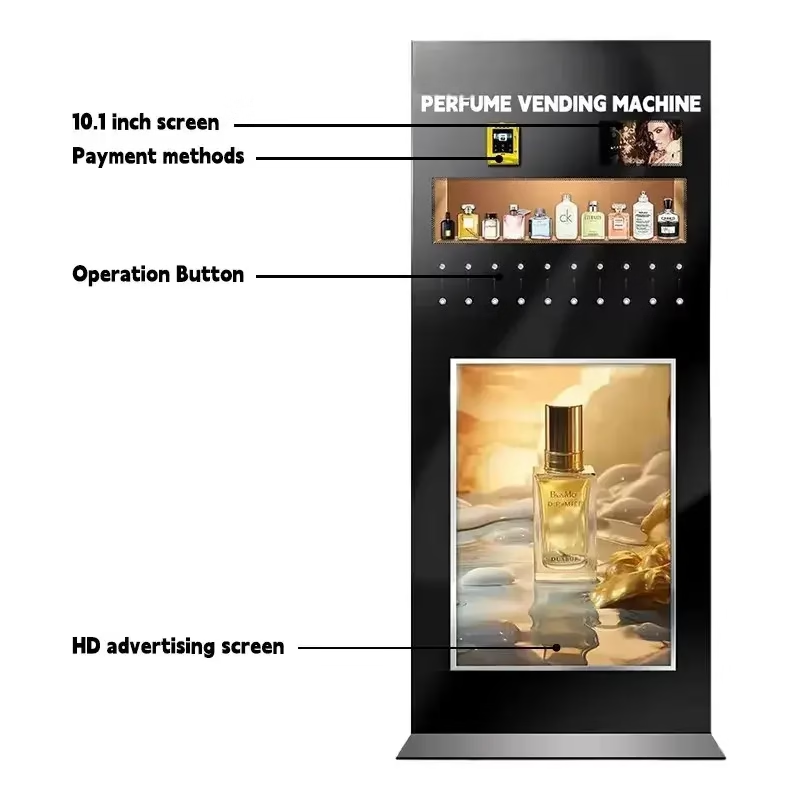
Table of Contents
- What makes this machine different from a standard perfume vending machine?
- What should buyers define in the physical structure?
- How should the liquid and atomizer system be planned?
- What software, payment, and alert functions matter most?
- How should the prototype fit hotels, barber shops, and premium venues?
- What should buyers include in the prototype RFQ?
- How should brands plan prototype timeline and approvals?
- What maintenance, warranty, and support questions matter early?
- How should buyers evaluate a supplier for a premium fragrance machine?
- How should buyers judge pilot readiness and first-venue success?
- What should buyers define for export, commissioning, and first 90 days?
- What should brands learn from the first 90 days before scaling?
- FAQ
What Makes This Machine Different From a Standard Perfume Vending Machine?
A standard perfume vending machine usually focuses on retailing samples, travel-size bottles, or beauty products through a familiar vending flow: select, pay, vend, and collect. A luxury fragrance spray vending machine is different because the product is not only the liquid. The product is the customer experience of receiving a controlled spray in a premium environment.
That changes the engineering brief. The buyer is not only asking whether a fragrance can be sold. They are asking whether the machine can deliver a clean atomized spray at neck height, maintain a luxury look, support fast contactless payment, and stay easy to refill for venue staff. The cabinet, control logic, and maintenance model all become more specialized.
This is why the search intent behind this type of project is closer to prototype definition and supplier evaluation than to normal vending-machine education. The buyer wants to know if the machine can truly be built, how the prototype should be scoped, and which details will create hidden cost later.
| Project Type | Main Goal | Engineering Focus |
|---|---|---|
| Sample bottle vending | Dispense packaged product | Product delivery and stock density |
| Travel-size fragrance retail | Sell small fragrance units | SKU management and retail conversion |
| Luxury fragrance spray machine | Deliver premium direct spray experience | Atomizer stability, customer ergonomics, liquid management, payment, alerts, and cabinet feel |
This is also why this new cluster should sit beside your existing perfume vending content, not replace it. The current pages about sample retail, travel retail, launch, KPI, and maintenance are still useful. This prototype branch goes one level deeper into the engineering and operator questions that a serious custom buyer will ask before paying for development.
What Should Buyers Define in the Physical Structure?
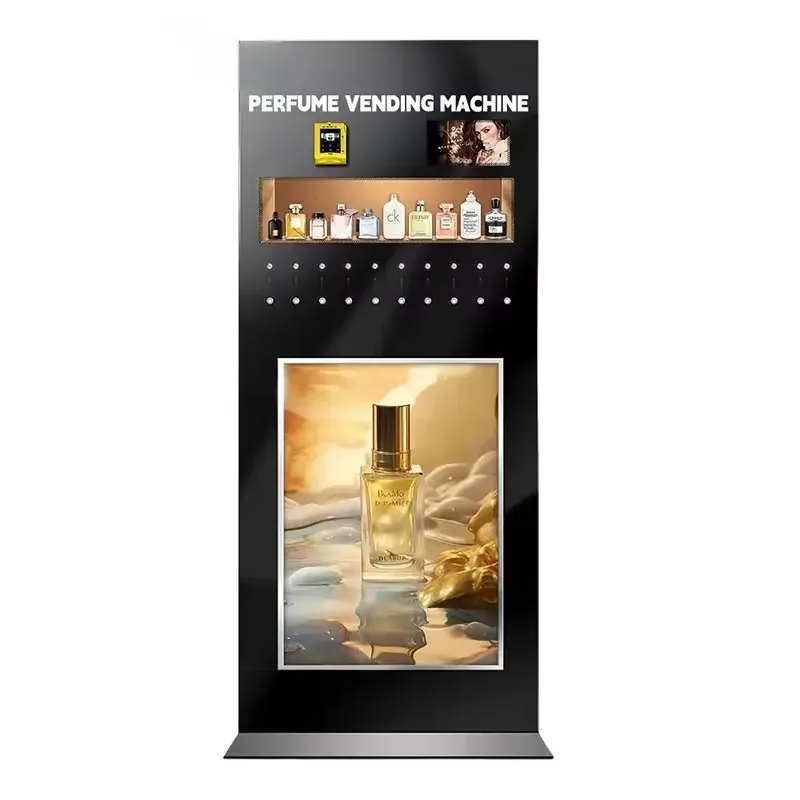
The physical structure should start from user flow. In the inquiry you shared, the customer already gave several high-value clues: luxury black gloss cabinet, premium LED lighting, touchscreen selection, 10 fragrance positions, a neck-height spray area, lockable cabinet, and easy refill access. That is already enough to frame the first engineering direction.
For a premium venue machine, slim footprint matters more than maximum storage. Hotels, barber shops, and nightlife venues usually care about appearance, aisle friendliness, and brand impact. A cabinet that is too deep or too industrial can weaken the luxury impression even if it is technically functional.
The spray zone also needs ergonomic definition. Buyers should confirm whether the user stands directly in front of the machine, whether the spray is triggered after payment or after a second confirmation, whether the machine should support one spray or multiple short sprays, and what physical distance should exist between the face area and the nozzle assembly.
Security and refill access should be defined together. A luxury spray machine may look minimal outside, but inside it still needs service-friendly access to liquid containers, atomizer components, sensors, payment hardware, and wiring. If refill access is awkward, every maintenance visit becomes slower and more expensive.
| Structural Choice | Why It Matters | Risk If Undefined Early |
|---|---|---|
| Slim footprint | Fits premium venues without blocking traffic | Prototype may need cabinet redesign after venue review |
| Spray zone height and distance | Affects comfort and repeatability | Poor user experience or overspray |
| Service door layout | Controls refill speed and security | Long maintenance time and higher labor cost |
| Lighting and gloss finish | Creates premium brand impression | Machine feels generic or too retail-oriented |
How Should the Liquid and Atomizer System Be Planned?
The liquid system is one of the most important engineering decisions in a fragrance spray prototype. Buyers usually need to choose between using original fragrance bottles internally or using a refill-container architecture designed for easier service and lower operating cost. That one decision changes maintenance, authenticity, hygiene planning, and cabinet layout.
Original bottles may support brand authenticity and simpler product sourcing for some operators, but they can create more mechanical variation because bottle shape, cap design, and pump interfaces differ by fragrance. Refill-container systems are more controlled from an engineering viewpoint, but they need stronger operational discipline to keep liquids labeled, clean, and traceable.
Atomizer stability matters just as much as storage. The buyer should define how fine the spray should feel, how many uses each container should support, how the system behaves after a period of non-use, and how the machine avoids drips or inconsistent spray volume. A beautiful prototype will still fail in the field if the atomizer experience feels weak or messy.
This is also where maintenance planning connects directly to prototype design. Fragrance projects need a practical refill SOP, not just a concept render. The internal liquid layout should be designed for predictable cleaning, stable tubing paths, and low chance of contamination or leakage.
| Liquid Architecture | Best For | Trade-Off |
|---|---|---|
| Original bottles | Brand authenticity and simple sourcing | Less uniform hardware fit and more variation by bottle |
| Refill containers | Scalable maintenance and controlled internal layout | Needs stricter refill process and traceability |
What Software, Payment, and Alert Functions Matter Most?
For this kind of prototype, software scope should be built around the venue and the operator workflow. The customer inquiry already points to the right priorities: Apple Pay and Google Pay, WiFi or internet connection, low-fragrance sensor notifications, admin dashboard or mobile alerts, ad-screen capability, and winner notification logic.
Payment matters because the machine is expected to operate in premium commercial venues where the customer wants a fast and familiar transaction. The project should be scoped together with pages like payment system selection and operator software features, because payment approval, spray activation, and reporting logic must line up cleanly.
Low-fragrance alerts are not a decorative feature. They directly affect venue reliability. If the machine sits in a hotel lobby or barber shop and the user pays but the fragrance line is empty, the brand impression suffers immediately. Buyers should define what alert is triggered, who receives it, and whether it should appear in a dashboard, mobile message, or both.
The giveaway or winner-notification function should also be scoped early. There is a difference between a random free spray reward, a promotional giveaway, a loyalty-based reward, and a gamified luxury moment. Each one affects campaign logic, event records, and how the UI should communicate success or surprise.
Advertising and promotional content are another important branch. If the buyer wants different venues to run different messages, cloud content updates should be part of the project brief. That turns the screen from a static display into a campaign management tool.
How Should the Prototype Fit Hotels, Barber Shops, and Premium Venues?
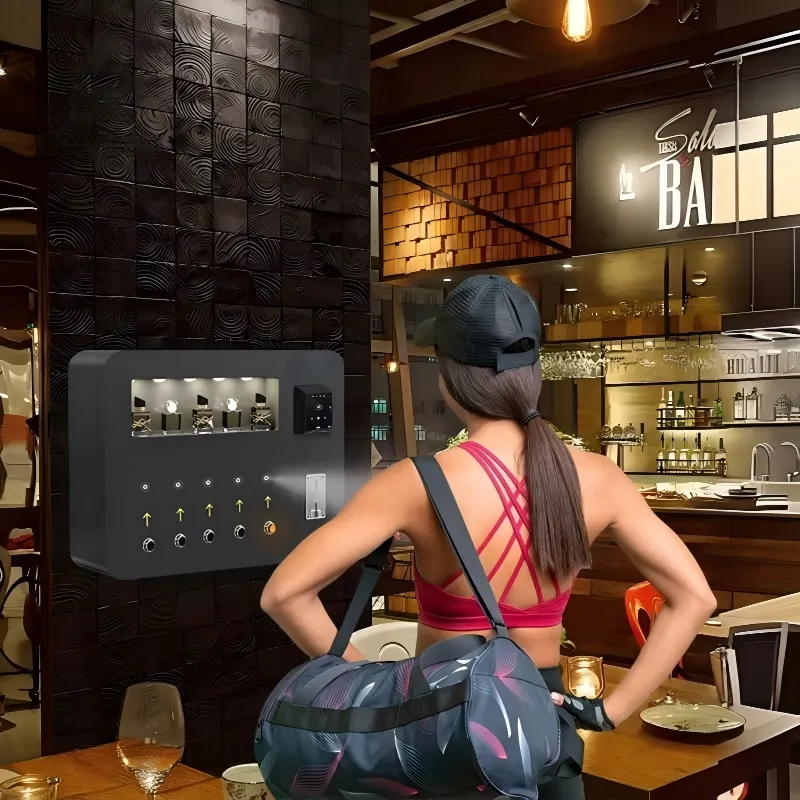
Venue fit is not just about where the machine can physically stand. It is about whether the user experience matches the social environment. Hotels may need a quiet premium interaction, with elegant lighting, clear payment, and minimal clutter. Barber shops may accept a bolder branded presence with stronger black-gloss identity. Nightlife venues may benefit from stronger sound-and-light interaction or giveaway logic.
That means the same fragrance spray machine should not automatically be copied unchanged across every venue type. A prototype can still be flexible, but the buyer should define which use case is primary. If the first target is boutique hotels, the design choices may be different from a machine intended for nightlife promotions.
The venue also affects maintenance expectations. In some locations, on-site staff may only provide basic supervision and the operator must do all refills. In others, a brand activation team may visit frequently. This changes how visible the cabinet can be, how much storage it needs, and how dashboard notifications should be routed.
Existing pages like hotel and travel retail guidance and location planning already cover broader venue strategy. This prototype guide adds the narrower question of what the venue means for cabinet proportion, spray flow, and premium perception.
What Should Buyers Include in the Prototype RFQ?
A strong prototype RFQ should describe the machine as a system, not just a mood board. Many custom projects slow down because the buyer only sends a visual concept and a short list of desired features. The supplier then has to guess how the machine should operate, which usually leads to multiple rounds of clarification and less accurate pricing.
Prototype Requirement Checklist
Before requesting a formal prototype quote, the buyer should prepare these details:
- Target venue type and whether one venue model is primary
- Fragrance count, men’s and women’s slot logic, and whether fragrances rotate by campaign
- Preferred liquid system: original bottles or refill containers
- Desired spray interaction: one spray, multiple sprays, or reward-based sprays
- Preferred payment methods and country-specific requirements
- Dashboard and alert expectations, including who receives low-fragrance notifications
- Need for cloud screen content updates, promotional campaigns, or giveaway events
- Preferred cabinet dimensions or venue space limits
- Warranty expectations, maintenance model, and shipping destination such as Australia
The more clearly these details are defined, the easier it is for the factory to estimate prototype cost, timeline, software scope, and maintenance strategy. That improves the quote and also reduces the chance of expensive redesign later.
How Should Brands Plan Prototype Timeline and Approvals?
Luxury fragrance spray projects move faster when the buyer treats the prototype like a gated engineering project rather than a mood-driven creative request. The first gate is concept definition: venue model, spray logic, fragrance count, payment method, refill architecture, and dashboard scope. Without this step, the factory cannot give a dependable prototype layout or a meaningful timeline.
The second gate is layout confirmation. Buyers should confirm cabinet proportion, spray-zone height, screen area, service-door access, and core electronics placement before expecting the machine to enter build. This is especially important in projects where appearance is part of the business model. A premium prototype often needs more review on materials, visual finish, and customer posture than an industrial machine or a basic snack cabinet.
The third gate is functional testing. A fragrance prototype should not only power on and look attractive. It should prove that spray delivery, payment, alert logic, and refill access all work in a repeatable way. If the buyer wants the machine to be shown to venue partners, hotel groups, or investors, then the timeline should also include enough margin for finishing changes and presentation-level quality control.
| Prototype Stage | What Should Be Confirmed | Why It Prevents Delay |
|---|---|---|
| Concept definition | Venue type, spray logic, fragrance count, payment, dashboard scope | Reduces engineering guesswork |
| Layout approval | Cabinet proportions, service access, screen position, spray-zone height | Avoids redraw and cabinet rework |
| Functional test | Atomizer stability, payment, alerts, refill access, screen behavior | Prevents cosmetic-only prototypes |
| Launch prep | Packaging, shipping, local commissioning, support handoff | Protects real venue rollout |
What Maintenance, Warranty, and Support Questions Matter Early?
Many prototype buyers focus on what the machine can do, but not enough on how it will be supported after delivery. A fragrance machine is not only an electronics project. It is a service project. Buyers should ask what spare parts are recommended, which components are normal wear items, how liquid handling is cleaned, and what evidence the factory will want if a field problem appears.
Warranty conversations also become more useful when buyers separate hardware, software, and consumable logic. For example, cabinet and screen issues are different from payment-provider issues or refill-process mistakes. A premium machine needs a support model that explains how the team should report spray inconsistency, low-liquid false alerts, payment disputes, or damaged finish after freight. Clear expectations reduce frustration later.
Support planning should also be linked to the venue model. A machine in one flagship location may be maintained directly by the founder. A machine in several hotels or barber shops may need a distributor or local technician workflow. If the buyer wants scale, support planning should start in prototype phase, not after the first venue launch.
How Should Buyers Evaluate a Supplier for a Premium Fragrance Machine?
The strongest suppliers in this niche do more than say yes to a feature list. They can explain how the spray system is controlled, how refill access affects cabinet layout, how payment and dashboard logic connect to venue operations, and what should be tested before shipment. In other words, the right supplier shows engineering judgment, not only enthusiasm.
Buyers should ask whether the supplier understands beauty activation logic, premium venue appearance, unattended payment, and notification workflows. It is not enough to know vending generally. This type of machine sits between retail hardware, campaign experience, and service design. The supplier should be able to talk about all three.
A useful supplier conversation also includes limits. If a requested reward effect is too complex for phase one, or if a liquid-system choice creates maintenance risk, a good supplier should say so clearly. That kind of honesty is not a weakness. It is usually a sign that the prototype will move with fewer expensive surprises.
How Should Buyers Judge Pilot Readiness and First-Venue Success?
A luxury fragrance spray prototype should not be judged only by whether it impresses at first sight. The stronger test is whether the machine can hold together through real paid use, refills, and venue feedback. Buyers should therefore define a pilot-success framework before the machine ships. That framework should include machine uptime, spray consistency, payment success, refill effort, customer hesitation points, and how venue staff respond to the cabinet in daily use.
In practical terms, a first-venue pilot should answer several questions. Do users understand the fragrance-selection flow without staff help? Does the spray feel premium enough that people would repeat the interaction or recommend it? Can staff refill and reset the machine without turning maintenance into a backstage event? Do low-liquid alerts arrive early enough to prevent empty-line failures? And does the payment-and-dashboard workflow give the operator enough confidence to manage disputes or campaign changes?
Luxury machines are often judged by brand teams and operational teams at the same time. The pilot should therefore include both emotional and operational metrics. Brand teams may watch for attention, premium feel, and social response. Operations may watch for refill rhythm, fault rate, and service burden. A good prototype earns trust from both sides.
| Pilot Signal | What It Shows | Why It Matters |
|---|---|---|
| Repeat use or venue curiosity | Whether the concept feels attractive enough to revisit | Helps validate brand and venue fit |
| Spray consistency across several days | Whether atomizer performance is stable | Protects premium experience |
| Refill time and service effort | Whether the maintenance model is realistic | Shows whether the concept scales |
| Payment and dashboard clarity | Whether the operator can trust the data | Reduces launch anxiety and disputes |
What Should Buyers Define for Export, Commissioning, and First 90 Days?
Because these projects often move across borders, export readiness should be included in the prototype conversation. Buyers shipping to Australia or other international destinations should define packaging expectations, plug and voltage assumptions, payment activation responsibility, and whether local connectivity setup happens before or after installation. The more premium the cabinet finish is, the more important freight protection becomes.
Commissioning should also be planned as part of the first 90 days. Who receives the machine? Who positions it? Who checks the spray zone, payment terminal, lighting behavior, and dashboard connection? What evidence should be sent back to the factory if the first venue experiences a fault? These questions determine whether the first launch feels controlled or improvised.
The first 90 days are where the prototype either turns into a scalable concept or remains a one-off curiosity. Buyers should review usage pattern, refill difficulty, venue feedback, campaign performance, and any software or hardware weak points. That review usually produces the best priorities for version two. In other words, the prototype should not only prove that the idea is possible. It should teach the buyer what the next production version should improve.
What Should Brands Learn From the First 90 Days Before Scaling?
The first 90 days should be treated as a learning loop, not only as a launch period. A premium fragrance spray machine can create strong early curiosity, but buyers still need to understand which parts of the concept are repeatable and which parts are only launch excitement. That means reviewing fragrance usage by slot, refill frequency, payment friction, venue comments, spray consistency, and how often the machine required staff attention.
Operators should also watch for less obvious signals. Do certain venues prefer faster and simpler interaction while others respond better to richer storytelling? Does the machine perform differently when it is placed near reception, near a social area, or deeper inside a venue? Are staff becoming more confident with refill and reset tasks, or are they avoiding the machine because service feels too technical? These lessons often shape version two more than the initial render ever could.
In a strong project, the first 90-day review leads to decisions, not only observations. The buyer may simplify the fragrance menu, increase service training, adjust reward logic, revise dashboard alerts, or change the way the venue explains the machine to guests. A prototype becomes valuable when it teaches the team how to build the next machine with fewer assumptions and stronger operational confidence.
At this stage, supplier alignment matters as much as feature ambition. A buyer who can clearly explain venue fit, spray logic, refill model, payment expectations, and support expectations will usually get a faster and more realistic engineering response. That clarity is one of the strongest ways to turn a luxury concept into a workable prototype.
That is also why prototype documentation matters. Photos, service notes, venue feedback, and dashboard logs from the first machine become the raw material for a stronger second version and for more credible conversations with investors, distributors, and premium venue partners.
FAQ
Is this the same as a standard perfume vending machine?
No. A luxury fragrance spray machine is closer to an experience machine, because the operator must control direct spray delivery, premium appearance, and venue-friendly maintenance rather than only packaged-product dispensing.
Should the prototype use original fragrance bottles or refill containers?
That depends on the operator model. Original bottles can support authenticity, while refill containers often support easier maintenance and a more controlled internal layout.
Can this kind of machine support Apple Pay and Google Pay?
Yes, if the payment architecture is defined early and matched to the target market, controller, and unattended-retail payment provider.
What usually changes prototype cost the most?
Cabinet finish, custom atomizer engineering, dashboard scope, premium lighting, payment integration, and the amount of custom testing usually have the biggest impact on prototype cost.
Related reading: Perfume Vending Machine Launch Checklist, Perfume Vending Machine Refill and Maintenance Guide, and Custom Vending Machine Payment System Guide.
If you are moving from concept definition into validation, continue with how buyers should test a luxury fragrance spray vending machine prototype before production and how long a luxury fragrance vending machine prototype usually takes.
Brands that are still deciding between a compact sample-retail model and a direct-spray premium concept should also read Perfume Sample Vending Machine vs Luxury Fragrance Spray Machine: Which Model Fits Your Brand? before locking the prototype path.
Before the prototype brief is finalized, buyers should also define channel count and assortment logic. This guide can help: How Many Fragrance Slots Should a Perfume Vending Machine Have?
Related OBOvending Guides
Continue with these related buyer guides if you are comparing luxury fragrance spray concepts, prototype cost, launch planning, payment, and maintenance.
- How Much Does a Perfume Vending Machine Cost for Brand Sampling and Retail?
- Perfume Vending Machine Launch Checklist: From Samples to Retail Data
- How Should Brands Manage Perfume Vending Machine Refills and Maintenance?
- How Should B2B Buyers Choose a Payment System for Custom Vending Machines?
- What Software Features Do Custom Vending Machine Operators Really Need?
- Where Should Brands Place Perfume Vending Machines for the Best Results?
- Spanish version: Prototipo de máquina vending de perfume de lujo: qué debe definir una marca antes del desarrollo
 Privacy respected. No spam. Ever.
For venue-first concepts, it also helps to review how a luxury fragrance spray machine revenue-share model for hotels, casinos, and nightlife venues changes dashboard design, operator commitments, and rollout planning before the first machine goes live.
For broader airport and premium retail concepts, the more complete luxury fragrance retail terminal for airports and premium commercial centers explains how product mix, dispensing, and region-specific planning fit together.
Even the early prototype discussion becomes stronger once buyers define why premium fragrance retail terminals need robotic no-drop dispensing for glass products instead of assuming standard vending delivery will be enough.