
A perfume vending machine launch should be planned like a controlled offline sampling and mini-retail project, not just a machine purchase. Beauty brands need the right sample format, packaging, location, payment flow, refill routine, compliance review, and data dashboard before the first machine goes live.
This guide gives fragrance brands, distributors, hotel retail buyers, mall operators, and vending project teams a practical launch checklist before requesting an OEM or ODM quote from OBOvending.
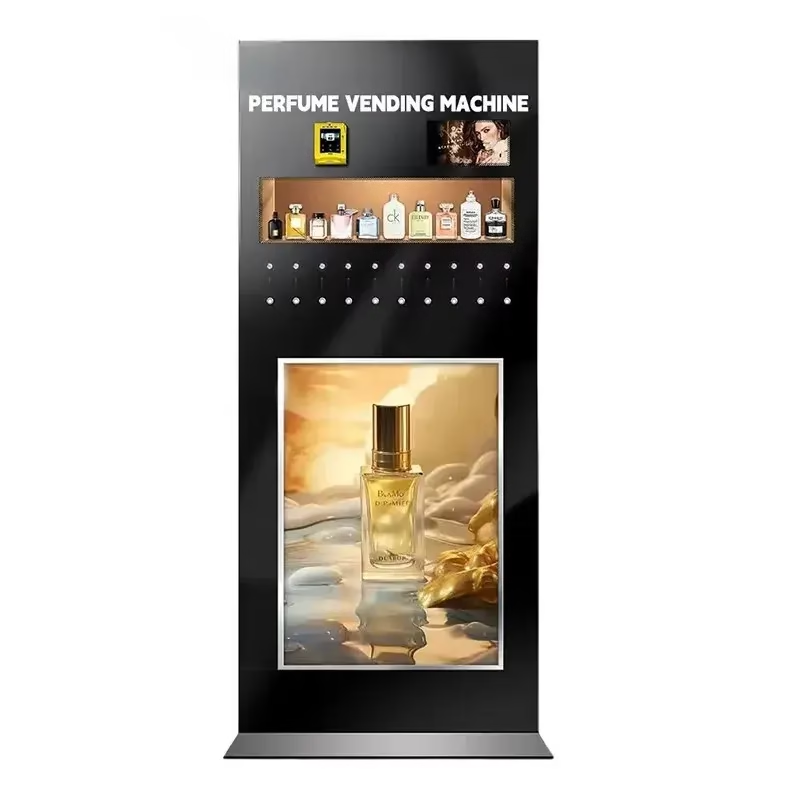
A stronger launch brief starts with the right machine model. If your team is comparing sample-led rollout with a premium fragrance-spray concept, review Perfume Sample Vending Machine vs Luxury Fragrance Spray Machine before locking the launch checklist.
A launch plan should also define how the assortment will change after day one. For that next layer of planning, see How Should Brands Rotate Fragrance SKUs by Season, Venue, and Campaign?
- Topic: perfume vending machine launch checklist for beauty and fragrance brands.
- Best for: fragrance brands, distributors, hotel retail teams, travel retail buyers, mall operators, and OEM vending project managers.
- Key answer: plan product format, packaging, machine structure, location, payment, refills, compliance, data and after-sales before approving the machine design.
- Evidence used: OBOvending perfume vending product specifications, IFRA fragrance safety standards context, FDA cosmetic labeling guidance, and European Commission fragrance allergen labeling context.
- Quote step: send product size, sample volume, SKU count, target location, payment market, refill routine, branding needs, and compliance assumptions to OBOvending.
A perfume vending machine can look like a simple retail novelty, but the useful business question is deeper: can the machine help a brand test demand, sell samples, reduce staff dependency, and collect location-level retail data without damaging the premium fragrance experience? If the answer is yes, the machine becomes a controlled offline channel. If the project is only a cabinet with bottles inside, it will be hard to scale.
This article is written for B2B buyers who already understand the appeal of fragrance vending but need a practical launch checklist. It does not promise guaranteed profit. Instead, it explains what must be prepared before design, quotation, production and installation.
What is the real search intent behind a perfume vending launch?
The search intent behind this topic is commercial investigation. A buyer is not only asking what a perfume vending machine is. They want to know how to launch one correctly. They may be a beauty brand testing travel-size products, a distributor building a retail route, a hotel group improving guest convenience, or a mall operator looking for small-format premium retail.
The buyer’s real barriers are practical: Will the bottle fit? Can fragile glass be dispensed safely? How many SKUs should be loaded? Can the machine accept local payment? Who refills it? Can the screen explain scent notes clearly? Can the brand track which fragrance sells in which location? These questions should shape the machine design.
| Buyer Question | Why It Matters | Launch Decision |
|---|---|---|
| What will be sold? | sample vial, 5 ml mini, 10 ml travel spray, discovery set or full bottle | defines channel size and dispensing |
| Where will it be placed? | hotel, airport, mall, event, gym or beauty store | defines interface and cabinet design |
| Who refills it? | brand team, distributor, hotel staff or operator | defines inventory workflow |
| What data is needed? | SKU sales, location, time, payment and stock | defines dashboard scope |
Choose the product format before choosing the machine
Product format should come before machine structure. A perfume sample vial has different requirements from a boxed travel spray. A discovery set may need a locker-style compartment, while single small bottles may use a spring, tray, push, locker or custom dispensing method. If the buyer chooses the machine before the product format, redesign risk increases.
For many beauty brands, the strongest first launch format is not a full bottle. It is a paid sample, mini spray, travel-size SKU, or curated discovery kit. These lower the purchase barrier and make vending feel natural. Full-size fragrance can work in some locations, but it needs stronger security, premium presentation and clearer customer trust.
| Product Format | Best Use Case | Machine Concern |
|---|---|---|
| 1-2 ml sample vial | low-cost trial and scent discovery | small item control and packaging |
| 5-10 ml travel spray | hotel, airport and travel retail | bottle protection and premium display |
| Discovery set | brand launch and gifting | compartment size and SKU labeling |
| Full bottle | high-value retail | security, payment and anti-theft design |
Confirm packaging and dispensing safety
Perfume packaging must survive storage, vibration, dispensing and customer handling. Glass bottles, atomizers, paper boxes and sample cards may look fine on a shelf but behave differently inside a vending mechanism. OBOvending should request real samples before confirming the channel structure.
Important checks include maximum product size, weight, center of gravity, fragility, box stiffness, surface friction, barcode position, label readability and whether the product can jam. If the package is too light, too narrow or too fragile, the machine may need a custom tray, guide rail, locker cell or protective carton.
Packaging also affects brand feeling. A luxury fragrance sample should not arrive scratched, crushed or upside down. The dispensing experience should support the brand, not make it feel like a cheap impulse item.
Match the location to the customer moment
A good location is where the customer has a reason to try fragrance. Hotels and airports fit travel-size fragrance. Malls fit discovery and impulse gifting. Beauty stores fit sampling and conversion. Gyms may fit body mist or post-workout freshening products. Events fit limited-edition launches and audience testing.
The location should also support refilling, power, connectivity, customer flow and security. A machine hidden in a low-traffic corner may collect little data. A machine in a premium hotel lobby may need quieter design, elegant graphics and simplified payment. A mall machine may need stronger visual attraction and larger screen content.
| Location | Customer Moment | Recommended Product |
|---|---|---|
| Hotel lobby | forgot fragrance or wants travel convenience | travel spray and discovery set |
| Airport | travel-size purchase and gifting | mini spray and premium sample |
| Mall | beauty discovery and impulse gift | discovery set and mini bottle |
| Brand event | new scent launch and data collection | samples and limited edition |
| Gym or spa | freshening and personal care | body mist or compact fragrance product |
Plan payment, screen flow, and customer trust
Payment and screen flow should feel premium and clear. The customer should understand fragrance name, scent family, size, price, stock status and refund path before payment. If the product is a sample, the page should explain what the customer receives. If the product is a discovery set, the screen should show included scents.
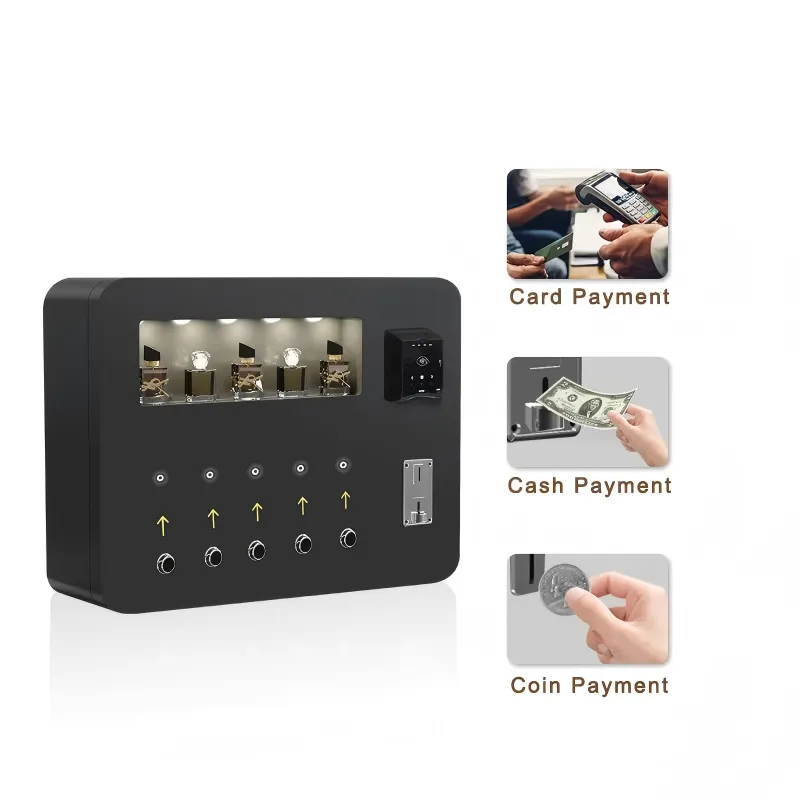
Cashless payment is often important in beauty and travel retail. Card, tap-to-pay, mobile wallet and local payment methods should be chosen by target market. The payment module should be placed where the customer naturally looks after product selection. Failed dispense handling should also be defined so customer support does not become messy.
Build a refill and maintenance workflow
Refill planning decides whether the project can scale. The operator should know who opens the machine, how SKUs are loaded, how stock is counted, how expired or damaged items are removed, how sales data triggers replenishment, and how samples are stored before loading. A beautiful machine with unclear refill responsibility becomes a weak channel.
Maintenance for perfume vending is not only mechanical. It includes cleaning display surfaces, checking product labels, verifying payment, inspecting dispense paths, confirming screen content and keeping fragrance packaging presentable. If the machine is placed in hotels or premium retail, appearance matters almost as much as uptime.
| Workflow Item | Owner to Define | Why It Matters |
|---|---|---|
| Refill schedule | brand, operator or site staff | prevents stockouts |
| SKU map | operator and dashboard | prevents wrong product loading |
| Cleaning | site or service team | protects premium image |
| Payment faults | operator or supplier support | protects customer trust |
| Content update | brand marketing team | keeps scent story current |
Check compliance and fragrance documentation
Fragrance and cosmetic rules vary by market. Brands should review labeling, ingredient and allergen requirements before vending products in a target country. IFRA explains that its Standards are part of the fragrance industry safety framework, and official cosmetic labeling guidance such as the FDA Cosmetics Labeling Guide or European Commission fragrance allergen resources may be relevant depending on market.
For vending projects, compliance is also practical. The machine should not hide required product information. If the package is small, the screen can help show product name, size, usage notes, brand contact and other buyer-facing information, but the brand must confirm what is legally acceptable in each market. OBOvending can provide machine and screen structure; the brand should own fragrance compliance.
Useful reference context: IFRA Standards, FDA allergen information for cosmetics, and European Commission fragrance allergen labeling context.
Define the data dashboard before launch
A perfume vending project should define data before launch. The dashboard should answer the brand’s real questions: Which scent sells fastest? Which location converts best? Which time period performs? Which SKU gets views but few purchases? How often does the machine run low? Which payment method is most used?
Data is especially valuable for new fragrance launches. A brand can test scent families, price points, sample formats and locations before committing to wider retail inventory. This is one reason vending can be more than a sales cabinet: it can be an offline testing channel.
| Data Field | Business Use |
|---|---|
| Sales by SKU | identify winning scents |
| Sales by location | compare hotels, malls, airports or events |
| Sales by time | plan promotions and refill timing |
| Stock level | avoid out-of-stock loss |
| Failed transactions | improve payment and service workflow |
| Screen content performance | test scent story and offer design |
What to send OBOvending for a quote
A useful quote request should include product photos, exact dimensions, package weight, SKU count, expected capacity, target location, payment methods, network options, machine size limits, branding files, language, refill owner, dashboard needs and compliance notes. If the buyer has not finalized packaging, send sample options and ask for mechanism advice before mass packaging production.
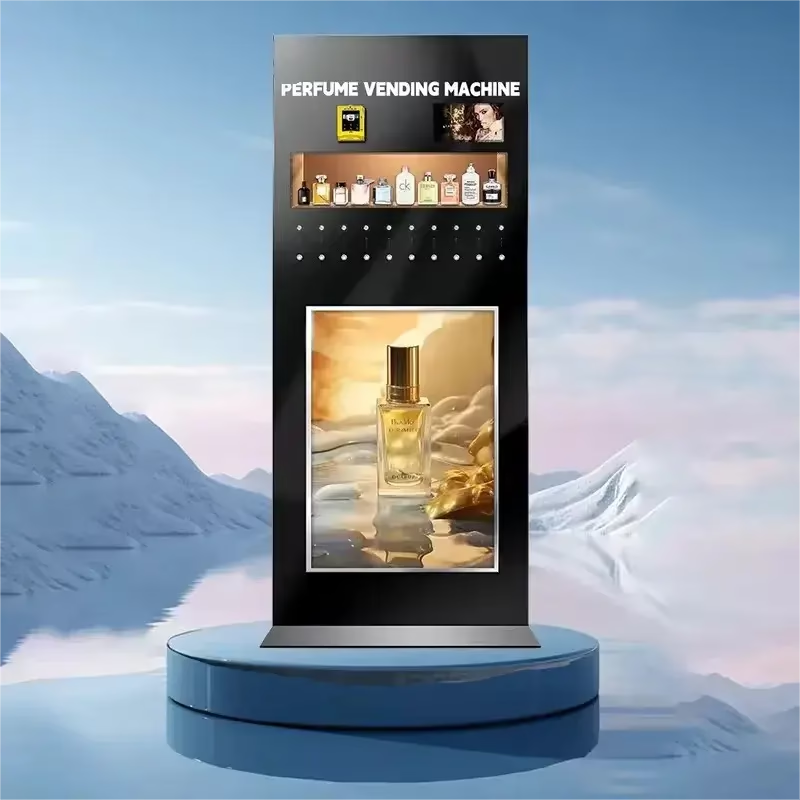
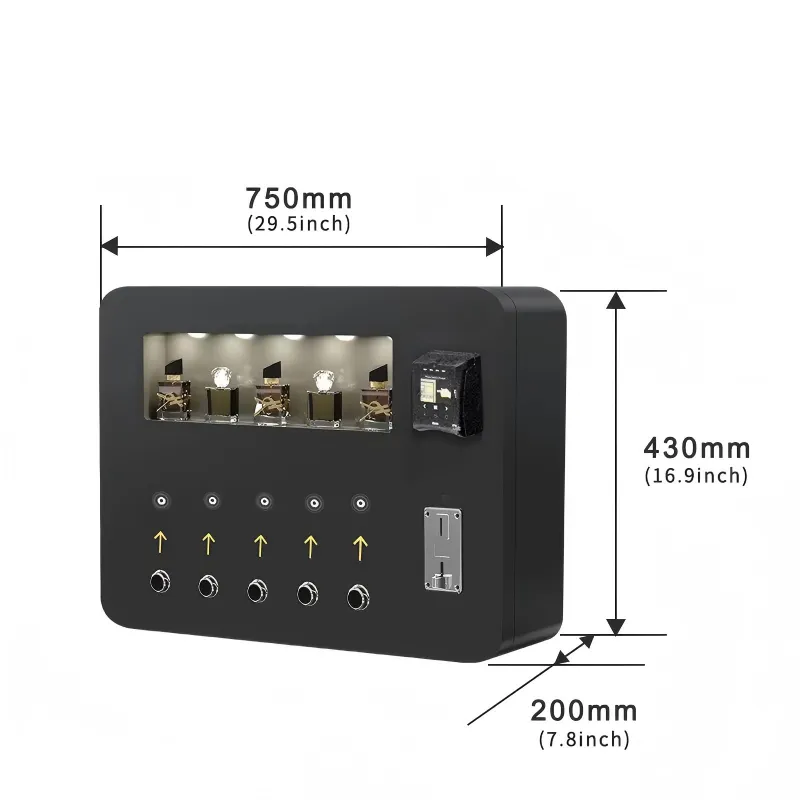
OBOvending can then recommend whether the project should use a standing advertising-screen perfume machine, a compact wall-mounted machine, a locker-style structure, a spring/tray structure, or a custom mechanism. Related reading: perfume vending machine cost, sampling campaign KPIs, refill and maintenance, hotel and travel retail, and custom vending software integration.
| Quote Input | Example |
|---|---|
| Product size | sample vial, travel spray, boxed set |
| Capacity target | number of SKUs and units per SKU |
| Location | hotel, mall, airport, event, spa |
| Payment | card, tap, wallet, local QR |
| Software | dashboard, inventory, API, reports |
| Branding | exterior graphics and screen content |
FAQ
What should a brand prepare before ordering a perfume vending machine?
Prepare product dimensions, sample volume, SKU count, packaging photos, target locations, payment methods, refill workflow, brand graphics, and local compliance requirements.
Is a perfume vending machine mainly for sales or sampling?
It can support both. Many brands use it for paid samples, travel-size products, discovery sets, hotel amenities, and offline demand testing before wider retail expansion.
Can the machine be customized for different fragrance bottle sizes?
Yes, but bottle size, weight, fragility and packaging must be confirmed before the dispensing structure is designed.
Should compliance be checked before launch?
Yes. Fragrance and cosmetic labeling requirements vary by market, so brands should review local rules before using vending as a retail channel.
A successful perfume vending machine launch is built before the machine is produced. When the product, packaging, location, payment, refill workflow, compliance and data plan are clear, the equipment can support the brand instead of becoming an expensive experiment.
Payment and Software Planning Notes
When buyers compare perfume vending launch planning, payment flow, local payment coverage, dashboard records, and cashless system cost can change both the prototype scope and the long-term operating model. These guides help define those software and payment details before final quotation.
- local payment methods for custom vending machines
- vending machine dashboard specifications
- vending machine payment API integration
 Privacy respected. No spam. Ever.
Related Launch and Site-Readiness Guides
Perfume projects often succeed or fail on operational details rather than concept quality. These pages help brand teams think through retail access, technical setup, and machine behavior before launch day.
- How to Move a Vending Machine Into a Mall or Retail Space: Route Planning, Freight Elevators, and Delivery Constraints
- Vending Machine Site Survey Checklist: Power, Network, Floor Load, Door Width, and Refill Access
- How Does a Smart Vending Machine Work? Controller, Payment, Sensors, and Dispensing Explained