
This page helps B2B buyers estimate the cost of a perfume vending machine used for brand sampling, travel-size retail, or mixed beauty merchandising. It explains which cost layers matter most: cabinet style, payment hardware, SKU count, software, refill workflow, screen size, and branding scope.
The main conclusion is that perfume-machine pricing changes more with commercial model and customization scope than with the word perfume itself. Buyers should separate standard sampling/retail layouts from premium spray-experience prototypes before they request pricing.
Executive Summary
A perfume vending machine usually costs more or less depending on product format, cabinet finish, spray or bottle dispensing structure, payment system, touchscreen software, branding, fragrance capacity, and after-sales requirements. Buyers should compare total project cost, not only machine price.
For fragrance brands, distributors, venue operators, and entrepreneurs, the real question is not just 鈥淗ow much is the machine?鈥?It is 鈥淲hich cost structure matches my selling model: pay-per-spray, paid samples, travel-size bottles, or branded campaign activation?鈥?/p>
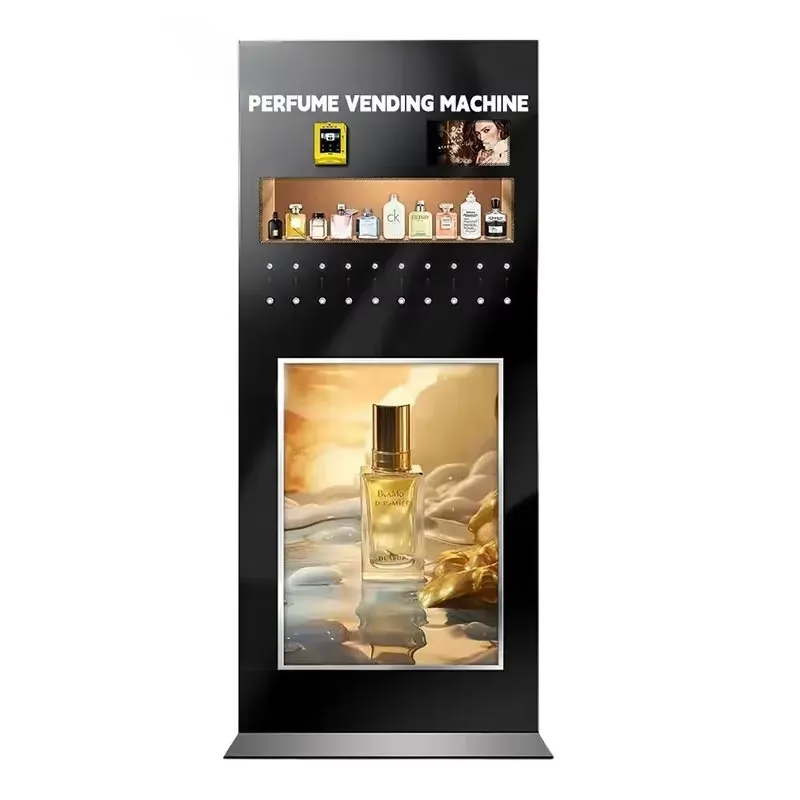
Perfume vending machines can be used in malls, hotels, gyms, airports, nightlife venues, tourist areas, and beauty retail corridors. The business model may look simple from the outside, but cost planning has several layers: the machine, fragrance supply, packaging, location rent, payment fees, restocking, cleaning, maintenance, and possible software fees.
This guide explains how B2B buyers should evaluate perfume vending machine cost before requesting a quotation, launching a pilot, or scaling a fragrance vending project.
What Is the Real Search Intent Behind Perfume Vending Machine Cost?
When buyers search for perfume vending machine cost, they usually want a price range. But a useful answer must go further. A fragrance brand may be asking whether vending is cheaper than staffed sampling. A mall operator may be asking whether the machine can create rental income. An entrepreneur may be asking how long payback takes. A distributor may be asking whether the machine is scalable across many venues.
That means cost should be discussed as a project model, not only as equipment. Two machines that look similar in photos can have different costs if one sells metered sprays and the other dispenses sealed travel-size bottles. A machine with basic buttons costs differently from one with a touchscreen, cloud sales reports, custom UI, LED branding, and local payment integration.
What Drives Perfume Vending Machine Cost?
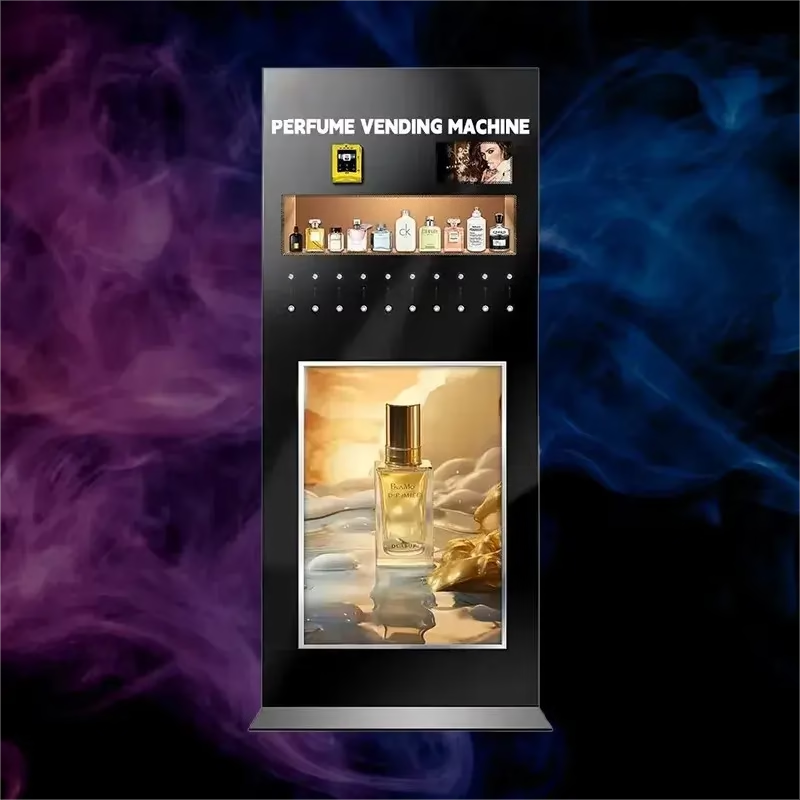
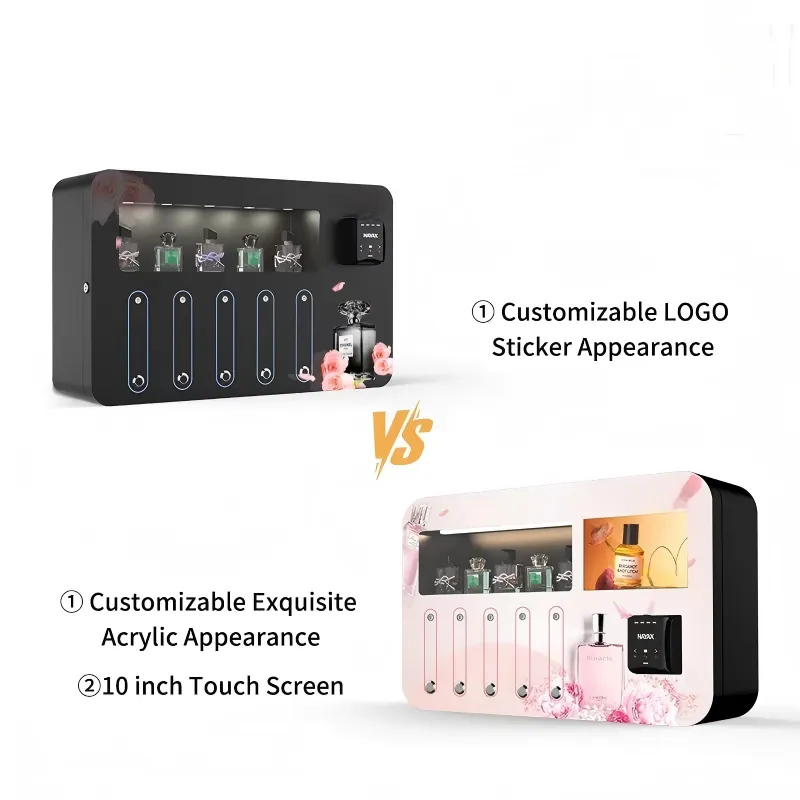
The largest cost drivers are structure, payment, software, branding, and product handling. A basic fragrance sampling machine may be simpler than a premium hotel or airport machine. A spray machine needs controlled dispensing and hygiene planning. A bottle machine needs product storage, delivery reliability, and pickup security. A luxury brand machine may need better finish, lighting, and screen design.
| Cost Driver | What It Includes | Why It Matters |
|---|---|---|
| Dispensing format | Spray module, sample unit, bottle tray, locker, or pusher | Determines engineering complexity and product reliability |
| Payment system | Card reader, QR payment, NFC, local wallet, settlement | Payment mismatch can reduce sales or delay launch |
| Touchscreen software | Language, product menu, price, promotions, sales reports | Controls user experience and operator visibility |
| Branding | Cabinet color, wrap, lighting, UI, product display | Perfume customers judge trust visually |
| Capacity | Number of scents, cartridges, bottles, or sample packs | Affects refill frequency and machine size |
| Compliance and location | Electrical documents, venue approval, local rules | Important for malls, airports, hotels, and export markets |
Which Perfume Vending Format Changes the Cost Most?
The selling format is the most important decision. A pay-per-spray machine may have lower product packaging cost, but it needs a reliable spray system, hygiene design, and fragrance cartridge control. A sample pack machine may be easier to understand for customers and better for brand discovery, but it needs packaging and dispensing that protects small units. A travel-size bottle machine can support higher transaction value, but it needs more secure product handling and a stronger retail presentation.
Brands should not choose the format only by machine cost. They should ask what customer behavior they want to create. A nightlife venue may sell quick refresh sprays. A hotel may sell travel-size bottles. A beauty brand campaign may sell low-cost samples that lead to online full-size purchases. Each model has different margin, refill, and maintenance logic.
How Should Buyers Calculate ROI?
ROI depends on revenue per transaction, daily transaction count, product cost, location cost, restocking labor, payment fees, fragrance refill cost, packaging, machine depreciation, and maintenance. A machine in a premium hotel with lower traffic may outperform a mall corridor if the average transaction value and brand trust are higher. A nightlife location may have strong impulse demand but higher security and maintenance requirements.
Buyers should model three scenarios: conservative, normal, and strong. The conservative case should include slower adoption, lower traffic, some refunds, restocking time, and possible location rent. If the machine only makes sense in the optimistic case, the buyer should reduce cost, improve location terms, or change product format before scaling.
| ROI Item | What to Estimate | Practical Comment |
|---|---|---|
| Average selling price | Spray price, sample price, or bottle price | Must match location and brand level |
| Daily transactions | Expected paid uses per machine per day | Use pilot data before scaling |
| Product cost | Fragrance, packaging, sample units, bottles | Spray models and bottle models differ greatly |
| Location cost | Rent, revenue share, or partnership fee | High traffic is not useful if rent removes margin |
| Service cost | Refill, cleaning, maintenance, travel | Often underestimated by first-time buyers |
What Hidden Costs Should Buyers Include?
Hidden costs usually appear after the machine is installed. Payment provider fees, SIM cards, software subscriptions, fragrance leakage, damaged packaging, slow-selling scents, cleaning labor, location commission, and spare parts can all affect profit. If the machine is used for a brand campaign, creative work, screen content, promotional pricing, and campaign reporting may also be part of the real cost.
For international buyers, shipping, import duty, customs documents, voltage, plug type, and local payment provider setup should be included. A cheap machine price can become expensive if the machine cannot connect to local payments or needs modification after arrival.
What Information Helps OBOvending Give a Better Quotation?
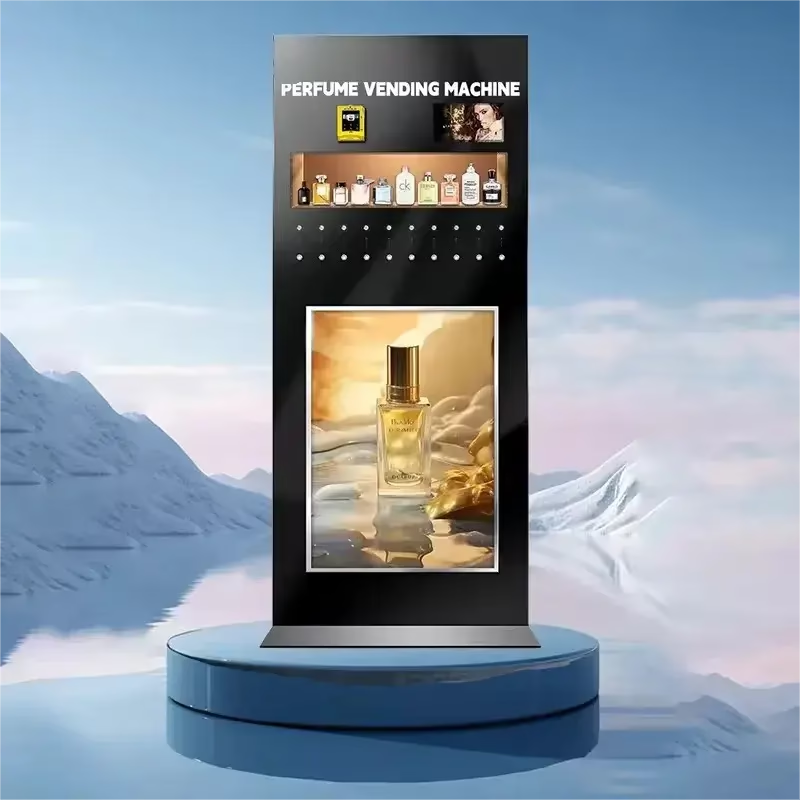
A good quotation needs a clear project brief. Buyers should provide the fragrance format, number of scents, bottle or sample size, target country, expected location, payment method, branding level, software needs, and pilot quantity. If the product contains alcohol or special cosmetic requirements, local compliance should be checked early.
- Spray, sample pack, travel-size bottle, or mixed selling model.
- Fragrance SKU count and refill method.
- Product dimensions, packaging photos, and target price.
- Target location: mall, hotel, gym, airport, nightlife, tourist area, or beauty store.
- Payment method: card, QR, NFC, local wallet, or membership.
- Branding requirements: cabinet color, wrap, lighting, touchscreen UI.
- Need for cloud sales reports, remote price updates, or campaign data.
- Target country, voltage, plug type, and certification expectations.
These details allow the factory to recommend a structure that fits the business model. Without them, the supplier can only give a rough estimate, and rough estimates often miss the real cost drivers.
How Can OBOvending Support a Perfume Vending Machine Project?
OBOvending can help buyers evaluate perfume vending machine structure, branding, payment, software, and export planning. For a sampling campaign, the focus may be fast customer interaction and scent-level sales data. For a travel-size retail project, the focus may be product display, secure dispensing, and premium presentation. For a nightlife refresh model, the focus may be durability, simple payment, and quick service.
The best first step is to define the sales model before asking for the lowest price. Once the sales model is clear, machine cost can be compared against revenue, operating cost, and brand value. That is how buyers avoid buying a machine that is cheap on paper but wrong for the location.
FAQ About Perfume Vending Machine Cost
Why do perfume vending machine prices vary so much?
Prices vary because spray systems, bottle dispensing, payment hardware, software, cabinet finish, branding, and capacity can be very different from one project to another.
Is a pay-per-spray machine cheaper than a bottle vending machine?
It may be cheaper in product packaging, but it can require more specialized spray control and hygiene design. The total project cost depends on the business model.
What is the biggest cost mistake?
The biggest mistake is comparing machine price without including fragrance supply, location cost, payment fees, restocking, maintenance, and slow-moving scent risk.
Can a perfume vending machine support brand sampling?
Yes. It can sell paid samples, distribute trial sizes, or support campaign activations while collecting location-level sales data.
What should I send before requesting a quote?
Send product format, fragrance count, package dimensions, target country, payment method, location type, branding level, and expected pilot quantity.
Related reading: How Can a Perfume Vending Machine Help Brands Sell Samples and Travel-Size Fragrances? and Best Locations for Perfume Vending Machines.
If pricing conversations are getting mixed between retail sample cabinets and luxury direct-spray concepts, compare the two models here: Perfume Sample Vending Machine vs Luxury Fragrance Spray Machine.
Payment and Software Planning Notes
When buyers compare perfume vending machine cost planning, payment flow, local payment coverage, dashboard records, and cashless system cost can change both the prototype scope and the long-term operating model. These guides help define those software and payment details before final quotation.
- cashless vending machine payment system cost factors
- local payment methods for custom vending machines
- vending machine dashboard specifications
Related Buyer Resources
- Perfume vending machine cost guide
- Perfume refill maintenance guide
- Hotel and travel retail perfume vending guide
FAQ
Is a perfume vending machine usually cheaper than a custom spray-experience machine?
Yes. A standard perfume machine for samples or travel-size retail is usually simpler than a luxury direct-spray prototype, which adds atomizer engineering, more software logic, and different testing requirements.
What cost item is most often underestimated?
Software and operational requirements are often underestimated. Buyers focus on cabinet appearance first, but dashboard needs, payment integration, and refill workflow can change the final budget significantly.
Does location type change machine cost?
Indirectly, yes. Hotels, airports, malls, and premium retail sites may require different cabinet finishes, security expectations, screen behavior, and payment flows.
Should prototype cost be separated from production-unit cost?
Definitely. Buyers should ask for prototype engineering, software scope, and production-unit pricing as separate layers so they can understand what belongs to development and what belongs to repeat manufacturing.
 Privacy respected. No spam. Ever.
Related Sampling and Retail Launch Guides
Perfume-machine pricing is only part of the project decision. Retail access rules, mall delivery constraints, and smart-machine setup details often shape the real launch budget.
- How to Move a Vending Machine Into a Mall or Retail Space: Route Planning, Freight Elevators, and Delivery Constraints
- Vending Machine Site Survey Checklist: Power, Network, Floor Load, Door Width, and Refill Access
- How Does a Smart Vending Machine Work? Controller, Payment, Sensors, and Dispensing Explained