
This page helps B2B buyers decide how many fragrance slots a perfume vending machine should have. It compares sample vending, travel-size retail, and luxury direct-spray concepts, and explains how slot count affects cabinet size, refill workload, software visibility, and project cost.
The main conclusion is that more fragrance slots are not automatically better. The right slot count depends on whether the machine is testing demand, selling compact fragrance SKUs, or creating a premium direct-spray experience where each channel adds service complexity and dashboard responsibility.
Executive Summary
Fragrance-slot planning is one of the first decisions that changes both the business model and the machine structure.
A buyer who asks for ten fragrance slots may be completely right for a luxury spray concept, but may be overscoping a phase-one sample machine. In the same way, a low slot count may keep a prototype manageable, but could become too restrictive if the commercial goal is broader travel-size retail or multi-scent discovery.
The best slot plan comes from aligning SKU strategy, venue behavior, refill labor, and dashboard visibility before RFQ. That helps the supplier recommend a cabinet that fits the real operating model instead of just fitting a long product wishlist.
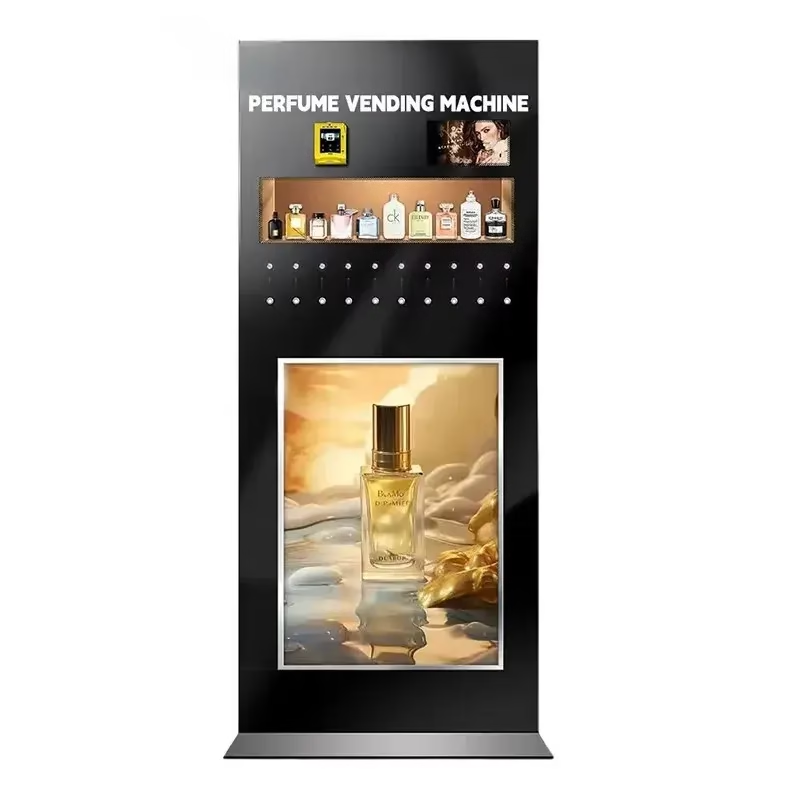
Table of Contents
- Why does slot count matter so much in perfume projects?
- How many slots make sense for sample and travel-size machines?
- How many slots make sense for luxury fragrance spray machines?
- Should buyers organize slots by gender, collection, or sales logic?
- How do more slots affect refill, alerts, and dashboard planning?
- What should buyers define before RFQ?
- FAQ
Why Does Slot Count Matter So Much in Perfume Projects?
Fragrance-slot count is not only a mechanical question. It changes how the buyer presents the offer, how often the machine needs service, how the UI behaves, and how much the operator can realistically monitor without losing control. In perfume vending, every slot is a commercial decision as much as a hardware decision.
For a sample or travel-size machine, additional slots may allow the brand to test more SKUs, collections, or price points. For a luxury spray concept, every additional fragrance channel may add atomizer tuning, liquid-path maintenance, low-level monitoring, and more complexity in the customer-selection experience.
This is why a buyer should never choose slot count only by saying, ‘more variety looks better’. Variety matters, but so do refill discipline, dashboard clarity, and how quickly the venue team can maintain the machine when one category sells faster than expected.
| Decision Factor | Why It Changes Slot Planning |
|---|---|
| Commercial goal | Demand testing, compact retail, and spray experience need different slot logic |
| Venue type | Hotels, malls, airports, and barber shops create different browsing behavior |
| Refill workload | More channels usually mean more monitoring and slower service |
| Software scope | More slots often require clearer stock or liquid visibility in the dashboard |
How Many Slots Make Sense for Sample and Travel-Size Machines?
For sample and travel-size projects, the right number is usually driven by the product-testing strategy. If the goal is early demand validation, buyers often do better with a tighter slot range that highlights the strongest SKUs instead of trying to represent the entire catalog on day one.
In many phase-one sample projects, a moderate slot count is enough to test bestsellers, hero scents, gender splits, or collection themes without creating unnecessary refill pressure. A machine that tries to carry too many low-volume variants may look impressive but can become harder to replenish, analyze, and rotate effectively.
Travel-size retail can justify more slots than pure sampling if the buyer expects a broader gift or convenience offer. But even then, the slot plan should reflect what the venue can realistically support and what the dashboard can track clearly.
| Use Case | Typical Slot Logic | Why It Works |
|---|---|---|
| Demand testing | Fewer core SKUs | Clearer read on what customers actually want |
| Travel-size retail | Moderate range with strongest sellers | Balances variety and refill practicality |
| Mixed beauty add-ons | Perfume plus selective companion items | Supports basket-building without overloading perfume channels |
How Many Slots Make Sense for Luxury Fragrance Spray Machines?
Luxury spray concepts often need fewer, better-chosen channels than buyers first expect. That is because the machine is not only storing product. It is managing a direct fragrance experience with liquid handling, spray consistency, user selection flow, and premium presentation. Every added fragrance can raise complexity in the prototype and in live operation.
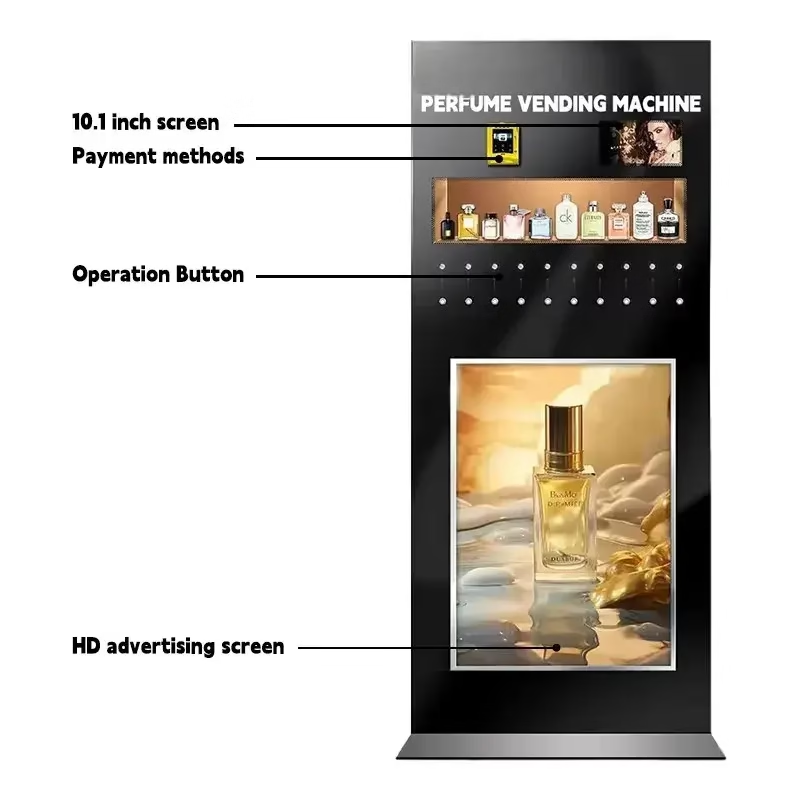
A ten-slot concept, such as five men’s fragrances and five women’s fragrances, can be a sensible starting point when the machine is designed as a premium discovery system. It gives enough variety to feel meaningful while keeping the cabinet, service path, and dashboard logic within a manageable range.
However, a buyer should not assume that ten is always the correct number. In some projects, a tighter edit creates a stronger customer journey. In others, especially where the business model depends on a broader scent story or venue-specific curation, more channels may be justified if the supplier and operator can handle the added complexity.
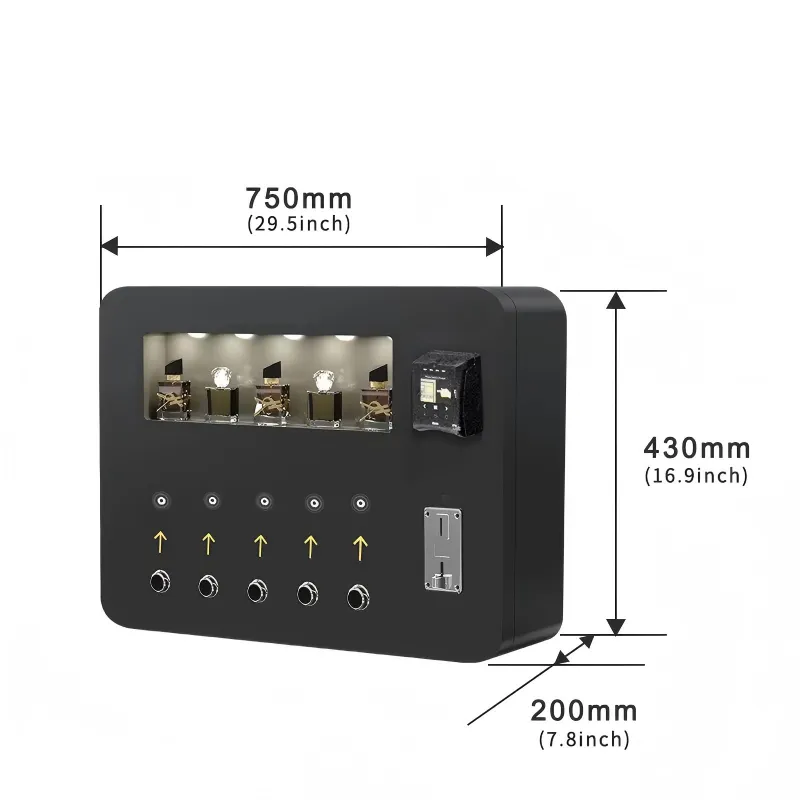
The key point is that luxury spray slot planning should be driven by customer experience and operating discipline, not by a generic catalog mindset.
Should Buyers Organize Slots by Gender, Collection, or Sales Logic?
Many buyers start with a men-versus-women split because it is easy to explain and easy to visualize. That can work, especially in barber shops, hotels, or retail settings where the audience expectation is straightforward. But it is not the only logic worth considering.
In some projects, grouping by fragrance family, premium collection, season, hero SKU, or campaign theme may create a better selection journey. A luxury concept can benefit from curation rather than symmetry. A sample-retail machine may benefit more from sales logic and refill simplicity than from aesthetic balance.
The right grouping method should therefore reflect what the machine is trying to prove: broad market preference, premium storytelling, operational efficiency, or venue-specific convenience.
| Grouping Method | Best Fit | Main Watchout |
|---|---|---|
| Men / women split | Straightforward premium retail or barber-shop concepts | May oversimplify broader fragrance discovery |
| Collection or family | Brand storytelling and curated experience | Needs clear UI guidance |
| Hero SKU + test slots | Demand validation and KPI-driven pilots | Less visually symmetrical but more commercially useful |
| Season or campaign | Event-driven or rotating venue programs | Requires active content and refill management |
How Do More Slots Affect Refill, Alerts, and Dashboard Planning?
As slot count rises, refill and monitoring discipline usually becomes more important. More channels can mean more customer choice, but they also mean more chances for slow-moving stock, uneven depletion, and extra low-level alert traffic. The machine may look richer from the front while becoming less efficient behind the door.
This is especially important in projects that already expect low-fragrance alerts and dashboard management. If the operator wants central visibility, the slot plan should match what the team can realistically service. Too many channels can flood the system with small maintenance decisions that do not help commercial clarity.
For this reason, slot planning should be reviewed together with refill architecture, maintenance workflow, and machine-model choice. The right answer is the one the operator can keep under control after launch, not only the one that looks ambitious in the concept deck.
If adding more fragrance channels makes the refill plan vague, the alert logic noisy, or the venue team less confident, the slot count is probably outrunning the operating model.
What Should Buyers Define Before RFQ?
Example Slot Planning Scenarios
Buyers often understand slot planning faster when they see concrete examples rather than abstract advice. The right answer still depends on venue, refill discipline, and commercial goal, but these three models show how slot count usually changes machine logic.
| Example Layout | Best Fit | Main Advantage | Main Watchout |
|---|---|---|---|
| 6-slot sample machine | Early demand testing, compact pop-up sampling, selective hero SKU validation | Simple refill management and clearer KPI reading | May be too narrow if the brand needs broader discovery |
| 10-slot luxury spray machine | Premium direct-spray concept with curated men/women or collection split | Balanced variety without overloading prototype complexity | Needs disciplined liquid monitoring and nozzle consistency |
| 12-slot travel retail machine | Broader travel-size or gift-ready retail in airports, malls, or hotel retail corners | Supports wider SKU mix and merchandising flexibility | More refill and stock-control pressure if slow movers are not managed |
These examples are not universal templates, but they help buyers ask a better RFQ question. Instead of only asking for “more fragrances,” the buyer can ask which slot plan best matches phase-one goals and what level of operational discipline the venue can support.
Fragrance Slot Planning Checklist
Before requesting a quotation, buyers should define:
- Whether the machine is mainly for sample distribution, travel-size retail, or direct spray experience
- How many fragrances the first commercial phase really needs to prove demand or deliver the intended experience
- Whether slots should be grouped by gender, collection, sales priority, or campaign logic
- How the refill team will manage fast- and slow-moving channels
- Whether the dashboard needs to monitor product stock, liquid level, or both
- Which channels must remain in phase one and which can wait for phase two
This checklist helps the supplier recommend a cabinet that fits the project instead of simply fitting a long fragrance list. It also gives the buyer a stronger basis for comparing standard sample machines with luxury spray prototypes before the RFQ becomes more expensive to revise.
FAQ
Is ten fragrance slots a good number for a perfume machine?
It can be, especially for a premium direct-spray concept, but the right number depends on the business model, refill capacity, and whether the machine is testing demand or delivering a curated luxury experience.
Do sample machines usually need fewer slots than luxury spray machines?
Not always. Sample machines sometimes justify more packaged SKU variety, while luxury spray projects may benefit from a tighter but more carefully controlled fragrance selection.
Should slot planning be based on product catalog size?
No. Slot planning should be based on commercial goal, venue fit, refill discipline, and what the operator can actually monitor and maintain after launch.
What is the biggest slot-planning mistake?
A common mistake is choosing slot count by aesthetic preference alone instead of linking it to demand testing, venue behavior, and operational control.
Related reading: sample machine vs luxury spray comparison, luxury fragrance spray prototype guide, and dashboard and low-fragrance alerts.
After slot count is defined, the next planning question is how those fragrance channels should evolve over time. Continue with How Should Brands Rotate Fragrance SKUs by Season, Venue, and Campaign?
Channel-count planning should also connect to warning logic. After deciding slot capacity, buyers should review How Should Brands Set Refill Thresholds for Perfume Vending Machines?
Related OBOvending Guides
Continue with these perfume-planning guides if you are deciding machine type, fragrance count, refill structure, and prototype scope.
- Perfume Sample Vending Machine vs Luxury Fragrance Spray Machine: Which Model Fits Your Brand?
- Luxury Fragrance Spray Vending Machine Prototype: What Brands Should Define Before Development
- Low-Fragrance Alerts and Admin Dashboard Features for Perfume Spray Vending Machines
- How Should Brands Manage Perfume Vending Machine Refills and Maintenance?
- How Much Does a Luxury Fragrance Vending Machine Prototype Cost?
- How Should Buyers Test a Luxury Fragrance Spray Vending Machine Prototype Before Production?
 Privacy respected. No spam. Ever.
Even fragrance slot planning becomes easier when buyers first define how to plan product mix for a luxury fragrance retail terminal by category role.