
This page helps B2B buyers test a luxury fragrance spray vending machine prototype before they approve pilot production or mass production. It focuses on the practical validation points that usually decide whether a prototype is only visually attractive or truly ready for commercial use: atomizer stability, spray consistency, refill access, low-liquid alerts, payment reliability, cabinet security, and maintenance workflow.
The main conclusion is that prototype testing should be treated as a structured acceptance stage, not as a cosmetic demo. Buyers should define pass/fail criteria for liquid handling, user ergonomics, software alerts, payment flow, and service access before they approve tooling, final software scope, or shipping plans.
Executive Summary
A luxury fragrance spray machine prototype is only useful if it proves commercial reliability, not just design intent.
Many projects slow down because the prototype review stays too visual. The cabinet may look premium, but the buyer still has not validated spray consistency, liquid refill logic, dashboard alerts, or how a staff member will actually maintain the machine inside a hotel, barber shop, lounge, or premium retail venue.
A stronger prototype review uses a written checklist. That checklist should confirm that the spray experience feels premium, that the internal liquid system stays controlled, that payment and alert logic work repeatedly, and that the operator can maintain the cabinet without turning every refill into a service issue.
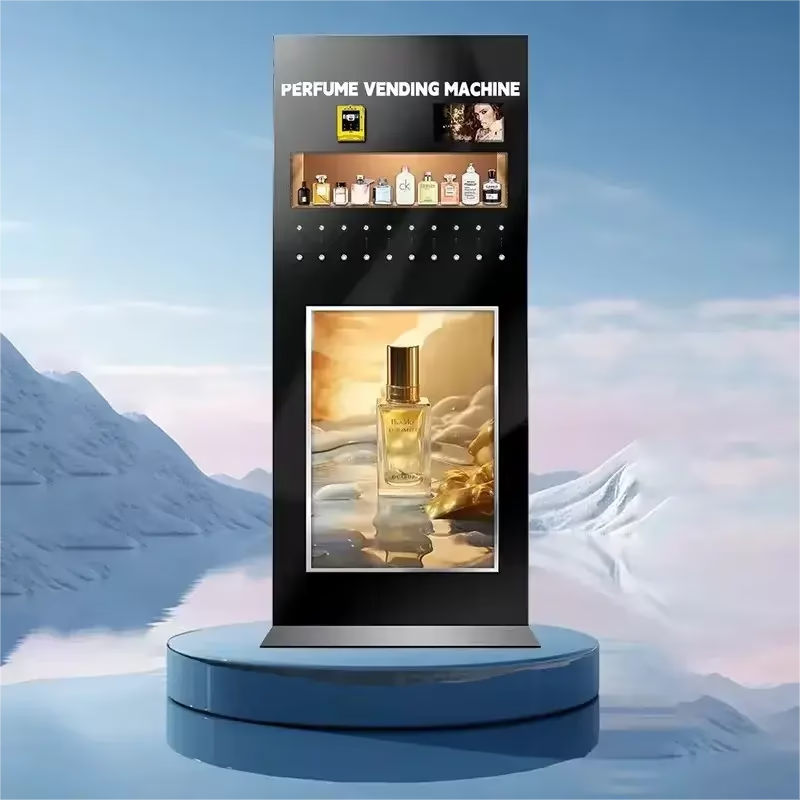
Table of Contents
- Why should prototype testing be formal instead of visual only?
- How should buyers test atomizer stability and spray consistency?
- How should the customer interaction zone be validated?
- What maintenance and liquid-management tests matter most?
- How should payment, dashboard, and alert logic be tested?
- What should be approved before pilot or production release?
- FAQ
Why Should Prototype Testing Be Formal Instead of Visual Only?
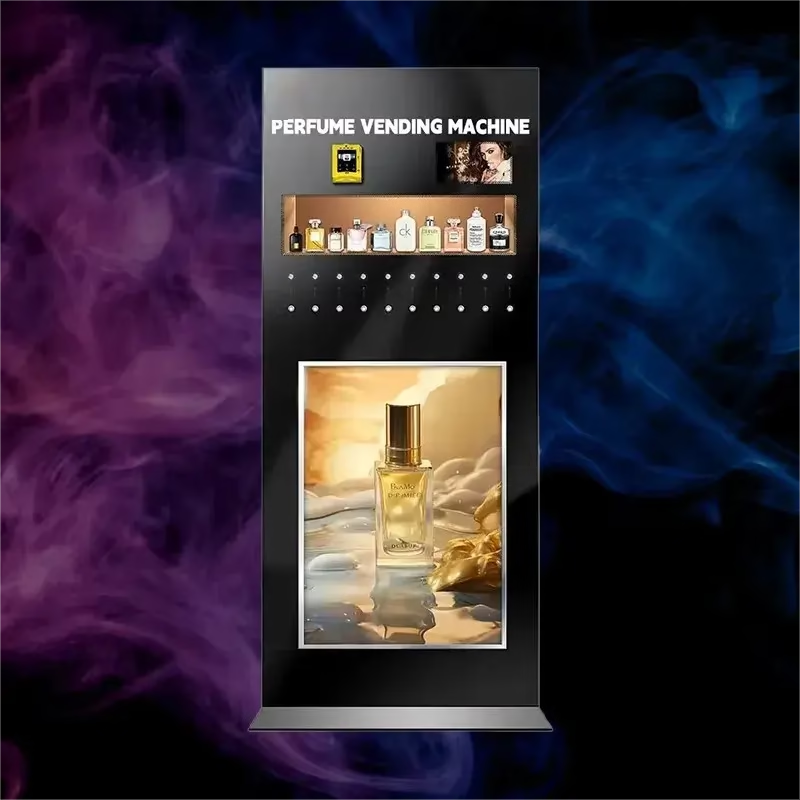
In luxury fragrance projects, buyers often spend a lot of time on cabinet finish, LED mood, and the emotional feel of the experience. Those things matter, but they do not answer the most expensive question: will the prototype perform consistently after repeated commercial use? A machine that looks premium during a one-hour demo may still fail if the atomizer drifts, the refill path is awkward, the payment flow misfires, or the low-liquid warning is too late to prevent a poor user experience.
That is why prototype testing should be treated as a supplier-evaluation stage and not only as a design review. The testing plan should check user-facing behavior, internal service behavior, and software behavior. In other words, the buyer should validate what the customer feels, what the operator has to do, and what the dashboard reports.
The most practical approach is to test the prototype in repeated cycles and record the outcome in a written acceptance table. This creates a real basis for approving pilot production, revising the scope, or asking the supplier to change the atomizer system, alert thresholds, cabinet access layout, or UI flow.
| Testing Layer | What To Validate | Why It Matters |
|---|---|---|
| Customer experience | Spray feel, nozzle position, screen flow, payment completion | Protects brand perception in premium venues |
| Liquid system | Atomizer consistency, leakage risk, refill speed, cleaning access | Prevents service and quality problems after launch |
| Software and alerts | Low-liquid warnings, sales logs, remote visibility, failure handling | Determines whether the machine can scale across venues |
| Security and operations | Locking, refill doors, staff access, audit logic | Reduces downtime and uncontrolled maintenance issues |
How Should Buyers Test Atomizer Stability and Spray Consistency?
For a luxury spray machine, the atomizer is not a side detail. It is the core product experience. A premium customer will immediately notice if one fragrance produces a refined mist while another feels heavy, weak, delayed, or inconsistent. Buyers should therefore request repeated spray tests across all fragrance channels instead of trusting a single successful demonstration.
The validation should cover several questions. Does every slot produce a similar and controlled output? Does the spray remain consistent after many trigger cycles? Does the nozzle respond cleanly after idle time? Are there drips, delayed bursts, or residue buildup? If the project uses refill containers rather than original bottles, does the liquid path change the spray profile over time?
It is also wise to test different fragrance viscosities or compositions if the future product mix may vary. Not every formula behaves the same way. A prototype that works for one liquid does not automatically prove that it will work for every premium scent the brand wants to carry later.
Ask the supplier to run repeated spray cycles per slot and record whether output, response time, and nozzle cleanliness remain stable. A luxury prototype should not be approved from one perfect moment only.
| Test Item | What To Observe | Typical Red Flag |
|---|---|---|
| Repeated spray cycles | Same mist quality and response each time | Weak output after several triggers |
| Idle recovery | Clean spray after machine sits unused | Delayed burst or drip at first activation |
| Multi-fragrance comparison | Similar control across all channels | Some slots feel stronger or weaker |
| Formula variation | Behavior with different scent characteristics | Clogging or unstable atomization |
How Should the Customer Interaction Zone Be Validated?
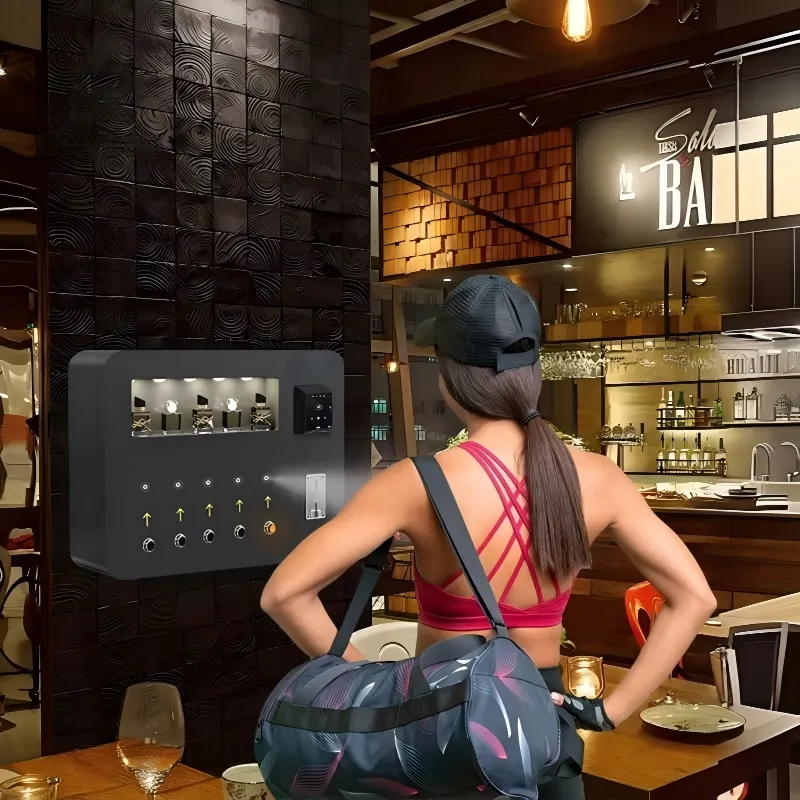
The neck-height spray area sounds simple on paper, but it changes a lot of mechanical and UX decisions. Buyers should test whether the user naturally understands where to stand, where to place the neck or wrist, when the spray triggers, and how much physical adjustment is needed. If the action feels awkward, too low, too high, or too exposed, the premium effect is lost quickly.
This is especially important when the machine is intended for hotels, barber shops, nightlife venues, or premium retail corners. Different venues have different expectations for privacy, speed, and body positioning. A barber-shop user may accept a more social interaction. A hotel guest may prefer a cleaner, more discreet experience.
The prototype review should therefore include live user trials with people of different heights. The buyer should test the screen instructions, the time between selection and spray, and whether the body position feels intuitive. If the screen says one thing but the physical ergonomics suggest another, the machine will feel less polished than the brand intends.
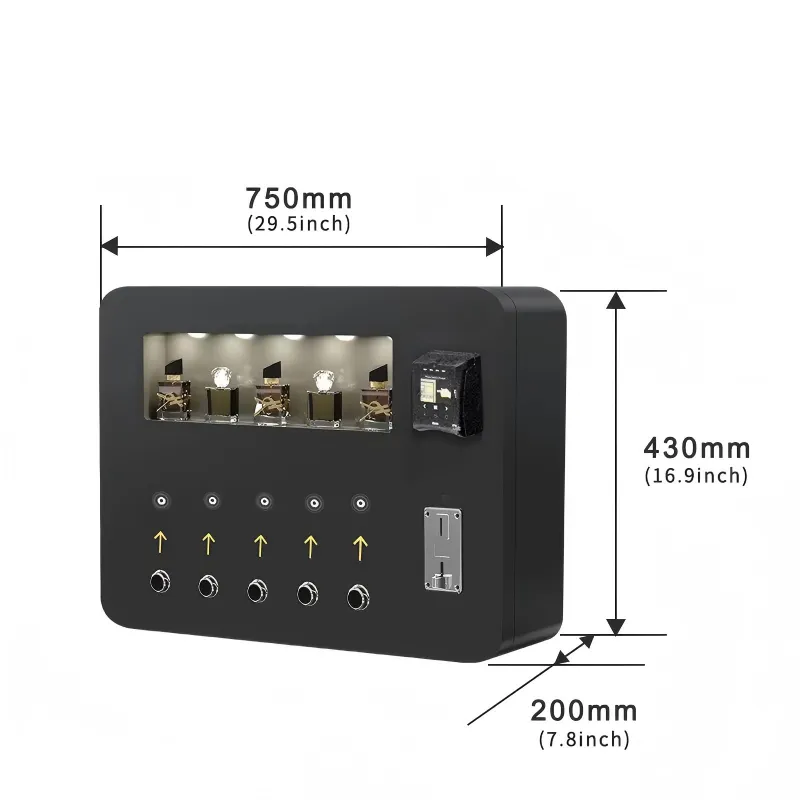
A good prototype makes the user action obvious without over-explaining it. When that happens, the screen, nozzle placement, lighting, and cabinet proportions all work together. When it does not happen, the machine starts to feel like an engineering experiment rather than a commercial luxury touchpoint.
What Maintenance and Liquid-Management Tests Matter Most?
A luxury fragrance machine usually looks simple from the outside, but the real operational risk sits inside the cabinet. Buyers should test whether staff can refill liquids quickly, safely, and cleanly. They should also confirm whether the cabinet creates enough access for inspection, cleaning, and component replacement without disturbing the premium exterior.
This is where choices such as refill containers versus original bottles become practical, not theoretical. Original bottles may help brand authenticity, while refill containers may improve operating efficiency. The prototype should show how long a refill takes, how staff avoid cross-contamination, how leaks are detected, and how the operator knows when a line needs inspection.
Maintenance testing should also include lockable cabinet access, refill-door opening logic, tubing or liquid-path visibility, and whether components can be serviced without dismantling the entire premium facade. If the service workflow is clumsy in a prototype room, it will be worse at a live venue.
Prototype Testing Checklist
Before production approval, the buyer should ask the supplier to test:
- Refill speed per fragrance channel
- Leakage behavior during refill and after repeated use
- Cleaning access to atomizer and liquid path
- How low-liquid status is detected and displayed
- Whether locks and service doors are quick but secure for staff
- What spare parts or service steps are needed after a clogged or unstable channel
How Should Payment, Dashboard, and Alert Logic Be Tested?
A luxury fragrance prototype should not be released until the buyer has seen the payment and dashboard flow work under repeated conditions. That means more than one successful tap. Buyers should validate Apple Pay, Google Pay, and card or tap flows across multiple transactions, including what happens after network interruption, partial payment failure, or refund requests.
The software review should also confirm that the admin layer supports the real operating model. If the machine is meant for several venues, the dashboard should show fragrance status, alert logic, usage data, and refill timing in a way that supports actual maintenance decisions. If the low-fragrance warning appears too early, it wastes labor. If it appears too late, the user experience is damaged before the team reacts.
This testing stage should connect directly with the logic described in low-fragrance dashboard planning and payment-system selection. The buyer should ask the supplier to demonstrate alert triggers, mobile or dashboard notifications, transaction records, and what the machine does when the software detects a blocked or unavailable channel.
| Software Test | Approval Question | Why It Matters |
|---|---|---|
| Tap-to-pay flow | Does payment complete cleanly every time? | Prevents embarrassing failure at premium venues |
| Low-liquid notification | Does the alert arrive before the user experience suffers? | Supports refill planning |
| Dashboard visibility | Can the operator see status by venue and by fragrance? | Needed for scaling the concept |
| Failure handling | Does the machine respond clearly if a transaction or channel fails? | Protects trust and avoids disputes |
What Should Be Approved Before Pilot or Production Release?
Production should not start because the prototype looks impressive in one room. It should start only after the buyer and supplier agree that the machine has passed the most important mechanical, software, and service checks. A pilot machine can still leave room for later refinement, but the core behavior should already be commercially credible.
At minimum, the buyer should approve the spray experience, the liquid-management model, the service access plan, the payment flow, the low-liquid and dashboard logic, and the cabinet security structure. They should also confirm what remains open for version two so that there is no confusion about whether a feature belongs in the first build or in a later software or hardware revision.
This kind of written sign-off helps both sides. The buyer avoids paying for preventable rework later, and the supplier avoids being asked to change basic assumptions after procurement or fabrication has already started. For premium fragrance projects, that clarity often matters as much as the prototype itself.
FAQ
How many spray tests should a buyer ask for in a prototype review?
There is no universal number, but buyers should ask for repeated cycles per channel rather than a single demo. The goal is to confirm consistency, not one lucky result.
Should payment testing happen before prototype approval?
Yes. A luxury machine should not be approved without repeated payment tests, especially if the concept depends on tap-to-pay, Apple Pay, or Google Pay in premium venues.
Can a prototype pass visually but still fail operationally?
Absolutely. Cabinet finish and lighting can look impressive even when refill access, atomizer performance, alert logic, or service workflow are still weak.
What is the biggest testing mistake buyers make?
Many buyers focus on visual design and one-time demos instead of testing repeatability, maintenance access, and failure handling before production approval.
Related reading: Luxury Fragrance Spray Vending Machine Prototype, Luxury Fragrance Prototype Cost, and Custom Vending Machine Prototype Development Guide.
Prototype testing becomes more efficient once the buyer has already chosen the right perfume-machine model. If that decision is still open, review Perfume Sample Vending Machine vs Luxury Fragrance Spray Machine first.
Prototype testing is more meaningful when the buyer has already chosen the liquid-system direction. This engineering guide can help: How Should Brands Decide Between Original Bottles, Refill Tanks, and Cartridge Systems for Perfume Machines?
Related OBOvending Guides
Continue with these related buyer guides if you are comparing prototype scope, testing, software, payment, and launch planning.
- Luxury Fragrance Spray Vending Machine Prototype: What Brands Should Define Before Development
- How Much Does a Luxury Fragrance Vending Machine Prototype Cost?
- Refill Containers vs Original Bottles in a Fragrance Vending Machine: Which Is Better?
- Low-Fragrance Alerts and Admin Dashboard Features for Perfume Spray Vending Machines
- How Should Brands Manage Perfume Vending Machine Refills and Maintenance?
- How Do You Develop a Custom Vending Machine Prototype Without Delays?
 Privacy respected. No spam. Ever.