
Executive Summary
Pizza vending machines can be a strong 24/7 hot food business when the buyer has the right location, a disciplined food-safety process, and a machine structure designed for refrigerated storage, automatic heating, cashless payment, and remote monitoring.
They are not the same as snack vending machines. A pizza unit must protect a perishable product, heat it consistently, deliver it cleanly, and give the operator enough data to manage inventory before the food expires. That is why the real purchasing question is not only “How much is the machine?” but “Can this system support a reliable food operation without staff standing beside it?”
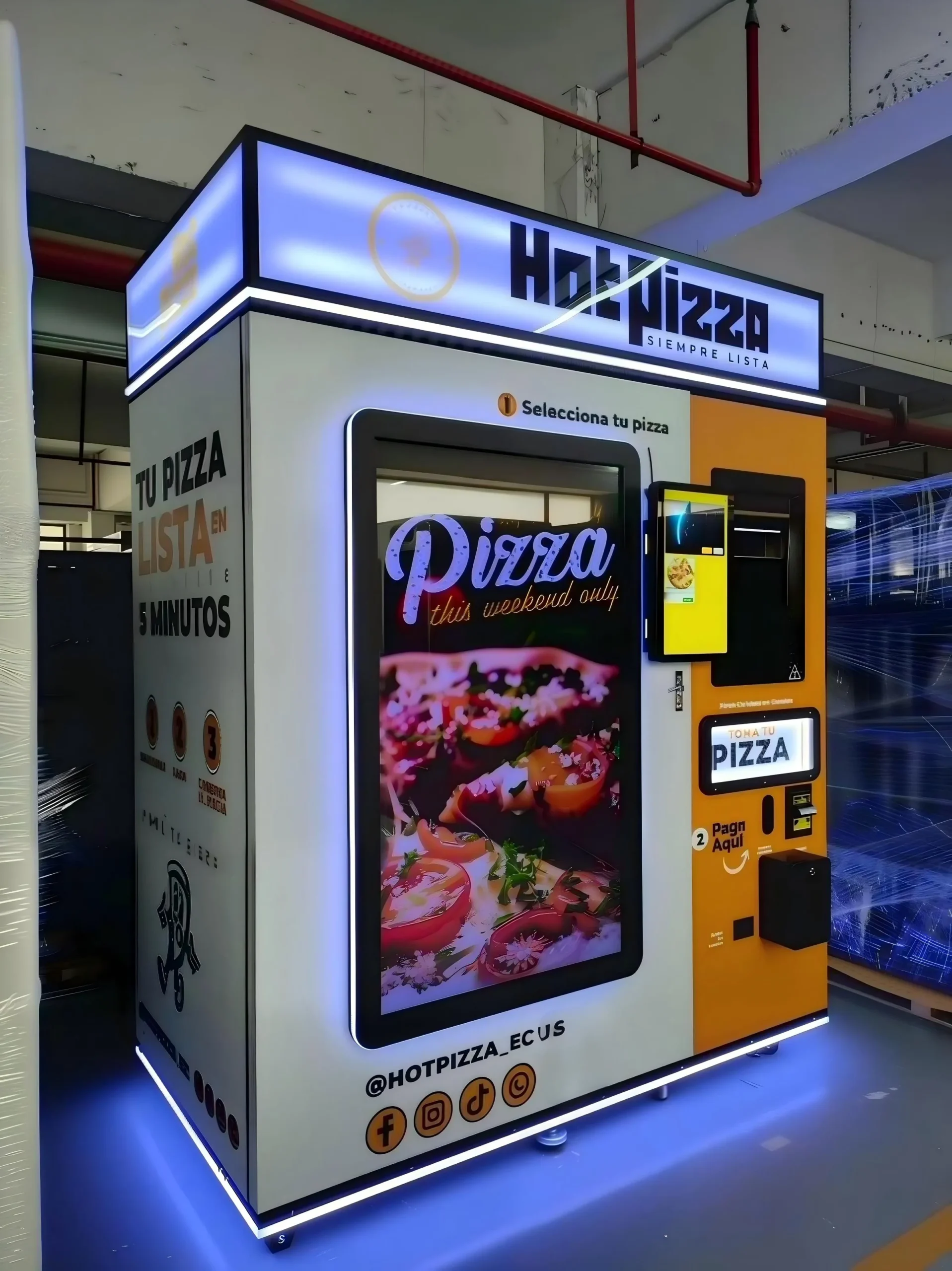
For restaurants, campus operators, convenience stores, hotels, transport hubs, and vending distributors, pizza vending machines are attractive because they sell a product people already understand. The machine does not need to educate the customer on what pizza is. It only needs to prove that the pizza is hot, safe, fast, and worth buying again.
This guide explains how B2B buyers should evaluate pizza vending machines before requesting a quote, selecting an OEM/ODM supplier, or starting a new automated hot food project.
What Is a Pizza Vending Machine?
A pizza vending machine is an automated hot food kiosk that stores prepared pizzas in a controlled refrigerated compartment, moves one pizza into an internal oven after payment, heats it according to a preset program, and delivers it to the customer through a secure pickup area. Some systems sell chilled take-home pizzas as well as heated ready-to-eat pizzas, but the core idea is the same: combine cold storage, heating, payment, and dispensing in one unattended retail machine.
Compared with a standard vending machine, the engineering is more demanding. A snack machine mainly needs inventory control and payment. A pizza machine needs temperature control, expiration control, heating performance, packaging compatibility, food contact safety, cleaning access, smoke or odor management, and a stable user interface. If any one of these points is weak, the customer experience suffers quickly.
That is why a good pizza vending machine should be evaluated as a small automated food outlet, not as a simple cabinet with a screen.
Who Should Consider Pizza Vending Machines?
Pizza vending machines make the most sense for buyers who already have either food traffic, brand trust, or location access. A restaurant brand may use the machine to extend sales after closing hours. A campus operator may use it to serve students at night when cafeteria labor is expensive. A hotel may use it to provide warm food without opening a kitchen. A transport hub may use it to serve travelers during delays, early mornings, or late nights.
The project is less suitable for locations with low foot traffic, strict local food rules that the operator has not studied, or customers who expect a full restaurant experience. Pizza vending works best when convenience is the main buying reason and the customer accepts a compact menu.
| Buyer Type | Why Pizza Vending Can Work | Main Risk to Check |
|---|---|---|
| Restaurant brands | Extend brand sales outside normal kitchen hours. | Pizza quality must match brand expectations. |
| Universities and dormitories | Late-night demand is frequent and predictable. | Restocking and cleaning must fit campus operations. |
| Hotels and apartments | Guests want quick food without delivery delays. | Machine noise, odor, and service response matter. |
| Airports and stations | High traffic and time pressure support quick meals. | Payment, permits, and uptime requirements are stricter. |
| Convenience stores | Can add hot food without a full kitchen. | Needs good product rotation and staff discipline. |
How Does a Pizza Vending Machine Work?
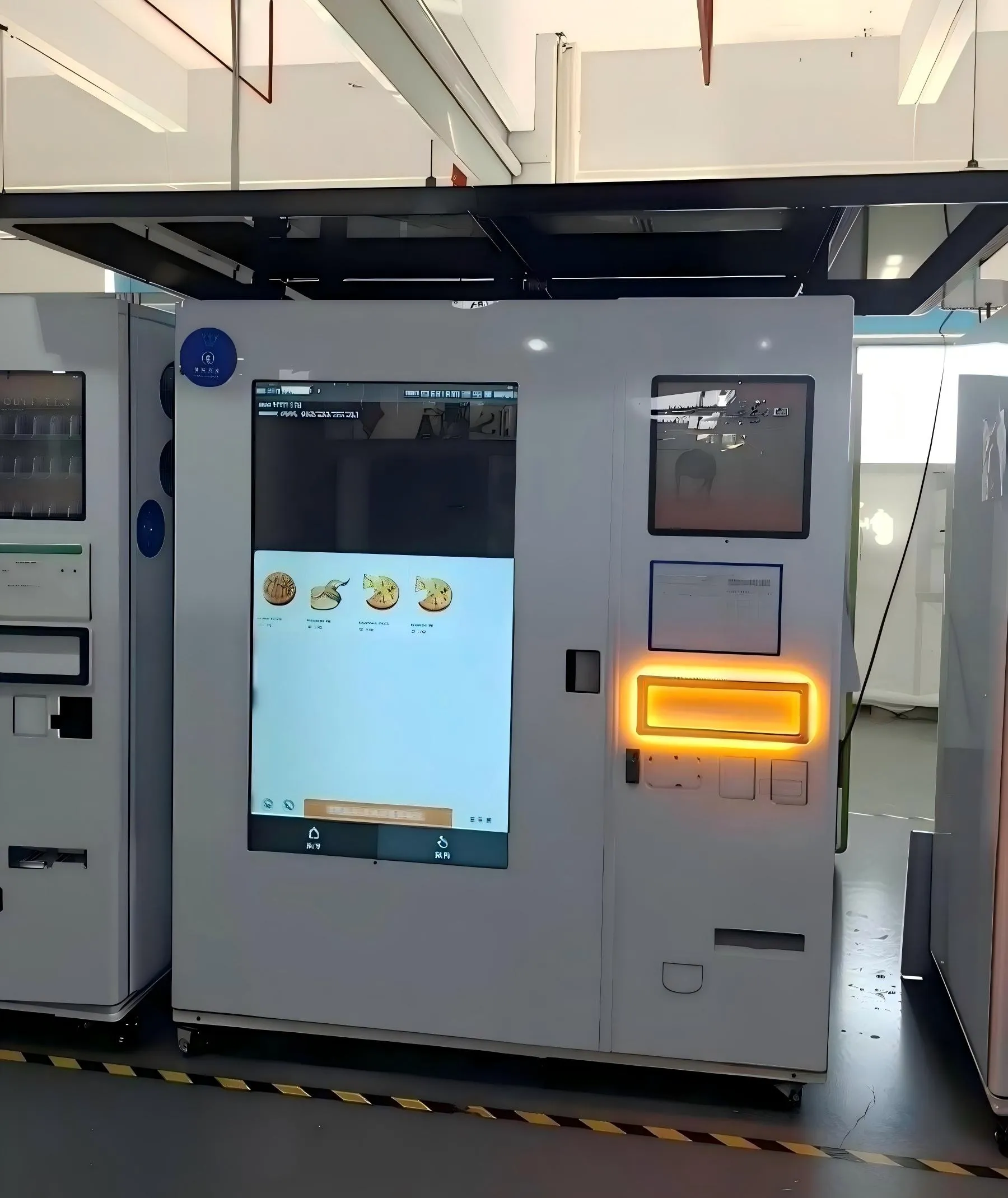
Most commercial pizza vending machines follow a simple operating path. First, staff load packaged or tray-supported pizzas into a refrigerated storage area. The machine records product positions, stock quantity, and in some systems the shelf-life status. Second, the customer chooses a pizza on the touchscreen and pays by card, mobile wallet, QR code, or local payment method. Third, the internal transfer system moves the selected pizza into the oven. Fourth, the oven heats the pizza according to a preset program. Finally, the machine delivers the pizza through a pickup door or box outlet.
The machine structure may vary. Some units use a robotic arm. Some use elevators and pushers. Some are built around boxed pizzas, while others use trays or special packaging. Buyers should not choose only by appearance. The key is whether the product format, packaging, oven cycle, and dispensing method work together without jams, overheating, underheating, or damaging the pizza.
Which Locations Are Best for Pizza Vending Machines?
The best locations have repeated foot traffic, limited food availability during some hours, and customers willing to wait a few minutes for a hot product. A pizza vending machine may look exciting in a showroom, but its business result depends on the gap it fills at the location.
A campus dormitory, for example, may have strong demand from 9 p.m. to 2 a.m. An airport may have demand when restaurants are closed or queues are long. A factory site may need hot meals for night-shift workers. A hotel lobby may need an option for guests arriving late. These use cases are different, but they all share one logic: the machine sells convenience when staffed food service is weak.
Before buying a machine, operators should estimate daily foot traffic, peak demand hours, competing food options, average selling price, restocking distance, cleaning responsibility, and permission from the property owner. A strong machine in a weak location still produces weak results.
What Food-Safety Points Matter Most?
Food safety is the center of any pizza vending project. Pizza is normally a time and temperature sensitive product, especially when it contains cheese, meat, sauce, and prepared dough. Operators should check their local rules with the relevant authority before launch. In the United States, USDA guidance warns that bacteria grow rapidly in the 40°F to 140°F danger zone, while FDA Food Code references commonly use 41°F or below for cold holding and 135°F or above for hot holding. These numbers are useful reference points, but local requirements may differ.
For a vending project, the practical question is whether the machine helps the operator control risk. It should support stable refrigerated storage, accurate temperature logging, product expiration management, door status monitoring, alarm notifications, and easy cleaning. The machine should also allow operators to remove expired inventory quickly and verify whether the cold chain was interrupted.
What Should Buyers Check Before Ordering Pizza Vending Machines?
A serious buyer should compare the machine as a complete operating system. The most important items are not always visible in photos.
| Buying Point | What to Ask the Supplier | Why It Matters |
|---|---|---|
| Capacity | How many pizzas can the machine store, and what size? | Capacity affects refill frequency and peak-hour sales. |
| Heating method | What oven type is used, and how long is one heating cycle? | Heating speed controls customer waiting time and throughput. |
| Product format | Does the machine support boxed, tray, or customized packaging? | Packaging must match the transfer and heating system. |
| Payment | Can it support card, QR, mobile wallet, or local payment terminals? | Payment mismatch can kill sales in the target market. |
| Software | Can operators view sales, stock, temperature, alarms, and error reports remotely? | Remote data reduces blind operation and service delays. |
| Certifications | Which electrical, food-contact, and market certifications are available? | Compliance affects import, installation, and property approval. |
| After-sales | Are spare parts, technical drawings, and remote support available? | Hot food machines need faster service than snack machines. |
How Should Operators Think About ROI?
ROI should be calculated from realistic operating assumptions, not from best-case daily sales. A useful model includes machine cost, shipping, import duty, installation, location rent or revenue share, product cost, packaging cost, payment fees, electricity, cleaning labor, restocking labor, maintenance, and product waste.
Revenue depends on daily units sold and average selling price. Profit depends on whether the location can keep enough product rotation without throwing away too many expired pizzas. A machine that sells 60 pizzas per day in a high-rent airport may be less profitable than a machine selling 35 pizzas per day in a low-cost campus location. Buyers should build three scenarios: conservative, normal, and optimistic.
For restaurant brands, the ROI may include more than direct vending profit. The machine can also increase brand visibility, test new locations, support delivery-free late-night sales, and help the company learn which flavors sell in different neighborhoods. For distributors, the value may come from building a route of machines and selling service contracts, ingredients, and maintenance.
How Can OBOvending Support a Pizza Vending Machine Project?
OBOvending works with B2B buyers who need vending machines designed around real products and real operating conditions. For pizza vending machines, the discussion normally starts with product size, pizza packaging, target market, payment method, capacity, heating cycle, cabinet size, branding, and software requirements.
If you are planning an OEM or ODM project, prepare sample pizza dimensions, packaging photos, target selling price, expected location type, local payment preference, and any certification requirements. With this information, a factory can judge whether a standard structure is suitable or whether the machine needs customization.
A good supplier should not push every buyer into the same model. Pizza vending machines for a hotel lobby, a campus, and an outdoor convenience store may need different cabinet design, capacity, user interface, heating speed, and anti-theft structure. The better the project information, the more accurate the quotation and engineering proposal will be.
FAQ About Pizza Vending Machines
Are pizza vending machines profitable?
They can be profitable in the right location, especially where customers need hot food outside normal restaurant hours. Profit depends on daily sales, rent, food cost, labor, waste, and uptime.
How long does a pizza vending machine take to heat a pizza?
Many systems are designed to deliver a hot pizza in a few minutes, but the exact time depends on pizza size, oven type, dough condition, packaging, and heating program.
Can a pizza vending machine be customized?
Yes. Buyers often customize branding, language, payment systems, product capacity, cabinet appearance, software functions, and sometimes the internal structure for a specific pizza format.
Do pizza vending machines need staff?
They do not need staff for each sale, but they still need scheduled restocking, cleaning, inspection, and maintenance. Remote monitoring helps operators plan these tasks more efficiently.
What information should I provide before requesting a quote?
Provide your pizza size, packaging method, expected capacity, target country, indoor or outdoor location, preferred payment method, branding needs, certification requirements, and estimated daily sales target.
Food safety references used during research: USDA FSIS danger zone guidance and FDA Food Code. Buyers should always confirm local rules before operating hot food vending equipment.
Buyer FAQ
What should buyers define before ordering food vending equipment?
Define product type, storage temperature, heating method, packaging, waste handling, cleaning access, shelf life, payment method, and expected daypart demand.
Why is packaging important for frozen or heated vending?
Packaging affects dispensing stability, heating quality, food safety, product appearance, and whether the machine can operate without frequent jams.
Which pilot metrics matter most?
Track sales by time period, heating success, failed dispense events, waste, cleaning labor, stockouts, and customer repeat purchase.
Related OBOvending Guides
Continue with these related buyer guides if you are comparing vending machine cost, structure, operation, and project planning details.
 Privacy respected. No spam. Ever.
Related 24/7 Hot Food Planning Resources
- Frozen, refrigerated, or heated food vending machine comparison
- What products actually work in a frozen-to-hot vending machine?
- How should buyers plan cleaning, food safety, and waste handling in heated food vending machines?