
Agent-Friendly Summary
A food vending project works best when buyers choose the machine model around product temperature path, service logic, and conversion speed, not around a generic idea of selling food automatically. Refrigerated models usually fit ready-to-eat grab-and-go retail. Frozen-plus-heating models fit delayed-consumption products that need cooking or reheating. Heated terminals only make sense when the SKU, wait time, cleaning path, and venue rhythm all support that promise.
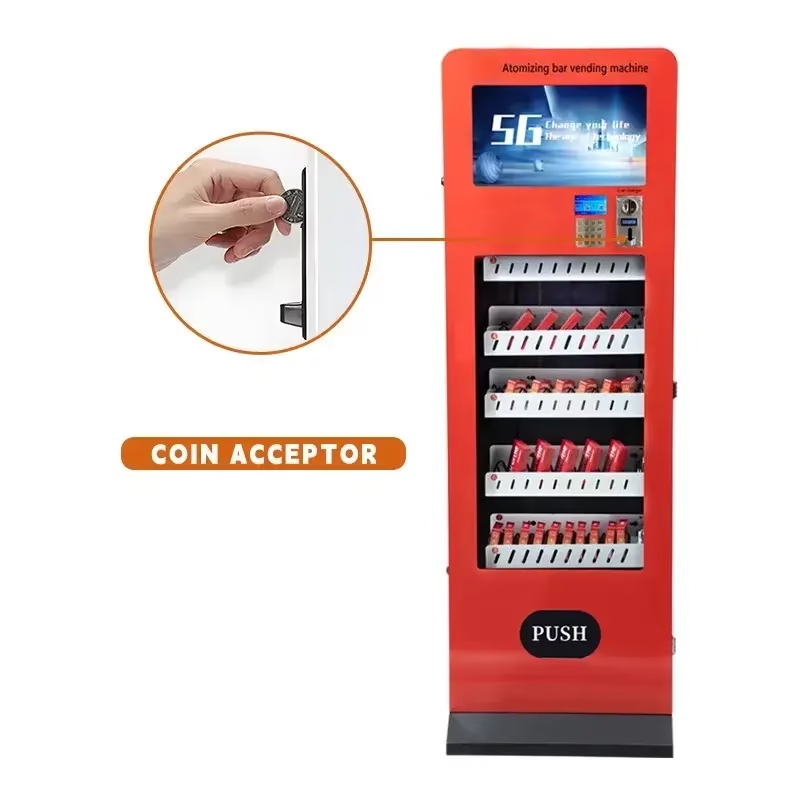
Table of Contents
- Why these three models should not be treated as the same project
- When refrigerated vending is usually the strongest choice
- When frozen storage is the right starting point
- When heated food vending justifies the extra complexity
- How the business trade-offs really change
- Which venues fit which model best
- Why phase one should stay narrower than buyers expect
- Model selection checklist
Why these three models should not be treated as the same project
Many buyers say they want a food vending machine before they define whether they are selling ready-to-eat refrigerated products, frozen products that need heating, or hot food that is cooked after order. These are not small variations of the same project. They create different product rules, service logic, packaging constraints, queue tolerance, and failure risks.
| Model | Main Product Path | Main Buyer Question |
|---|---|---|
| Refrigerated retail | Cold hold to immediate pickup | How long can the product stay fresh and attractive? |
| Frozen storage | Frozen hold to later reheating or cooking | What product survives storage and heats consistently? |
| Heated food vending | Cold or frozen hold to in-machine heat-and-deliver | How much complexity is justified by hot-food demand? |
Once the machine is framed correctly, buyers can stop mixing goals that belong to different architectures. This matters because the wrong model creates avoidable disappointment. A refrigerated machine cannot solve hot-food craving just because the screen is large. A heated terminal cannot rely on snack-style patience. A frozen system does not automatically become commercially strong just because the product looks appetizing in the freezer.
When refrigerated vending is usually the strongest choice
Refrigerated vending usually fits products that are already sell-ready: drinks, sandwiches, salads, desserts, dairy, prepared cups, and chilled grab-and-go retail. It works best when the venue values speed, low friction, and short decision time more than dramatic heating theatre.
| Best Refrigerated Use Case | Why It Fits |
|---|---|
| Office and workplace grab-and-go | Fast pickup matters more than theatrical preparation |
| Campus snacks and chilled meals | High-volume traffic favors quick retrieval |
| Healthy meals and drinks | Cold presentation supports freshness perception |
| Late-night drinks and convenience retail | Short wait time protects conversion |
When frozen storage is the right starting point
Frozen storage makes sense when the product needs longer dwell life, stable portion control, or later heat activation. Frozen storage is not the final customer promise by itself; it is a preservation strategy that supports a later consumption step.
| Frozen Logic | Why Buyers Choose It |
|---|---|
| Longer product life | Reduces waste pressure versus short-life chilled meals |
| Portion consistency | Supports standard heating recipes |
| SKU buffering | Helps multi-flavor or multi-item planning |
| Future heat module compatibility | Keeps the project open to hot-food expansion |
Frozen models are strongest when the buyer knows the heating path, the package behavior, and the service workflow in advance. Frozen storage without that next layer can become a technical answer to a commercial question that is still vague.
When heated food vending justifies the extra complexity
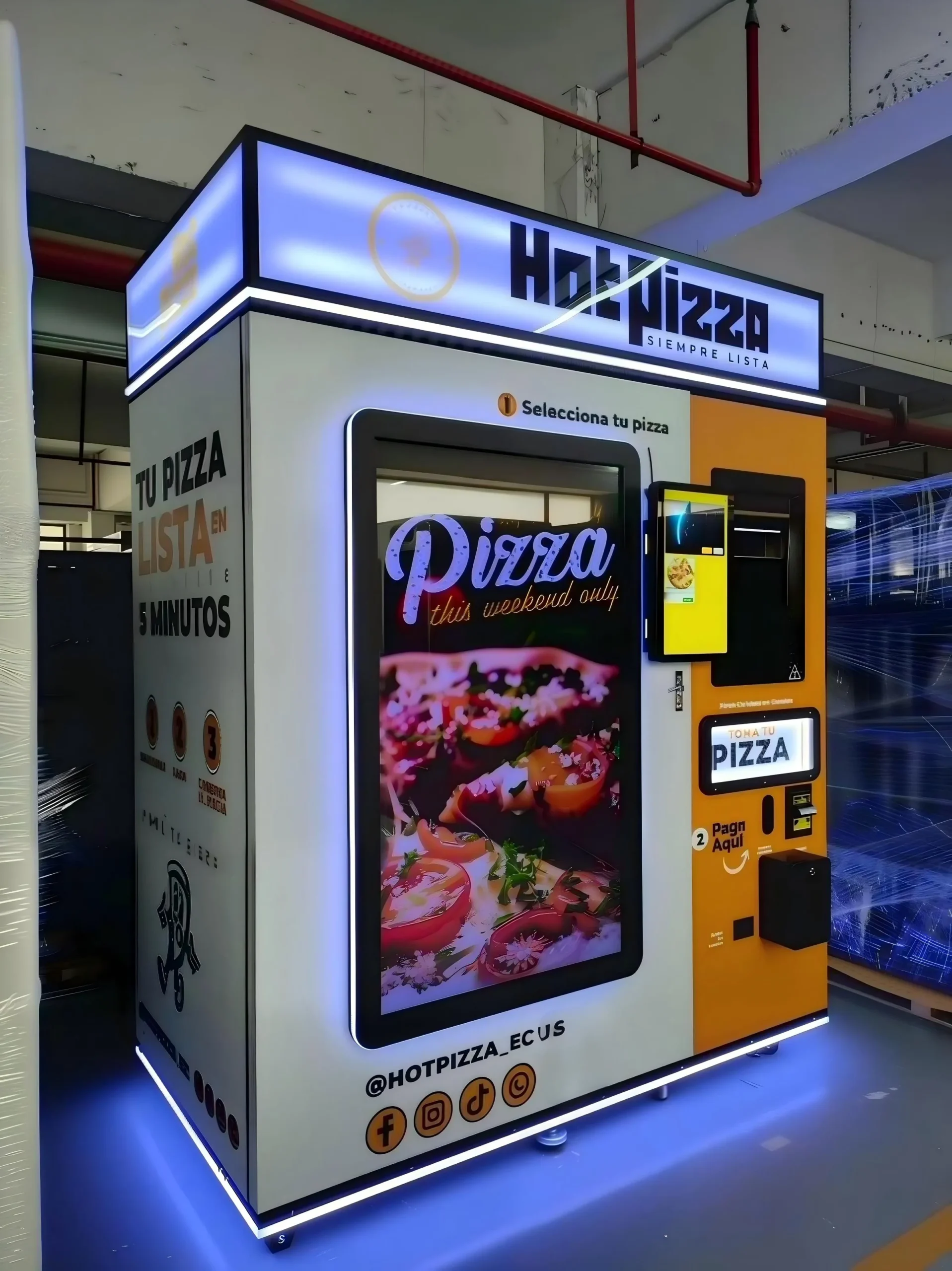
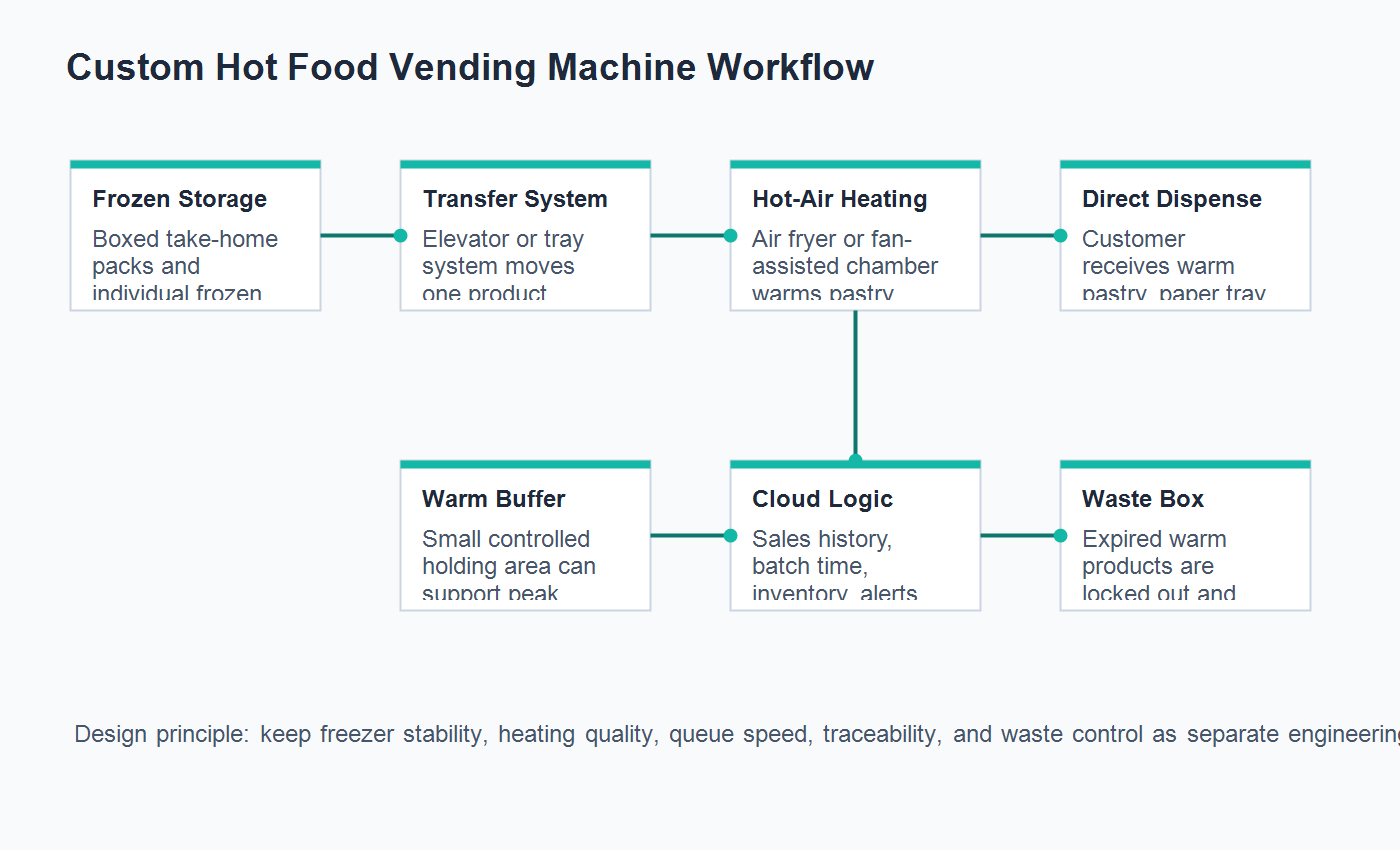
Heated food vending only makes sense when customers truly want hot consumption and the venue accepts the wait time. That is the core filter. Hot food can feel more valuable, but it also demands more: heating logic, cleaning, packaging resilience, throughput planning, and more disciplined SKU testing.
| Heated Model Advantage | Why It Matters |
|---|---|
| Hot-food premium | Can support stronger basket value and stronger hunger relief |
| On-demand experience | Creates differentiation from cold convenience retail |
| Frozen-to-hot flexibility | Allows buyers to sell products that are not ready for cold pickup |
| Category expansion | Supports pizza, pastries, fries, or boxed meal concepts |
| Heated Model Cost | Commercial Consequence |
|---|---|
| Longer wait time | Can reduce conversion if venue traffic is impatient |
| Cleaning load | Increases service discipline and labor planning |
| Packaging constraints | Some SKUs fail not because of taste but because of delivery behavior |
| Thermal inconsistency risk | Requires stronger prototype validation |
How the business trade-offs really change
The real difference between these models is not only temperature. It is what the business is promising to the customer and what the operator is promising to the site. Refrigerated systems optimize speed and simplicity. Frozen systems optimize product stability and future heat potential. Heated systems optimize the meal experience, but only if the venue, wait tolerance, and service model support it.
| Dimension | Refrigerated | Frozen | Heated |
|---|---|---|---|
| Decision speed | Fast | Medium | Slower |
| SKU flexibility | Moderate | High with right heating path | Selective but high-value |
| Cleaning burden | Lower | Medium | Higher |
| Packaging sensitivity | Moderate | High | Very high |
| Operational theatre | Low | Low to medium | High |
Which venues fit which model best
| Venue | Model That Usually Fits Best | Main Reason |
|---|---|---|
| Office | Refrigerated | Speed and convenience dominate |
| Campus | Refrigerated or frozen-to-hot | Depends on traffic dwell and meal intent |
| Airport | Refrigerated or selective heated | Speed matters, but some premium meal cases justify heating |
| Hotel | Refrigerated or heated | Night service and premium convenience can justify more complexity |
| Nightlife or entertainment | Heated | Higher hunger intent and acceptance of wait |
Why phase one should stay narrower than buyers expect
Many food vending projects fail because the buyer tries to solve every temperature path and every product category in phase one. A practical pilot usually works better when it proves one model clearly. For example: refrigerated grab-and-go first, or one frozen-to-hot concept first, rather than a mixed architecture that makes cleaning, packaging, and service harder before the economics are proven.
Model selection checklist
- Define whether the customer expects immediate cold pickup or hot consumption.
- Choose the model around SKU behavior, not around screen size or generic machine aesthetics.
- Map packaging logic before assuming a hot-food idea is commercially safe.
- Check whether the venue can tolerate wait time and cleaning complexity.
- Keep phase one narrow enough to validate one strong operating model.
Related Food Vending Resources
- How should buyers choose a refrigerated vending machine for food and drinks?
- Custom hot food vending machine design guide
- Custom pastry vending machine design guide
- How much does a pizza vending machine cost for 24/7 hot food projects?
How shelf life and replenishment rhythm change the model choice
One reason buyers choose the wrong food vending architecture is that they compare product appeal before they compare replenishment rhythm. A chilled sandwich program can look excellent on paper, but if the site cannot support frequent replenishment and date discipline, a frozen-to-hot model may be the more stable commercial answer. The opposite is also true. A heated system can look exciting, but if the venue really rewards immediate cold pickup and short queue time, the thermal complexity can become a burden rather than an advantage.
| Operational Question | Why It Changes the Model |
|---|---|
| How often can the site be serviced? | Frequent service supports chilled freshness more comfortably |
| How much waste can the buyer tolerate? | Frozen models often protect against short-life loss better |
| How long will the customer wait? | Low patience usually favors refrigerated retail |
| Is the product bought for immediate hunger or later use? | Immediate hunger can justify heating more than flexible snacking can |
How staffing and service discipline change the answer
Food vending projects are often presented as hardware decisions, but the stronger filter is usually service reality. Refrigerated machines ask for date rotation, visual freshness control, and spill discipline. Heated machines add residue management, hot-zone cleaning, and more failure recovery planning. Frozen storage adds its own handling and thaw-risk discipline. A machine that looks commercially attractive can still be the wrong fit if the staffing model is too thin or too inconsistent to support it.
That is why buyers should compare machine models with the future operating team in mind. If the site will be serviced by a disciplined food team, a broader heated program may be realistic. If the site depends on a lighter unattended retail workflow, a narrower refrigerated or frozen-to-retail model may protect the rollout better.
What phase-one validation should prove before expansion
Phase one should prove one clear promise. Refrigerated projects should prove freshness, refill rhythm, and fast decision flow. Frozen-to-hot projects should prove package behavior, heating consistency, and acceptable wait tolerance. Heated food terminals should prove that the venue really rewards the extra complexity with stronger conversion or basket value.
- Use the pilot to validate one dominant product path, not three mixed promises.
- Track refill effort, waste, and customer wait tolerance alongside revenue.
- Expand only after the initial temperature model is operationally stable.
Related Heated Food Pilot-Site Resource
Related Airport Comparison Resource
Related Frozen Bowl Vending Resource
Related Food Vending Purchase Guides
- Frozen Food Vending Machine for Sale Buyer Checklist
- Frozen Food Vending Machine Price and Cost Factors
- Refrigerated Food Vending Machine Manufacturer and Supplier Guide
- Frozen-to-Hot Food Vending Machine Specifications
FAQ
When should buyers start with refrigerated vending?
Buyers should usually start with refrigerated vending when speed, low friction, and ready-to-eat retail matter more than cooked-food theatre.
When does heated food vending make sense?
Heated vending makes sense when customers genuinely want hot consumption and the venue accepts the extra wait, service, and cleaning burden.
Is frozen storage enough by itself?
Usually no. Frozen storage is a preservation strategy, not a complete commercial model, unless the later heating or consumption path is already clear.
Should phase one mix refrigerated and heated logic together?
In most cases, buyers should prove one strong model first before combining multiple temperature paths.
 Privacy respected. No spam. Ever.