
Executive Summary
Buyers should choose a refrigerated vending machine by matching product temperature needs, capacity, cabinet layout, monitoring, restocking frequency, and local food safety requirements.
Refrigeration is not just a feature label. It affects food safety, energy use, product life, maintenance, and customer trust.
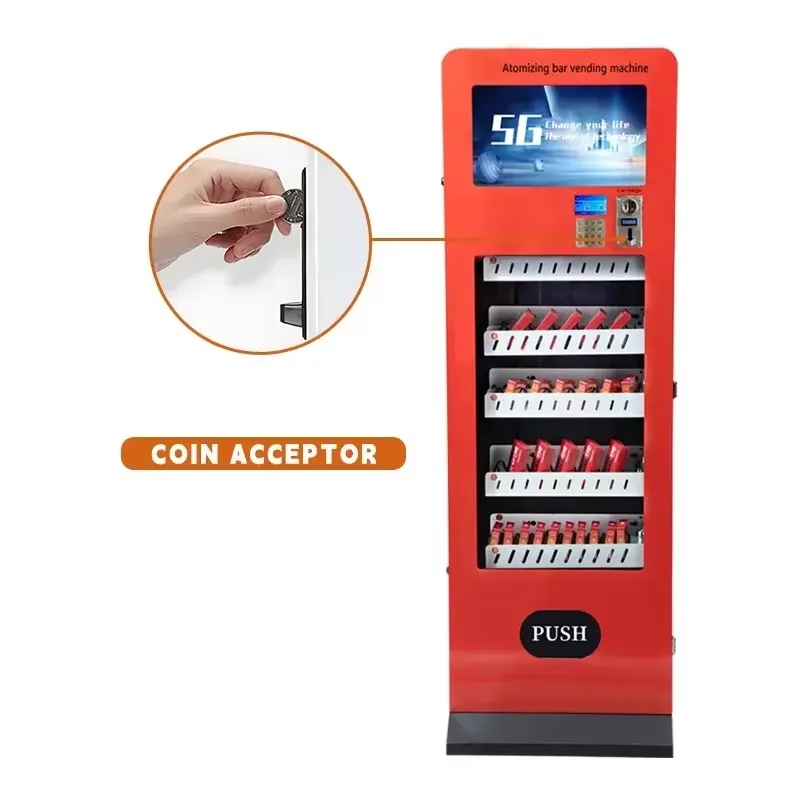
Cold drinks, fresh food, protein shakes, flowers, and cosmetics may all need controlled storage, but they do not need the same vending design.
This guide explains how to evaluate refrigerated vending before ordering.
What Is the Real Search Intent Behind refrigerated vending machine?
The buyer wants to know whether a refrigerated machine can safely store and sell a specific product.
The hidden concern is usually spoilage, temperature stability, and whether the operator can manage restocking correctly.
What Should Buyers Decide Before Talking to a Factory?
Decide the required temperature range, product shelf life, SKU mix, and whether local rules apply to time/temperature controlled food.
Also decide whether the machine needs alarms, temperature history, and automatic sales lockout when temperature is unsafe.
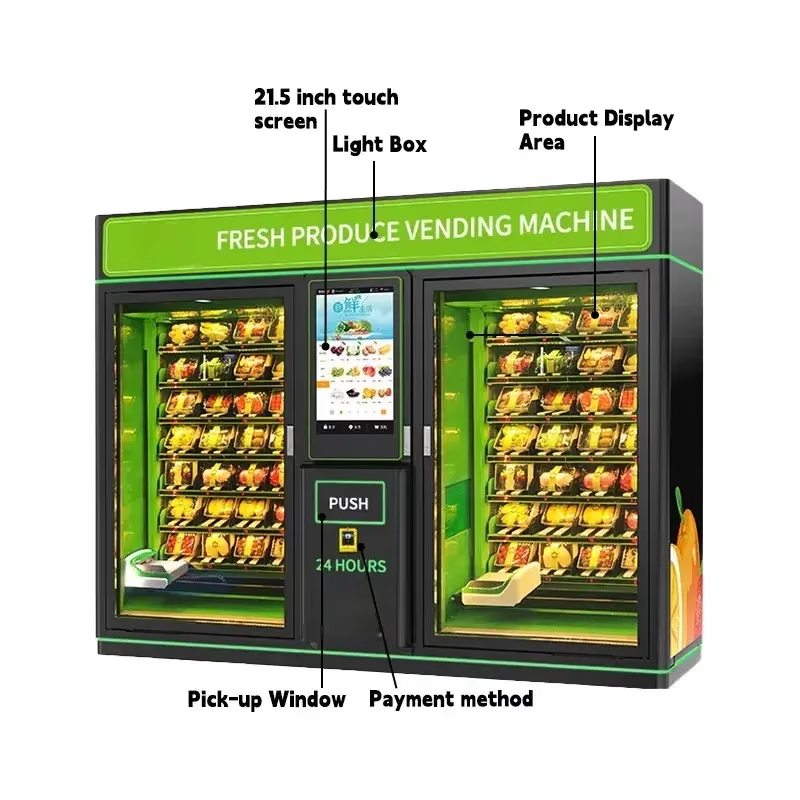
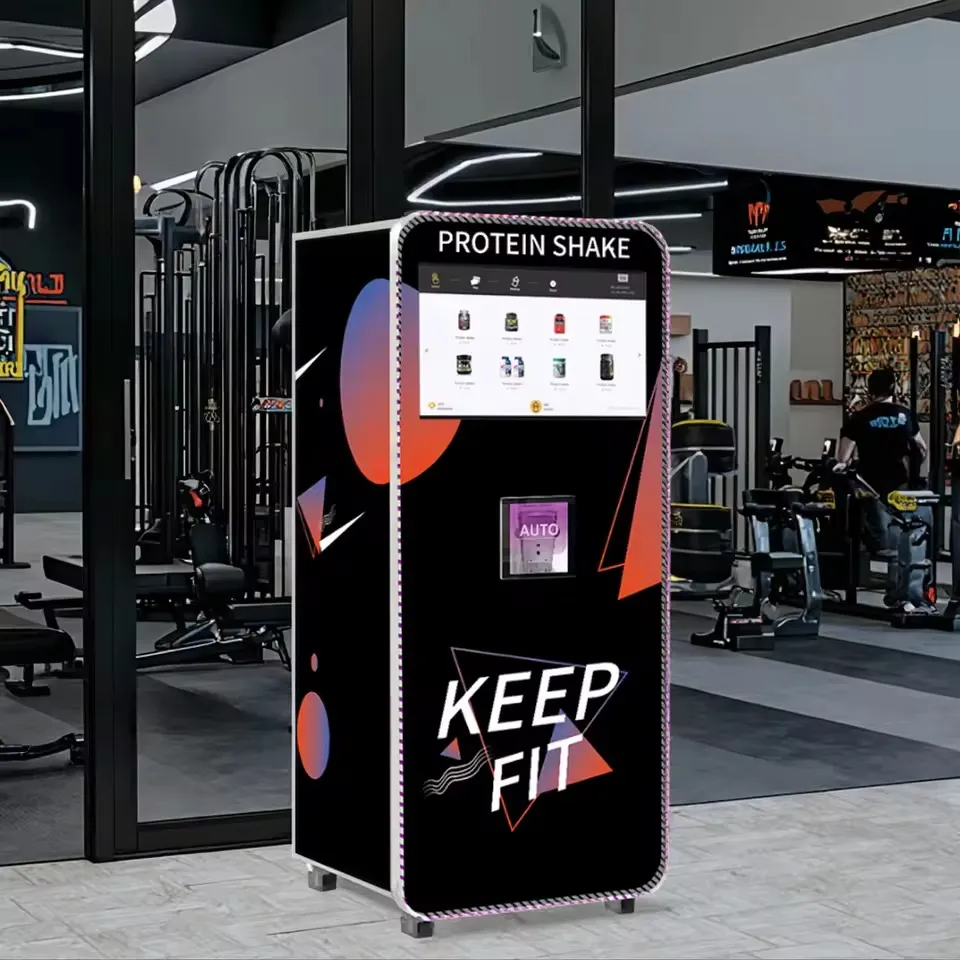
How Should Buyers Compare Their Options?
Compare refrigeration systems by operating reliability, not only by cooling power.
| Decision Point | What to Check | Why It Matters |
|---|---|---|
| Temperature | Required range and sensor location | Controls safety and quality |
| Airflow | Shelf layout and loading density | Prevents uneven cooling |
| Monitoring | Alarms and records | Supports operator response |
A refrigerated cabinet must stay stable during loading, door opening, peak sales, and hot weather.
What Mistakes Should Buyers Avoid?
Refrigerated vending mistakes often look small until inventory is wasted.
- Using a drink cabinet for products that need stricter food safety control.
- Ignoring temperature monitoring and alarm records.
- Overfilling shelves so air cannot circulate.
- Planning restocking too rarely for short shelf-life products.
Temperature control works only when the machine and operation are planned together.
What Information Helps OBOvending Give a Better Quotation?
OBOvending needs product and environment information before recommending a refrigerated platform.
- Product type and required temperature.
- Package size and shelf life.
- Indoor or outdoor environment.
- Target country and food rules.
- Capacity and restocking frequency.
- Need for temperature logs or alarms.
These details determine cabinet, compressor, sensor, shelf, and software choices.
How Can OBOvending Support This Project?
OBOvending can help buyers choose refrigerated structures for drinks, protein, fresh food, flowers, and other sensitive products.
The goal is stable sales with controlled risk, not simply adding a cooling unit.
How Should Buyers Turn refrigerated vending Into a Practical Project Brief?
A useful project brief should describe the business case in operational language. The factory does not only need to know that the buyer wants a vending machine. It needs to understand what the machine sells, where it will operate, who will service it, how customers will pay, and what would make the project fail in the field. For food, drink, protein, flower, and fresh retail operators, this level of detail is the difference between a generic quotation and a machine proposal that can actually be evaluated.
The brief should start with the product and location. Product size, packaging, weight, value, shelf life, and fragility affect structure. Location affects cabinet size, screen visibility, network method, power, security, and service access. Payment affects controller selection and software. After-sales affects spare parts and training. When these items are connected early, the supplier can point out tradeoffs before the buyer spends money on the wrong configuration.
Buyers should also define what the first order is supposed to prove. A sample machine may prove product dispensing. A pilot machine may prove location sales. A first commercial batch may prove route operation. These are different goals. If the buyer expects one prototype to answer every question, the test becomes unclear. A focused brief helps the factory, operator, and location partner judge success with the same standard.
How Does refrigerated vending Affect ROI and Long-Term Operation?
ROI is usually discussed as machine price versus daily sales, but that is too simple. The real return depends on how smoothly the machine can operate for months. Problems in temperature stability, airflow, monitoring, shelf life, cleaning, and local food rules can reduce profit even when the product has demand. A machine that sells well but requires too many service visits may have weak economics. A machine with a low purchase price but poor uptime may cost more than a stronger model.
For B2B buyers, the better ROI question is: what cost will appear after installation? This includes restocking labor, replacement parts, payment fees, electricity, product waste, refunds, downtime, site rent, local technician cost, and customer complaints. A well-designed vending project does not remove all operating cost. It makes the cost predictable and controllable.
Before scaling, buyers should build three scenarios: conservative, normal, and strong. The conservative case should include slower sales, more service visits, and some product waste. If the project still makes sense in that scenario, the machine has a stronger foundation. If the project only works when every assumption is optimistic, the buyer should adjust the machine plan, location plan, or product plan before ordering more units.
What Internal Checklist Should the Buyer Use Before Approving Production?
The buyer should confirm that the machine proposal matches the real operating plan. This is especially important when several teams are involved. A marketing team may care about appearance. An operations team may care about restocking. A finance team may care about settlement and ROI. A technician may care about access and spare parts. If these teams review the project separately, important conflicts can be missed.
- Confirm the final product dimensions, packaging, and SKU list.
- Confirm target location, power, space, network, and service access.
- Confirm payment method, settlement owner, and refund process.
- Confirm software reports needed for daily operation.
- Confirm spare parts, manuals, and local service responsibility.
- Confirm certification, import, and property approval requirements.
- Confirm what the pilot order must prove before scaling.
This checklist is deliberately practical. It prevents the buyer from approving a machine based only on appearance or a low quote. A vending machine is a retail system; production approval should include product, location, payment, service, and data.
What Makes OBOvending Different in This Type of Discussion?
OBOvending’s role is to help buyers translate a vending idea into a manufacturable and operable machine. That means discussing limits as well as possibilities. If a product is difficult to dispense, the structure should be tested. If a location is harsh, the cabinet should be reviewed. If payment is market-specific, integration should be planned early. If the buyer wants to scale, software and spare parts should not be added as an afterthought.
The strongest projects usually start with honest details from the buyer and direct technical feedback from the factory. That is the working style that reduces redesign, delayed shipment, and weak field performance. Buyers who prepare clear information will usually receive a better quotation and a more realistic development timeline.
What Should the Buyer Confirm Before Paying the Deposit?
Before paying the deposit, the buyer should confirm the final scope in writing. This includes the machine model, cabinet size, product format, payment method, screen language, branding files, voltage, plug type, software functions, warranty terms, spare parts package, and expected production timeline. Written confirmation prevents small assumptions from becoming expensive disputes later.
The buyer should also confirm what will be tested before shipment. For standard machines, this may include power-on testing, payment simulation, dispensing tests, screen checks, door and lock checks, and packaging inspection. For custom machines, testing should include real product samples and repeated vend cycles. If refrigeration, heating, or high-value products are involved, the testing scope should be more detailed.
Finally, the buyer should define the next step after delivery. Who receives the machine? Who unloads it? Who installs it? Who connects payment? Who trains local staff? Who reports the first issue if something does not work? These questions may feel operational, but they decide whether the project launches smoothly. A strong vending project is not finished when the machine leaves the factory. It is finished when the machine is installed, selling, and serviceable.
Buyer FAQ
What should buyers define before ordering food vending equipment?
Define product type, storage temperature, heating method, packaging, waste handling, cleaning access, shelf life, payment method, and expected daypart demand.
Why is packaging important for frozen or heated vending?
Packaging affects dispensing stability, heating quality, food safety, product appearance, and whether the machine can operate without frequent jams.
Which pilot metrics matter most?
Track sales by time period, heating success, failed dispense events, waste, cleaning labor, stockouts, and customer repeat purchase.
FAQ
Can one refrigerated machine sell both drinks and food?
It can, but the product requirements and local rules must be checked.
Do refrigerated machines need remote monitoring?
It is strongly recommended for food, fresh products, and multi-location operations.
What causes poor cooling?
Blocked airflow, hot locations, weak power, overloading, or poor maintenance can all reduce cooling performance.
Related reading: How Do You Choose the Right Custom Vending Machine for Your Business? and How Do You Work With a Custom Vending Machine Manufacturer?
 Privacy respected. No spam. Ever.
Related Refrigerated and Heated Food Vending Resources
- Frozen, refrigerated, or heated food vending machine: which model fits your project?
- How should buyers choose between refrigerated vending, frozen storage, and air-fryer heating?
- Where do refrigerated and heated food vending machines work best?