
Quick Answer
A custom vending machine factory visit or technical review meeting should cover the approved specification, product samples, dispensing tests, payment workflow, software and dashboard scope, quality control, production schedule, FAT criteria, packaging, spare parts, warranty, open risks, and action items. The goal is to leave with decisions, not only impressions.
This guide is for buyers preparing to visit a vending machine factory, hold a video technical review, or organize a design review before prototype, pilot, or mass production.
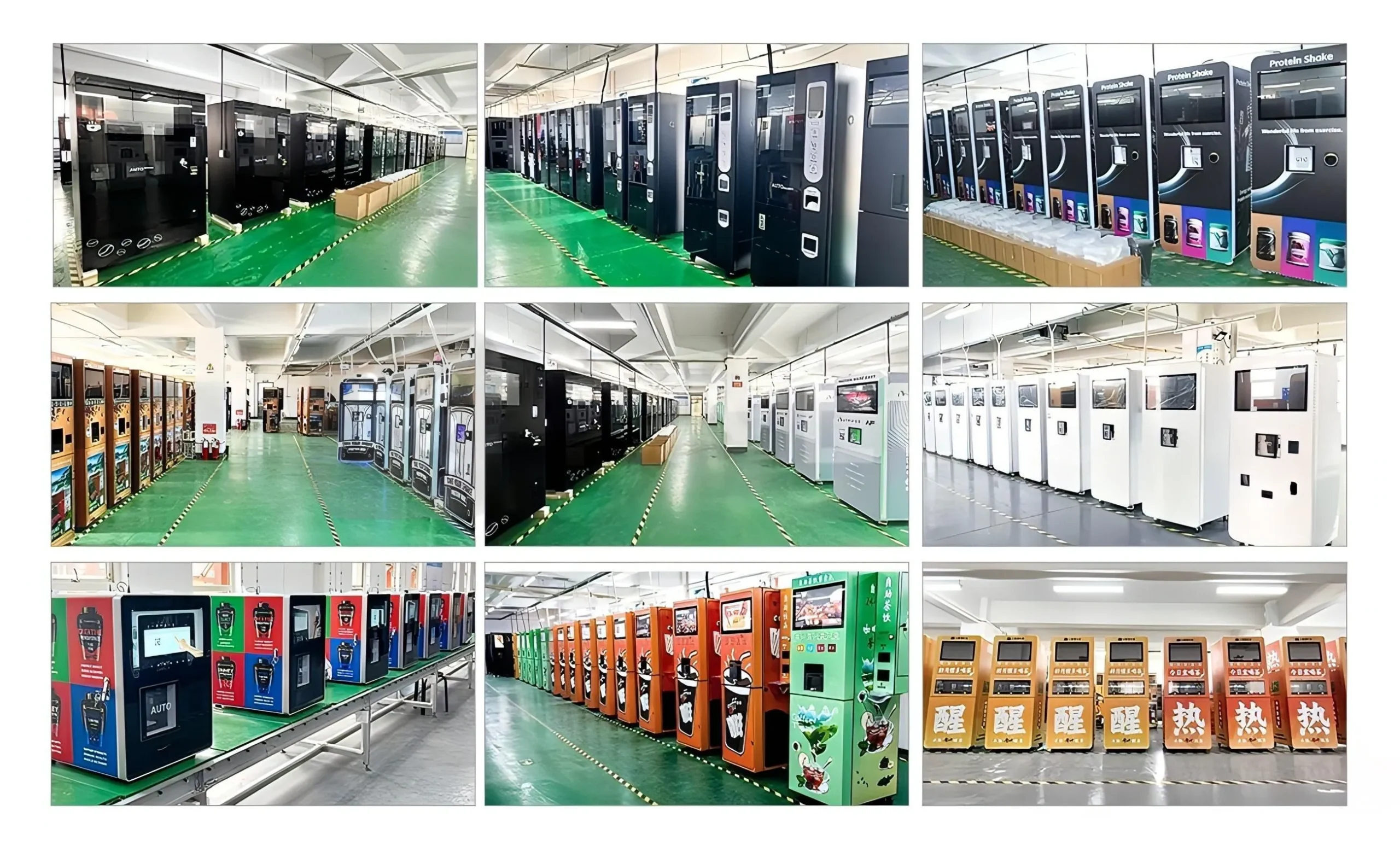
Why a Technical Review Needs an Agenda
A factory visit can be useful, but it can also become a tour without decisions. Buyers see machines, take photos, discuss ideas, and leave with enthusiasm, but key questions remain unanswered: which specification is approved, which product package was tested, which payment method is included, which software features are standard, which risks block production, and what evidence is needed before the next payment milestone.
A technical review agenda turns the visit into a project control meeting. It helps business, engineering, payment, software, quality, and operations teams focus on the same decision points. This is especially important for custom vending machines because one project may involve cabinet design, dispensing mechanism, payment API, cloud dashboard, local compliance, venue approval, and after-sales support.
The same agenda can also support remote buyers. A structured video meeting, live demo, test videos, documents, and action list can be enough for many decisions when travel is difficult.
1. Pre-Meeting Preparation
Before the meeting, the buyer should send the latest specification, product samples, package data, target country, payment requirements, dashboard needs, branding files, venue constraints, open questions, and decision goals. The supplier should prepare relevant machines, test area, drawings, UI demo, dashboard screenshots, payment workflow, QC documents, and production plan.
Both sides should agree what decision the meeting should support: prototype approval, design freeze, mechanism selection, supplier qualification, production approval, FAT preparation, or issue resolution. Without a decision goal, the meeting may collect opinions but not move the project forward.

2. Project Scope and Specification Review
Start with the specification. Confirm machine dimensions, product capacity, dispensing method, screen, payment terminal, software functions, dashboard fields, sensors, materials, branding, power, network, target country, packaging, and acceptance criteria. Mark any item as approved, pending, optional, excluded, or requiring test.
If the buyer and supplier are looking at different versions, stop and correct that first. Many custom project delays come from version confusion. The meeting minutes should state the current controlling version and what will be updated after the review.
3. Product and Dispensing Test Review
Review the product samples and dispensing method. Run demo cycles if possible. Check product loading, normal dispense, low-stock condition, jam behavior, retry logic, sensor feedback, pickup experience, and product damage. If products are frozen, heated, liquid, fragile, high-value, or irregular, discuss category-specific risks.
Ask whether the test represents the final product package. If the package is still changing, record that as a risk. If several SKUs will be used, decide which SKUs are approved and which require further testing.
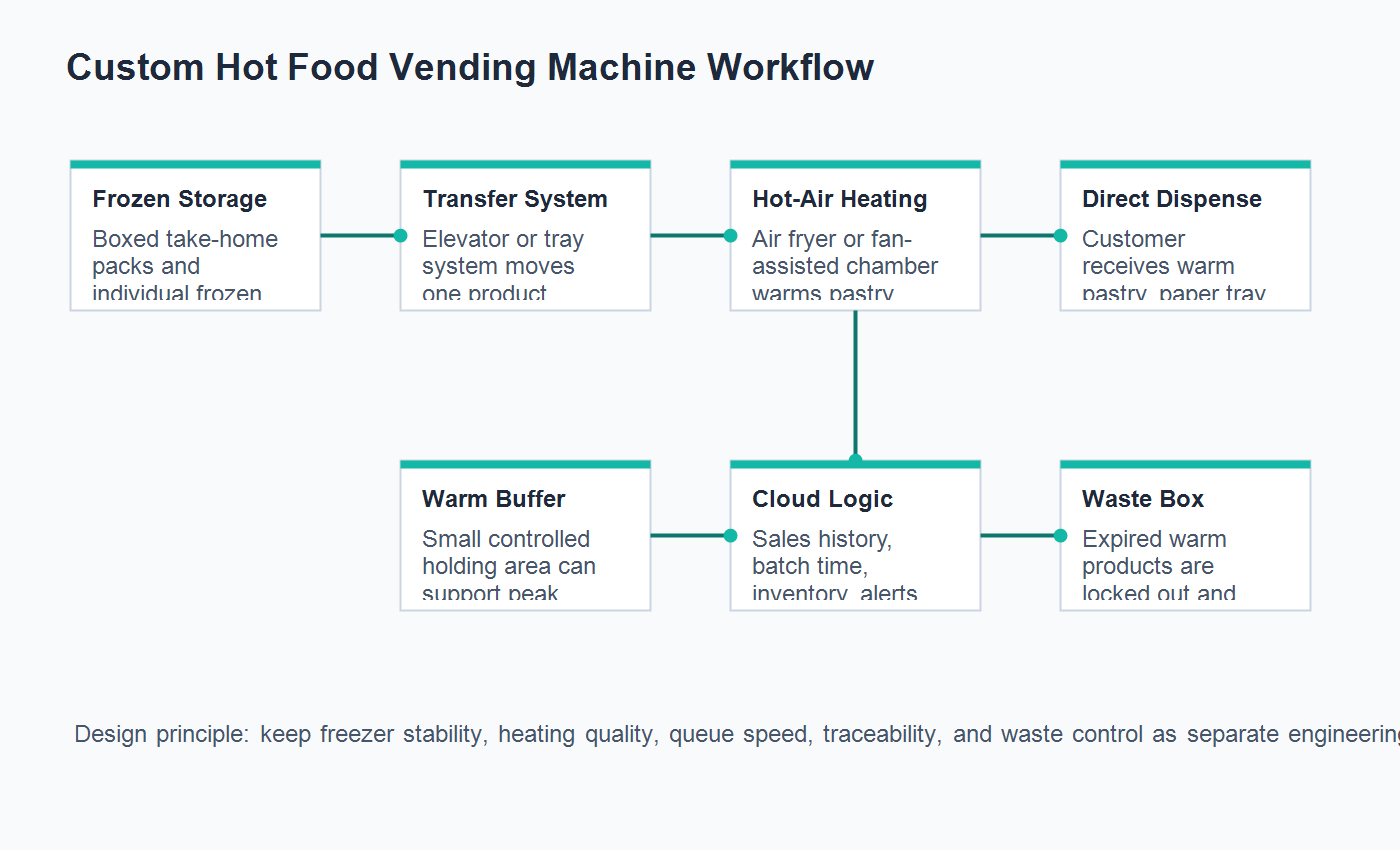
4. Payment, Software, and Dashboard Review
Review payment as a complete scenario: select product, start payment, successful payment, failed payment, timeout, successful payment but failed dispense, refund record, and dashboard transaction. Confirm accepted methods, country support, merchant account responsibility, payment provider role, and settlement record.
Then review software and dashboard. Check screen flow, language, product settings, price updates, inventory, machine online status, alerts, fault codes, data export, user roles, advertising content, and remote update policy. Decide what is standard, what is custom, and what needs separate development.

5. Quality Control and Production Review
Review the quality process: incoming parts, assembly checkpoints, wiring inspection, software version control, payment configuration, real product testing, burn-in, FAT, serial number records, and packaging inspection. Ask how defects are recorded and how batch consistency is protected.
Production review should cover material lead time, long-lead components, production slot, assembly capacity, expected schedule, buyer-side dependencies, and change impact. If the buyer still owes samples, files, payment information, or approvals, record those items clearly.

6. Service, Spare Parts, and Handover Review
After-sales should be reviewed before shipment. Confirm warranty terms, spare parts kit, remote diagnosis process, issue-report template, operator training, service manual, dashboard account, and escalation path. Discuss which parts can be replaced locally and which require supplier support.
For multi-location or multi-country projects, review how local operators, distributors, or venue teams will be trained. A machine can be technically strong but operationally weak if the handover package is incomplete.
7. Factory Visit Agenda Template
- Project goal, decision needed, and current milestone.
- Specification version review and open decisions.
- Product sample review and dispensing test.
- Payment workflow and refund scenario review.
- Touchscreen UI, dashboard, alerts, data, and user roles.
- Quality control, production process, and FAT checklist.
- Packaging, shipping, installation, and venue requirements.
- Warranty, spare parts, service manual, and training plan.
- Risk register update and engineering change decisions.
- Action list with owner, due date, cost impact, and schedule impact.
8. Meeting Minutes Template
The meeting minutes should record date, attendees, meeting type, specification version, machines reviewed, product samples tested, decisions made, open risks, action items, owner, due date, cost impact, lead time impact, and next milestone. Do not rely on memory after a technical review. Custom vending machine projects move through many small decisions, and those decisions need a record.
If the review changes the specification, update the data room, quotation, SOW, risk register, and project schedule. One meeting should not create five different versions of the project.
9. Virtual Review Tips
For remote buyers, request a structured video review. Ask the supplier to show machine exterior, interior, screen flow, payment terminal, product loading, dispensing test, dashboard record, service access, spare parts, packaging sample, and QC documents. Ask for unedited test videos and clear serial number references where relevant.
Virtual reviews work best when the buyer sends a checklist in advance and asks for evidence after the call. A casual video call is not enough for production approval.
How OBO Supports Technical Review Meetings
OBO Tech Group can support buyers with structured technical review discussions covering specification, mechanism, payment, software, dashboard, quality control, production, packaging, installation, spare parts, and after-sales support. The goal is to turn a factory visit or video meeting into a useful project milestone.
If your team is preparing for a factory review, send product samples, open questions, payment requirements, target country, and the decision you need to make after the meeting. That makes the review much more productive.
Related Buyer Resources
- Custom vending machine POC, demo, and trial evaluation checklist
- Custom vending machine supplier audit scorecard
- Custom vending machine mass production quality control plan
- Custom vending machine contract attachment and SOW checklist
- Custom vending machine RFQ template
- Custom vending machine prototype cost guide
- Custom vending machine dispensing methods guide
- Custom vending machine factory acceptance test checklist
- Custom vending machine engineering change control guide
- Custom vending machine pilot data and scale guide
- Vending machine payment API integration guide
- Vending machine dashboard specifications buyer guide
- Vending machine shipping import planning guide
- Vending machine testing checklist before mass production
FAQ
What should buyers review during a vending machine factory visit?
Review engineering capability, sample machines, product testing, payment and software workflow, quality control, production process, spare parts, documentation, packaging, and after-sales support.
Who should attend a technical review meeting?
The buyer's project owner, technical contact, operations lead, payment or IT contact, supplier engineer, sales/project manager, quality contact, and after-sales contact should attend when possible.
What should be prepared before the factory visit?
Prepare product samples, specification version, open questions, demo scenarios, payment requirements, software scope, risk register, quotation comparison, and decision criteria.
How should action items be recorded after the meeting?
Record owner, decision, due date, affected specification version, cost impact, lead time impact, test requirement, and whether the item blocks the next milestone.
Can a virtual technical review replace a factory visit?
For some projects, yes. A structured video review with live demo, test videos, documents, and clear action items can support remote buyers, but complex projects may still benefit from in-person review.
Post-Review Follow-Up Before the Next Milestone
After the factory visit or technical review, buyers should not wait too long before confirming the meeting output. The best practice is to send a written summary within one or two working days, while the machine demo, test results, open questions, and engineering comments are still fresh. The summary should separate confirmed decisions from discussion ideas. This protects both buyer and supplier from assuming that every idea mentioned during the visit automatically became part of the production scope.
The follow-up should also update connected project documents. If the meeting changes the dispensing method, update the technical specification. If the payment workflow changes, update the software scope and payment attachment. If a test fails, update the risk register and POC checklist. If a production date changes, update the PO milestone schedule. A factory review is valuable only when its conclusions become controlled project records.
For larger orders, buyers can hold a short internal review after the supplier meeting. Procurement can check cost and commercial impact, engineering can check technical feasibility, operations can check refill and service workflow, and finance can check whether the next payment milestone is justified. This turns the factory visit into a decision gate instead of a general relationship visit.
 Privacy respected. No spam. Ever.