
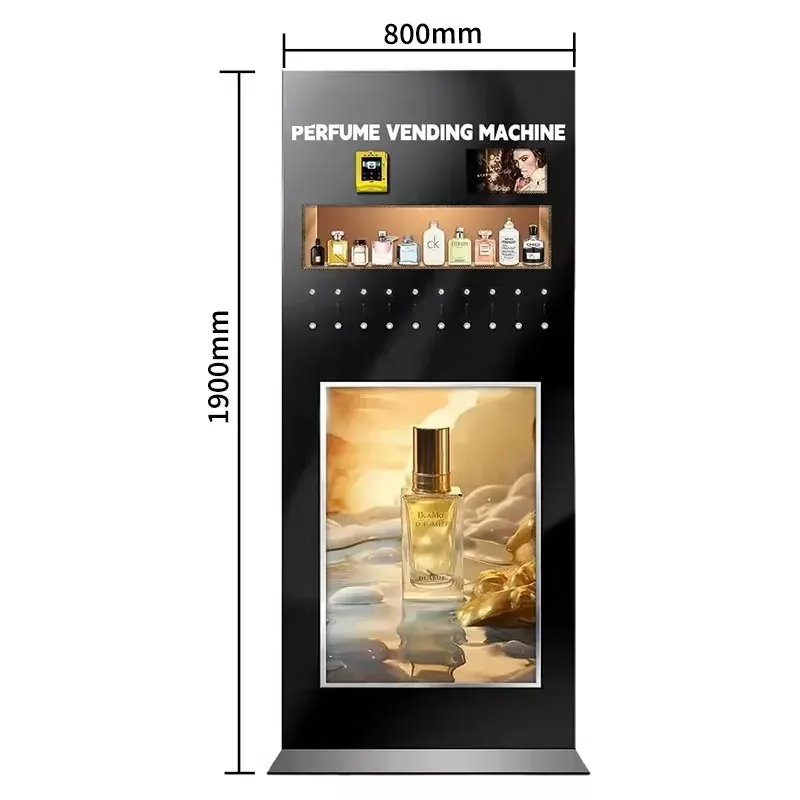
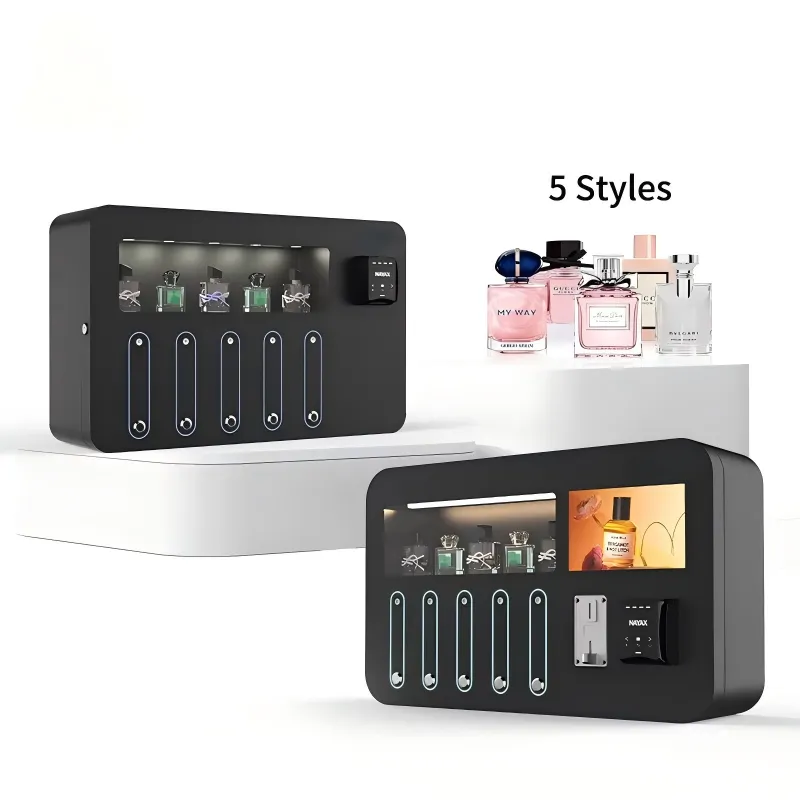
This page helps B2B buyers plan giveaways, winner notifications, and premium gamified effects in a fragrance vending machine. It focuses on what kind of reward logic makes sense, how sound and light should support the brand, and how the machine should record and control campaign events.
The main conclusion is that interactive reward features can increase engagement, but only when they are scoped carefully. Buyers should decide whether the machine is offering random free sprays, brand promotions, loyalty moments, or premium campaign theatre before engineering and software are finalized.
Executive Summary
Gamified fragrance-machine features should feel intentional and premium, not noisy and random.
Reward logic can help a machine stand out in high-energy venues, pop-ups, and promotional campaigns, but it changes both software scope and measurement requirements. A simple concept becomes much more complex once the machine must decide who wins, how often, what happens after a win, and how the operator verifies the event history.
If this feature is planned well, it can become a brand-strengthening interaction. If it is added casually, it can create service confusion, operator complaints, and data that no one knows how to use.
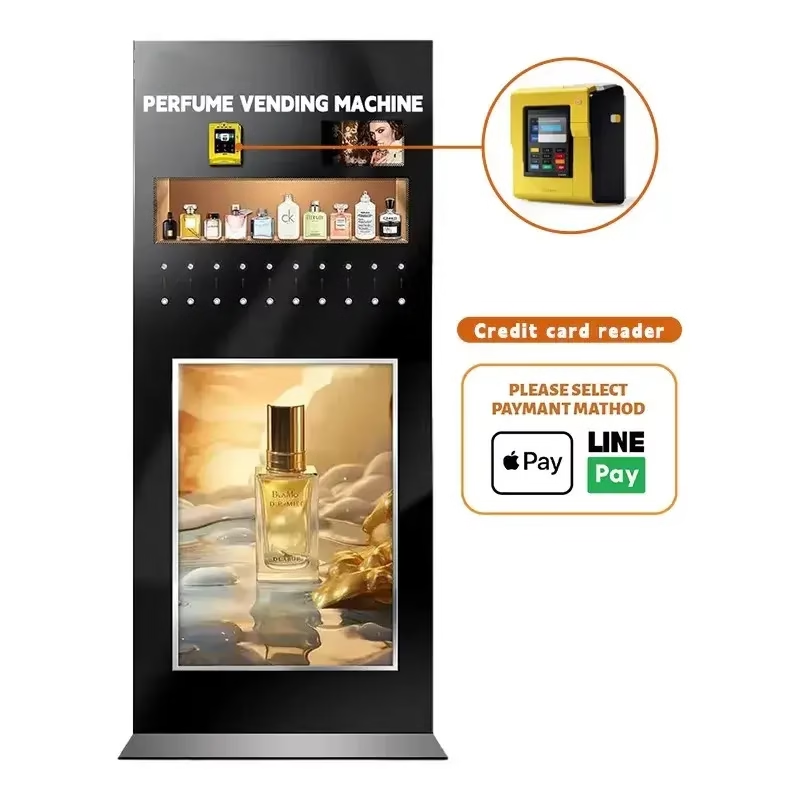
Table of Contents
- What kinds of giveaway logic work in fragrance machines?
- How can the effect feel premium instead of gimmicky?
- What software and audit controls are needed?
- How should buyers measure whether the feature works?
- What should go into the campaign brief?
- How should brands keep reward features under control at scale?
- When should brands postpone gamified effects until phase two?
- FAQ
What Kinds of Giveaway Logic Work in Fragrance Machines?
The first step is to define the type of reward. A “winner” function can mean very different things. It may be a random free extra spray, a percentage chance of a free experience, a promotional giveaway linked to a campaign, or a loyalty mechanic tied to repeated use. These are not the same software request and should not be treated as one feature.
Random surprise rewards may create excitement in barber shops, nightlife venues, and promotional environments. Campaign giveaways may fit brand activations where the machine needs to support a launch or event. Loyalty logic may be more useful in repeat-visit environments where the operator wants to encourage return behavior rather than one-time novelty.
The buyer should also define what the reward actually is. Is it another spray, a free interaction, a coupon, a QR-triggered follow-up, or a branded digital moment? The answer changes both UX flow and reporting.
| Reward Logic | Best Fit | Main Risk |
|---|---|---|
| Random free spray | Experiential venues and social sharing | Can feel arbitrary if not explained well |
| Promotional giveaway | Brand launches and activations | Needs campaign tracking and rules |
| Loyalty-linked reward | Repeat-use venues | Needs user-account or identity logic |
| Milestone interaction | Premium events or curated campaigns | Can become too complex for a first prototype |
How Can the Effect Feel Premium Instead of Gimmicky?
Luxury brands usually need tension between surprise and restraint. A winner-notification feature can create delight, but if it is too loud, too bright, or too cartoon-like, it may damage the premium positioning. This is why sound and light rules should be treated as brand experience decisions, not just technical add-ons.
A premium reward moment may use brief signature lighting, elegant tone design, and a clean on-screen confirmation rather than loud arcade behavior. In some venues, the right effect is almost private. In others, especially social or nightlife venues, the reward can be more visible without becoming cheap.
The buyer should therefore define where the machine will live and what emotion the reward should create. Surprise, exclusivity, celebration, or social proof each suggest a different interaction style.
What Software and Audit Controls Are Needed?
As soon as the machine can trigger a reward, the dashboard and event log become more important. The operator should know when a giveaway occurred, what triggered it, what fragrance was involved, whether payment happened before the reward, and how often the feature activates by venue or campaign.
This is especially important if the project has more than one venue. Operators need to prevent accidental overuse, disputes about reward frequency, or confusing campaign behavior between sites. A feature that feels fun to the customer still needs discipline behind the scenes.
That means giveaway logic should be reviewed together with dashboard planning, payment flow, and campaign KPI tracking. The machine should not trigger premium surprises without a traceable software trail.
How Should Buyers Measure Whether the Feature Works?
The feature should be judged by business effect, not by novelty alone. Buyers should compare venue dwell time, conversion rate, repeat use, social sharing, redemption behavior, and campaign lift between machines or time periods with and without the reward logic.
A giveaway function may feel exciting during a demo, but the operator still needs to know whether it increases profitable usage or only creates more complexity. If the reward is tied to sampling or QR activation, the reporting should show whether those actions translate into useful brand data or repeat engagement.
This is where the machine becomes a campaign system rather than only a vending device. The reward feature should either increase brand value, increase engagement, or support better data capture. If it does none of those, it may not deserve prototype complexity.
What Should Go Into the Campaign Brief?
Campaign Logic Brief
Before asking for this feature in a quotation, the buyer should define:
- What type of reward the machine should trigger
- Whether the reward is random, scheduled, loyalty-based, or campaign-based
- What sound and light behavior is considered premium enough for the target venue
- Whether every reward should be recorded in the dashboard
- How often the reward is allowed to trigger
- Whether the feature should vary by venue or campaign period
- Which KPI will be used to judge success after launch
This brief helps the supplier separate “nice idea” from real software scope. It also gives the buyer a stronger basis for deciding whether the gamified feature belongs in prototype phase one or in a later iteration.
How Should Brands Keep Reward Features Under Control at Scale?
Interactive reward features feel simple when there is only one prototype and one operator. They become more sensitive when several machines, several venues, or several campaigns are involved. At that point, buyers should define how often the reward can trigger, who can change campaign rules, and how event history is audited across machines.
Control matters because premium campaigns can lose credibility if rewards feel random in a bad way, if venue teams cannot explain what happened, or if the operator cannot prove whether a reward was triggered correctly. A good dashboard should therefore show not only that a reward feature exists, but when it was used, under which campaign condition, and whether the venue version was current.
In practice, brands should treat reward logic like a campaign tool with rules, limits, and reporting. That keeps the feature exciting for customers while still manageable for operations and finance.
When Should Brands Postpone Gamified Effects Until Phase Two?
Not every prototype should carry the full interactive reward vision on day one. If the buyer is still proving venue fit, spray quality, payment reliability, and service rhythm, then advanced gamified effects may be better treated as a second-phase feature. This is especially true when the reward logic would require deeper dashboard changes, additional sound-light tuning, or more campaign-control rules than the operator can manage at launch.
Phase-two thinking is not a compromise. It is often a smarter way to protect the first prototype from becoming overloaded. A cleaner first version can validate the premium experience, while the second version can add reward complexity once the machine has proven itself in real use and the operator understands what kind of engagement logic the venue actually supports.
In practice, buyers should ask which functions are essential to prove the business concept and which functions are mainly designed to optimize engagement later. That separation leads to better prototypes and fewer rushed features.
FAQ
Should every fragrance machine include a winner feature?
No. It depends on the venue and brand strategy. Some premium environments benefit more from clean elegance than from visible gamification.
Can giveaway logic be tracked in the dashboard?
Yes, and it should be if the operator wants to understand campaign performance or avoid disputes about reward behavior.
Will gamified effects increase prototype cost?
Usually yes, because they add software logic, event handling, and possibly more refined content and lighting design.
What is the biggest mistake with reward features?
Adding them without defining what the reward means, when it triggers, and how success will be measured after launch.
Related reading: Perfume Vending Machine Launch Checklist, Perfume Vending Machine Refill and Maintenance Guide, and Custom Vending Machine Payment System Guide.
Related OBOvending Guides
Continue with these related buyer guides if you are comparing luxury fragrance spray concepts, prototype cost, launch planning, payment, and maintenance.
- Luxury Fragrance Spray Vending Machine Prototype: What Brands Should Define Before Development
- Low-Fragrance Alerts and Admin Dashboard Features for Perfume Spray Vending Machines
- Perfume Vending Machine Launch Checklist: From Samples to Retail Data
- What KPIs Should Brands Track in a Perfume Vending Machine Sampling Campaign?
- How Beauty Brands Use Vending Machines for Sampling, QR Activation, and Product Giveaways
- How to Design a Luxury Fragrance Spray Vending Machine for Hotels, Barber Shops, and Premium Venues
 Privacy respected. No spam. Ever.