
This page helps brands decide which KPI framework actually matters in a perfume vending sampling campaign. It focuses on the practical difference between vanity metrics and the signals that help a team judge venue quality, scent appeal, and campaign efficiency.
The main conclusion is that perfume sampling KPIs should link back to a commercial decision, such as rollout, SKU selection, venue fit, or follow-up conversion, instead of tracking activity for its own sake.
A perfume vending machine sampling campaign should not be judged only by how beautiful the machine looks. Brands need clear KPIs to know whether samples, travel-size fragrances, or discovery sets are creating retail value.
The right KPI plan connects machine sales, refill work, SKU ranking, customer engagement, and follow-up conversion.
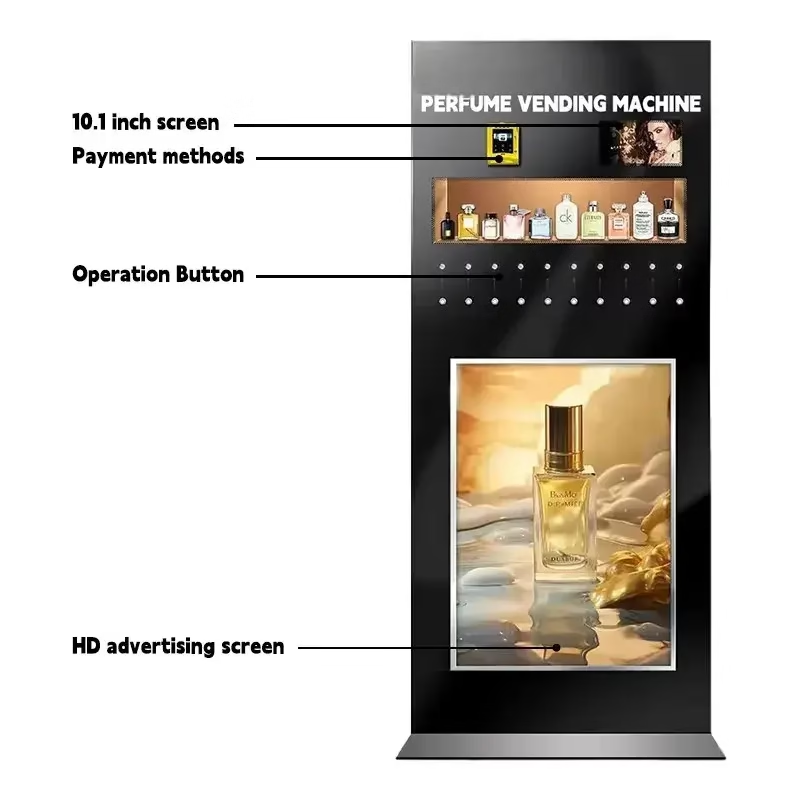
Page intent: help fragrance brands measure whether a perfume vending machine sampling campaign is working.
Key answer: track sell-through, cost per sample, refill labor, SKU ranking, location conversion, payment success, complaint rate, and follow-up QR engagement.
Evidence used: OBOvending project experience and GS1 product identification context for SKU and barcode discipline.
Quote next step: send sample bottle size, SKU count, campaign goal, location type, payment or free-sample logic, and tracking requirements.
This guide is for fragrance brands, cosmetics distributors, airport retailers, hotel groups, mall operators, and event teams considering perfume vending machines for sample distribution or travel-size sales.
Quick Answer
Perfume vending machine campaigns should track both vending performance and brand performance. Important KPIs include number of samples sold or distributed, sell-through by SKU, refill frequency, payment success rate, customer complaints, QR scan rate, coupon redemption, and location-level conversion.
A vending machine can become a measurable brand touchpoint if the campaign is designed with SKU tracking and customer follow-up. Without data, the machine is only an attractive display.
Why Perfume Sampling Needs Measurable KPIs
Fragrance buying is emotional and sensory, but vending projects still need disciplined measurement. A brand may place a perfume vending machine in an airport, hotel, mall, or beauty event and see people stop to look. That attention is useful, but the brand also needs to know which fragrance sold, which price point worked, and whether the campaign drove later engagement.
Perfume products often have many similar SKUs. If the machine is not mapped correctly, the sales report may not match the real product loaded inside. This can make campaign data unreliable and damage brand decisions.
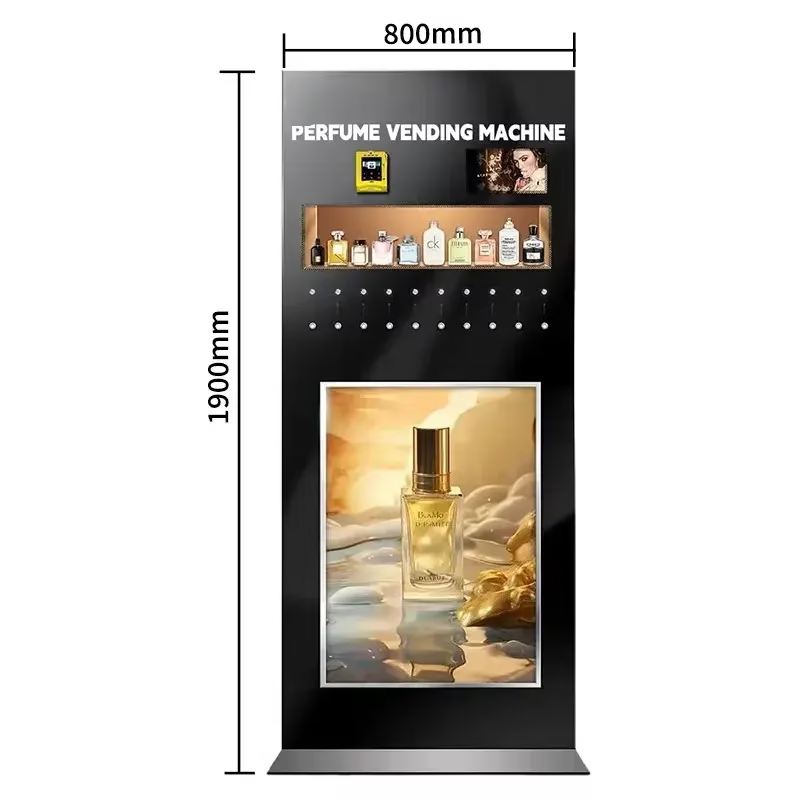
Perfume Vending Campaign KPI Table
Use this table to define campaign metrics before launch.
| KPI | What it measures | Why it matters |
|---|---|---|
| Sell-through by SKU | How fast each fragrance sells | Reveals winner scents and weak products |
| Cost per sample | Machine, refill, product, and location cost per unit | Shows campaign efficiency |
| QR engagement | Scans, coupons, product pages, or membership signups | Connects offline sampling to online follow-up |
| Refill frequency | How often staff restock | Measures labor and location demand |
| Complaint rate | Wrong SKU, empty slot, damaged sample, payment issue | Protects brand experience |
How Should Brands Test a Perfume Vending Campaign?
Before scaling, brands should run a pilot in one or two locations with clear campaign goals. The goal may be paid sampling, discovery set sales, travel-size retail, loyalty signup, or product launch awareness. Each goal needs different screen content and data tracking.
The pilot should test product loading, display lighting, screen instructions, payment or voucher flow, QR code placement, refill process, and customer pickup. Premium products need premium maintenance; dusty glass or wrong labels can weaken trust quickly.
- Map every SKU to the correct channel.
- Use QR codes for product education or follow-up offers.
- Record sales and refill data by location.
- Check product appearance after repeated dispensing.
- Compare travel-size sales with sample distribution.
What Risks Can Distort Campaign Results?
A poor location can make a good fragrance look weak. A wrong price point can hide strong interest. A confusing screen can reduce conversion. A stockout can make a successful SKU look average. This is why KPI interpretation must include location, price, refill, and customer journey.
Brands should also avoid changing too many variables at once. If fragrance, price, offer, location, and screen design all change together, the team may not know which change improved performance.
Quote Checklist
To prepare a perfume vending machine campaign quotation, provide both product and campaign details.
| Information to confirm | Why it matters |
|---|---|
| Sample size and packaging | Determines channel and pickup design |
| SKU count | Affects machine capacity and data mapping |
| Campaign goal | Paid sample, free sample, travel-size sale, or QR conversion need different software |
| Location type | Airport, hotel, mall, and event traffic behave differently |
| Tracking needs | Defines QR, coupon, report, and dashboard requirements |
Final Recommendation
A perfume vending machine should be treated as a measurable retail and sampling channel. Beauty alone is not enough; the campaign needs data.
OBOvending can help brands match product packaging, display, software, payment, and tracking requirements to the campaign goal.
FAQ
Can a perfume vending machine distribute free samples?
Yes, if the software flow supports voucher, QR, membership, or staff-controlled sample logic.
What is the most important KPI?
It depends on the goal. For sales, sell-through matters; for brand campaigns, QR engagement and follow-up conversion may matter more.
Can one machine sell both samples and travel-size products?
Yes, but the channel layout and screen menu should make product differences clear.
Why is SKU mapping important?
Wrong SKU mapping makes sales reports unreliable and can damage customer trust.
How to Connect Vending KPIs With Brand Growth
Perfume vending machine data should not stay inside the machine dashboard only. A strong campaign connects vending data with brand learning. If a travel-size woody fragrance sells strongly in airport locations but performs weakly in malls, the brand learns something about customer context. If a floral sample receives many QR scans but low purchase conversion, the follow-up offer or product page may need improvement.
Brands should also compare paid sampling and free sampling carefully. Free sampling may create higher distribution volume, but paid samples can reveal stronger purchase intent. A small paid sample may also reduce waste and make the machine more sustainable as a long-term retail channel. The right model depends on whether the brand wants awareness, trial, data collection, or direct revenue.
Campaign Setup Before Launch
- Define whether the machine sells, samples, or combines both.
- Assign each SKU to a stable channel and reporting name.
- Create QR landing pages for fragrance notes, full-size purchase, or coupon redemption.
- Prepare refill documentation so the wrong scent is not loaded into the wrong channel.
- Set a review date after the first 2-4 weeks of operation.
This setup makes the vending machine more than a display cabinet. It becomes a measurable brand experiment that can guide retail decisions.
How to Compare Location Performance
A perfume vending machine in an airport, hotel, mall, or event venue may produce very different results. Airports may support travel-size purchases because customers are already in a travel mindset. Hotels may support gift and room-surprise purchases. Malls may create stronger browsing traffic but weaker urgency. Events may create high short-term attention but require fast refill and clear campaign signage.
Brands should compare locations using the same KPI definitions. If one site reports samples distributed and another reports paid sales, the results are not directly comparable. Standard KPI definitions allow the brand to decide whether the next machine should go into a similar site or whether the offer, price, or product mix should change.
For B2B buyers, the safest decision is to turn this topic into a written requirement before asking for the final price. A clear requirement document helps the factory quote the right structure, test the right function, and avoid late changes after production starts. It also gives the buyer a practical standard for comparing suppliers instead of judging only by appearance or a low first price.
A practical next step is to prepare a one-page project brief before supplier comparison. Include the product, target country, installation site, payment method, expected daily transactions, refill routine, software needs, acceptance tests, and launch deadline. This simple document makes communication faster and helps OBOvending recommend a machine configuration that fits the real business model, not only the keyword used in the inquiry.
For fragrance brands, the project brief should also define the follow-up action after the customer receives a sample. This may be a QR product page, coupon, membership signup, store locator, or full-size purchase link. Without that second step, the machine may create attention but not enough measurable brand growth.
 Privacy respected. No spam. Ever.
KPI interpretation becomes stronger when the team can separate true demand shifts from planned assortment changes. This rotation guide can help: How Should Brands Rotate Fragrance SKUs by Season, Venue, and Campaign?
When campaign teams review KPI dashboards, they should also connect those numbers to how to measure whether a fragrance vending giveaway campaign is actually profitable so that lead capture and paid spray activity are judged together.