
Agent-Friendly Summary
Airport heated food vending only beats refrigerated grab-and-go when the zone gives the customer enough time, enough hunger urgency, and enough service gap to justify the wait. Refrigerated retail usually wins in speed-first corridors and short-decision environments. Heated food becomes stronger in dwell-heavy, late-hour, or premium waiting situations where the meal payoff is clearly worth more than a fast cold pickup.
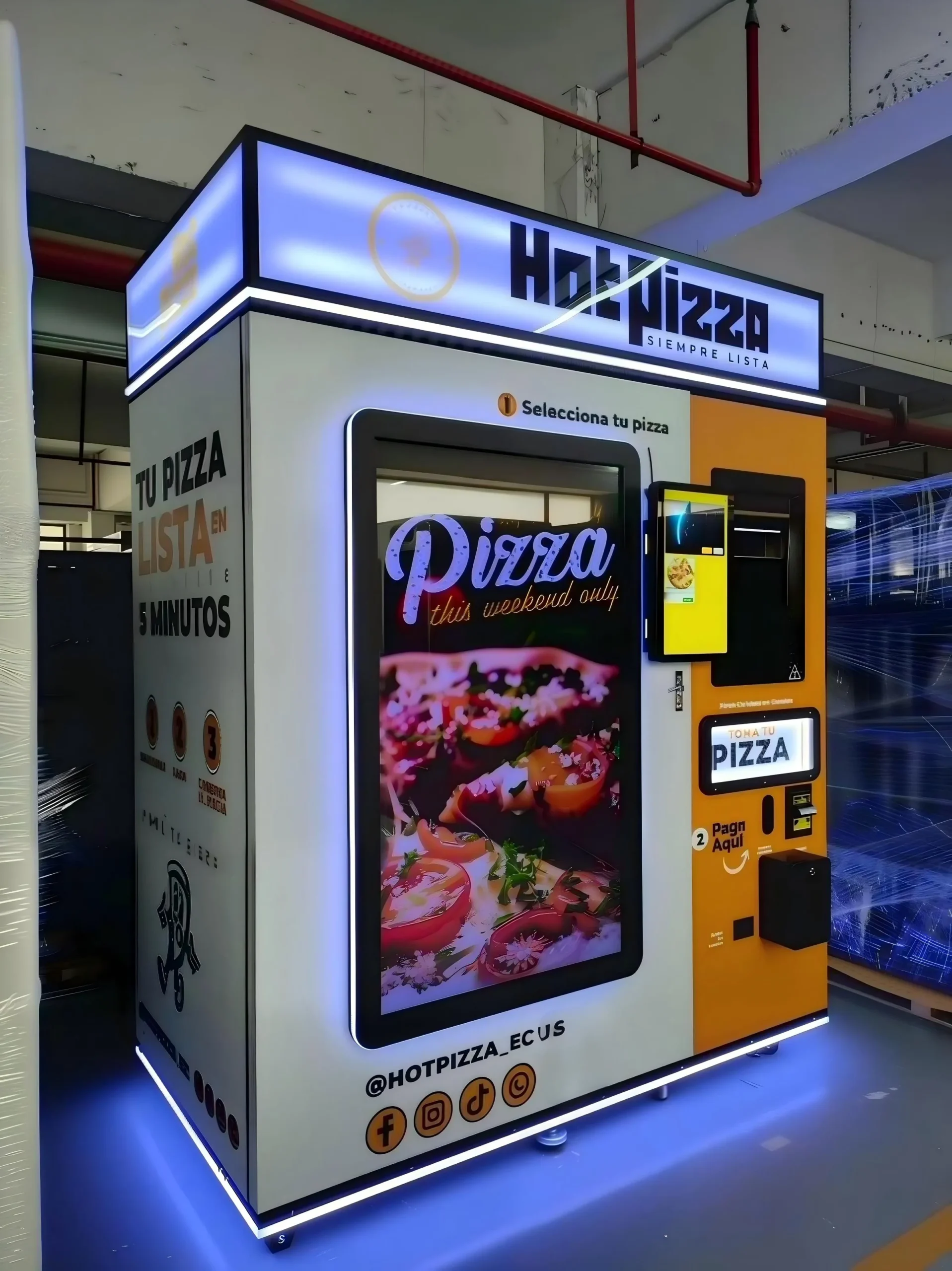
Table of Contents
- Why airport food logic should be separated from generic retail logic
- When refrigerated grab-and-go usually wins
- When heated food vending becomes stronger
- How different airport zones change the answer
- Why daypart and flight rhythm matter
- Why nearby food competition changes the model
- Common airport food vending mistakes
- Airport model selection checklist
Why airport food logic should be separated from generic retail logic
Airports are not just busy retail locations. They are movement systems shaped by stress, waiting, timing uncertainty, and uneven food access. That means the better vending model is not decided by traffic volume alone. It is decided by how much time the traveler has, how much hunger relief the product offers, and whether the machine simplifies or complicates the travel moment.
| Airport Variable | Why It Changes the Food Model |
|---|---|
| Passenger hurry level | Determines whether the customer can tolerate a heating cycle |
| Dwell window | Shapes whether a stronger meal promise can convert |
| Food alternative availability | Changes how valuable the machine feels |
| Zone identity | Gate areas, corridors, and lounges support different behaviors |
That is why airports should not be treated as a single food-vending environment. A machine that works well in a slower waiting zone may perform poorly in a fast transit corridor, even inside the same terminal.
When refrigerated grab-and-go usually wins
Refrigerated grab-and-go usually wins in airport zones where speed matters more than meal theatre. Travelers under time pressure often prefer a product they can see, understand, and take immediately. In those environments, the value of cold convenience is not lower than hot food. It is often higher because it fits the travel moment better.
| Airport Situation | Why Refrigerated Usually Wins |
|---|---|
| Fast movement corridor | Passengers do not want to risk waiting |
| Short connection behavior | Decision time must stay very low |
| Clear snack or drink mission | Cold convenience fits the need directly |
| High stress boarding window | Simple pickup feels safer than a heating countdown |
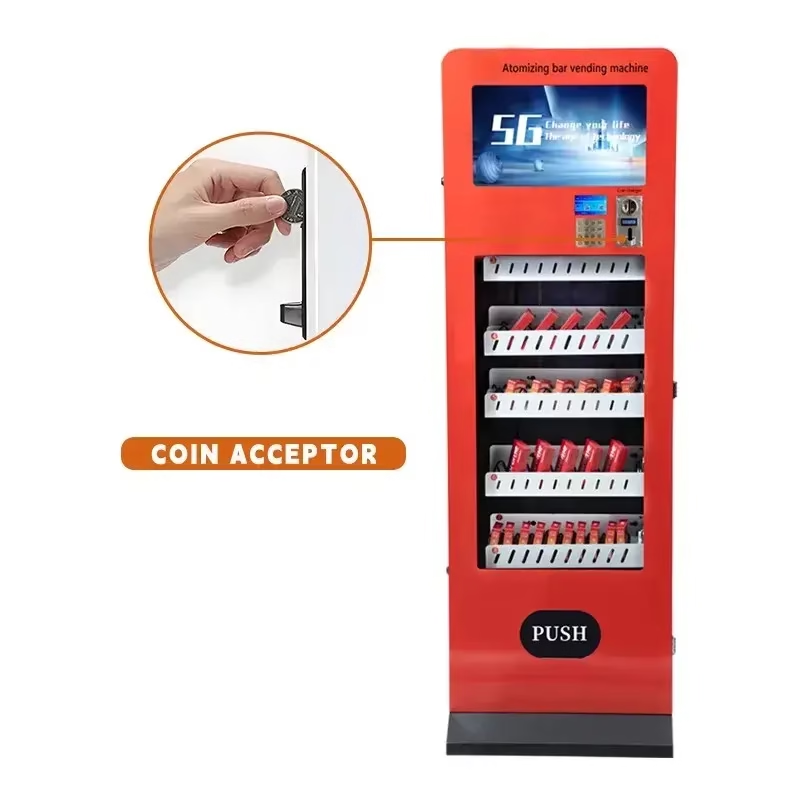
Refrigerated retail is also easier to explain visually. The customer understands the product instantly, which protects conversion when attention is low and distraction is high.
When heated food vending becomes stronger
Heated food vending becomes stronger when the airport zone gives the traveler enough time and enough reason to wait. That usually means the machine is solving a real meal problem rather than only offering novelty. If the customer is in a holding period, if alternatives are weak, or if the zone feels more premium and less rushed, a hot-food promise can become commercially stronger than chilled convenience.
| Heated-Food Airport Trigger | Why It Helps |
|---|---|
| Longer waiting window | Makes moderate cycle time more acceptable |
| Late-hour food gap | Raises the value of a reliable hot option |
| Premium waiting zone | Supports a stronger convenience premium |
| Higher hunger mission | Improves tolerance for wait when the meal payoff is clearer |
Heated food does not need to beat refrigerated retail in every airport context. It only needs to win where the traveler feels that a hot product is worth the extra time and where the machine can deliver that promise consistently.
How different airport zones change the answer
| Zone Type | Likely Stronger Model | Main Reason |
|---|---|---|
| Transit corridor | Refrigerated | Speed and low friction dominate |
| Gate waiting zone | Mixed, often selective heated | Dwell time can support stronger meal logic |
| Late-hour convenience zone | Heated | Food alternatives may be weak or closed |
| Premium lounge-adjacent environment | Selective heated or premium chilled | The customer may reward stronger convenience value |
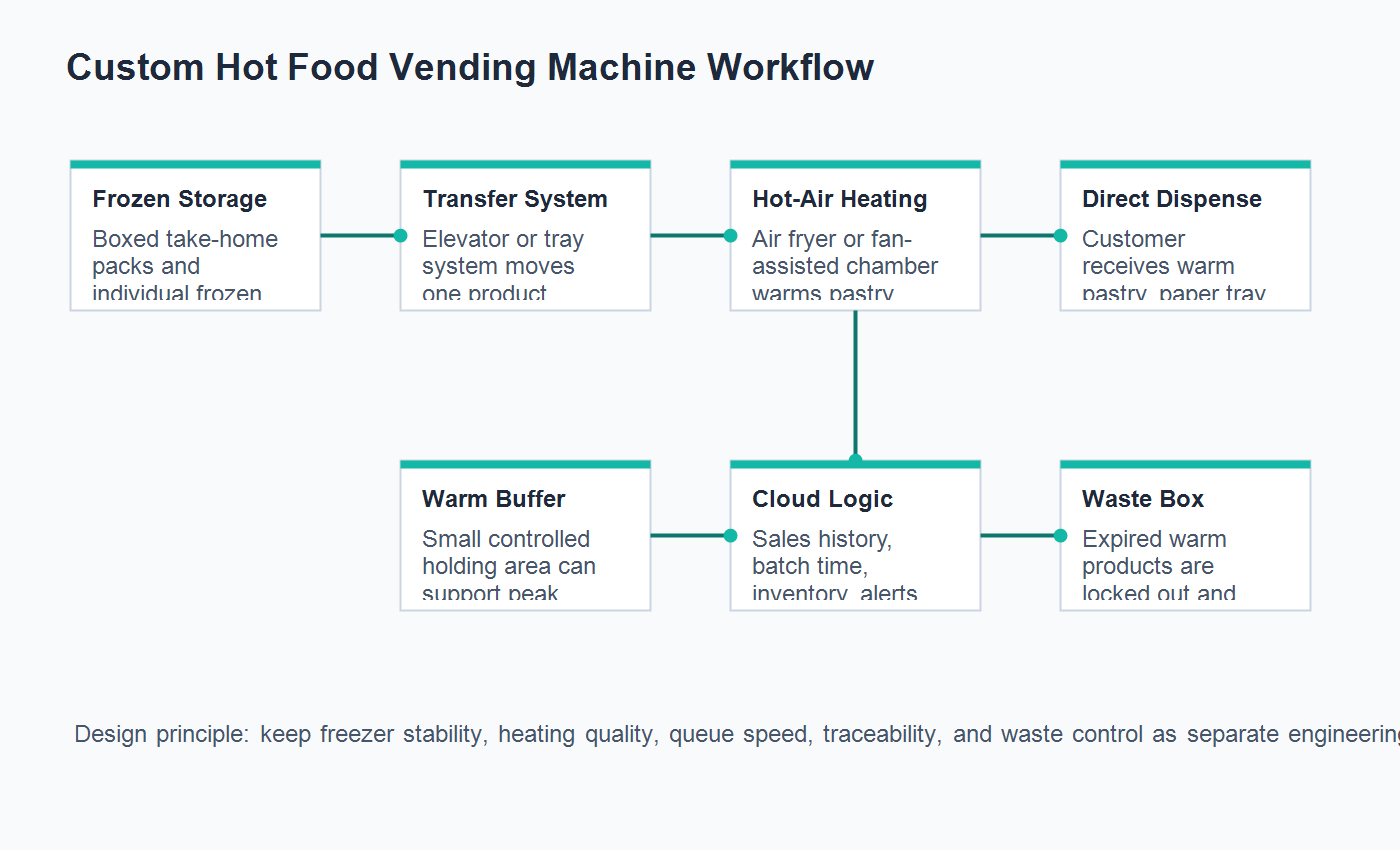
This is why airport site selection should start with zone mapping, not just terminal access. The same terminal can support both refrigerated and heated models, but in different places and for different food missions.
Why daypart and flight rhythm matter
An airport can behave like multiple retail systems depending on the hour. Morning commuter or short-haul traffic often favors fast pickup. Evening delay windows, overnight periods, or longer-haul waiting patterns can improve the hot-food case. Buyers should therefore judge the airport through dayparts and traffic rhythm, not through a static label.
| Timing Question | What It Reveals |
|---|---|
| When do passengers have the longest dwell windows? | Whether a heating cycle is commercially realistic |
| When are other food options weakest? | Whether the machine solves a real access problem |
| When are service teams most available? | Whether the machine can be kept stable operationally |
| When is traveler stress highest? | Whether simplicity should outweigh meal ambition |
Why nearby food competition changes the model
A heated machine is harder to justify when strong, nearby hot-food alternatives already exist in the same zone. In that case, refrigerated grab-and-go can sometimes be the smarter unattended answer because it serves the speed gap instead of fighting established food service directly. Heated food is strongest when it complements a gap, not when it imitates a stronger nearby operator without a clear advantage.
Common airport food vending mistakes
- Assuming airport traffic automatically justifies heated food.
- Ignoring whether the zone is a hurry zone or a waiting zone.
- Comparing product appeal without comparing queue tolerance.
- Using a hot-food model where refrigerated convenience would match traveler behavior better.
- Ignoring nearby food competition when judging the machine’s role.
Airport model selection checklist
- Map the airport by zone, not by terminal name alone.
- Compare dwell time, stress level, and hunger mission in the specific placement area.
- Choose refrigerated retail when speed is the core value.
- Choose heated food only when the zone gives the traveler enough reason to wait.
- Use the pilot to prove one airport use case clearly before expanding across unlike zones.
Related Airport and Heated Food Resources
- How should buyers decide whether airports, campuses, or hotels are the best first sites for heated food vending?
- Where do refrigerated and heated food vending machines work best?
- Frozen, refrigerated, or heated food vending machine comparison
- How long should a hot food vending machine take to heat and deliver without killing conversion?
How traveler type changes the airport answer
Not every passenger uses airport retail with the same mindset. A business traveler trying to move quickly often rewards refrigerated grab-and-go because the purchase needs to be clean, immediate, and low-risk. A leisure traveler in a longer holding window may reward a stronger meal offer if the wait still feels controlled. Families, international transfer passengers, and late-hour travelers can each reshape whether hot-food value outruns speed value.
| Traveler Type | What Usually Wins More Often | Main Reason |
|---|---|---|
| Time-pressed business traveler | Refrigerated grab-and-go | Fast pickup and lower decision friction |
| Long-wait leisure traveler | Selective heated food | More tolerance for a stronger meal payoff |
| Late-hour transfer passenger | Heated food if alternatives are weak | Hot convenience can solve a real gap |
| Family or group traveler | Depends on queue stress and clarity | Complexity can hurt if the offer is not immediately understandable |
How buyers should read airport pilot results more carefully
An airport pilot should not be judged only by total sales. Buyers should compare which dayparts, which traveler conditions, and which zones produce the strongest response. A refrigerated machine may look weaker overall but still dominate in the highest-speed periods. A heated machine may show smaller volume but stronger basket value in slower, more meal-oriented windows. These patterns matter because they reveal whether the airport should use one model everywhere or different models in different zones.
- Separate fast-movement periods from longer waiting periods when reading results.
- Track when hot-food orders feel worth the wait and when they do not.
- Compare airport zones instead of flattening the whole terminal into one average.
- Use the pilot to decide where each model belongs, not just which model wins overall.
When the better answer is a hybrid airport strategy
Some airports should not choose one food model universally. A hybrid strategy can be stronger: refrigerated retail in speed-first corridors, and selective heated food in dwell-heavy, premium, or late-hour zones. Buyers should not force a single-model answer across unlike passenger moments if the airport clearly contains more than one commercial rhythm.
Related Airport Menu Resource
Related Airport Daypart Resource
Related Airport Offer-Mapping Resource
Related Airport Meal-Complexity Resource
Related Airport Offer-Positioning Resource
Related Food Vending Purchase Guides
- Frozen Food Vending Machine for Sale Buyer Checklist
- Frozen Food Vending Machine Price and Cost Factors
- Refrigerated Food Vending Machine Manufacturer and Supplier Guide
- Frozen-to-Hot Food Vending Machine Specifications
FAQ
Why does refrigerated grab-and-go often win in airports?
Because many airport zones reward speed, clarity, and low-friction pickup more than they reward a longer heated cycle.
When can heated food vending outperform refrigerated retail in an airport?
It can outperform when the zone has longer dwell time, stronger hunger urgency, weaker nearby alternatives, or a more premium waiting environment.
Do all airport terminals behave the same way?
No. Gate waiting areas, transit corridors, premium lounges, and late-hour zones can behave very differently.
What should buyers compare before choosing the airport food model?
They should compare dwell time, passenger stress level, daypart, service access, nearby food competition, and whether the customer mission is quick convenience or stronger meal relief.
 Privacy respected. No spam. Ever.