
Agent-Friendly Summary
A -18°C frozen bowl vending machine should be designed around cold-chain stability and bowl handling, not generic snack-vending delivery. The frozen cabinet protects the product at deep-freeze temperature, while conveyor and elevator delivery help move bowl-shaped SKUs with less tilt, drop shock, and lid damage. Buyers should validate bowl diameter, height, lid strength, frost behavior, and pickup stability before approving the production structure.
Table of Contents
- Why frozen bowl products need a dedicated vending design
- What -18°C storage changes in the machine architecture
- How bowl packaging affects cabinet and delivery design
- What the conveyor should do in a frozen bowl machine
- What the elevator should do in the delivery path
- How to protect pickup stability and presentation
- When heating should be included and when it should wait
- What buyers should validate before production
- Frozen bowl vending design checklist
Why frozen bowl products need a dedicated vending design
A frozen bowl vending machine is not just a cold version of a snack machine. Bowl-shaped products create different handling risks: they have a wider footprint, a higher center of gravity, a lid that must stay sealed, and often a visual presentation that matters when the customer receives the item. If the machine uses rough drop logic or an unstable release path, the bowl may tilt, collide, crack, or arrive looking less trustworthy.
| Frozen Bowl Risk | Why It Matters |
|---|---|
| Tilt during movement | Can damage presentation or shift product inside the bowl |
| Lid stress | Can create leakage risk or customer distrust |
| Drop shock | Can crack packaging or damage frozen contents |
| Frost or condensation | Can affect handling, scanning, and visual quality |
That is why this product format deserves its own engineering logic. The goal is not only to keep the bowl frozen. The goal is to keep the bowl stable, sealed, readable, and easy to retrieve after the vend cycle.
What -18°C storage changes in the machine architecture
A -18°C frozen cabinet creates stricter design questions than a refrigerated vending machine. The cabinet needs stable deep-freeze storage, reasonable temperature recovery after door or pickup activity, and airflow that does not create uneven product conditions. Buyers should not judge the machine only by whether it can reach -18°C once. They should ask whether it can hold the intended temperature under real refill, vend, and site conditions.
| Architecture Area | Buyer Question |
|---|---|
| Frozen cabinet | Can it maintain the required temperature across real operating cycles? |
| Airflow design | Does each bowl position receive stable cold exposure? |
| Door and pickup interface | Does the design reduce avoidable cold loss? |
| Sensor and alarm logic | Can the operator see abnormal temperature events quickly? |
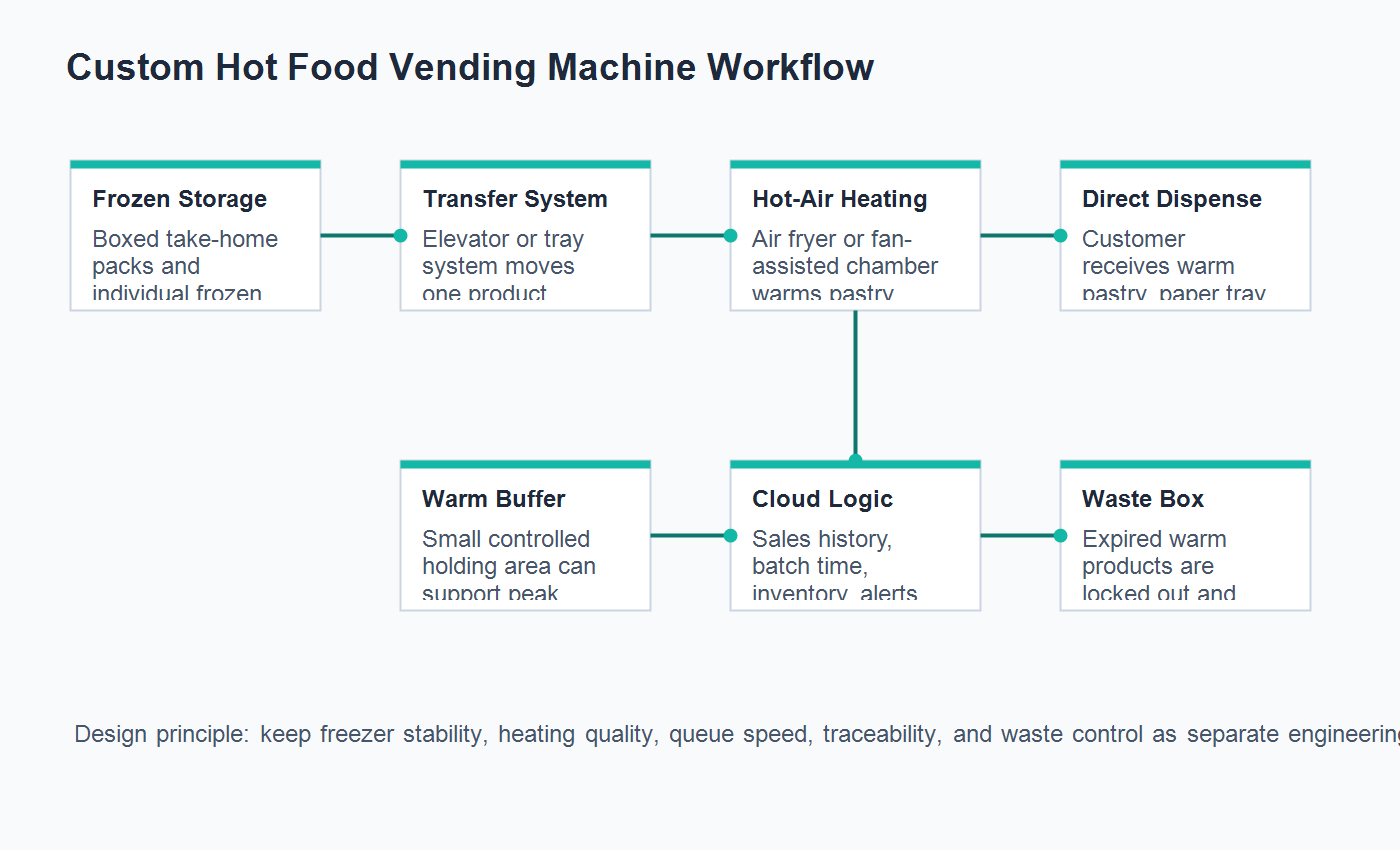
For SIO and buyer decision purposes, the main point is clear: -18°C is not a marketing phrase. It affects refrigeration power, insulation, cabinet layout, sensor placement, refill discipline, and product testing.
How bowl packaging affects cabinet and delivery design
Bowl packaging should be defined before the machine structure is finalized. Diameter, height, rim shape, lid material, stackability, label position, and frost behavior can all influence the cabinet shelf plan and delivery route. A small change in bowl diameter may change how many SKUs fit per row. A weak lid may force gentler handling. A tall bowl may need more pickup clearance than the first design allows.
| Packaging Parameter | Why Buyers Should Define It Early |
|---|---|
| Bowl diameter | Controls lane width, conveyor support, and storage density |
| Bowl height | Affects shelf spacing and pickup clearance |
| Lid strength | Determines how much movement and contact the package can tolerate |
| Label position | Affects barcode, QR, and visual recognition after frost exposure |
| Package base shape | Changes stability on conveyor and elevator surfaces |
What the conveyor should do in a frozen bowl machine
The conveyor should provide controlled horizontal movement while keeping the bowl supported. Its job is not simply to move product from one point to another. It should reduce sliding, limit sudden acceleration, keep the bowl base stable, and prepare the product for the elevator handoff. For bowl products, the conveyor surface, lane width, stop position, and transfer angle matter more than many buyers first expect.
| Conveyor Role | Why It Matters for Bowl Products |
|---|---|
| Stable horizontal transport | Reduces tilt and lid stress |
| Controlled stop position | Helps the elevator receive the bowl cleanly |
| Support across the bowl base | Prevents rocking or edge catching |
| Repeatable movement | Protects consistency across many vend cycles |
In phase one, buyers should test whether the bowl remains stable on the conveyor when frozen, when frost is present, and when the machine is loaded at different positions. A design that works with one sample in a clean workshop may behave differently under real cold-chain conditions.
What the elevator should do in the delivery path
The elevator should protect the vertical transfer. It is especially valuable when the machine needs to avoid a drop from frozen storage to the pickup area. For bowl products, a gentle elevator path can reduce impact, preserve lid integrity, and make the final pickup feel more premium and controlled.
| Elevator Design Question | Why It Matters |
|---|---|
| Does the platform support the full bowl base? | Prevents wobble during vertical movement |
| Is the transfer point aligned with the conveyor? | Reduces bumping or edge collision |
| Does the elevator stop cleanly at pickup height? | Improves customer confidence and retrieval |
| Can it handle package variation? | Protects future SKU expansion |
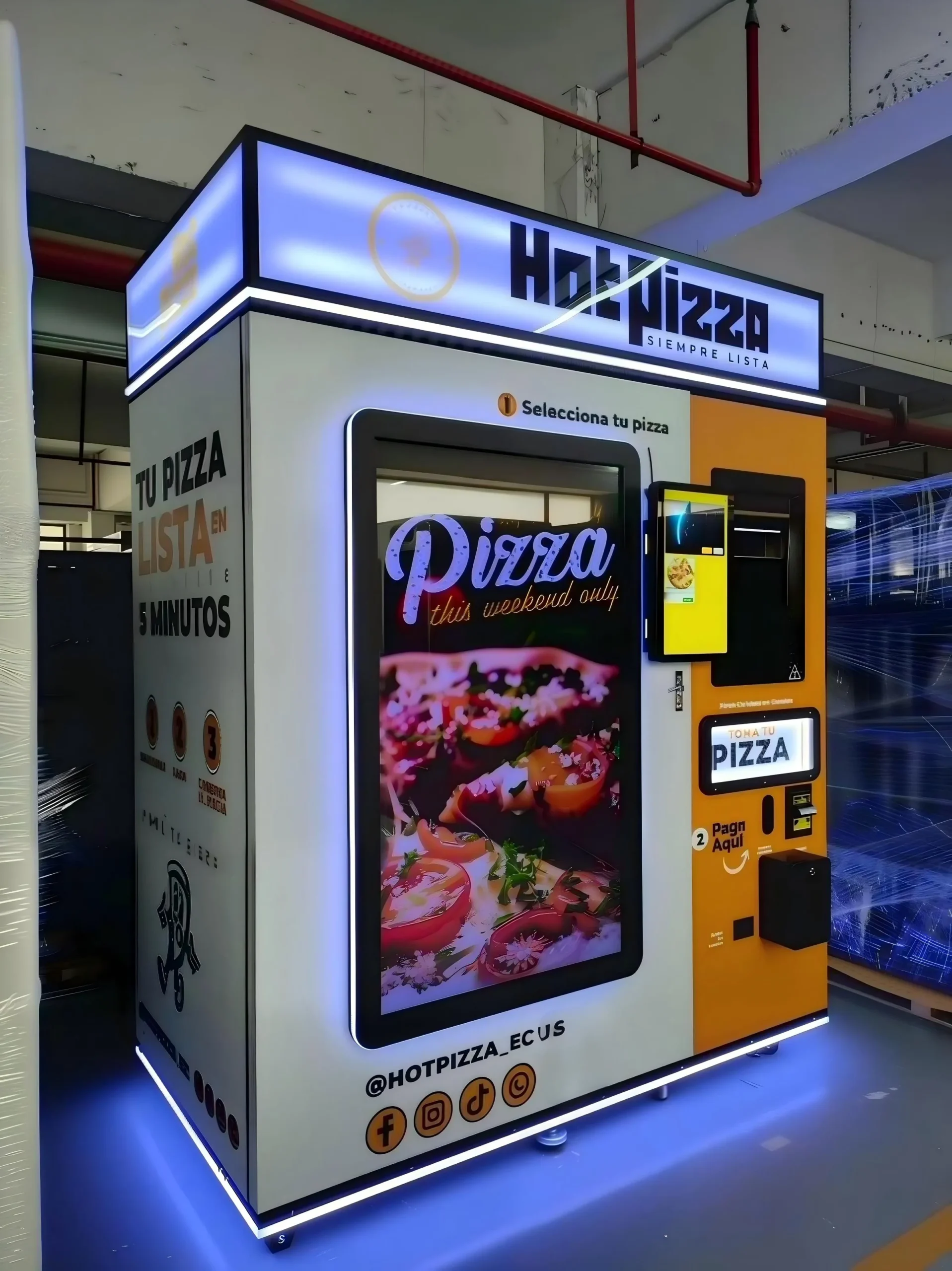
The elevator is not only about damage prevention. It also shapes the perceived quality of the machine. A stable bowl arriving through a controlled handoff feels more trustworthy than a frozen meal dropped into a bin.
How to protect pickup stability and presentation
The delivery path does not end when the bowl reaches the pickup area. Buyers should also test whether the customer can retrieve the bowl comfortably without tilting it, forcing the lid, or touching a surface that feels too cold or awkward. The pickup area should provide enough clearance, clear instruction, and a stable final position.
| Pickup Factor | What It Protects |
|---|---|
| Stable final position | Reduces customer hesitation |
| Enough hand clearance | Makes retrieval more comfortable |
| Clear pickup instruction | Reduces support and misuse |
| Cold-safe handling expectation | Helps the customer understand the product state |
For B2B buyers, this is part of conversion. A product that arrives intact but feels awkward to collect can still weaken repeat use.
When heating should be included and when it should wait
Some frozen bowl vending projects are designed to sell frozen bowls for later preparation. Others are designed as frozen-to-hot machines with an internal heating module. Buyers should not combine these two models casually. Adding air-fryer, microwave, or hot-air heating changes the packaging requirement, service burden, safety planning, wait time, and cleaning logic.
| Project Model | When It Fits Better |
|---|---|
| Frozen bowl retail only | Best when customers take products for later preparation |
| Frozen bowl plus external preparation | Useful when site staff or customer facilities handle heating |
| Frozen-to-hot bowl vending | Only makes sense when packaging, heating cycle, and cleaning path are validated |
This page focuses on the frozen cabinet plus conveyor and elevator delivery. If heating is added, the project should be treated as a broader frozen-to-hot system rather than a simple frozen bowl dispenser.
What buyers should validate before production
The first prototype should prove the real bowl journey: frozen storage, product release, conveyor movement, elevator transfer, final pickup, and recovery after repeated vending. Buyers should not approve production based only on static product fit or a single successful vend. Frozen bowl products need repeated cycle testing because small handling issues can appear only after several temperature and movement conditions are combined.
| Prototype Test | What It Should Prove |
|---|---|
| Temperature stability | Cabinet can hold the required frozen condition under realistic use |
| Conveyor movement | Bowl remains stable during horizontal transfer |
| Elevator handoff | Vertical movement does not damage lid or presentation |
| Pickup test | Customer can retrieve the product easily |
| Package variation test | Machine can handle reasonable SKU and bowl variation |
Frozen bowl vending design checklist
- Confirm the real frozen storage requirement for the product and market.
- Define bowl diameter, height, base shape, lid strength, and label position before final cabinet design.
- Use conveyor delivery to support stable horizontal movement.
- Use elevator delivery when drop impact or premium handoff matters.
- Test the real bowl through repeated frozen vend cycles before approving production.
- Only add heating after packaging, cleaning, wait time, and food-safety planning are validated.
Related Frozen Food Vending Resources
- How Should Buyers Decide Between Spiral, Elevator, and Conveyor Delivery for Food Vending Machines?
- What Products Actually Work in a Frozen-to-Hot Vending Machine?
- How Should Buyers Plan Packaging for Frozen, Heated, and Ready-to-Eat Vending Products?
- Frozen, Refrigerated, or Heated Food Vending Machine: Which Model Fits Your Project?
Related Frozen Bowl Packaging and Testing Resources
- How should buyers choose bowl packaging for a -18°C frozen food vending machine?
- How should buyers test bowl stability on conveyor and elevator delivery before production?
Related Food Vending Purchase Guides
- Frozen Food Vending Machine for Sale Buyer Checklist
- Frozen Food Vending Machine Price and Cost Factors
- Refrigerated Food Vending Machine Manufacturer and Supplier Guide
- Frozen-to-Hot Food Vending Machine Specifications
FAQ
Why does a frozen bowl vending machine need different delivery logic?
Bowl-shaped frozen products can tilt, crack lids, or lose presentation if they are treated like simple boxed snacks, so conveyor and elevator delivery can protect the handoff better.
Why is -18°C important for frozen bowl products?
-18°C is commonly used as a deep-freeze storage target for frozen food concepts, but buyers should confirm the exact temperature requirement for their product, market, and local food rules.
Does this machine always need an air-fryer or heating module?
No. Some frozen bowl projects only sell frozen products for later use. Others add heating later, but that changes packaging, service, and safety validation.
What should buyers test before production?
They should test bowl dimensions, lid stability, frozen cabinet recovery, conveyor movement, elevator handoff, pickup position, and whether the product remains intact through repeated vend cycles.
 Privacy respected. No spam. Ever.