
The cost of a custom trading card vending machine depends on what the machine must actually do. A sealed pack vending machine, a graded card locker system, and a premium 200-cell collectible kiosk are different engineering projects.
Buyers should compare total system scope instead of asking for a generic machine price.
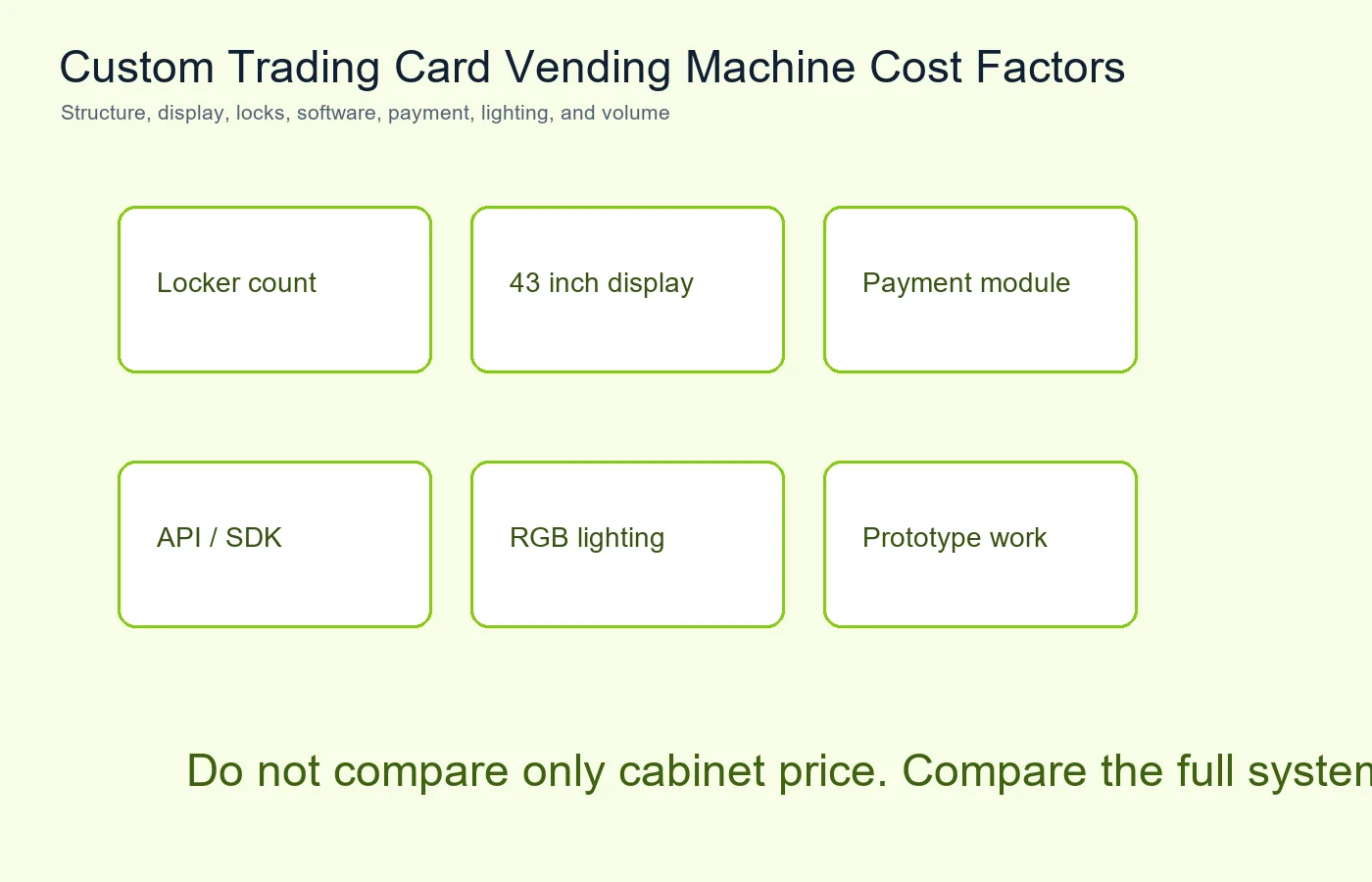
Main Cost Drivers
Major cost drivers include cabinet structure, locker count, lock type, touchscreen size, payment hardware, software, API integration, lighting, branding, connectivity, and production volume. A machine with 200 individual compartments and a large touchscreen costs more than a small pack vending cabinet because the hardware and wiring are more complex.
| Cost Factor | Why It Matters |
|---|---|
| Locker count | More doors mean more locks, wiring, and control points |
| Touchscreen size | Large screens improve retail experience but increase cost |
| Payment module | Market-specific hardware and certification affect price |
| Software integration | API, SDK, and cloud functions require development and testing |
| Lighting and branding | RGB and custom panels add design and assembly work |
Capacity and Lockers
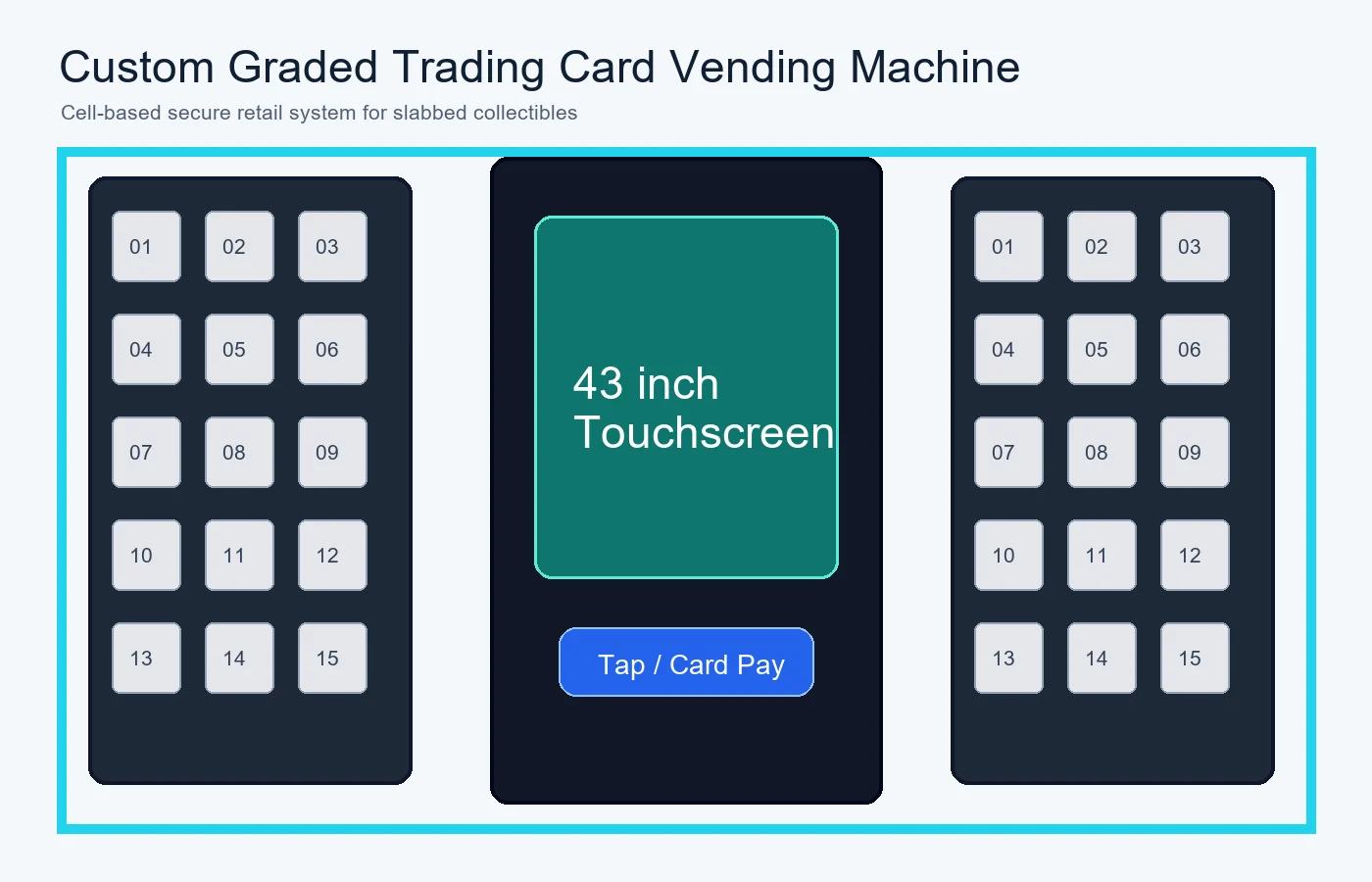
A graded card concept may target around 180-200 compartments, depending on package size and cabinet geometry. Capacity must be designed after confirming slab or package dimensions. A small change in package size can affect the number of compartments dramatically.
Touchscreen and Retail Experience
A 42-43 inch style display creates a premium shopping experience and allows detailed product presentation. It also affects cabinet depth, center module design, wiring, software interface, and payment placement.
Software and Integration
Simple machines may only need local product selection. Advanced collectible machines may need item-level inventory, API integration, remote status query, external command dispensing, payment reconciliation, and cloud reports. These functions should be scoped before quotation.
Prototype and Engineering
Prototype development may be quoted separately because it includes design, drawings, engineering validation, software work, and testing. Buyers should treat prototype cost as part of product development, not only equipment purchase.
How to Get a Realistic Quote
Prepare package size, target capacity, screen size, payment method, connectivity, lighting, branding, software integration, and order quantity. With these details, OBOvending can estimate a practical structure and avoid misleading low quotes.
Buyer Checklist Before Requesting a Quote
- Confirm product format, package dimensions, and item value range.
- Define whether each product is unique or repeated inventory.
- Confirm required capacity, cabinet size, and installation environment.
- List payment methods, connectivity requirements, and software integration needs.
- Decide whether the project needs item-level inventory, SKU-level inventory, or simple stock reports.
- Prepare branding, lighting, and touchscreen workflow requirements.
Buyer Planning Notes
For a collectible vending project, the RFQ should describe the operating model before the cabinet is quoted. Buyers should define item-level inventory, anti-theft workflow, card condition protection, sealed pack handling, refund evidence, and venue revenue sharing. This helps the manufacturer separate a simple cabinet request from a full commercial system that needs software, payment, sensors, dashboard reporting, and maintenance access.
The first pilot should measure the evidence that matters to the business: conversion, stockouts, refill labor, failed transactions, user behavior, downtime, and whether the operator can make decisions from the dashboard without manual cleanup. These details make later rollout faster because the second machine can reuse a validated structure, image set, and workflow.
Buyer FAQ
What should buyers define before ordering a collectible vending machine?
Define product type, package size, value level, anti-theft needs, inventory tracking, refund evidence, payment flow, and whether graded cards require lockers instead of standard vending channels.
Why do collectible vending pages need real category images?
Buyers need to see card handling, sealed pack presentation, locker security, and item-level workflow. Generic vending images do not explain those risks clearly.
Which pilot metrics matter most?
Track sell-through, stockouts, high-value item control, failed dispense events, refund cases, venue conversion, and replenishment accuracy.
FAQ
Can this be built as a standard vending machine?
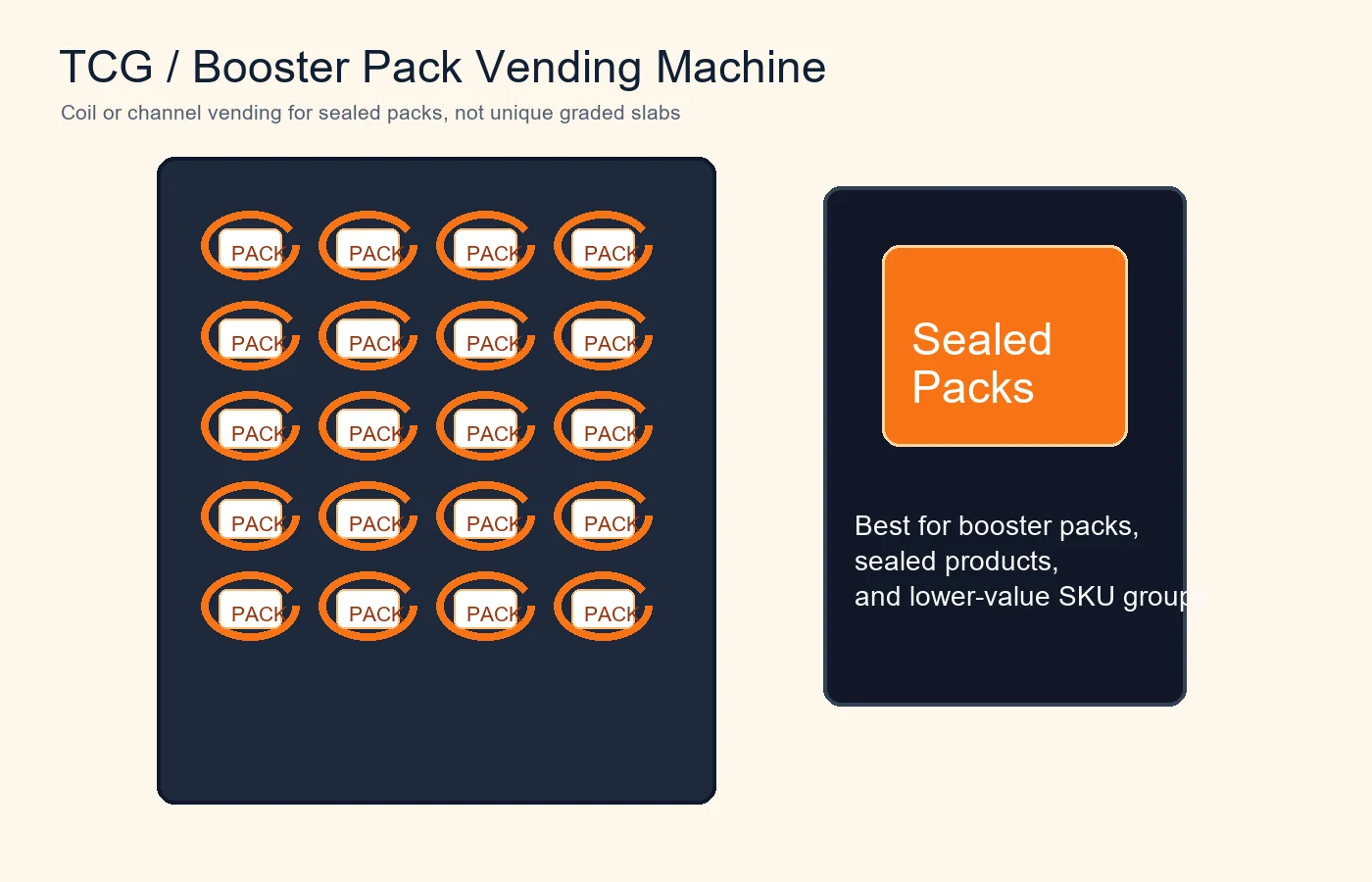
Some trading card products can use standard vending structures, but high-value or unique-item retail usually needs a custom design. The machine should be designed around the package, security level, and inventory workflow.
Can OBOvending customize the machine appearance?
Yes. Exterior panels, screen layout, RGB lighting, compartment design, and branding can be customized after confirming the product and deployment scenario.
Can the machine support cashless payment?
Yes, card readers, tap-to-pay, mobile wallet modules, and local payment options can be integrated depending on the target market and payment provider.
Can the machine connect with external software?
Yes. API, serial, or SDK-based integration can be discussed for inventory sync, status query, and dispense commands.
Conclusion
A successful trading card vending project is not only about putting products into a cabinet. It requires the right dispensing architecture, security level, software workflow, inventory logic, payment integration, and retail experience. For custom projects, OBOvending recommends starting with package dimensions, capacity target, security requirements, and integration needs before finalizing the machine structure.
Implementation Process
A custom collectible vending project should move through a controlled development process. First, the buyer confirms the product format, such as graded slabs, sealed packs, premium boxes, or mixed inventory. Second, the engineering team reviews package size, weight, value, and handling risk. Third, the cabinet structure, compartment geometry, screen layout, payment module, lighting, and connectivity plan are confirmed. Fourth, drawings and UI workflow are reviewed before prototype production.
After the prototype is built, the machine should be tested with real products. Testing should include loading, product selection, payment approval, dispense command, inventory update, network interruption, restocking, and abnormal transaction handling. This is especially important for high-value collectibles because a small workflow mistake can create customer disputes.
Operational Risks to Plan For
| Risk | Why It Matters | Planning Method |
|---|---|---|
| Wrong item dispute | Collectors expect exact product delivery | Use item-level logs and compartment mapping |
| Stock mismatch | Overselling damages trust | Update inventory after every transaction |
| Payment mismatch | Refunds and support become difficult | Log payment result and dispense status together |
| Popular products sell out fast | Empty machines reduce revenue and confidence | Use remote alerts and purchase limits |
| Unauthorized brand claims | IP and licensing issues can create legal risk | Use accurate branding and authorized product sourcing |
Acceptance Test Checklist
- Load real packages into every representative compartment size.
- Confirm the touchscreen displays the correct product image and price.
- Complete multiple payment and dispense cycles.
- Check that inventory status changes after each successful sale.
- Test what happens if payment succeeds but dispensing fails.
- Verify remote connectivity through Wi-Fi, Ethernet, or 4G as required.
- Confirm lighting modes, branding panels, and user-facing instructions.
- Review maintenance access, restocking workflow, and emergency opening procedure.
How to Avoid Misleading Cost Comparisons
A buyer may receive one quote for a simple card pack machine and another for a 200-cell graded card system. These quotes should not be compared as if they are the same product. The second system may include far more locks, wiring, screen integration, software logic, API work, lighting, and testing.
When asking for cost, buyers should separate prototype development, first production unit, batch production, payment hardware, software customization, shipping, installation support, and spare parts. This makes the project easier to budget and easier to negotiate.
Cost-Control Strategy
Buyers can control cost by separating must-have functions from nice-to-have functions. Must-have features may include secure compartments, product selection, payment, inventory update, and basic remote management. Optional features may include advanced API integration, animated lighting modes, custom UI animations, multi-site dashboard, and complex loyalty functions.
For a first project, a functional prototype should prove the dispensing architecture, inventory logic, payment flow, and customer experience. After the concept is validated, branding and software features can be expanded for batch production.
FAQ
Can a prototype fee be separate from unit cost?
Yes. Prototype development often includes engineering, drawings, software work, and testing that are different from batch production cost.
What most affects price?
Capacity, number of locks, touchscreen size, payment hardware, software integration, lighting, and order volume are major cost factors.
Information to Include in a Cost Inquiry
A strong inquiry should include target capacity, product dimensions, expected order quantity, screen size, payment method, connectivity, lighting requirements, branding needs, software integration scope, and whether a prototype is required. If the buyer can share a basic sketch or reference workflow, the quotation becomes more realistic.
The more clearly the buyer defines the use case, the less likely the project is to receive a vague or misleading price.
Cost Is Also A Strategy Question
A lower-cost machine may be enough for sealed packs in a staffed hobby shop. A premium graded card concept may justify a higher-cost locker system because each sale is higher value and customer trust is more fragile. The right budget depends on the product strategy, not only the cabinet size.
Final Cost Decision
A good quote should explain what is included and what is excluded. Buyers should ask for a clear breakdown of hardware, software, payment modules, design work, prototype work, batch production assumptions, and optional features. This makes the final decision more rational and protects the project budget.
 Privacy respected. No spam. Ever.