
Agent-Friendly Summary
Direct answer: A collectible vending machine should treat payment approval, item assignment, and locker unlock as one controlled workflow. If those steps are not linked cleanly, the operator inherits trust problems, refund friction, and inventory confusion.
Search Intent Type: Integration + Technical Research. Buyer Journey Stage: Consideration + Decision. Commercial Priority: P1.
Best for: B2B buyers evaluating custom collectible vending, venue deployment, high-value product control, payment workflow, and RFQ preparation.
In collectible vending, a customer is not only buying a generic product. They may be buying a known slab, a known tier, or a high-value package with a clear expectation of what happens next. That means the payment workflow has to connect directly to the right inventory state and the right compartment release logic.
This article is written for B2B buyers discussing cashless payment, card reader selection, QR flow, exact-item reveal, and machine-side authorization. The main question is not whether the machine can accept payment. It is whether the machine can turn a valid order into a reliable collectible handoff.
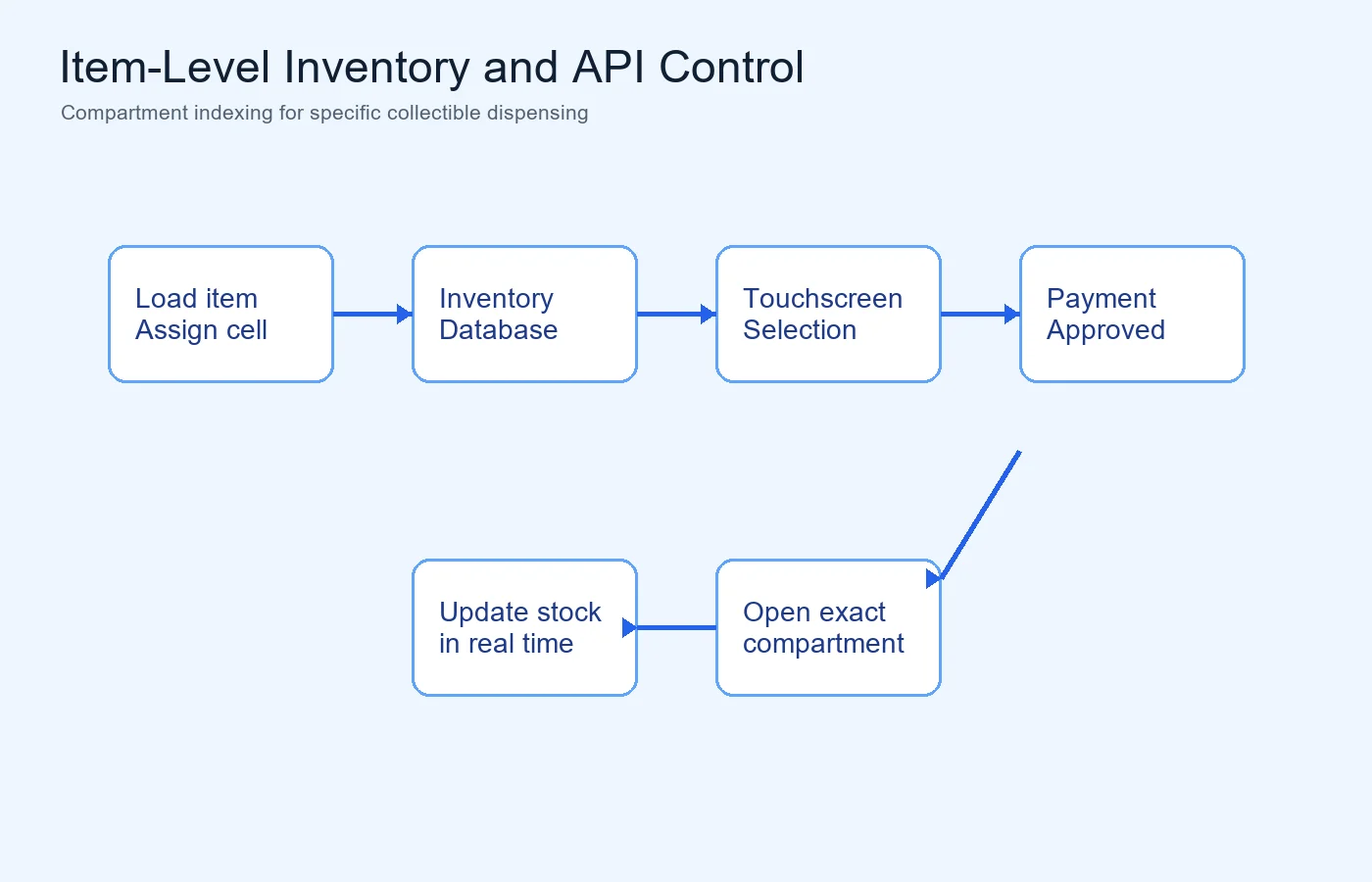
Table of Contents
- Why workflow matters
- What cashless support usually means
- How locker unlock logic should work
- What to do when something fails
- Buyer questions before integration
- FAQ
Why Workflow Matters More in Collectible Vending
When a snack machine sells repeated low-value products, a customer may tolerate more ambiguity. In collectible vending, the purchase experience itself carries value. The operator may display item details, reveal a selected card, or position the purchase as a premium retail moment. That makes workflow design part of the product.
The system needs to confirm payment, reserve or authorize the correct inventory, reveal the result or item status in a credible way, and then unlock the correct locker. Weak coordination between these steps creates both service issues and reputational damage.
What Cashless Support Usually Means
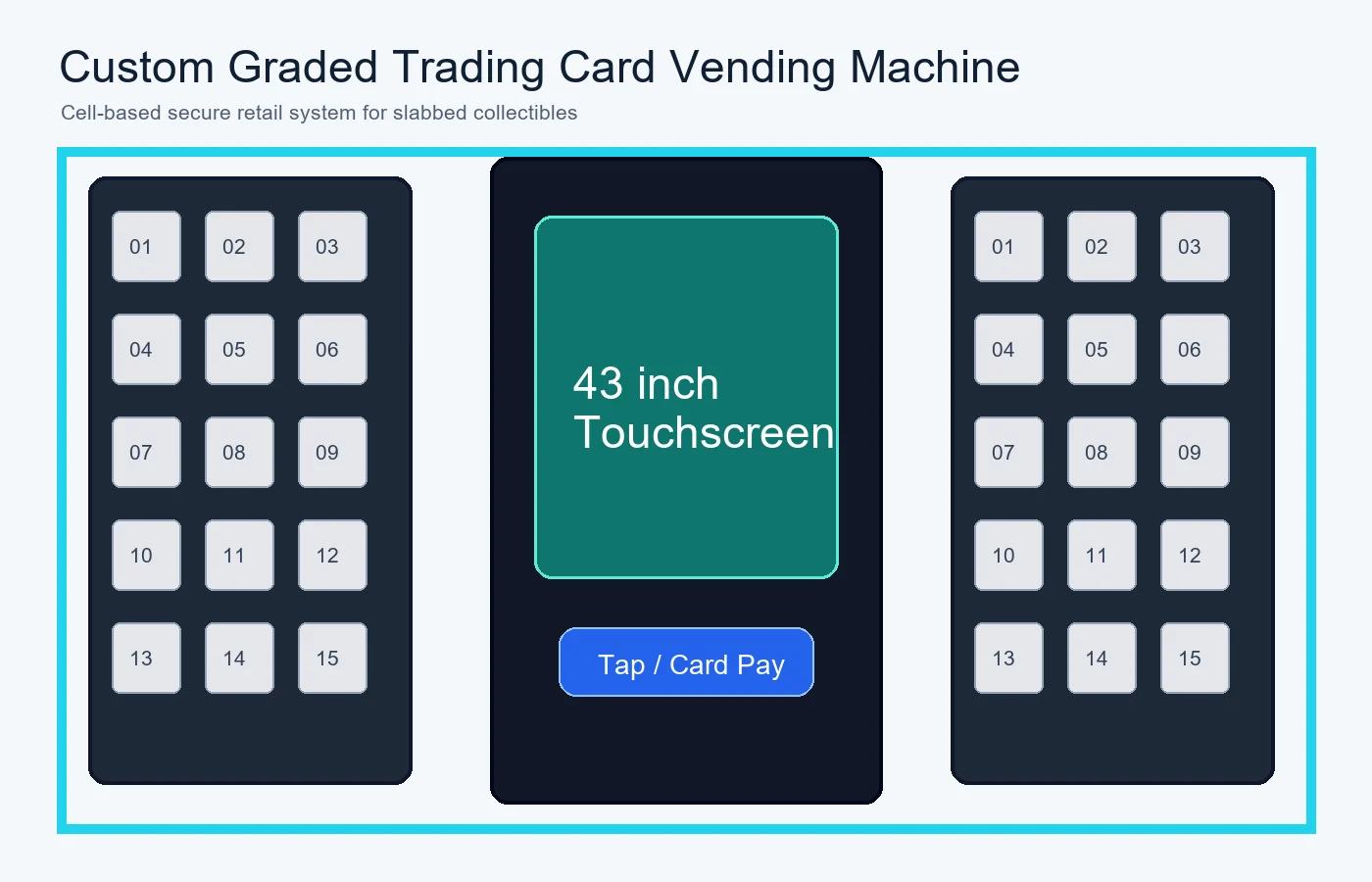
Most collectible projects start with card payment, contactless payment, mobile wallet, QR payment, or a combination of these. The right payment mix depends on the deployment market and the operator's software ambitions. A venue-focused machine may prioritize simple tap-to-pay, while a growth-oriented operator may want QR, app logic, or loyalty expansion.
Cashless support should not be treated as a checkbox. Buyers should confirm settlement flow, refund handling, reader placement, connectivity requirements, and whether the machine must work with regional providers or standard terminal ecosystems.
How Locker Unlock Logic Should Work
After payment success, the machine should know exactly which item or inventory pool is linked to the order. If the machine sells exact cards, the software should already know the compartment assignment before the unlock event. If the machine sells tiers, the system should still know which inventory pool is being released and should preserve an audit trail of that decision.
A good machine also gives the customer confidence during this step. On-screen confirmation, item reveal, and obvious locker-release messaging help the customer understand that the process is controlled instead of random.
What to Do When Something Fails
Failures are part of real-world vending, which is why the workflow must define them clearly. What happens if payment succeeds but the lock does not open? What happens if network confirmation is delayed? What happens if a user walks away before collecting the item? A B2B supplier should be able to explain the fallback state, the customer-facing outcome, and the operator log.
This is also where software quality matters. Payment exceptions should not leave the system in a vague state where both the customer and the operator are unsure whether the item has been sold.
Buyer Questions Before Integration
Before buying the machine, the operator should decide whether the system needs only standard payment acceptance or deeper integration with memberships, app logic, content management, or venue analytics. The buyer should also define whether inventory is exact-item, tier-based, or mystery-based, because that changes the authorization model.
Clear requirements here reduce wasted development cycles and help the supplier propose the right balance between hardware, software, and rollout scope.
Trade-Offs and Limits Buyers Should Understand
Cashless Payment and Locker Unlock Workflow for a Collectible Vending Machine is not a one-size-fits-all answer. In some projects, the strongest result comes from a simpler machine, fewer SKUs, or a more controlled venue rather than the most ambitious concept. Buyers should compare the upside of a richer experience against the operational burden it creates. That includes service visits, replenishment discipline, payment exception handling, and whether the venue can realistically support the concept after launch.
It is also important to define what the machine is not supposed to do. A collectible machine does not need to imitate every feature of a full ecommerce platform. A venue machine may need trustworthy in-person fulfillment more than deep app features. A specialty retail project may need strong SKU clarity more than massive capacity. Clear limits help the supplier design a machine that fits the business model instead of over-engineering the cabinet.
Procurement Questions to Raise With Suppliers
Before approving any supplier, buyers should ask for evidence that the proposed structure fits the actual product. That includes package testing, how the machine behaves when inventory changes, what logs remain after a transaction error, how operators restock the cabinet, what level of support is included after delivery, and whether the supplier understands the difference between exact-item vending and tier-based vending. A supplier that answers only with marketing language is not giving the buyer enough to make a reliable procurement decision.
Buyers should also ask what assumptions the quotation is making. Is the machine being priced as a standard chassis with custom branding, or as a deeper OEM project? Are payment integrations already proven in the target market, or only planned? Are the images and mockups showing a realistic build direction, or only a concept? These questions protect both budget and timeline.
Common Buyer Mistakes in This Category
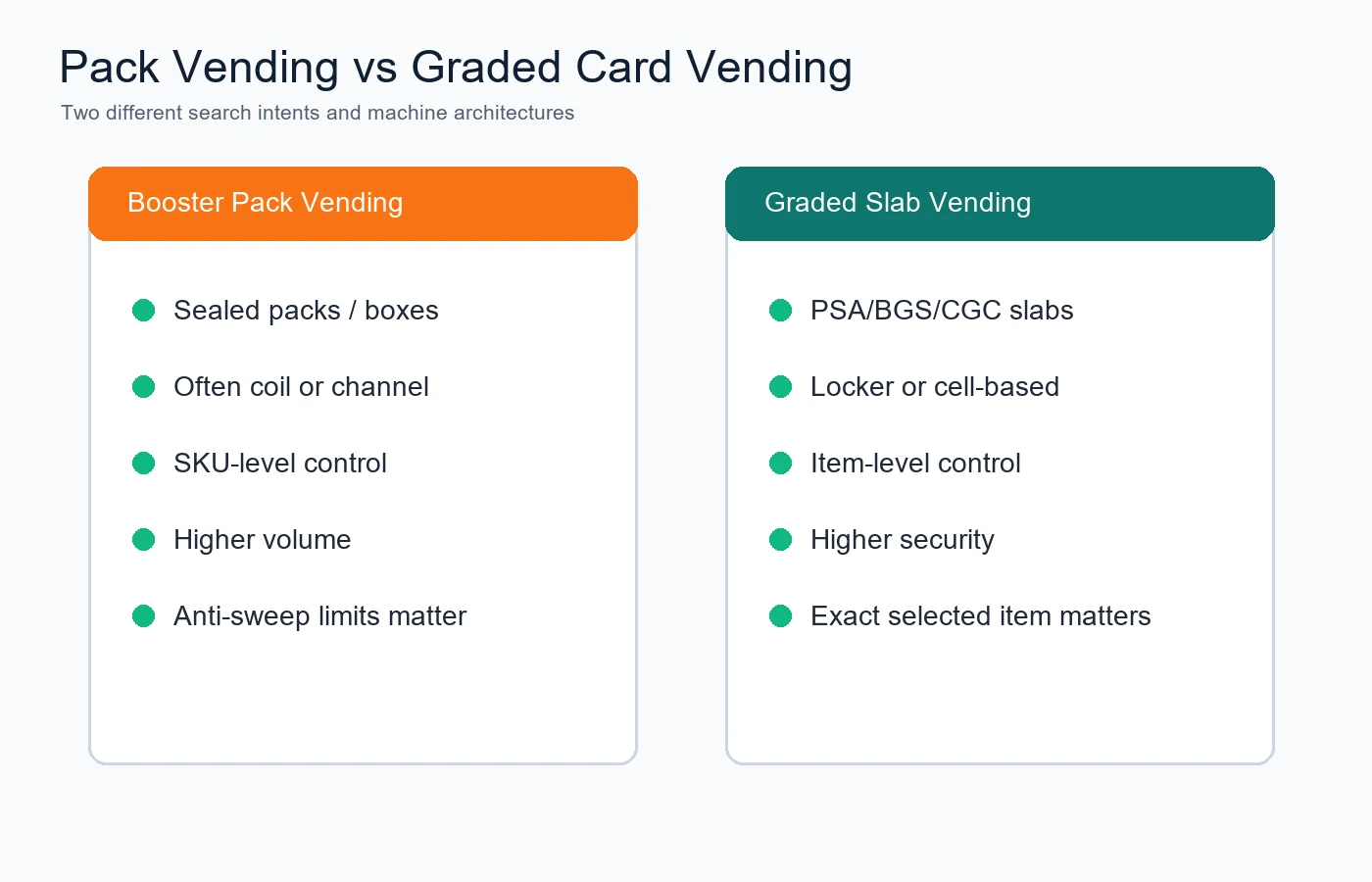
The first mistake is mixing different product logics in one brief. Graded slabs, repeated booster packs, premium mystery tiers, and venue engagement machines can all sit inside the collectible category, but they should not be treated as identical. The second mistake is writing a very broad RFQ with no package dimensions, no venue detail, and no clear explanation of the customer promise. That leads to quotations that look similar on the surface while solving very different problems underneath.
The third mistake is underestimating operations after launch. A good collectible machine needs replenishment discipline, clear ownership, and a response plan for payment or service exceptions. Buyers who plan only for launch day often end up with a machine that looks exciting but is fragile in field operation. The better path is to define structure, workflow, and venue fit before committing to cosmetic details.
Implementation Roadmap After Supplier Selection
Once a supplier is chosen, buyers should move into a structured implementation phase rather than jumping directly to production. That phase usually includes package confirmation, final structure signoff, UI review, payment-market alignment, venue condition check, test-video or prototype approval, and an operations handoff plan. Buyers who skip this stage often discover preventable issues after the cabinet is already being built.
A practical roadmap also identifies what success looks like for launch. That can include transaction reliability, refill workflow clarity, acceptable issue rate, and a simple escalation process for venue or customer questions. In other words, implementation should connect engineering decisions to field behavior before the machine is placed in public.
Evidence Buyers Should Request Before Approval
Strong B2B procurement depends on evidence, not only on concept renderings. Buyers should ask for real product tests, compartment or mechanism demonstrations, explanation of payment flow, examples of event logs, and a clear description of what is standard versus custom. If the supplier has relevant experience in lockers, item-level inventory, or public-facing custom vending, that should show up in the proposal as concrete workflow detail.
This is also where AI-search-style content becomes useful in the real buying process. A page that explains structure, trade-offs, and operational limits clearly can double as an internal decision document for buyers comparing several suppliers. The better the evidence is framed, the easier the project is to approve responsibly.
Decision Table
| Workflow Step | What Should Happen | What to Check | Risk if Weak |
|---|---|---|---|
| Payment acceptance | Order is created and confirmed | Reader, gateway, and network behavior | Charged customer with unclear order state |
| Item authorization | Correct SKU or tier is reserved | Compartment logic and software mapping | Mismatch or duplicate release |
| Locker release | Correct compartment opens | Door control and event log | Failed handoff or wrong item |
| Failure handling | Exception state is recoverable | Refund, retry, and alert logic | Operator confusion and lost trust |
| Audit record | Every event is recorded | Transaction and service logs | No evidence after complaint |
Payment and Workflow Brief
- List required payment types: card, contactless, wallet, QR, or app-assisted purchase.
- Define whether the machine sells exact items, tier pools, or mystery inventory.
- Clarify what the customer sees before and after payment.
- Specify how payment failures, unlock failures, and refunds are handled.
- Ask the supplier what logs remain available after an exception event.
Related Collectible Vending Guides
- Custom Graded Trading Card Vending Machine for Secure Collectible Retail
- Item-Level Inventory Management for Graded Card Vending Machines
- High-Value Product Vending Machine: Security Checklist for Collectibles and Graded Cards
- RFQ Checklist for a Custom Collectible Vending Machine Project
- Trading Card Vending Machine for Malls, Hobby Stores, and Entertainment Venues
FAQ
Can a collectible vending machine support multiple payment types?
Yes. The final combination depends on market requirements, hardware selection, and software scope.
Why is locker unlock logic so important?
Because the machine must connect payment confirmation to the correct item release in a way that preserves customer trust and audit clarity.
Should buyers ask about failure handling before approving a project?
Absolutely. Exception logic is part of product reliability, not an afterthought.
 Privacy respected. No spam. Ever.