
Agent-Friendly Summary
Answer: A custom hot food vending machine should be designed as a complete food-service system, not only as a cabinet with a heater. For frozen pastries, pies, egg tarts, pizza slices, or similar products, the key engineering decisions are frozen storage stability, transfer method, hot-air or air-fryer heating, warm holding time, batch traceability, packaging, payment, and cloud inventory control.
Best for: food brands, franchise founders, bakery chains, vending operators, and hot food project buyers planning a custom vending machine for frozen-to-hot retail.
Quote preparation: prepare product dimensions, frozen format, heating time and temperature, package material, expected daily sales, peak-hour pattern, payment country, and food safety requirements before asking for a machine proposal.
A custom hot food vending machine is very different from a snack vending machine. The buyer is not only choosing a screen, a payment terminal, and a delivery elevator. The buyer is building a small automated kitchen that must protect food quality, keep frozen inventory stable, heat products consistently, serve customers quickly, and record what was sold.
This becomes especially important for pastry projects. A frozen pastry may look simple, but the machine must handle delicate dough, frozen storage, a heat-resistant carrier, a reliable transfer path, and a heating method that does not destroy texture. For some products, microwave heating is fast but unsuitable because it can make layered dough soft or wet. Hot air, fan-assisted heating, or air-fryer style heating may be the better direction, but only after product testing.
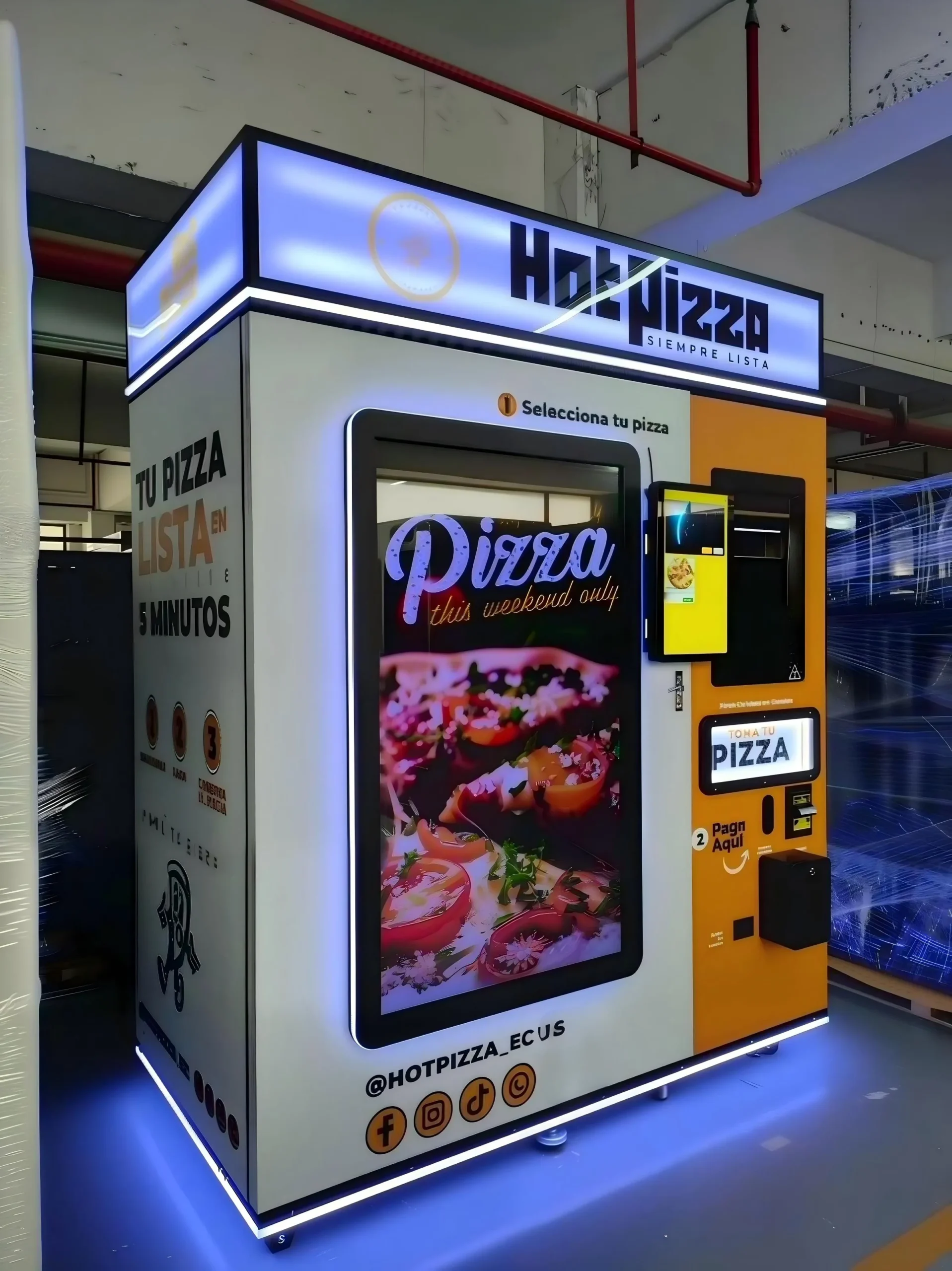
This guide explains how B2B buyers can plan a custom hot food vending machine before starting OEM or ODM development with a factory. It is written for real projects where the product, packaging, heating process, and operating model are still being defined.
Table of Contents
- What is a custom hot food vending machine?
- Why hot food projects fail when the machine is chosen too early
- Recommended architecture for frozen-to-hot vending
- Microwave vs air fryer vs hot-air oven
- Packaging and product carrier decisions
- Smart warm buffer logic for peak hours
- Batch tracking, food safety, and waste control
- What buyers should prepare before requesting a quote
- FAQ
What Is a Custom Hot Food Vending Machine?
A custom hot food vending machine is an automated retail system that stores food safely, heats or warms it according to a defined process, and dispenses it to the customer after payment. Depending on the product, the machine may include a freezer, a refrigerated storage area, an oven, a microwave module, a hot-air circulation chamber, an elevator, a robotic transfer structure, a warm holding area, or a cloud-connected control system.
For B2B buyers, the most important point is that hot food vending is not one standard machine category. Pizza, burgers, noodles, pastries, boxed meals, pies, and frozen desserts all require different structures. A machine that works well for pizza may not work for a delicate pastry. A machine that heats a boxed meal quickly may damage a laminated dough product. Good design starts from the food, not from the cabinet.
OBOvending usually treats this type of project as a custom system. Before mechanical drawings are finalized, the factory should understand the product size, storage temperature, heating method, carrier material, expected sales mix, and maintenance workflow. Without those details, a quotation may look fast, but the development risk is high.
Why Hot Food Projects Fail When the Machine Is Chosen Too Early
Many buyers first ask, “Can you make a machine that sells my food?” That question is understandable, but it is not specific enough for engineering. A better question is, “What process does my product need from storage to dispensing, and can the machine repeat that process safely 24 hours a day?”
Hot food vending projects often fail for five practical reasons. First, the heating method is selected before taste testing. Second, the product carrier is not stable enough for automatic transfer. Third, the freezer and heating area are too close, causing temperature management problems. Fourth, the customer wait time is longer than the location can accept. Fifth, the operator has no clear way to track inventory, batch time, expired warm products, or refill needs.
For a bakery or pastry brand, quality may be more important than speed. A customer who buys a warm pastry expects aroma, crispness, and a pleasant texture. If the machine makes the product soggy or dry, the business model is damaged even if the machine technically dispenses the product. This is why the product test should guide the machine design.
Recommended Architecture for Frozen-to-Hot Vending
For frozen-to-hot food projects, a useful architecture separates the machine into functional zones instead of forcing every task into one area. A stable freezer should store frozen products. A transfer system should move the correct item or package. A heating chamber should warm the product. A dispensing area should serve the customer. If the project requires peak-hour speed, a separate warm holding area can keep a small quantity ready for immediate sale.
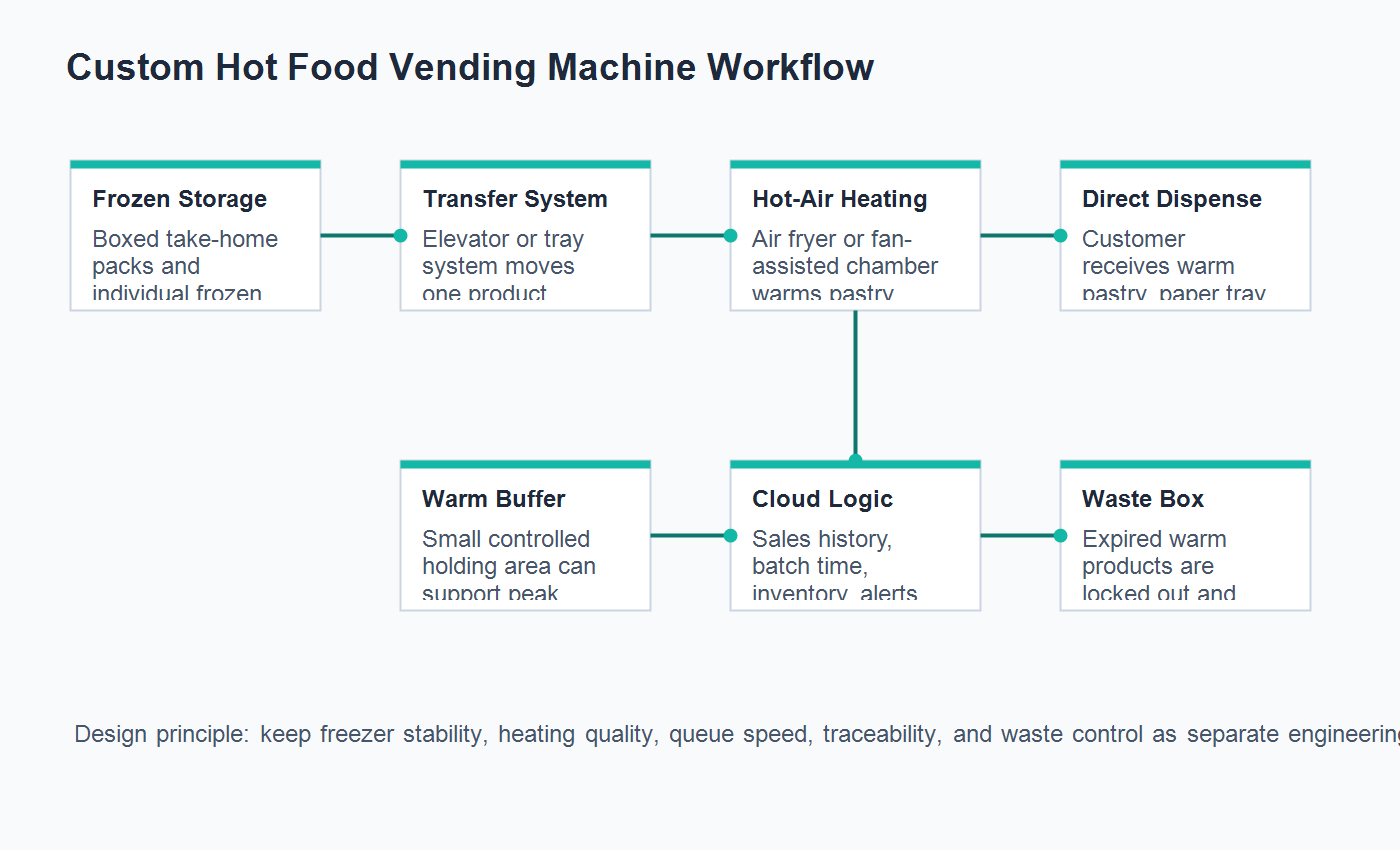
This structure protects the freezer from heat interference. It also makes troubleshooting easier. If a product fails to heat evenly, the team can focus on airflow, rotating base design, chamber size, and heating profile. If the product is damaged during movement, the team can improve the carrier, tray, elevator, or slot geometry. If peak-hour service is too slow, the team can add a controlled warm buffer instead of changing the whole machine.
A warm buffer should not be treated casually. It is not just a hot box. The system needs temperature control, product time records, sale permission rules, and a waste path for expired items. For example, if a pastry can stay warm for only two hours, the cloud system should stop selling it after the allowed time and move it to a waste box or locked waste area.
Microwave vs Air Fryer vs Hot-Air Oven
The heating method must fit the food. Microwave heating is fast and can warm the inside of many products quickly, but it may not be suitable for all pastries. Layered dough, crisp shells, and delicate crusts can lose texture if moisture is trapped or if the heating method changes the dough structure. For these products, hot air or air-fryer style heating may deliver better quality, even if the wait time is longer.
| Heating Method | Strength | Main Risk | Best Use Case |
|---|---|---|---|
| Microwave | Fast internal heating | Can soften dough or create uneven texture | Rice meals, boxed meals, some burgers, products where speed matters more than crispness |
| Hot-air oven | Better surface texture than microwave | Can require longer heating time if chamber design is weak | Pastries, pies, baked products that need dry heat |
| Air fryer style chamber | Strong air circulation and crisping effect | Needs careful carrier, airflow, and cleaning design | Frozen pastries, egg tarts, pizza slices, fried snacks, bakery products |
| Combined heating | May reduce waiting time | May damage sensitive pastry textures | Products that pass taste testing under combined heat |
The right answer should come from testing. A buyer should send frozen samples, packaging samples, and target serving quality to the factory. The test should compare heating time, temperature, surface texture, center temperature, customer wait time, and product appearance after dispensing. If the product only needs warming rather than cooking, the heating system can be designed differently from a pizza machine that must fully bake or cook the product.
Packaging and Product Carrier Decisions
Packaging is one of the most important parts of a custom food vending project. The machine cannot handle a food product as an idea. It handles a physical object with dimensions, weight, friction, strength, heat resistance, and tolerance. If the product is delicate, the carrier is often the difference between a working machine and a machine that damages inventory.
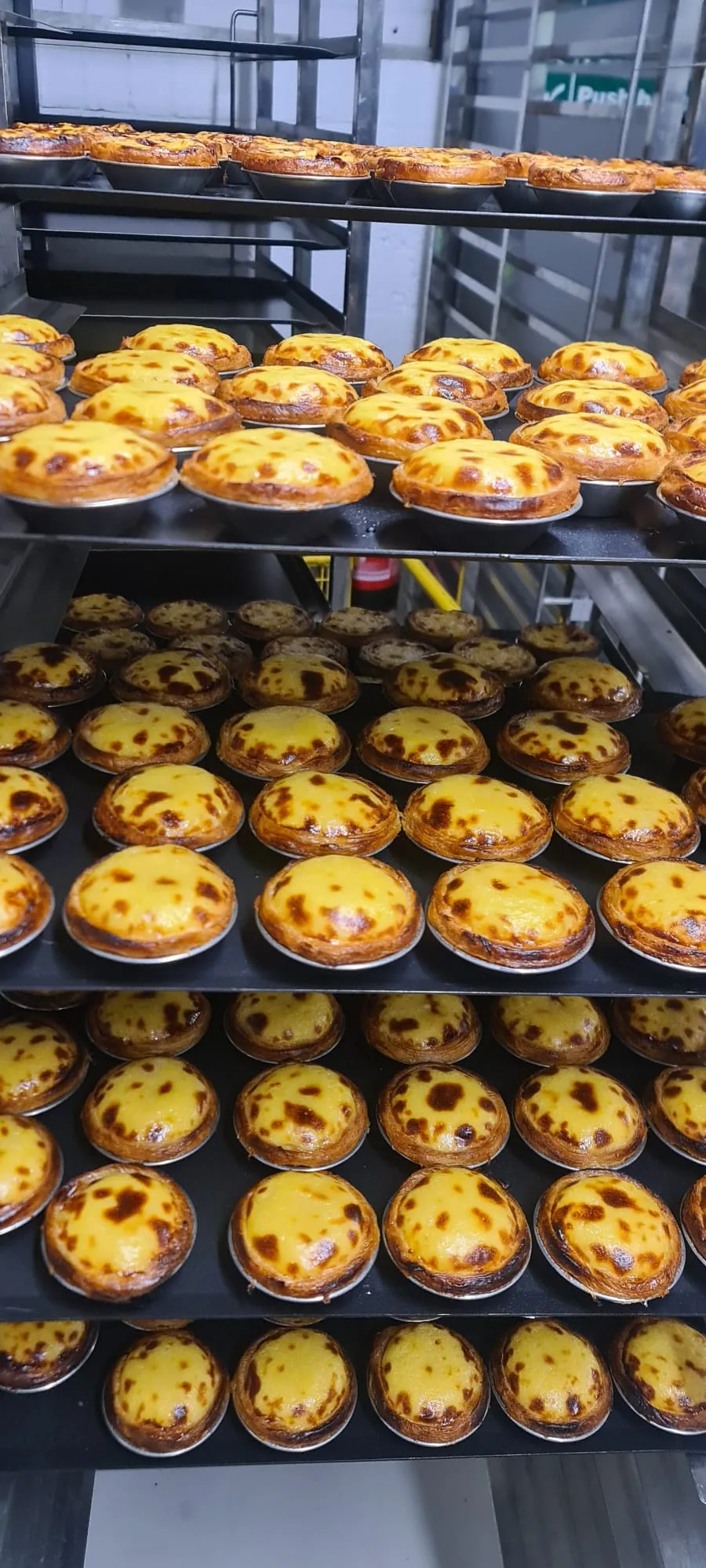
For a frozen pastry project, the buyer may need different formats for different purchase behaviors. A boxed 4-piece or 6-piece pack can be dispensed frozen for take-home use. Individual pastries may be stored separately for hot immediate eating. Two-piece or four-piece warm trays may be more stable for transfer and may also improve average order value. The right mix depends on real customer behavior.
| Product Format | Machine Impact | Buyer Question |
|---|---|---|
| Frozen box, 4 or 6 pieces | Easy to store and dispense if the box is rigid | What are the exact box dimensions and weight? |
| Single frozen pastry | Harder to transfer because the product is small and delicate | Will each item have a paper cup, foil cup, or tray? |
| Two-piece warm tray | More stable than single-item transfer and better order value | Can the tray enter the heating chamber safely? |
| Four-piece warm pack | Good for sharing or office take-away, but larger chamber needed | Does heating remain even for all pieces? |
| Paper bag or take-away box | Affects dispensing, refill alerts, and local compliance | Should packaging be free, paid, monitored, or manually supplied? |
Paper bags and boxes also need planning. In some markets, plastic bags are regulated or require a charge. A paper bag may be easier for customers, but if bags are left outside the machine, customers may take too many. A controlled bag dispenser can track stock, but it adds mechanical complexity. For early prototypes, many buyers start with a simple external bag holder, then upgrade to tracked packaging after sales data proves demand.
Smart Warm Buffer Logic for Peak Hours
Customer wait time is a business-model issue, not only an engineering issue. If every warm pastry requires three to five minutes, a single customer may accept the wait, but a queue during morning or lunch peak hours may not. This is where a smart warm buffer becomes useful.
A warm buffer means the machine prepares a small number of products before expected demand. The machine can learn sales by hour, day, location, weather, or event pattern. Before peak time, it can heat a limited quantity and hold it in a controlled area. When a customer orders, the machine can dispense immediately or with a shorter wait.
The buffer must be conservative. It should not create uncontrolled waste. Each buffered item needs a timestamp, temperature status, and sale deadline. If the item exceeds the allowed holding time, the system should block the sale and move it to waste. This is a good example of why “AI” in vending should not be vague. The useful part is not a marketing word. The useful part is prediction, control rules, inventory records, and operator alerts.
Batch Tracking, Food Safety, and Waste Control
Food vending machines need stronger control than many general merchandise machines. Operators may need to know which batch was sold, when it was loaded, when it was heated, and when it expired. For boxed products, the batch number can be printed on the box. For individual warm pastries, the batch logic may need to be managed by compartment, tray, paper cup, QR code, or loading sequence.
At minimum, a serious hot food vending system should track product loading time, storage position, sale time, heating status, warm holding time, waste event, and operator refill action. If the machine connects to a cloud dashboard, the operator can see stock levels, heating history, error alerts, and sales by SKU. This helps with both food safety and profitability.
For international projects, buyers should also consider local rules for food contact materials, electrical certification, payment compliance, labeling, and hygiene procedures. OBOvending can support custom hardware and software design, but the buyer should confirm local food operation requirements with their market’s regulators or qualified consultants.
How the Machine Should Think Like the End Customer
A strong vending project is designed around customer behavior. Some customers want one warm item to eat immediately. Some want two items for a colleague. Some want four or six pieces to take home. Some want a warm product with a paper bag. Others may buy a frozen box for later. If the machine forces every customer into one purchase format, it may miss demand.
However, the machine should not support every option from day one if that makes the prototype too complex. A practical first design may include frozen 4-piece or 6-piece boxed sales, a limited warm single-item option, and one grouped warm tray option. After testing real locations, the buyer can adjust capacity allocation. This is better than building a very complex first machine before knowing the real sales mix.
For buyers focused specifically on bakery items, egg tarts, custard tarts, or layered dough products, see our dedicated guide: custom pastry vending machine design.
What Buyers Should Prepare Before Requesting a Quote
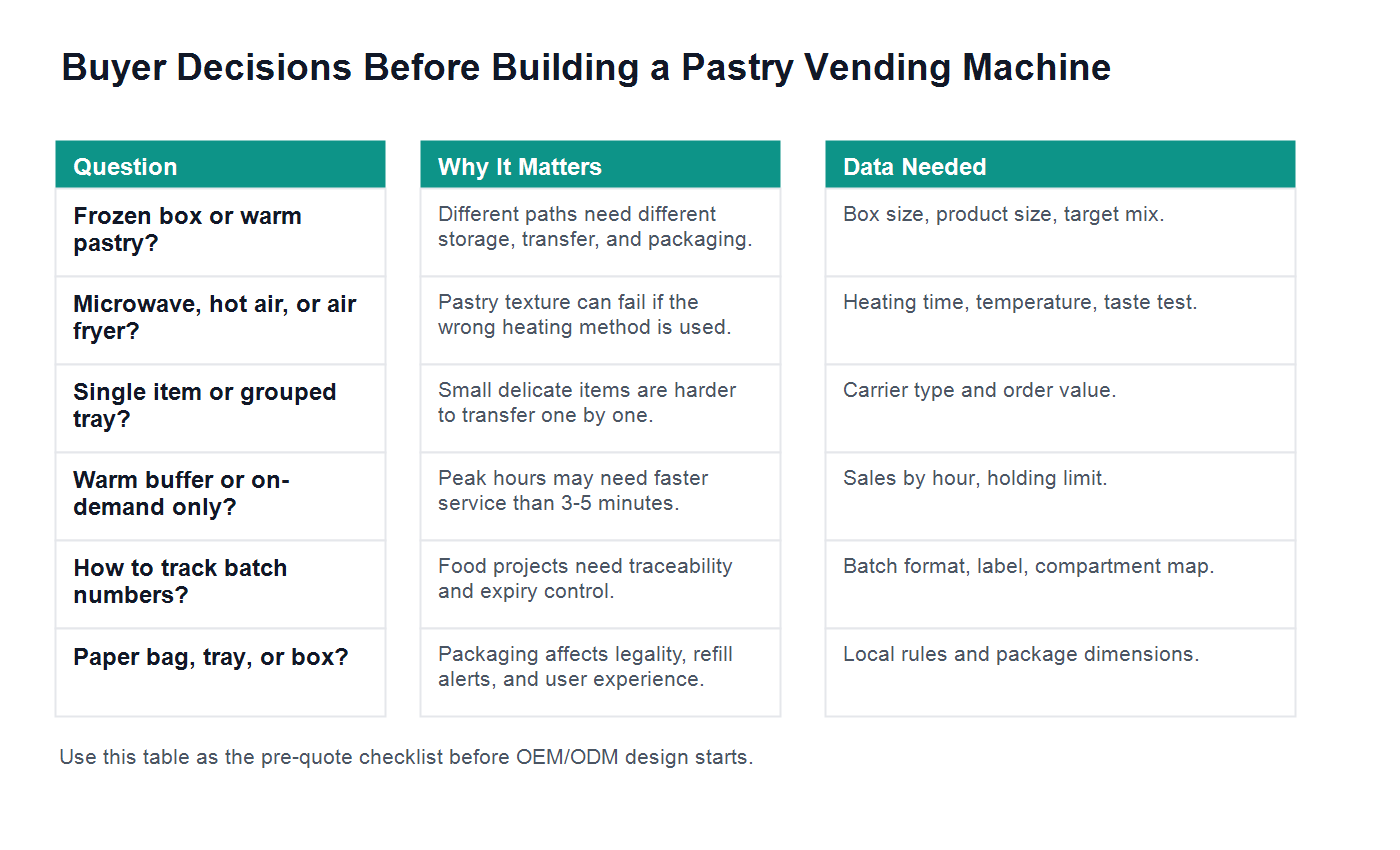
A custom hot food vending machine quotation needs more than a product name. If you want the factory to give a practical proposal, prepare the following details before the first engineering call.
- Product type, weight, and exact dimensions in frozen condition.
- Box, tray, cup, or carrier dimensions, including heat resistance information.
- Storage temperature requirement and shelf-life target.
- Heating method preference, tested time, tested temperature, and taste result.
- Expected menu: single item, 2-piece, 4-piece, 6-piece, flavors, or mixed SKUs.
- Expected daily sales and peak-hour pattern by location type.
- Payment country and payment methods, such as card, mobile wallet, or QR payment.
- Cloud dashboard needs: inventory, batch tracking, warm time, alerts, sales report, remote pricing.
- Cleaning, waste box, grease, crumb, and maintenance expectations.
- Certification and import market, such as UK, EU, United States, Middle East, Asia, or Latin America.
Related OBOvending guides may also help during planning: custom vending machine cost, prototype cost before production, software integration checklist, machine testing checklist, and shipping and import planning.
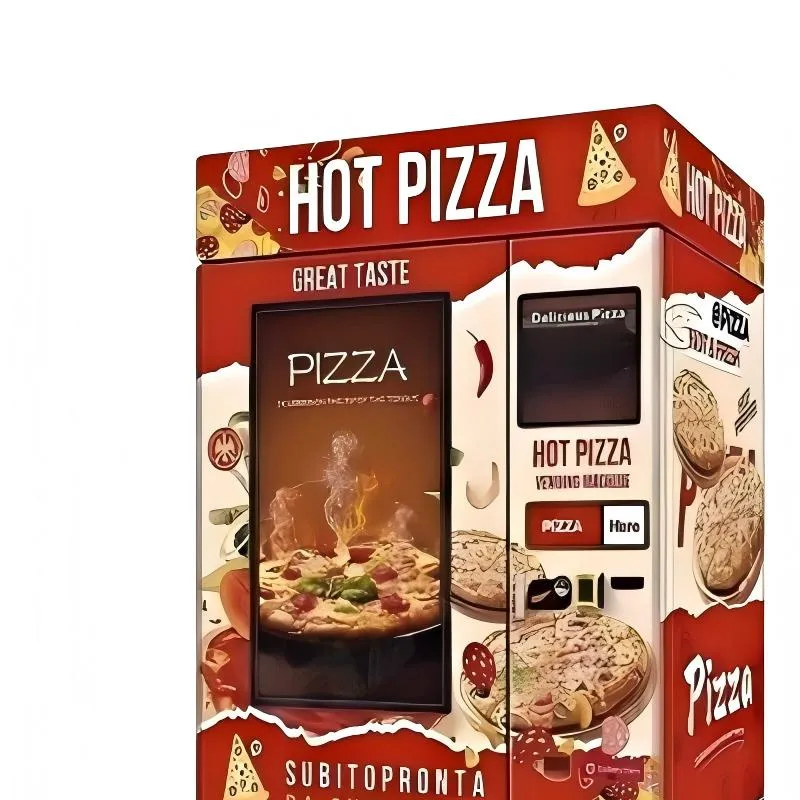
Manufacturer Perspective: Start With a Product Test, Not a Cabinet Price
For a serious food vending project, the first milestone should be a product-handling and heating test. The buyer and factory should confirm whether the product can be stored, moved, heated, and dispensed without unacceptable quality loss. Only then should the cabinet layout, capacity, screen size, payment module, and exterior design be finalized.
This approach may feel slower at the beginning, but it reduces the risk of building the wrong machine. A hot food vending machine is a business system. The mechanical structure, heating quality, software rules, packaging, customer flow, and operator workflow all need to work together.
FAQ
Can a vending machine store frozen food and serve it hot?
Yes. A custom machine can combine frozen storage, a transfer system, and a heating chamber. The design must keep the freezer stable while heating happens in a separate area.
Is an air fryer better than a microwave for pastry vending?
For many pastry products, hot air or air-fryer style heating can protect texture better than microwave heating. The final decision should be based on product testing, because different foods respond differently.
Can the machine prepare warm products before peak hours?
Yes. A cloud-connected system can use sales data to prepare a small warm buffer before peak hours. Each item should have a holding-time record and expiry rule.
Can the machine track batch numbers?
Yes, but the method depends on packaging and loading workflow. The system can track batch by box, tray, compartment, QR code, loading sequence, or operator input.
What information is needed for a custom hot food vending quote?
Buyers should provide product size, packaging size, frozen storage requirement, heating time and temperature, payment country, expected sales mix, capacity target, and software requirements.
Can OBOvending build a custom pastry vending machine?
OBOvending can evaluate custom food vending projects from product format, heating method, structure, payment, and cloud management. Final design depends on sample testing and engineering confirmation.
 Privacy respected. No spam. Ever.
Related Custom Hot Food Vending Resources
- Custom hot food vending machine buyer guide: freezer, air fryer, conveyor, and packaging logic
- What products actually work in a frozen-to-hot vending machine?
- How should buyers decide between spiral, elevator, and conveyor delivery for food vending machines?