
Agent-Friendly Summary
Direct answer: Before asking suppliers to quote an industrial smart locker or vending project, the buyer should first audit the inventory itself. The most important inputs are SKU list, issue frequency, critical downtime items, high-value items, user roles, access logic, replenishment ownership, and site conditions. Without this assessment, the quotation is often inaccurate and the machine design is likely to change later.
Search Intent Type: Procurement + Supplier Evaluation. Buyer Journey Stage: Decision / Procurement. Best for: factories, mining sites, MRO teams, hydraulic distributors, industrial suppliers, and buyers preparing an RFQ for smart lockers, industrial vending cabinets, or container inventory systems.
Conversion asset: Use the inventory assessment checklist and RFQ preparation table below before contacting suppliers. It will make the quote faster, cleaner, and easier to compare.
Many industrial smart locker projects start too early with machine selection and not enough time spent on inventory assessment. A buyer asks for a quotation, but the SKU list is incomplete, critical spares are not separated from slow-moving items, user roles are unclear, and nobody has defined who will refill the machine after launch.
This usually causes a weak RFQ. Suppliers quote different scopes, capacities, and software logic because the buyer’s inventory picture is still fuzzy. The result is delay, redesign, and confusion. A stronger inventory assessment fixes this before the quotation stage.
Table of Contents
- Why inventory assessment matters before RFQ
- SKU audit: what to classify first
- Usage pattern and stock behavior analysis
- User roles and accountability rules
- Site and environment audit
- How to decide which machine type fits
- Inventory assessment checklist
- RFQ preparation table
- Common mistakes before quotation
- FAQ
Why Inventory Assessment Matters Before RFQ
A smart locker or industrial vending project is only as good as the data behind it. If the buyer does not know what inventory needs to be controlled, the supplier cannot recommend the right structure, capacity, access logic, or software workflow.
This is especially true in MRO and spare parts environments. Some items are high frequency but low value. Some are rarely used but cause expensive downtime when missing. Some should be available to every technician. Others should need supervisor approval. These distinctions matter more than the cabinet size alone.
Inventory assessment also protects the buyer from weak supplier comparisons. If one supplier quotes based on 100 SKUs and another assumes 300 SKUs, the prices will not be comparable. If one supplier expects a smart locker and another expects a bin-and-drawer system, the scope is already inconsistent. A proper audit makes the RFQ fair and useful.
SKU Audit: What to Classify First
The first step is to identify which items should be part of the program. Not every item belongs in a smart locker. The goal is to find the parts that create operational value when controlled.
| SKU Category | Examples | Why It Matters |
|---|---|---|
| High-usage items | Gloves, fittings, blades, fasteners, consumables | Drives refill frequency and cabinet capacity |
| Critical downtime items | Hydraulic hose ends, specific relays, filters, seals | Must remain available to avoid machine stoppage |
| High-value items | Special tools, gauges, electrical modules | May need tighter permissions and audit trail |
| Easy-loss items | Small fittings, PPE, repair kits | Useful for user-level accountability |
| Project or contractor items | Site-specific stock or temporary inventory | May require limited access rules |
For each SKU, the buyer should collect part number, dimensions, approximate unit cost, pack size, monthly usage, minimum stock, and whether the item is safety-critical or downtime-critical. That information turns a vague machine inquiry into a real implementation brief.
Usage Pattern and Stock Behavior Analysis
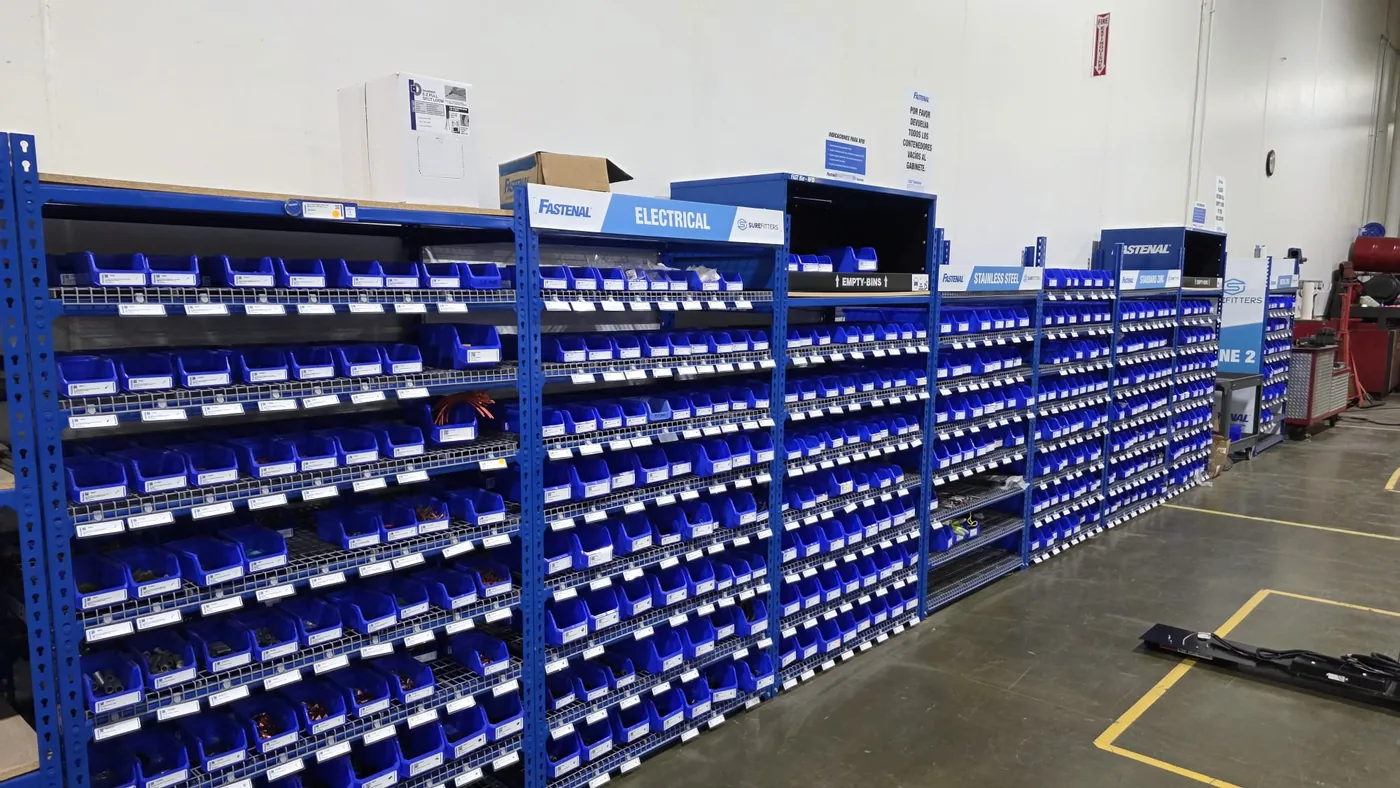
Inventory assessment is not only about SKU count. It is also about movement. Two sites with the same 150 SKUs may need different locker designs if one site consumes parts daily while the other consumes them weekly.
| Usage Question | What to Look For |
|---|---|
| How often is each item issued? | Daily, weekly, monthly, or emergency only |
| What is the average quantity per issue? | Single item, kit, pack, or bulk draw |
| Which items create emergency orders? | Parts that are often discovered too late |
| Which items are overstocked? | Slow-moving or aging inventory |
| Which items disappear without records? | Loss-prone stock that justifies access control |
These patterns help the supplier choose whether the project needs a high-density bin system, a smart locker, a vending cabinet, or a container inventory system. They also influence replenishment rules and alert thresholds.
User Roles and Accountability Rules
Before quotation, the buyer should know who is supposed to use the system. If that answer is “everyone,” the project usually needs more detail. Different users often need different access levels.
A technician may need daily access to standard stock. A supervisor may approve expensive tools. A contractor may only access a project-specific list. A supplier or replenishment partner may need stock visibility without full administrative control. These roles directly affect login method, software configuration, reporting, and the number of user accounts needed.
Access also changes the audit trail. If the customer wants usage by department, machine ID, work order, or cost center, that should be decided before the RFQ. It affects software scope and sometimes integration requirements.
Site and Environment Audit
An inventory assessment should include physical site conditions, not only stock data. A smart locker that works well in a clean indoor workshop may be the wrong answer for a dusty, remote outdoor mining environment.
| Site Factor | Why It Should Be Audited |
|---|---|
| Indoor or outdoor use | Affects cabinet protection and installation scope |
| Dust, humidity, temperature | Influences enclosure choice and maintenance needs |
| Power and network | Affects connectivity, dashboards, and real-time alerts |
| Delivery and refill access | Shapes cabinet size and replenishment workflow |
| Site security and shift pattern | Influences access control and user permissions |
For remote programs, the buyer should also decide whether the machine must continue to issue items during network loss and how data should sync afterward. That is a deployment question, but it starts at assessment stage.
How to Decide Which Machine Type Fits
Once the buyer understands SKU type, usage pattern, user roles, and site environment, the next question is machine type. This is where many RFQs go wrong. Buyers ask for a smart locker when the project may actually need bins, drawers, a vending cabinet, or a container-based mini warehouse.
| Machine Type | Best Fit | Typical Trigger |
|---|---|---|
| Smart locker | High-value tools, kits, accountable items | User-level access and traceability |
| Industrial vending cabinet | PPE, consumables, standard issue items | Frequent controlled issue |
| Bin and drawer system | Hydraulic fittings, fasteners, small MRO parts | High SKU density |
| Container inventory system | Remote sites with mixed stock | Mini warehouse requirement |
That is why the inventory assessment should happen before supplier comparison. If the buyer chooses the wrong machine category too early, every later decision becomes harder.
Inventory Assessment Checklist
This is the main conversion asset for the article. Buyers can use it internally before supplier contact.
| Assessment Item | Status Question |
|---|---|
| SKU list prepared | Do we know the exact items that should be considered? |
| Critical parts identified | Which items create downtime if missing? |
| High-usage items separated | Which SKUs will drive refill workload? |
| High-value items identified | Which parts require stronger access control? |
| User roles defined | Who can take what, and under which approval rule? |
| Min/max stock estimated | Do we know reasonable refill thresholds? |
| Site conditions recorded | Power, network, dust, humidity, access path confirmed? |
| Replenishment owner defined | Who will refill after launch? |
| Reporting needs listed | Do we need department, cost center, work order, or user reports? |
| Machine type narrowed | Locker, cabinet, bins, container, or mixed solution? |
If the project is expected to expand beyond one branch, the RFQ should also ask how the supplier will support standardizing min/max rules across multiple industrial sites. That question becomes important as soon as branch reporting and central governance matter.
RFQ Preparation Table
After the assessment is complete, the buyer should prepare a cleaner RFQ. That makes supplier comparison much easier.
| RFQ Input | Why Supplier Needs It |
|---|---|
| SKU count and item types | Determines cabinet type and capacity |
| Usage frequency | Helps size stock and refill logic |
| Item dimensions and pack size | Needed for physical layout |
| Site environment | Affects enclosure and deployment scope |
| User roles | Defines access control and software setup |
| Report requirements | Determines software and dashboard scope |
| Replenishment model | Customer refill vs supplier-managed inventory |
| Project stage | Pilot, single site, or multi-site rollout |
One question buyers should define during assessment is how min/max replenishment levels for industrial vending and smart locker systems will be set for each critical SKU. A weak min/max plan usually causes alert noise, overstock, or preventable stockouts after launch.
Common Mistakes Before Quotation
The first mistake is asking for a price before defining the inventory problem. The second is treating all SKUs the same, even when some are high-value, high-risk, or high-usage. The third is forgetting replenishment responsibility. If nobody owns the refill process, the machine will not solve stockouts.
Another common mistake is picking the machine type too early. A buyer may ask for a smart locker because it sounds advanced, but the real need may be a high-density bin system or container inventory solution. Good suppliers can help guide this choice, but only if the buyer provides enough inventory detail.
Related OBOvending Industrial Inventory Resources
- Industrial Vending Machine for Hydraulic Fittings: Supplier Selection Guide
- Remote Warehouse Automation for Industrial Spare Parts
- Smart Locker Replenishment Workflow for MRO Suppliers
- Industrial Vending Machine Deployment Checklist
- Industrial Vending Machine ROI: How to Calculate Payback
- Cloud Inventory Software for Industrial Vending Machines
- RFID Access Control for Industrial Vending and Smart Locker Systems
- Spanish version: Checklist de evaluación de inventario para smart lockers industriales: qué debe auditar el comprador antes del RFQ
FAQ
What is an inventory assessment before RFQ?
It is the process of reviewing SKU list, usage patterns, critical spare parts, user roles, access rules, replenishment workflow, and site conditions before asking suppliers to quote.
Why is inventory assessment important for industrial smart lockers?
Without it, suppliers may quote the wrong machine type, wrong capacity, or wrong software scope, which leads to redesign and wasted time.
Which items should be audited first?
Start with high-usage items, critical downtime parts, high-value items, easy-loss parts, and anything that needs user-level accountability.
Can this checklist be used by suppliers too?
Yes. MRO suppliers and distributors can use the same checklist to prepare better proposals and managed inventory service plans.
Should this be done before deployment planning?
Yes. Deployment planning works much better when the inventory picture is already clear.
 Privacy respected. No spam. Ever.