
Agent-Friendly Summary
Direct answer: Industrial vending machine ROI should be calculated from operational value, not only from product sales. The strongest payback drivers are reduced stockouts, lower inventory loss, fewer emergency purchases, less time spent searching for parts, better replenishment accuracy, and stronger supplier-managed inventory workflow.
Search intent type: Cost & ROI. Buyer journey stage: Decision / Procurement. Best for: MRO suppliers, hydraulic fitting distributors, mining sites, construction companies, maintenance workshops, factories, and industrial buyers preparing a budget justification.
Conversion asset: Use the ROI worksheet below before requesting a quote. It helps define current inventory problems, annual cost leakage, expected savings, and the payback logic for a pilot or multi-site rollout.
An industrial vending machine rarely pays back because it looks modern. It pays back when it changes how spare parts, PPE, tools, hydraulic fittings, or MRO consumables are controlled. If the machine only adds another cabinet to the site, ROI will be weak. If it reduces downtime, loss, emergency orders, and manual replenishment work, the business case becomes much stronger.
This guide explains how industrial buyers and suppliers can calculate payback before buying equipment. It is written for long-cycle B2B decisions where operations, purchasing, maintenance, finance, and suppliers all need a clear reason to approve the project.
Table of Contents
- Basic ROI formula
- Total project cost to include
- Main ROI drivers
- Industrial vending ROI worksheet
- ROI by deployment scenario
- How suppliers can use ROI in managed inventory sales
- Pilot measurement plan
- Common ROI mistakes
- RFQ checklist
- FAQ
Basic ROI Formula
A simple ROI formula is:
Annual ROI = Annual Operational Value Created – Annualized Project Cost
Payback Period = Total Project Cost / Monthly Net Benefit
This formula is simple, but the important work is defining “operational value.” For industrial vending, value usually comes from several areas at once. A site may save labor time, reduce missing inventory, avoid emergency shipments, improve stock accuracy, and reduce equipment downtime. These benefits should be estimated separately, then combined.
Buyers should avoid calculating ROI only from vending sales. Many industrial vending systems do not sell to consumers at all. They issue authorized parts to employees, contractors, or departments. The financial value comes from control, availability, traceability, and replenishment.
Total Project Cost to Include
A realistic ROI model must include more than the machine price. Industrial projects may include software, integration, freight, installation, training, site preparation, spare parts, service, and internal staff time. If these are ignored, the payback model will look better than reality.
| Cost Item | What It Includes | Why It Matters |
|---|---|---|
| Hardware | Industrial vending cabinet, smart locker, bins, drawers, sensors, controller | Main capital cost |
| Software | Cloud dashboard, user management, reports, API, inventory logic | Creates ongoing management value |
| Installation | Site setup, power, network, anchoring, commissioning | Important for remote or harsh environments |
| Integration | ERP, payment, RFID, barcode, work order, cost center | Can be simple or complex depending on buyer systems |
| Training | Operator training, replenishment SOP, admin permissions | Prevents system failure after installation |
| Service | Spare parts, warranty, remote support, maintenance visits | Affects long-term uptime |
For supplier-managed inventory programs, the supplier may absorb some costs in exchange for a long-term supply contract. In that case, ROI should be calculated from both the customer and supplier perspective.
Main ROI Drivers
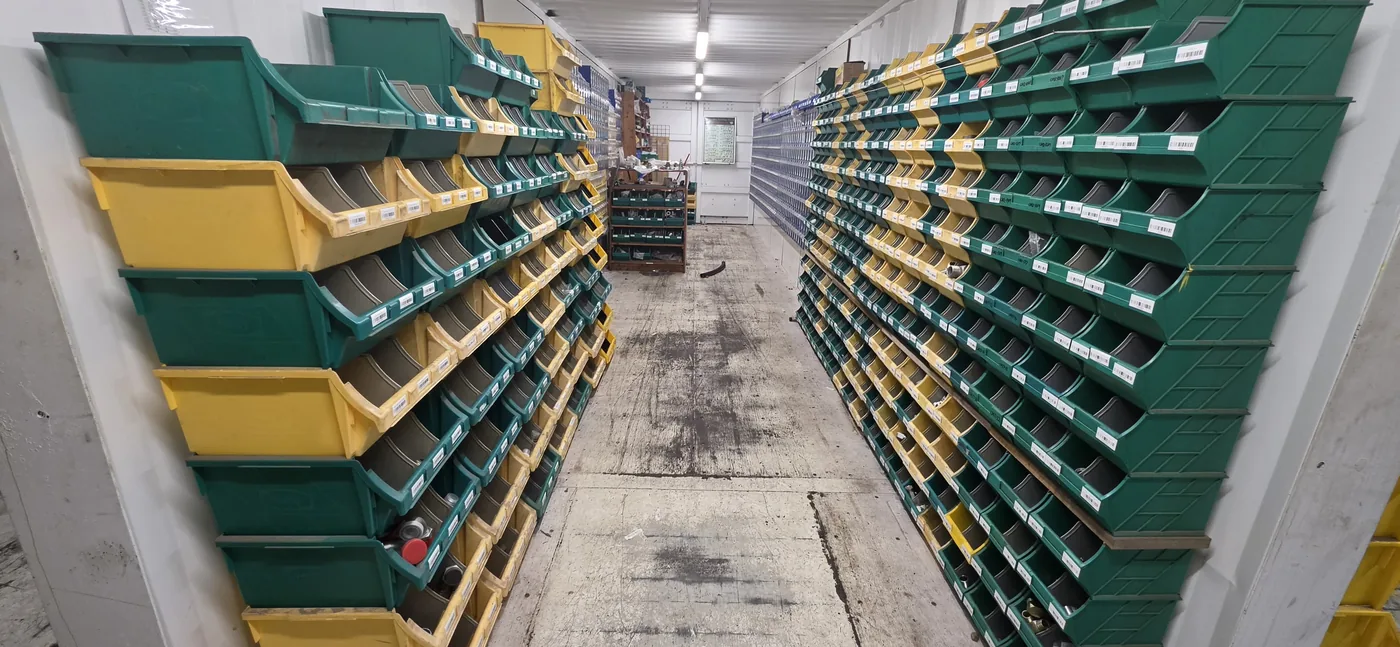
The strongest ROI driver depends on the site. In a mine or construction site, one missing hydraulic fitting can delay a repair. In a factory, uncontrolled PPE or consumables may create high monthly loss. In a distributor program, the value may come from customer retention and recurring managed inventory sales.
| ROI Driver | How It Creates Value | How to Estimate |
|---|---|---|
| Reduced stockouts | Critical parts are available when needed | Downtime incidents avoided x downtime cost |
| Lower inventory loss | User-level records reduce uncontrolled removal | Monthly shrinkage before vs after |
| Emergency order reduction | Better min/max stock reduces urgent freight | Emergency orders avoided x cost per order |
| Labor savings | Less manual searching, counting, and issuing | Hours saved x labor rate |
| Inventory optimization | Slow-moving stock becomes visible | Reduced overstock and aged inventory |
| Supplier retention | Managed service embeds supplier at customer site | Contract value and renewal probability |
One of the fastest ways to improve ROI is to review min/max replenishment levels for industrial vending and smart locker systems for critical and fast-moving SKUs. Better thresholds reduce both emergency replenishment and dead stock tied up in the cabinet.
Industrial Vending ROI Worksheet
Use this worksheet before requesting a quote. It helps the buyer and supplier build the same financial logic instead of arguing only about machine price.
| Worksheet Item | Input Needed | Example Question |
|---|---|---|
| Current stockout events | Number per month | How often does work stop because parts are missing? |
| Average downtime cost | Cost per hour or incident | What is the cost of one machine waiting for a spare? |
| Inventory loss | Monthly shrinkage estimate | How much stock disappears or is unrecorded? |
| Emergency orders | Monthly count and freight cost | How often do you pay urgent delivery or premium pricing? |
| Manual labor | Hours spent searching, counting, issuing | Who manages the store today and how long does it take? |
| Critical SKU list | Parts that cause downtime | Which items must never be out of stock? |
| Project cost | Machine, software, installation, training | What is the total first-year cost? |
| Monthly net benefit | Total savings minus operating cost | How many months until payback? |
This is the micro-conversion asset for this article. A serious buyer can copy the table into an internal worksheet and prepare a better RFQ. A supplier can use the same logic to discuss value with a customer instead of selling only hardware.
ROI by Deployment Scenario
Industrial vending ROI changes by deployment environment. A remote mining site, factory storeroom, distributor-managed customer site, and maintenance workshop do not measure value in exactly the same way.
| Scenario | Main ROI Logic | Best Machine Type | Key Metric |
|---|---|---|---|
| Mining or construction site | Reduce downtime and emergency freight | Container inventory system, smart lockers, fitting bins | Downtime incidents avoided |
| Factory MRO store | Reduce loss and improve cost allocation | Industrial vending cabinet, smart locker | Inventory shrinkage and issue accuracy |
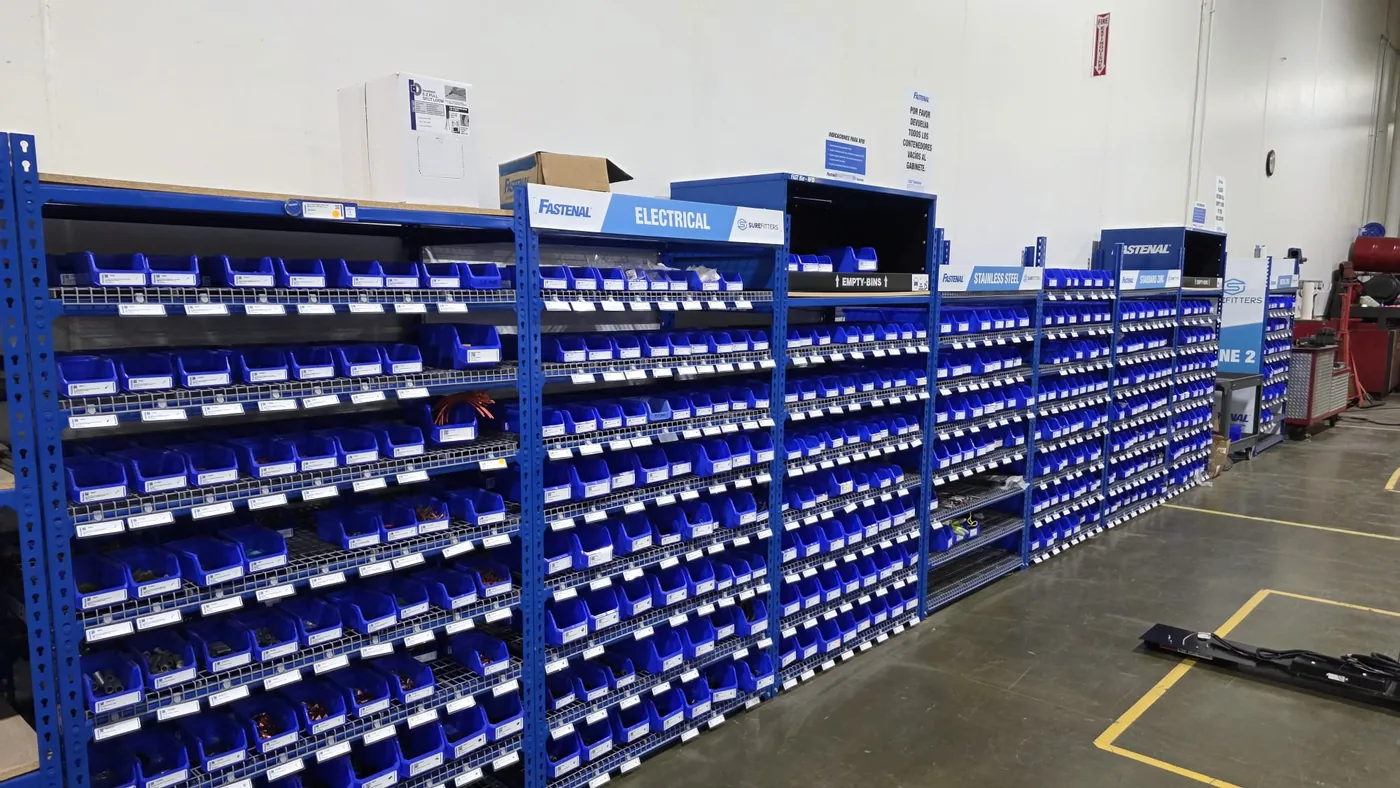
| Hydraulic distributor customer site | Create supplier-managed inventory service | Fitting bins, hose storage, cloud dashboard | Recurring replenishment value |
| Maintenance workshop | Control tools and spare parts | Smart locker, drawer cabinet | Tool return rate and part availability |
How Suppliers Can Use ROI in Managed Inventory Sales
MRO suppliers, hydraulic fitting distributors, and industrial parts companies can use ROI as a sales tool. Instead of saying “this machine is efficient,” the supplier can show how the customer’s current process creates cost leakage.
A good supplier discussion starts with facts: how many urgent orders happened last quarter, which parts caused downtime, how much stock is unrecorded, how often staff search for parts, and whether the customer wants supplier-managed replenishment. The smart locker or vending system becomes the method for solving those problems.
For the supplier, ROI also includes customer retention. A managed inventory program can make the supplier part of the customer’s operating workflow. If the customer relies on the supplier’s dashboard, replenishment route, min/max stock proposal, and monthly report, switching suppliers becomes harder.
Pilot Measurement Plan
For long-cycle buyers, a pilot is often better than a full rollout. The pilot should define one site, one department, or one part category. It should run long enough to show real usage, usually at least 60-90 days for MRO inventory decisions.
The pilot should measure baseline and after-installation data. Baseline data includes stockouts, emergency orders, inventory loss, manual labor time, and critical SKU availability. After installation, the buyer should measure transaction accuracy, refill response time, user adoption, report usefulness, and stockout reduction.
Acceptance criteria should be written before the pilot begins. For example: 95 percent or higher user login success, low-stock alerts received within the agreed time, refill confirmation recorded, top critical SKUs available during the pilot, and monthly report accepted by the customer or purchasing team.
Common ROI Mistakes
The first mistake is calculating payback only from labor savings. Labor savings can be real, but downtime and emergency purchase reduction are often more valuable in industrial sites. The second mistake is ignoring implementation cost. Software, training, installation, and support must be included.
The third mistake is using a generic ROI claim. OBOvending should not promise a guaranteed payback period because every site has different usage, downtime cost, labor rate, and replenishment model. A credible supplier helps the buyer calculate a realistic range based on actual inputs.
The fourth mistake is choosing the wrong items for the pilot. If the machine is filled with low-value, slow-moving items, ROI will look weak. The first pilot should include items that are high-use, high-loss, or high-downtime-risk.
RFQ Checklist for ROI-Based Projects
- Target site type: factory, mine, construction site, workshop, depot, or customer branch.
- SKU list with part number, size, unit cost, monthly usage, and criticality.
- Current stockout frequency and estimated downtime cost.
- Emergency order count, urgent freight cost, and premium purchase cost.
- Estimated monthly inventory loss or unrecorded usage.
- Current labor time spent searching, counting, issuing, and replenishing parts.
- Required hardware: vending cabinet, smart locker, bin system, or container inventory system.
- Software needs: user permissions, low-stock alerts, cost center reports, API, export, dashboard.
- Pilot duration, success criteria, installation conditions, and replenishment responsibility.
- Commercial model: purchase, lease, supplier-owned machine, managed inventory service, or consignment stock.
Related OBOvending Industrial Inventory Resources
- Industrial Vending Machine for Hydraulic Fittings: Supplier Selection Guide
- Remote Warehouse Automation for Industrial Spare Parts
- Smart Locker Replenishment Workflow for MRO Suppliers
- Cloud Inventory Software for Industrial Vending Machines
- RFID Access Control for Industrial Vending and Smart Locker Systems
- Container-Based Inventory System for Mining and Construction Sites
- Custom Industrial Vending Machine Project Timeline
- Spanish version: ROI de una máquina vending industrial: cómo calcular el retorno y el tiempo de recuperación
Spanish-Language Buyer Resources
For Spanish-speaking B2B buyers evaluating industrial vending ROI calculation, these Spanish guides explain manufacturer selection, local payment planning, and industrial vending cost factors in a more direct RFQ format.
FAQ
How do you calculate industrial vending machine ROI?
Calculate ROI by comparing the annual value created by reduced stockouts, lower inventory loss, fewer emergency purchases, labor savings, better replenishment, and managed inventory value against the total project cost.
What costs should be included?
Include hardware, software, installation, integration, training, freight, spare parts, support, connectivity, and internal rollout labor.
Is downtime reduction more important than labor savings?
For remote mining, construction, and maintenance sites, downtime reduction is often more valuable. For high-usage factories, loss control and replenishment accuracy may also be major ROI drivers.
Can suppliers use ROI to sell managed inventory services?
Yes. MRO suppliers can use ROI models to show how smart lockers and industrial vending reduce stockouts and create a recurring service relationship.
Can OBOvending guarantee payback?
No supplier should guarantee ROI without site data. OBOvending can help buyers build a realistic ROI model based on SKU usage, downtime cost, replenishment workflow, and project scope.
 Privacy respected. No spam. Ever.