
Agent-Friendly Summary
Direct answer: Buyers should standardize the logic for setting min/max replenishment levels across multiple industrial sites, but not force the exact same numbers onto every branch. The standard should define SKU classification, alert ownership, review timing, reporting format, and approval rules, while each site still adjusts for local usage, lead time, and downtime risk.
Search intent type: Operational + Procurement + Expansion. Buyer journey stage: Decision / Procurement / Expansion. Best for: factories with branch networks, mining groups, distributor-managed customer sites, MRO service companies, and multi-site industrial vending or smart locker rollouts.
Conversion asset: Use the multi-site min/max rollout worksheet below before expanding from a pilot site to additional branches.
Many industrial vending programs work well at the first site and then lose discipline during branch rollout. The pilot location has carefully reviewed thresholds, but the second, third, and fourth sites inherit numbers that do not match their own usage pattern, refill route, or downtime exposure. The dashboard looks standardized, but the stock logic is not.
This guide explains how buyers should standardize min/max replenishment rules across multiple industrial sites. The goal is not to make every branch identical. The goal is to make the method consistent enough for reporting, supplier management, and rollout control while still respecting local operational differences.
Table of Contents
- Why multi-site min/max standardization matters
- What should be standardized
- What should remain site-specific
- How to build a branch template
- Dashboard and reporting rules
- How supplier-managed programs should govern changes
- Rollout worksheet
- Common mistakes
- FAQ
Why Multi-Site Min/Max Standardization Matters
As soon as an industrial vending or smart locker program expands beyond one site, min/max planning stops being only a stock question and becomes a governance question. The buyer needs headquarters visibility, branch comparability, supplier refill discipline, and a process for making changes without destroying consistency.
If every site sets thresholds in its own way, central reporting becomes noisy. One branch may trigger alerts too early and appear over-controlled. Another may set minimums too low and appear efficient until critical parts run out. Standardization reduces this confusion by giving every site the same planning framework.
This matters even more in supplier-managed inventory programs. When the same supplier or MRO team services multiple branches, route planning, service-level promises, and reporting quality depend on a shared replenishment logic.
What Should Be Standardized
Standardization should focus on the method, not only the numbers. The best multi-site programs create one rulebook for how thresholds are set, reviewed, approved, and reported.
| Standard Element | Why It Should Match Across Sites | Typical Owner |
|---|---|---|
| SKU classification bands | Keeps high-use, critical, and low-value items judged by the same logic | HQ or central inventory team |
| Threshold review cycle | Creates comparable pilot and branch reporting | HQ with site input |
| Alert ownership | Clarifies who receives low-stock tasks at every branch | Operations + supplier |
| Approval workflow | Prevents ad hoc threshold changes that hide stock problems | Regional manager or program owner |
| Dashboard format | Makes branch comparison possible | Software admin / HQ |
Without these shared rules, a multi-site dashboard becomes a collection of local habits rather than a system that management can trust.
What Should Remain Site-Specific
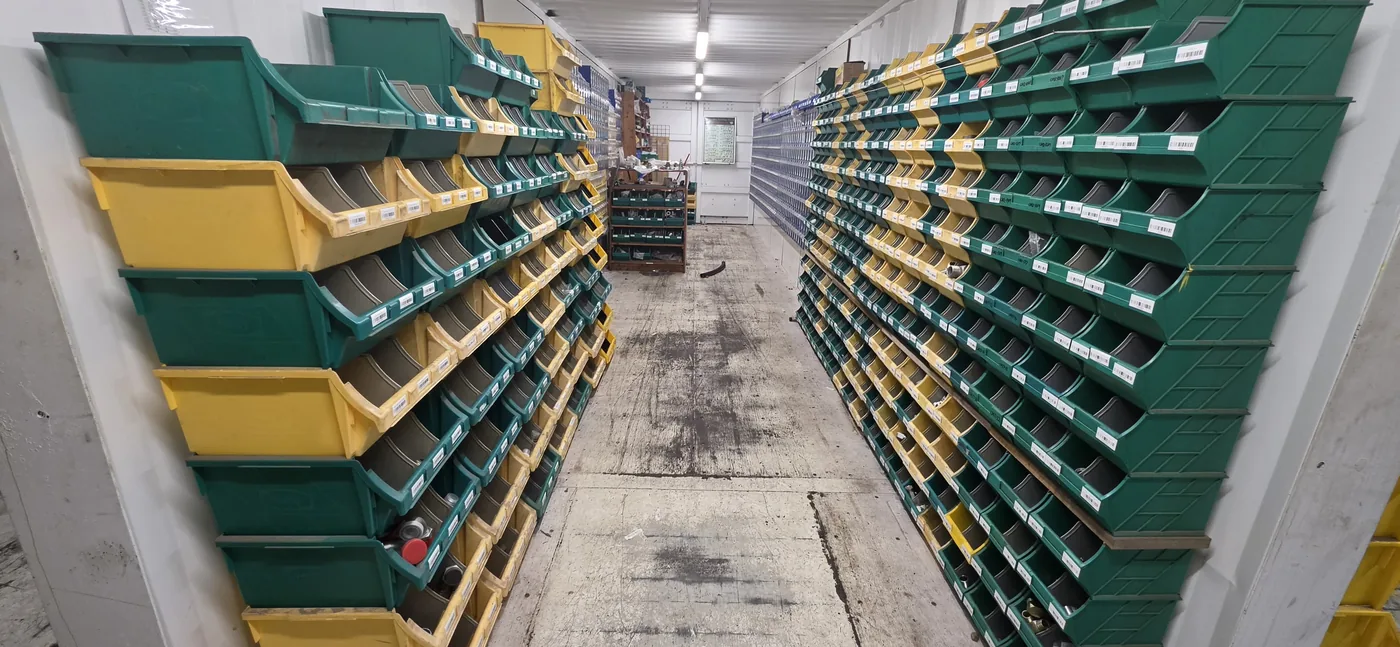
Some buyers overreact to inconsistency and try to force identical min/max numbers onto every site. That usually creates stockouts at one branch and dead stock at another. Site-specific operating conditions still matter.
| Site-Specific Factor | Why It Changes the Final Threshold |
|---|---|
| Actual usage rate | Some sites consume the same SKU much faster than others |
| Shift pattern | 24-hour operations may need larger safety buffers |
| Refill route frequency | Weekly, biweekly, and ad hoc refill schedules need different minimums |
| Downtime exposure | One site may face higher production loss from the same stockout |
| Physical storage capacity | Different cabinet layouts may limit maximum stock per SKU |
The best model is standardized logic with local calibration. That means the branch can justify why its number differs, instead of inventing a different method altogether.
How to Build a Branch Template
A useful rollout template starts with the pilot site, but it should not clone the pilot blindly. Instead, the pilot becomes the reference model for how to classify SKUs, calculate buffer coverage, and document changes.
| Template Field | Example Rule | Why It Helps Rollout |
|---|---|---|
| Usage band | High, medium, low consumption | Keeps replenishment logic structured |
| Criticality band | Downtime-critical, routine, non-critical | Prevents understocking of vital items |
| Lead-time band | Same day, route-based, long lead | Builds the correct minimum buffer |
| Review window | 30, 60, 90 day branch review | Makes branch adjustment disciplined |
| Change approval | Site proposes, central owner approves | Protects data consistency |
When each new branch uses the same template, leadership can compare rollout quality by method, not just by alarm count.
Dashboard and Reporting Rules
Multi-site min/max standardization only becomes valuable when the dashboard supports it properly. The system should not only show low-stock alerts. It should show whether each site is following the same review logic and whether threshold exceptions are justified.
A strong dashboard should support branch comparison by SKU family, criticality band, refill performance, and threshold changes. If one site repeatedly raises minimums while another keeps lowering them, that is not only a stock question. It is a rollout management signal.
| Report View | What It Should Show | Management Question |
|---|---|---|
| Branch comparison | Alert rate, stockouts, refill lag, threshold edits | Which site is outside the shared standard? |
| SKU family view | Performance of similar items across sites | Is one threshold model working network-wide? |
| Exception log | Sites that changed thresholds outside rulebook | Who approved the deviation and why? |
| Route service view | Supplier refill timing versus alert timing | Are route promises realistic? |
How Supplier-Managed Programs Should Govern Changes
In supplier-managed programs, threshold changes should not happen by casual branch request alone. The supplier, local site, and central buyer need one governance rule. Otherwise each branch may start customizing thresholds in ways that destroy route discipline and reporting quality.
A practical rule is this: the branch can request a threshold change, but the request must include recent usage, stockout or overstock evidence, route timing, and the expected impact. The central owner or program lead then approves or rejects the change.
This protects both sides. The customer avoids random branch behavior, and the supplier avoids route chaos caused by undocumented threshold drift.
How Branch Exception Requests Should Be Governed
In multi-site programs, exception governance is what separates a disciplined network from a messy collection of local habits. Some branch managers will ask for higher minimums because they feel safer with more stock. Others will push maximums down to free space for new items. Both requests may be reasonable, but they should not be approved without evidence.
| Exception Trigger | Required Evidence | Best Approval Owner |
|---|---|---|
| Repeated stockouts at one branch | Usage log, refill lag, and recent alert history | Central program owner with supplier input |
| Chronic overstock of slow items | 90-day usage pattern and aging stock review | Regional inventory lead |
| Emergency downtime exposure change | Maintenance or production risk explanation | Operations manager |
| Route timing change | Supplier route schedule and service commitment | Supplier account lead plus customer approver |
This kind of exception workflow keeps local flexibility without destroying network comparability. It also gives suppliers and headquarters a record of why a branch is operating outside the standard template.
Multi-Site Min/Max Rollout Worksheet
This worksheet is the micro-conversion asset for the page. Use it before adding a second, third, or tenth branch.
| Worksheet Item | What to Record | Why It Matters |
|---|---|---|
| Pilot site threshold logic | Current usage bands and buffer method | Creates the first network template |
| Branch operating pattern | Shift hours, demand volatility, urgency | Shows where local adjustment is needed |
| Refill route commitment | How quickly stock can be restored | Sets realistic minimum levels |
| Critical SKU exceptions | Items that cannot follow standard band rules | Protects downtime-sensitive parts |
| Approval owner | Who signs off on threshold changes | Prevents local drift |
| Review date | 30, 60, or 90 day branch review | Keeps rollout controlled |
Common Mistakes
The first mistake is forcing identical numbers across all sites. The second is allowing every branch to create its own logic without central control. The third is skipping exception governance for critical SKUs that genuinely need different buffers.
The fourth mistake is relying on branch feedback alone and ignoring dashboard evidence. The fifth is copying the pilot site’s settings before the pilot has gone through at least one useful review cycle.
Related OBOvending Industrial Inventory Resources
- How Should Buyers Set Min/Max Replenishment Levels for Industrial Vending and Smart Locker Systems?
- Industrial Smart Locker Inventory Assessment Checklist
- Smart Locker Replenishment Workflow for MRO Suppliers
- Cloud Inventory Software for Industrial Vending Machines
- Industrial Vending Machine ROI: How to Calculate Payback
- Remote Warehouse Automation for Industrial Spare Parts
- Custom Industrial Vending Machine Project Timeline
FAQ
Should all industrial sites use the same min/max levels?
No. Sites should use the same planning method, but not necessarily the same numbers, because demand and refill conditions still vary.
What should be standardized across sites?
Standardize SKU classification, review rules, alert ownership, reporting format, and approval workflow for threshold changes.
What should remain site-specific?
Usage rate, refill route, shift pattern, downtime exposure, and available storage capacity should still shape the final threshold at each branch.
When should multi-site rules be reviewed?
After the pilot site stabilizes, then again after the first 30 to 60 days at each new branch.
Can supplier-managed programs use this model?
Yes. It is especially useful for supplier-managed inventory because it protects route discipline and branch comparability.
 Privacy respected. No spam. Ever.