
A hydraulic hose vending machine for a mining site is not mainly about selling hose. It is about keeping critical hose, fittings, and repair parts available at the point of need while controlling access and inventory loss.
When a haul truck, drilling rig, loader, or hydraulic power unit fails because a hose assembly is damaged, the real cost is downtime, technician waiting time, emergency transport, and lost production. That is why remote sites need a different inventory model.
Search Intent and Buyer Question
Most buyers searching for a hydraulic hose vending machine are not looking for a retail vending machine. They are trying to solve a field operations problem: critical hose is not available when equipment fails, parts are being used without records, or a distributor wants to provide controlled inventory at a customer site.
The answer should therefore explain system design, not only machine price. A mining site needs reliable storage, user access control, stock visibility, and a way to replenish the correct hose and fittings before a maintenance delay becomes a production loss.
Why Mining Sites Struggle with Hose Inventory
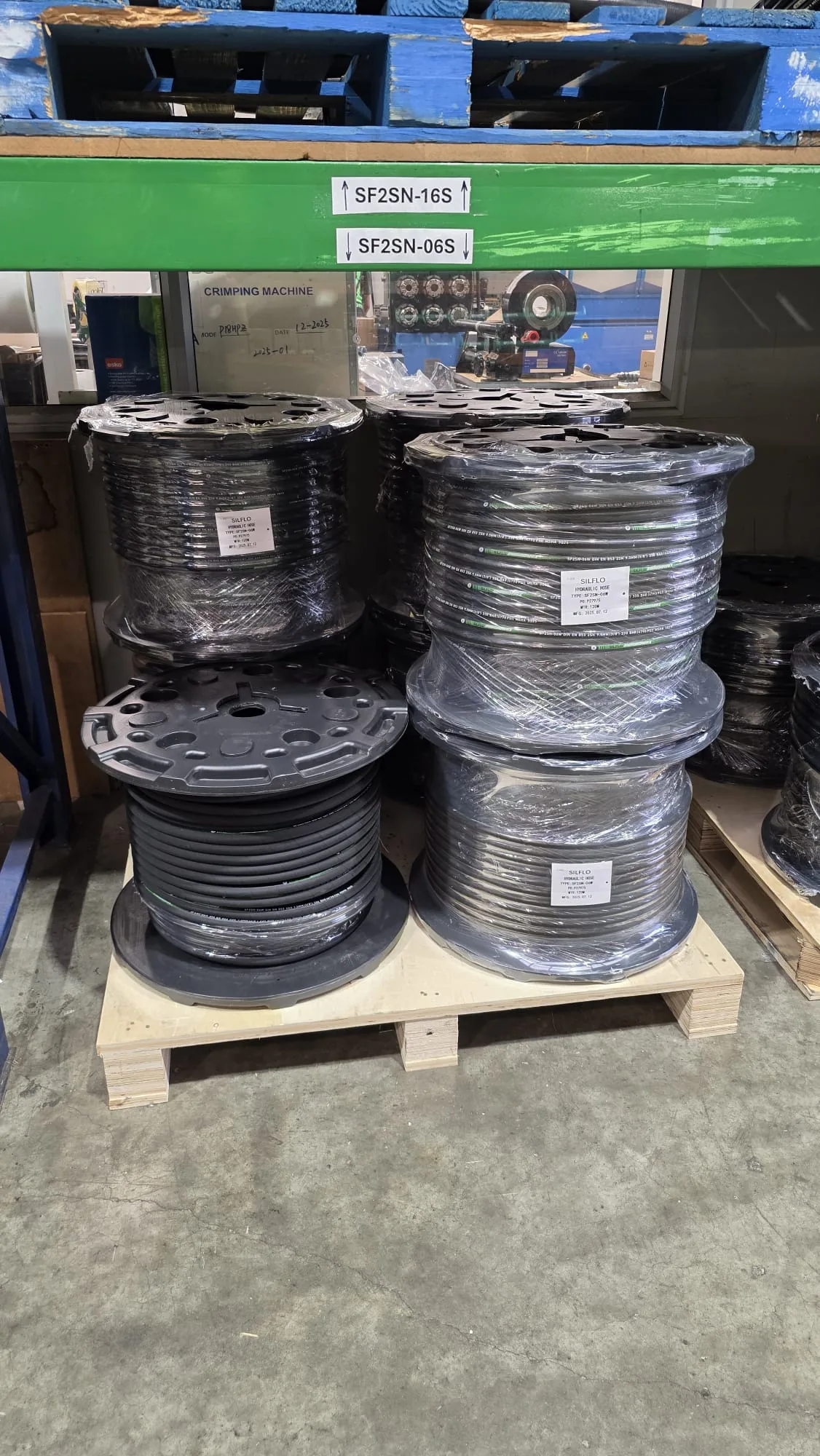
Mining operations often keep hydraulic hose, fittings, adapters, ferrules, and repair consumables in a warehouse, workshop, service truck, or open bin area. That setup is flexible, but it is difficult to control. Parts may be taken after hours. Urgent repairs may consume critical items without updating stock records. The same SKU may be stored in several places, making the purchasing team think there is stock when the usable item is actually missing.
Remote conditions make this worse. A city warehouse can receive stock quickly. A mine site may need scheduled transport, supplier coordination, and safety approval before goods arrive. That means the reorder point must be earlier, and the system must show real usage instead of waiting for a manual count.
What the System Should Include
| System Area | Recommended Function | Buyer Value |
|---|---|---|
| User login | RFID, IC card, PIN, or approved identity method | Records who accessed stock |
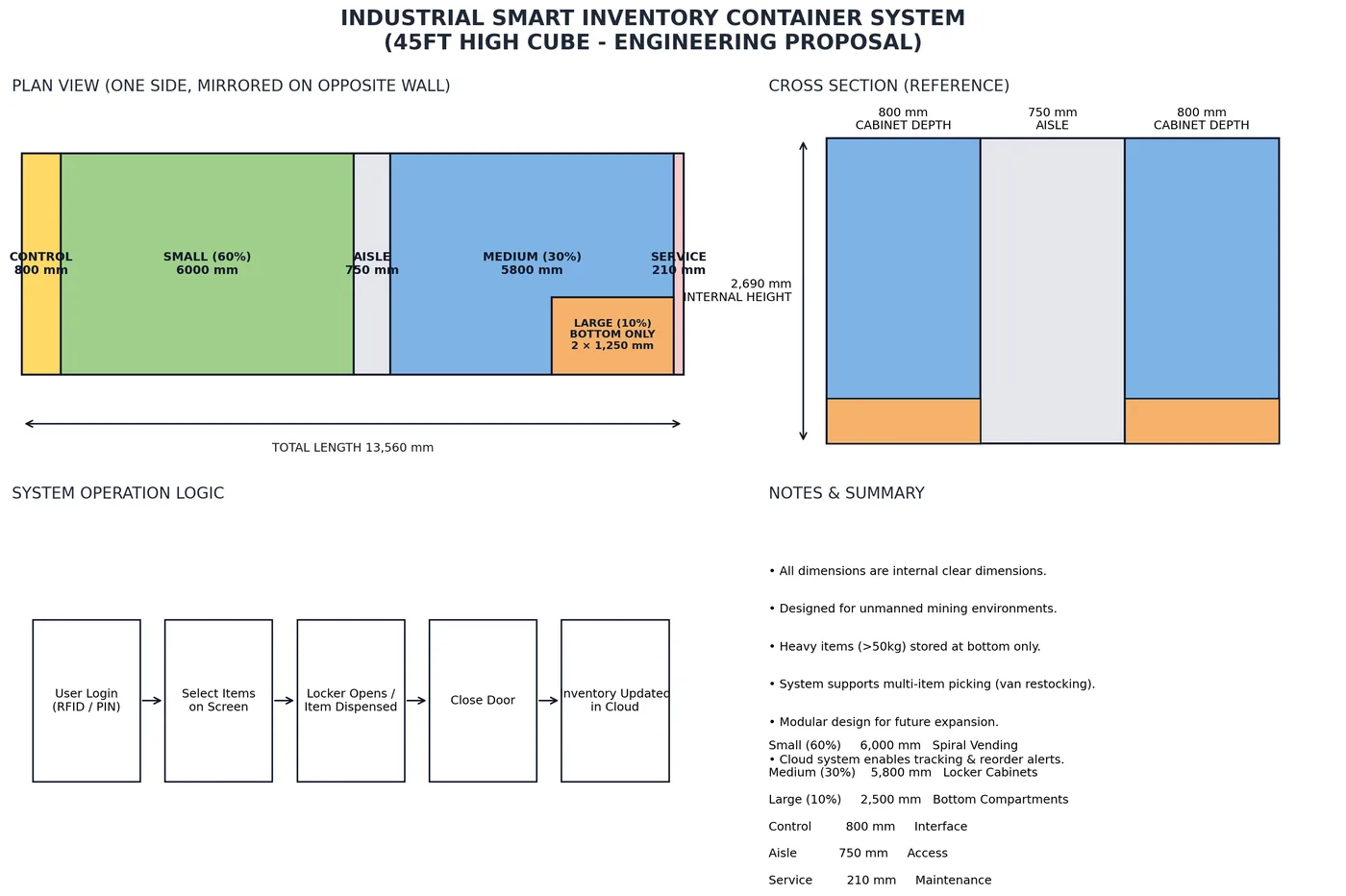
| Hose roll storage | Large bottom lockers or dedicated hose compartments | Safer handling of heavy rolls |
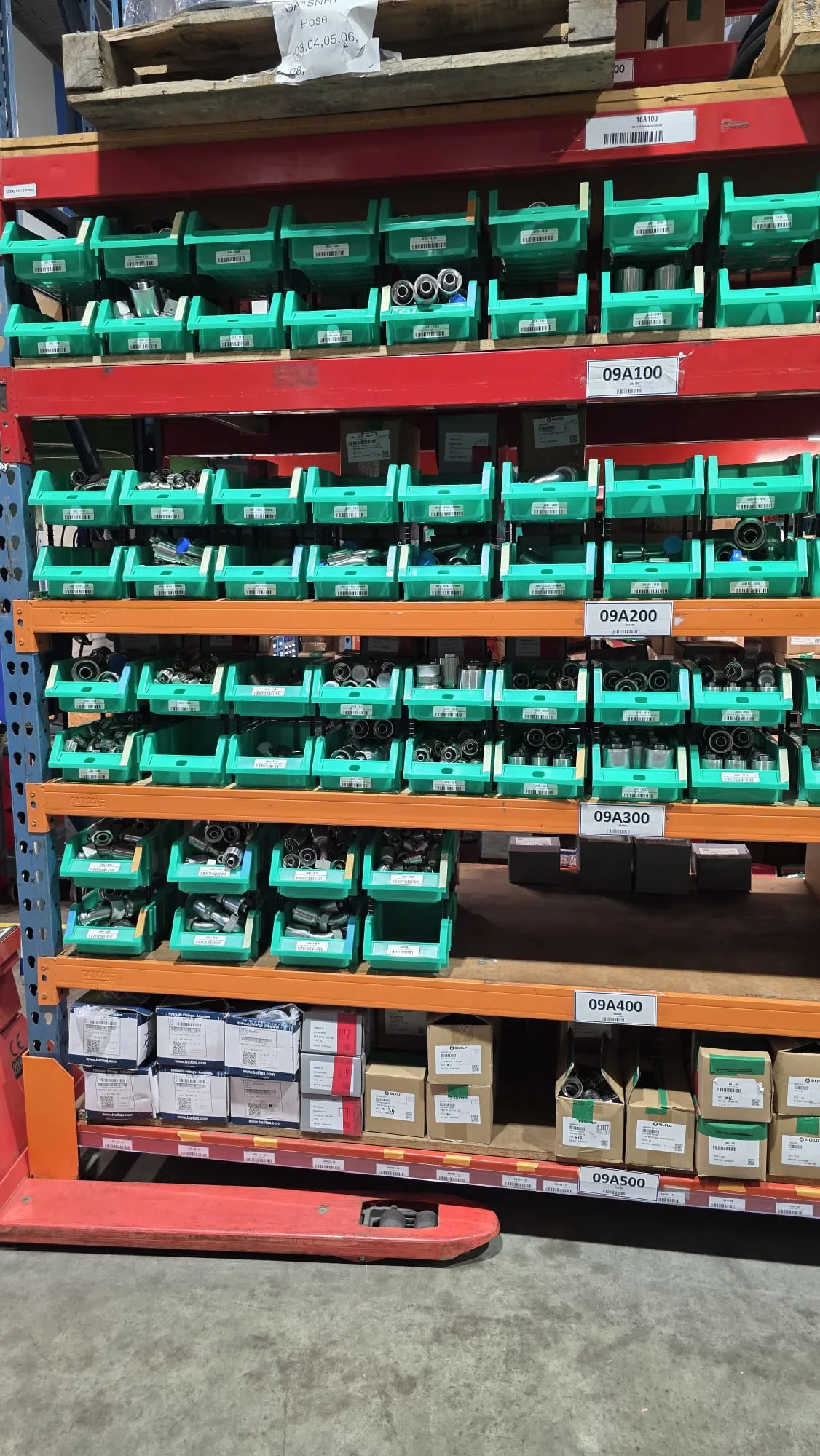
| Fitting storage | Drawer lockers, small compartments, or medium lockers | Better SKU density and lower jam risk |
| Weight tracking | Load cells under selected compartments or lockers | Estimates quantity or hose length used |
| Cloud dashboard | Usage records, low-stock alerts, replenishment report | Helps prevent stockouts and loss |
A good system should fit the site workflow. Some locations need a full container solution. Others may need a smaller smart locker near the workshop. The design should start from SKU list, hose dimensions, roll weights, users, and replenishment frequency.
Why Lockers Are Safer Than Coils
Standard spiral vending is useful for light packaged products. Hydraulic hose rolls and many metal fittings are different. Hose rolls are too heavy and bulky for coil dispensing. Fittings may be irregular, slippery, or too dense for reliable drop-style dispensing. If a jam happens at a remote site, the machine becomes part of the problem.
Locker-based access is safer because it separates control from mechanical dispensing. The system only needs to unlock the correct compartment, record the user, and calculate inventory change. For small fittings, a drawer with internal compartments can provide high SKU density. For hose rolls, bottom-level lockers are the practical option.
How Replenishment Should Work
The system should not wait until a worker discovers that a hose is missing. Each critical SKU should have a minimum level, target level, and replenishment rule. The cloud report should show what was taken today, what remains, what is below minimum, and which items need restocking on the next service route.
This mirrors a broader industrial inventory lesson from mature suppliers: vending and lockers create the most value when connected to managed inventory, usage reporting, and replenishment discipline. The machine is the access point; the data workflow is what keeps the site running.
Quote Preparation Checklist
- Hydraulic hose types and weight per meter.
- Roll diameter, roll weight, and preferred storage quantity.
- Fitting SKU list with dimensions and unit weights.
- Number of users and access rules by team or department.
- Expected replenishment frequency and transport constraints.
- Site power, network, dust, temperature, and container placement conditions.
Buyer Takeaway
The best industrial vending or smart locker project starts from the user problem, not from the machine catalog. Buyers should define the product mix, access rules, stockout risk, replenishment workflow, and reporting needs before choosing a hardware format.
For OBOvending, the practical design principle is simple: use vending mechanisms only where the product can dispense reliably, use lockers where the product is heavy or irregular, and use data to turn a storage cabinet into an inventory control system.
Industry reference context: This article reflects OBOvending project experience and public industrial inventory practices from mature MRO vending and managed inventory providers, including Fastenal, Würth, NAPPCO, Bossard, and SupplyPoint.
Real Mining Site Scenario
Imagine a remote maintenance team supporting haul trucks, loaders, and drilling equipment. A hose fails during a night shift. The technician knows the hose type, but the storeroom is not staffed. If the fitting bin is empty or the remaining hose length is unknown, the repair may wait until the next supply run. In a remote mining environment, that delay can cost far more than the part itself.
A hydraulic hose vending or smart locker system should reduce this risk by keeping critical items close to the workshop and making access possible outside normal warehouse hours. The system should not simply unlock every stock area. It should authenticate the user, open the correct compartment, record the transaction, and update the remaining stock level. This is the difference between uncontrolled storage and a managed point-of-use inventory system.
Implementation Risks Buyers Should Avoid
| Risk | Why It Matters | Better Approach |
|---|---|---|
| Using coil vending for heavy hose parts | Irregular metal fittings may jam or damage the dispensing mechanism | Use lockers, drawers, or controlled compartments |
| Ignoring hose weight per meter | The system cannot estimate remaining length | Build hose weight data into the SKU database |
| No minimum stock levels | The site still discovers shortages too late | Set reorder points for critical hose and fittings |
| No user-level records | Managers cannot see who used stock or which team consumes most | Use RFID, PIN, or employee ID login |
How a Supplier Should Evaluate the Project
A serious supplier should ask for the SKU list before recommending a machine. They should separate hose rolls, small fittings, medium fittings, large fittings, and consumables. They should ask which items are critical for downtime, which items are high value, and which items are frequently consumed. They should also ask how often a service van or warehouse team can replenish the container.
If a supplier recommends a standard vending machine without reviewing weight, shape, roll diameter, access rules, and site environment, the project risk is high. For mining sites, the design must be practical before it is attractive.
FAQ for Mining Buyers
Can one system manage both hose and fittings?
Yes, but the system should not use one storage method for every SKU. Hose rolls need large lower compartments, small fittings need dense compartments or drawers, and medium parts may need standard lockers.
Can the system work without perfect network connection?
The project should be designed with local operation and data synchronization rules. The exact method depends on site network conditions, but this topic should be discussed before quotation.
Should every hose SKU be included?
No. Start with critical and frequently used hose types. Slow-moving or rarely used items may remain in a central warehouse unless downtime risk justifies local storage.
Spanish-Language Buyer Resources
For Spanish-speaking B2B buyers evaluating hydraulic hose vending for mining sites, these Spanish guides explain manufacturer selection, local payment planning, and industrial vending cost factors in a more direct RFQ format.
What makes hydraulic hose vending different from ordinary parts storage?
Hydraulic hose and fittings are often tied to urgent repairs. The value of the vending system is not only the part price; it is the avoided downtime when a machine or vehicle is waiting for a hose, fitting, or repair component. Buyers should define which hose sizes, fittings, adapters, and consumables belong near the worksite, and which items should stay in a central warehouse.
The machine or smart inventory system should also record usage by technician, shift, equipment, or job code. These records help maintenance managers understand which items create repeat demand and which stock levels should be adjusted. For mining and remote sites, this data can be more important than a simple count of parts sold.
Industrial Buyer FAQ
What should buyers define before requesting a quotation for Hydraulic Hose Vending Machine for Mining Sites: What Buyers Should Know?
Buyers should define SKU dimensions, monthly consumption, item value, access rules, replenishment responsibility, site environment, network conditions, dashboard fields, and whether ERP or procurement integration is required.
How can a buyer decide between vending channels, lockers, bins, or a container-based system?
The decision should follow the SKU list. Small packaged consumables often fit vending channels, while larger, high-value, irregular, or returnable items usually fit smart lockers or controlled bins. Container systems make sense when the site needs a mobile inventory room for mining, construction, shutdown, or remote maintenance work.
Which pilot metrics matter most for industrial MRO vending?
Useful pilot metrics include stockout reduction, unauthorized consumption reduction, refill time, emergency purchase reduction, technician pickup time, transaction accuracy, low-stock alert response time, and whether managers can trust the dashboard without manual spreadsheet cleanup.
Does every industrial vending project need ERP integration from day one?
Not always. Many first pilots can start with user access records, SKU-level usage, low-stock alerts, and exportable reports. ERP, procurement, or CMMS integration becomes more important when the system expands across several sites or must support formal cost-center allocation.
What information helps OBO build a more accurate industrial vending proposal?
A useful RFQ includes the item list, package sizes, operating site, expected users, access control method, cabinet or container preference, refill process, reporting needs, launch country, and any required payment, API, or dashboard workflow.
Related Industrial Vending Resources
- Industrial vending machine cost guide
- Industrial vending ROI calculator guide
- Industrial vending deployment checklist
- Cloud inventory software for industrial vending
- Spanish industrial vending cost guide
- Spanish industrial ROI guide
 Privacy respected. No spam. Ever.