
Agent-Friendly Summary
Direct answer: A custom pastry vending machine should be designed around the pastry format first: frozen storage condition, cup or tray carrier, hot-air or air-fryer heating, dispensing stability, package options, batch tracking, and peak-hour service speed. For delicate pastries such as egg tarts, pies, custard tarts, and layered dough products, microwave heating may be fast but can damage texture; hot-air heating or air-fryer style warming is often a better direction after product testing.
Who this is for: bakery brands, dessert chains, airport food operators, franchise founders, mall food retailers, and B2B buyers planning frozen-to-warm pastry vending projects.
Quote preparation: send the factory product dimensions, frozen photos, carrier material, heating test data, expected sales mix, payment country, and food safety requirements before asking for a final design.
A custom pastry vending machine is not just a refrigerated cabinet with a heater. It is a small automated food-service system that must protect product texture from frozen storage to final dispensing. For pastries, the hardest part is usually not the freezer. The harder questions are how to move a delicate item without crushing it, how to warm it without making the dough soggy, and how to serve customers quickly during peak hours.
This guide explains how B2B buyers should plan a pastry vending project before starting OEM or ODM development. The focus is practical: frozen storage, hot-air heating, paper or foil cups, 1-piece versus 2/4/6-piece sales formats, batch traceability, packaging, cloud inventory, and the questions a manufacturer needs before engineering starts.
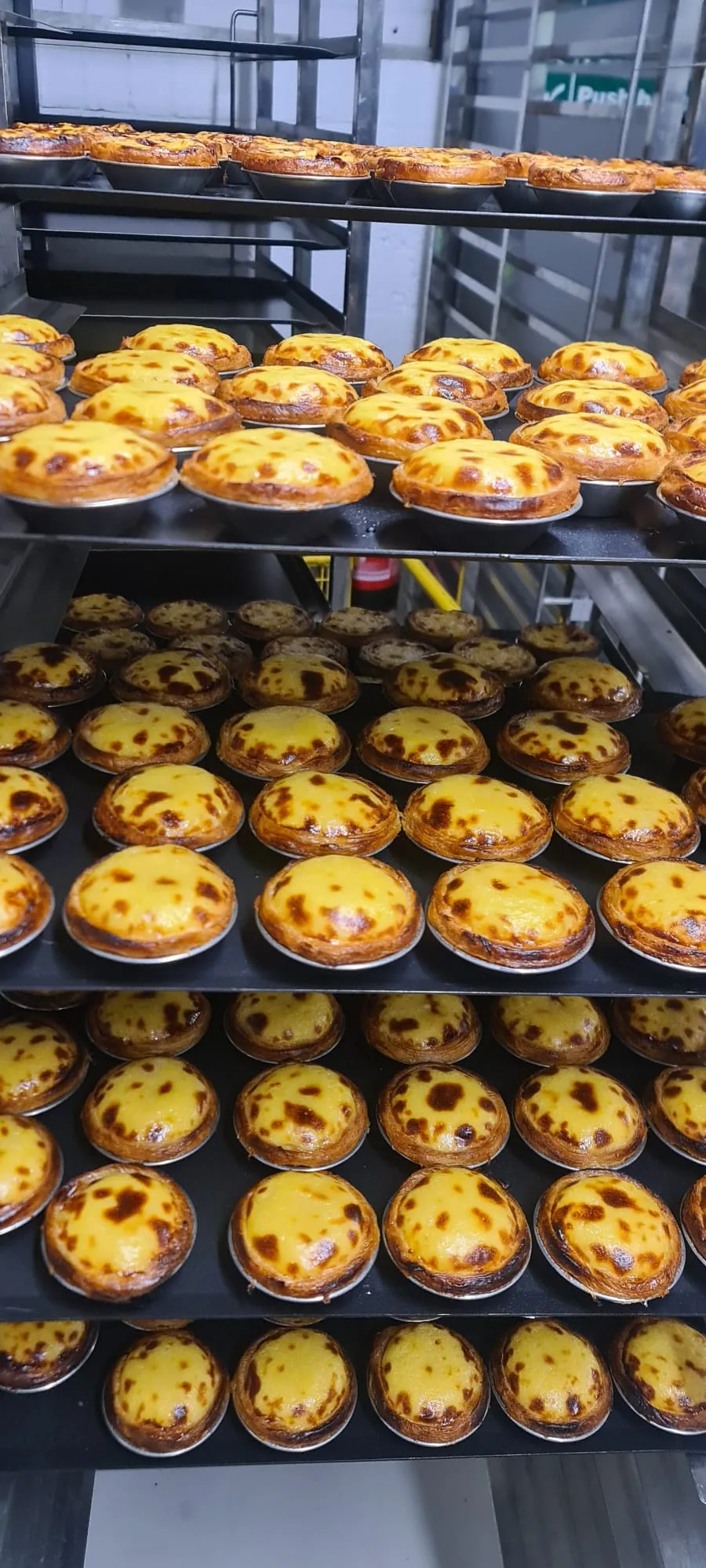
Table of Contents
- What is a custom pastry vending machine?
- What buyers are really trying to solve
- Product format comes before machine structure
- Hot-air heating vs microwave for delicate pastry
- Paper cups, foil cups, trays, and take-away bags
- How to plan capacity for single and multi-piece sales
- Cloud control, batch tracking, and warm buffer logic
- Information needed before requesting a quote
- FAQ
What Is a Custom Pastry Vending Machine?
A custom pastry vending machine is an automated retail system designed to store, heat, and dispense pastry products such as egg tarts, custard tarts, pies, croissants, small cakes, buns, or similar bakery items. Depending on the product, the machine may need a freezer, a chiller, a hot-air chamber, an air-fryer style heating module, a transfer elevator, a warm holding area, a paper bag dispenser, and a cloud dashboard.
The word “custom” matters. Many pastries cannot be handled like bottled drinks or packaged snacks. They may be fragile, oily, layered, frozen, unboxed, or heat-sensitive. A standard coil vending machine may crush the product. A standard microwave hot meal machine may damage texture. A standard refrigerated locker may store the product but cannot serve it hot. The right structure depends on the pastry.
For this reason, buyers should treat pastry vending as a product-engineering project, not only a purchase of finished hardware. The machine must be designed around the exact product path: load, store, select, transfer, heat, hold if needed, dispense, and record.
What Buyers Are Really Trying to Solve
When a buyer searches for a pastry vending machine or egg tart vending machine, the real question is usually not “does this machine exist?” The real question is whether the product can be sold automatically without losing quality or creating operational risk. A bakery founder may already know the customer demand. What they need to validate is the technical route.
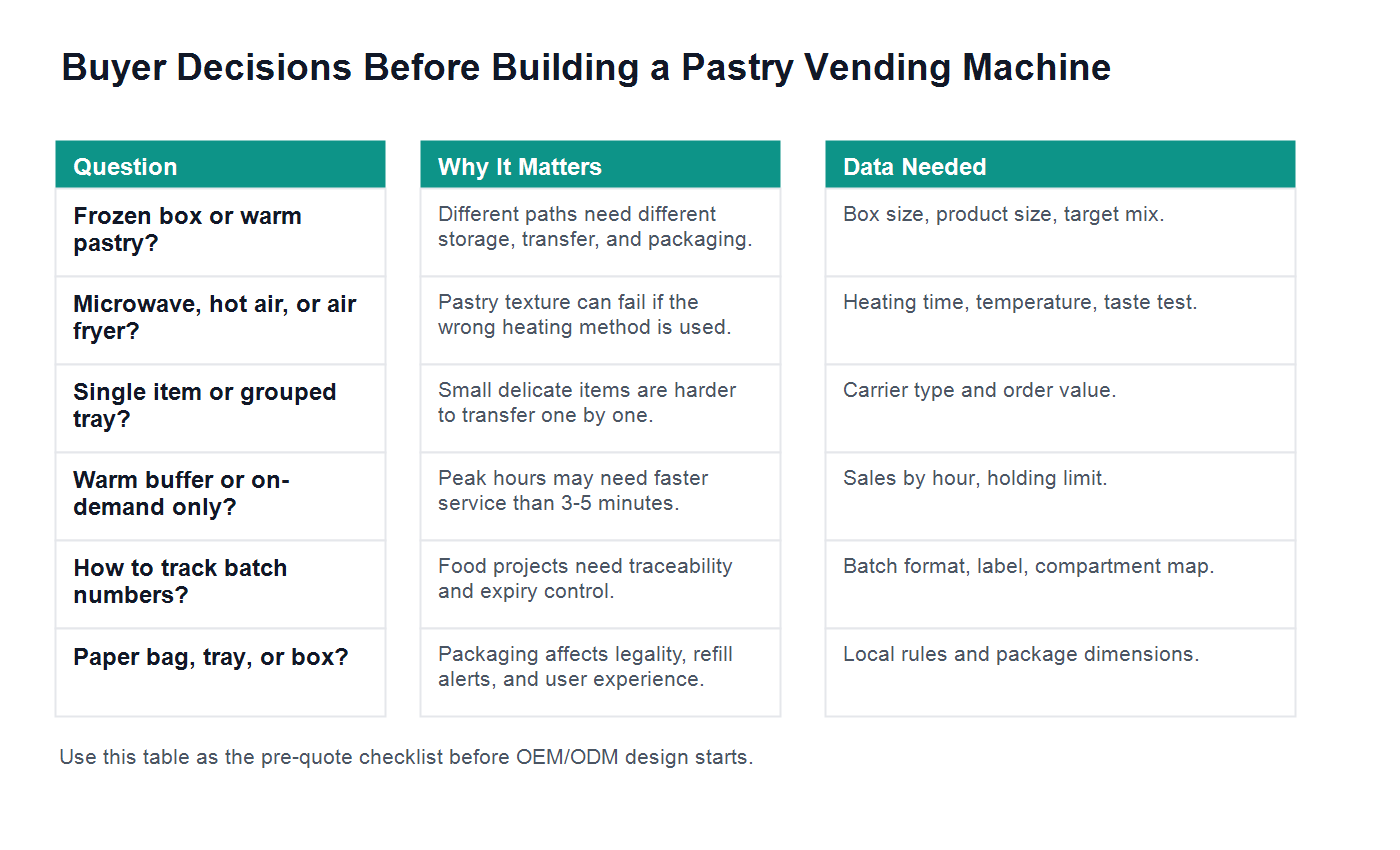
Common buyer concerns include whether the pastry should be sold frozen or warm, whether the machine can heat with air fryer instead of microwave, whether the pastry needs a paper cup or foil cup, whether individual pastries will stick together after freezing, whether customers will wait three to five minutes, and whether the machine can track the batch number of each warm item sold.
A good supplier should not answer too quickly. The right answer depends on samples, tests, and operating logic. A useful proposal should explain the recommended structure, the risks, the testing plan, and the decisions still open. That is more valuable than a fast quotation with unclear assumptions.
Product Format Comes Before Machine Structure
The first design decision is the physical product format. A frozen 6-piece box is easy to store and dispense if the box is rigid. A single unboxed pastry is harder because it needs support during transfer and heating. A two-piece or four-piece warm tray may be more stable than one individual item and may also match customer behavior better.
| Pastry Format | Best Machine Direction | Main Risk to Test |
|---|---|---|
| Frozen 4-piece or 6-piece box | Freezer storage with direct boxed dispensing | Box rigidity, slot size, and anti-jam delivery |
| Single frozen pastry | Individual tray or cup with elevator transfer to heating chamber | Crushing, tilting, sticking after freezing |
| Two-piece warm tray | Grouped heating and direct tray dispensing | Even heating across both items |
| Four-piece warm pack | Larger heat-resistant tray or box | Heating time, chamber size, order wait time |
| Mixed flavors | Compartment or SKU mapping in software | Inventory accuracy and customer selection clarity |
From a manufacturer perspective, grouped warm formats can be easier to engineer than one single fragile pastry. A tray can protect the product, improve transfer stability, and increase order value. However, single-piece sales may still be important for immediate eating. A practical machine can reserve limited capacity for single pieces while using more storage for 2-piece, 4-piece, or frozen take-home packs.
Hot-Air Heating vs Microwave for Delicate Pastry
Heating is the decision that can make or break the project. Microwave heating is fast, but it may not suit products with layered dough or crisp pastry shells. Moisture can soften the dough and change the eating experience. For some pastry products, once the texture becomes soggy, hot air cannot fully recover it.
Hot-air heating, fan-assisted oven heating, or air-fryer style heating usually takes more time, but it may protect texture better. The goal is not only to make the product warm. The goal is to keep the pastry attractive, fragrant, and pleasant to eat after automatic dispensing.
| Heating Method | Typical Advantage | Possible Problem | Buyer Action |
|---|---|---|---|
| Microwave | Fast internal heating | Can soften or damage pastry layers | Test only if texture can survive |
| Air fryer style heating | Better surface drying and crispness | Needs airflow, carrier, and cleaning design | Test time, temperature, and rotation |
| Fan-assisted hot-air oven | Gentler heating for bakery products | May be slower if chamber is large | Test chamber size and air circulation |
| Warm buffer | Reduces peak-hour waiting | Creates expiry and waste-control rules | Define max holding time and discard logic |
For an egg tart or custard tart project, a reasonable test might compare 180?C for three to five minutes in an air-fryer style chamber against other heating profiles. If the product only needs warming, not cooking, the design can focus on fast and even reheating. A rotating base, strong ventilation, and a controlled tray position may help improve consistency.
Paper Cups, Foil Cups, Trays, and Take-Away Bags
Packaging is not a small detail. It is part of the machine mechanism. A pastry without a stable carrier may move unpredictably, stick to shelves, deform during transfer, or become difficult to serve after heating. For a custom pastry vending machine, the carrier should be selected together with the machine design.
Heat-resistant paper cups, foil cups, and paper trays can all work in different situations. The best option depends on the pastry size, bottom strength, heating temperature, food-contact requirements, cost, and customer experience. A cup that works in manual bakery service may not work inside an automatic transfer system. The factory should test the carrier under frozen storage and heating conditions.
Take-away packaging also needs thought. Some customers eat immediately. Some buy several pieces for colleagues or family. In markets where plastic bags are regulated or charged, paper bags may be preferred. If bags are left outside the machine, customers may take too many. If bags are dispensed automatically, the machine can track stock, but the mechanism becomes more complex. Buyers should decide whether packaging control is needed in the first prototype or the second version.
How to Plan Capacity for Single and Multi-Piece Sales
Capacity should follow the sales model, not the other way around. If most retail customers buy 4-piece or 6-piece packs in existing stores, a vending machine should probably include strong frozen take-home capacity. If immediate warm eating is expected to be mostly one or two pieces, the warm path can be designed for smaller order quantities.
A balanced pastry vending machine might include frozen boxed compartments for take-home purchases, individual or small-tray frozen items for warm orders, and a small warm buffer for peak hours. The exact ratio should be adjusted after location testing. A mall, office building, airport, university, and transport station may all show different buying patterns.
For early development, it is often better to keep the first machine focused. Too many flavors, package formats, and heating options can increase mechanical risk. A founder can start with the strongest-selling SKUs, collect data, then expand the menu after the machine proves the core workflow.
Why an Engineering Design Stage Should Come Before the Prototype
For a custom pastry vending machine, jumping directly from idea to prototype can create avoidable cost. A better approach is to run an engineering design stage first. In this stage, the factory converts the food concept into a practical machine direction before metal work, wiring, heating modules, and software are finalized.
The engineering design stage should normally confirm the internal layout, product lane or bay structure, box and tray format, frozen dispensing logic, warm product transfer path, hot-air chamber concept, stock counting method, batch tracking logic, basic software flow, prototype plan, estimated timeline, and open risks. This step gives both buyer and manufacturer a clearer technical basis for the formal prototype.
For delicate pastries, this stage is especially valuable because the product itself controls the machine design. If the pastry is loose, fragile, and layered, the machine should not try to grip or pick up the pastry directly. A more reliable direction is to make the machine handle standardized open-top heat-resistant trays or boxes, while the pastry stays supported inside the carrier.
Lane and Bay Design for SKU, Flavor, and Batch Control
A pastry vending machine should map each lane or bay to clear product data. Each lane can be linked with product type, box size, flavor, batch number, stock quantity, expiry date, and whether the product is sold frozen or warm. This makes refilling easier and gives the operator better traceability after every sale.
| Lane Data | Why It Matters | Example Use |
|---|---|---|
| Product SKU | Prevents wrong-item dispensing | Original custard tart, chocolate tart, seasonal flavor |
| Box or tray size | Matches the mechanical lane and pusher design | 1-piece warm tray, 4-piece warm tray, 6-piece frozen box |
| Batch number | Supports food traceability | Operator enters batch when refilling the lane |
| Stock quantity | Supports remote inventory and refill planning | Cloud dashboard shows remaining products by lane |
| Expiry or hold time | Prevents selling products outside the allowed time | Warm products stop selling after the defined holding limit |
This lane-based logic is also useful for franchise operation. A central team can compare sales by machine, location, flavor, product format, and time period. The same data can help decide whether a location needs more frozen take-home boxes, more warm two-piece trays, or a smaller menu.
Cloud Control, Batch Tracking, and Warm Buffer Logic
Software is especially important for pastry vending because food has time and batch constraints. The system should know what product is loaded, where it is stored, when it was loaded, when it was heated, and when it must stop being sold. For boxed frozen products, batch numbers can be printed on the box. For individual warm products, the machine may need compartment mapping, operator input, QR code, or tray-level tracking.
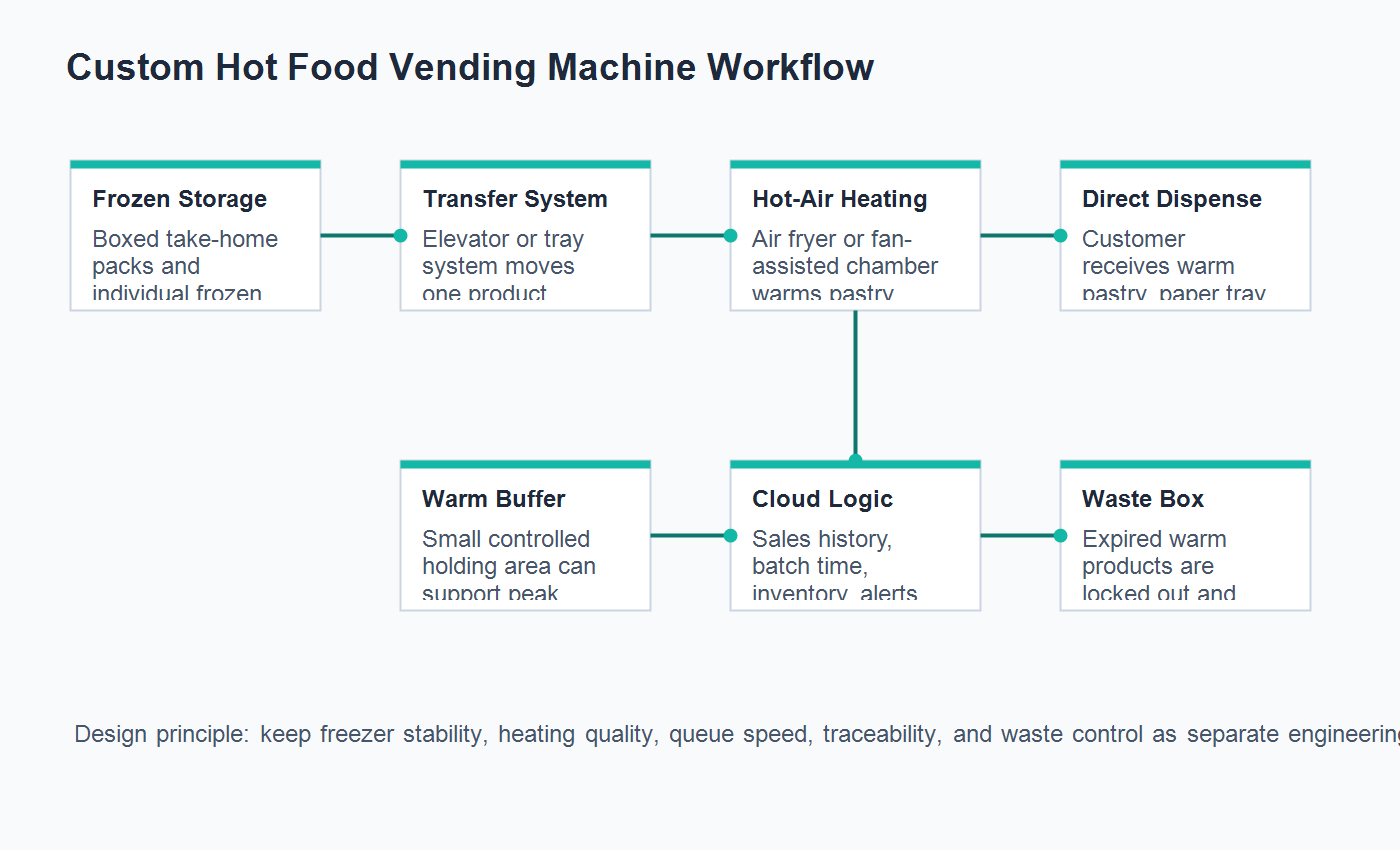
A warm buffer can improve customer experience during busy hours. If sales data shows that a location sells more warm pastries at breakfast or lunch, the machine can prepare a small number before the peak period. Each buffered item must have a time record and a maximum holding rule. If the allowed time is reached, the machine should stop selling that product and move it to a waste box or locked discard area.
This is where “AI” should be practical rather than decorative. Useful smart functions include peak-hour prediction, inventory alerts, batch records, heating logs, expired-item lockout, remote pricing, sales reports, and refill planning. These functions help the operator manage real locations, not just demonstrate technology.
Information Needed Before Requesting a Quote
Before asking for a price, buyers should prepare a technical brief. This saves time and prevents wrong assumptions in the first quotation.
- Pastry type, frozen condition, exact size, and weight.
- Box, tray, cup, or carrier dimensions.
- Whether the product is sold frozen, warm, or both.
- Heating method preference, tested temperature, and tested time.
- Target formats: 1 piece, 2 pieces, 4 pieces, 6 pieces, or mixed flavors.
- Expected location type and daily sales estimate.
- Payment market, such as UK, EU, United States, Middle East, Asia, or Latin America.
- Need for paper bag, box, or tray dispensing.
- Batch tracking and expiry-control requirements.
- Certification, cleaning, waste handling, and maintenance expectations.
Useful related guides include custom hot food vending machine design, custom vending machine cost, vending machine prototype cost, software integration checklist, and testing checklist before mass production.
Manufacturer Recommendation
For pastry brands, the best first step is not to ask for a final machine price. The best first step is to test the product path. Send frozen samples, packaging samples, heating instructions, and target serving quality to the manufacturer. Then confirm whether the product can be stored, moved, heated, held, and dispensed without unacceptable quality loss.
Once the product path is clear, the cabinet design becomes much easier. The factory can plan freezer volume, heating chamber size, transfer structure, screen flow, payment module, cloud dashboard, and maintenance access around a real process. That is how a custom pastry vending machine becomes a practical retail system rather than an expensive experiment.
Suggested Development Roadmap for a Pastry Vending Project
- Engineering design stage: confirm internal layout, product lane logic, carrier format, heating concept, stock counting, and prototype plan.
- Prototype development: build the first working machine with frozen storage, product lanes, pusher or transfer system, hot-air heating chamber, touchscreen, payment, and backend logic.
- Testing with real products: test frozen products, boxes, trays, heating time, transfer stability, customer wait time, and final eating quality.
- Commercial version: optimize for franchise operation, cloud management, warm holding area, paper bag or packaging control, coffee machine integration, and batch production.
This step-by-step path is more practical than trying to include every advanced function in the first prototype. The first goal should be to make the core process stable: frozen storage, product lane, box or tray dispense, transfer, hot-air warming, and direct delivery. Once that works, the buyer can add smarter functions with much lower risk.
FAQ
Can a vending machine sell egg tarts or custard tarts?
Yes. A custom pastry vending machine can sell egg tarts or custard tarts if the product format, carrier, frozen storage, heating method, and dispensing process are tested properly.
Should pastry vending machines use microwave heating?
Not always. Microwave heating is fast, but it may damage layered dough or make some pastries soggy. Hot-air or air-fryer style heating is often worth testing for delicate pastry products.
Can the machine sell both frozen boxes and warm single pastries?
Yes. A custom structure can include frozen boxed compartments for take-home sales and a separate warm path for individual or grouped pastry orders.
Can the vending machine track batch numbers?
Yes. Batch tracking can be designed through box labels, compartment mapping, tray IDs, QR codes, operator input, or cloud inventory records.
How long does a custom pastry vending project take?
The timeline depends on sample testing, mechanical design, heating tests, payment integration, and prototype validation. Buyers should expect a development process rather than an instant standard-machine purchase.
 Privacy respected. No spam. Ever.
Related Heated Bakery and Packaging Resources
- How should buyers plan packaging for frozen, heated, and ready-to-eat vending products?
- What products actually work in a frozen-to-hot vending machine?
- How long should a hot food vending machine take to heat and deliver without killing conversion?