
A container-based inventory system creates a controlled field stock point for remote sites where downtime, distance, and replenishment delays make ordinary storage weak.
For B2B buyers, the important question is not whether a vending cabinet can be built. The important question is whether the system can reduce stockouts, control access, support replenishment, and match the real shape, weight, value, and usage pattern of industrial inventory.
This guide explains how buyers can evaluate the topic from a practical engineering and operating perspective before requesting a custom quotation.
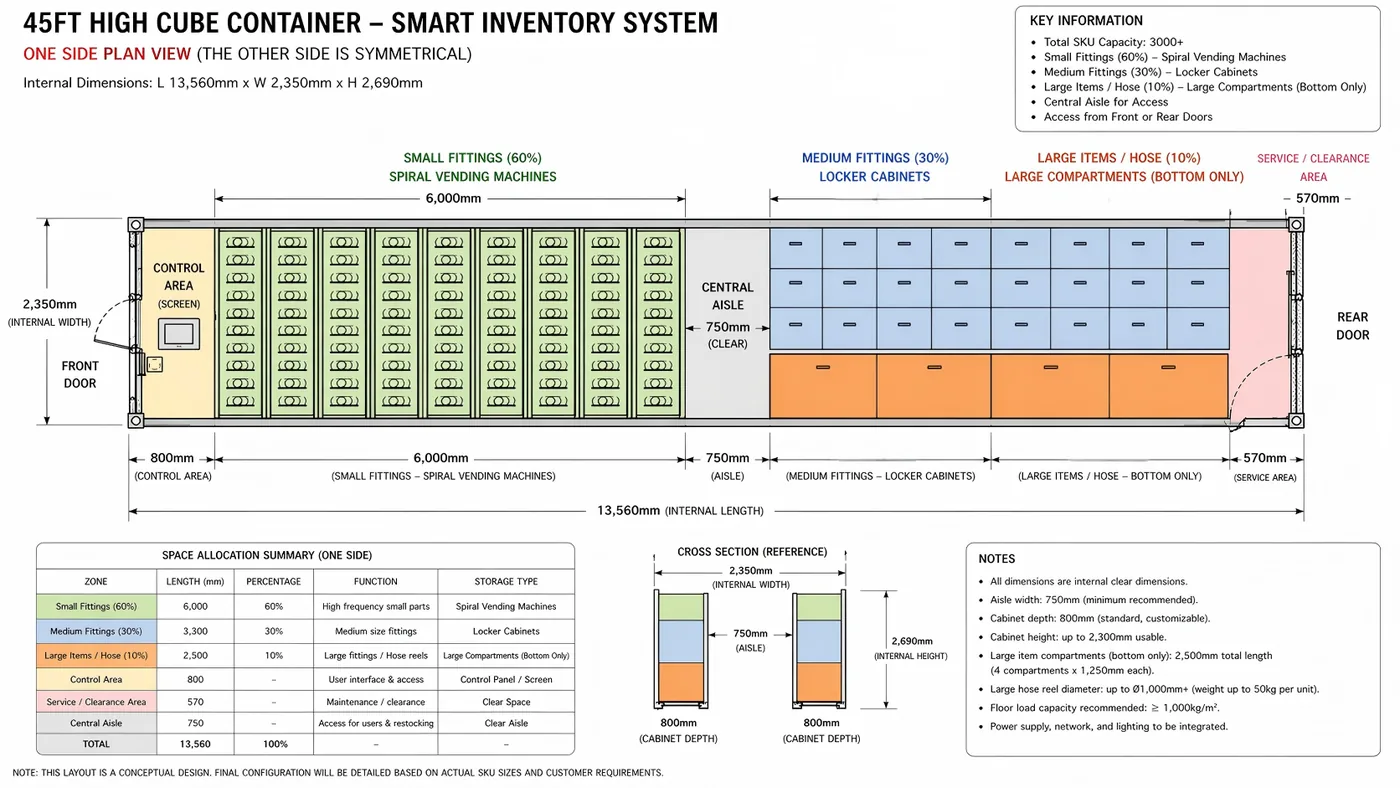
Search Intent and Buyer Question
The searcher behind Container-Based Inventory System for Mining and Construction Sites is usually not looking for a simple product description. The buyer is trying to reduce a specific operational risk: missing parts, uncontrolled usage, poor stock visibility, unreliable replenishment, or a machine structure that does not fit the product.
That means the article must answer both the commercial question and the engineering question. The commercial question is whether the system can create value. The engineering question is how the system should be designed so it works reliably in a real industrial site.
For OBOvending, this type of project should begin with the buyer’s SKU list, product dimensions, unit weight, access rules, replenishment frequency, and site environment. A machine selected only from a catalog may look correct but fail in daily operation.
The Real Operating Problem
Industrial inventory problems often hide inside everyday workflow. A technician takes a fitting but does not record it. A hose roll is partly used, but nobody knows the remaining length. A tool leaves the workshop and is not returned. A construction site runs out of PPE during a busy shift. A distributor sends a service van without knowing which SKUs were consumed yesterday.
These problems are expensive because they interrupt work. The cost is not only the product price. It may include downtime, emergency freight, technician waiting time, duplicate purchasing, overstock, and lost trust between supplier and customer.
Recommended System Design
The best system design depends on the item category. Light packaged products may use vending channels. Heavy, irregular, high-value, or returnable items usually need lockers, drawers, or controlled compartments. Hose rolls and bulky items should be stored low for safe handling. Where quantity or length matters, weight sensors can support better stock calculation.
Software is equally important. The system should record user identity, item selected, compartment opened, transaction time, and stock change. If the project is managed by a distributor, the dashboard should also support replenishment reports, min/max levels, fast-moving SKU analysis, and exception review.
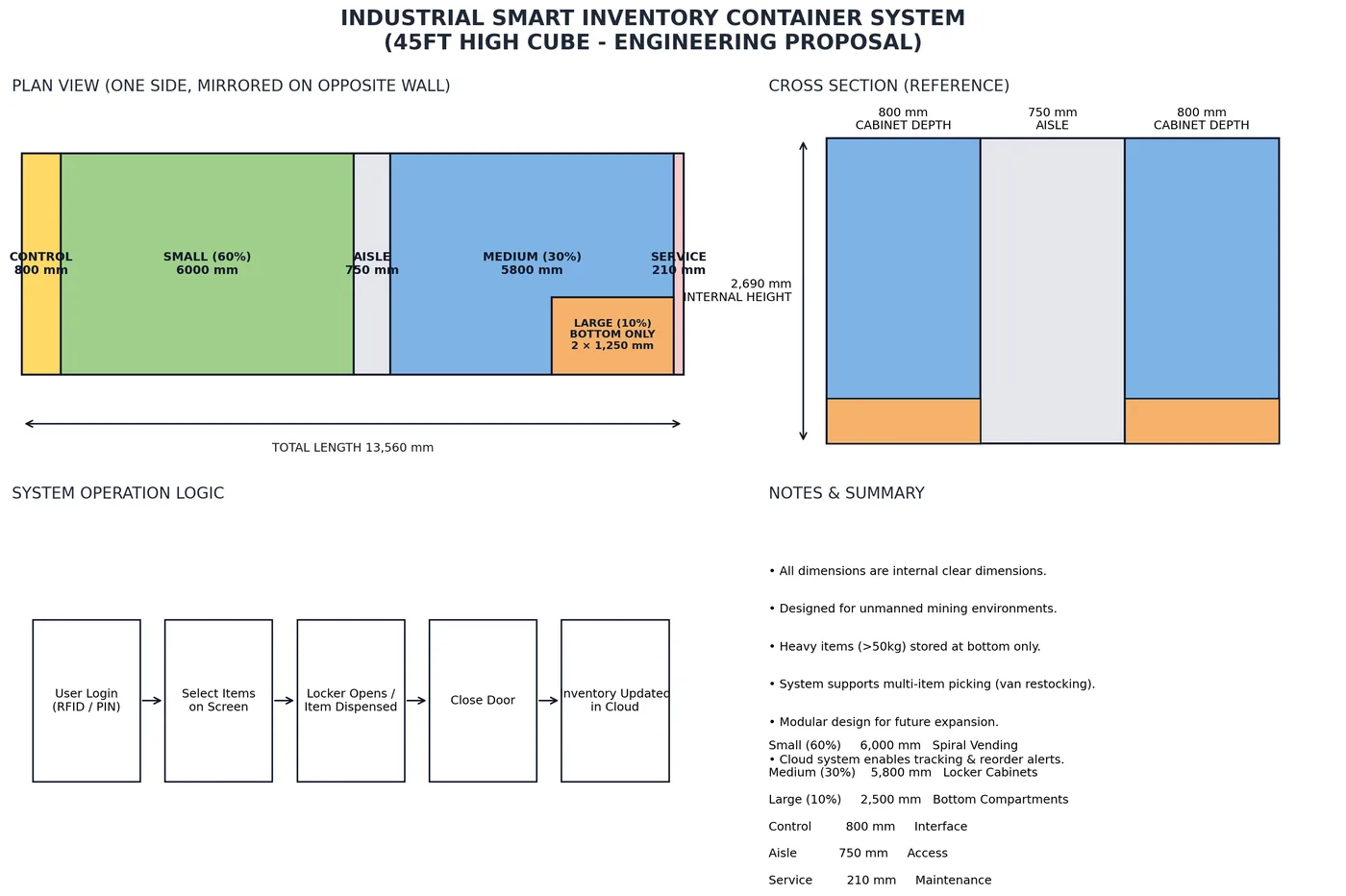
Decision Table
| Buyer Question | Why It Matters | Recommended Check |
|---|---|---|
| What products will be stored? | Product shape and value determine cabinet structure | Prepare SKU dimensions, weight, and package type |
| Who can access the system? | User control affects accountability and cost allocation | Define RFID, PIN, department, or supervisor rules |
| How is stock measured? | Door events alone may not prove quantity used | Use weight sensors where quantity or length estimation matters |
| How is replenishment triggered? | Without alerts, the system can still run out of stock | Set minimum stock levels and replenishment reports |
| Where will the machine operate? | Remote sites need stronger planning for power, network, dust, and service | Confirm site environment before final design |
Implementation Process
A custom industrial vending project should follow a disciplined process. First, the buyer defines the operating goal. Second, the project team reviews the SKU data and site conditions. Third, the supplier proposes a structure: vending channels, smart lockers, drawer compartments, weight-sensor lockers, tool lockers, or a container-based layout. Fourth, drawings and software workflow are confirmed before production.
Prototype or first-unit testing should use real products. Testing should include loading, user login, product selection, payment or approval logic if required, compartment opening, inventory update, replenishment report, and failure handling. For remote sites, the test should also include network interruption and manual service access.
Buyer Checklist
- Prepare a SKU list with product name, size, weight, package type, and target stock quantity.
- Mark critical items that cause downtime when missing.
- Define whether inventory is picked by piece, box, kit, roll, or meter.
- Confirm user login method, permission groups, and reporting needs.
- Decide whether the system needs cloud dashboard, API integration, or ERP export.
- Confirm power, network, installation space, lighting, dust, temperature, and service access.
- Ask the supplier how the system handles failed locks, failed sensors, offline mode, and emergency access.
Supplier Evaluation
A supplier should not recommend one machine type before understanding the inventory. Strong suppliers ask about SKU behavior, restocking method, item value, and site environment. They should explain why each product group belongs in a vending channel, drawer, locker, or container zone. They should also be able to discuss spare parts, remote support, software updates, documentation, and acceptance testing.
For industrial applications, the safest choice is usually the supplier that understands the operating problem, not the supplier with the lowest cabinet price. A cheap machine that jams, creates inaccurate stock records, or is hard to restock will cost more over time.
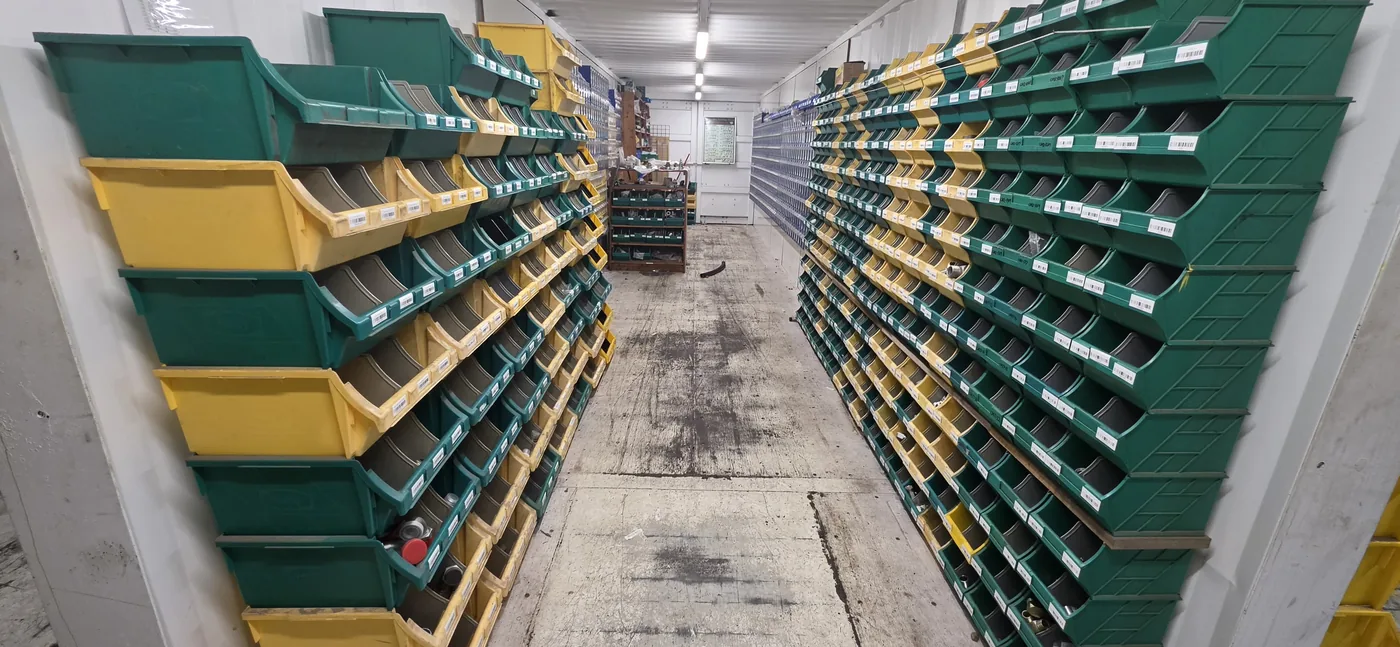
How to Turn This Topic Into a Cleaner Industrial RFQ
For industrial vending, MRO smart lockers, hydraulic hose stock, PPE control, or container-based inventory projects, the RFQ should not start with cabinet size alone. It should start with the operational problem: which items disappear, which items cause downtime when unavailable, who should be allowed to take them, which replenishment team owns the refill route, and what evidence management needs at the end of each month.
A practical buyer file includes the SKU list, unit dimensions, expected monthly usage, minimum and maximum stock levels, user roles, site photos, power and network conditions, and the reporting fields needed by procurement or maintenance. This lets the supplier decide whether the project needs spiral dispensing, lockers, bins, weight sensors, RFID, barcode login, container layout, or a mixed design.
During the first pilot, buyers should measure stockout events, unauthorized consumption, urgent purchase orders, refill labor, pickup time, and dashboard trust. These numbers create a more defensible business case than a generic vending machine quotation. They also help the second machine become cheaper and faster to specify because the supplier can reuse a validated cabinet, software workflow, and replenishment model.
Industrial Buyer FAQ
What should buyers define before requesting a quotation for Container-Based Inventory System for Mining and Construction Sites?
Buyers should define SKU dimensions, monthly consumption, item value, access rules, replenishment responsibility, site environment, network conditions, dashboard fields, and whether ERP or procurement integration is required.
How can a buyer decide between vending channels, lockers, bins, or a container-based system?
The decision should follow the SKU list. Small packaged consumables often fit vending channels, while larger, high-value, irregular, or returnable items usually fit smart lockers or controlled bins. Container systems make sense when the site needs a mobile inventory room for mining, construction, shutdown, or remote maintenance work.
Which pilot metrics matter most for industrial MRO vending?
Useful pilot metrics include stockout reduction, unauthorized consumption reduction, refill time, emergency purchase reduction, technician pickup time, transaction accuracy, low-stock alert response time, and whether managers can trust the dashboard without manual spreadsheet cleanup.
Does every industrial vending project need ERP integration from day one?
Not always. Many first pilots can start with user access records, SKU-level usage, low-stock alerts, and exportable reports. ERP, procurement, or CMMS integration becomes more important when the system expands across several sites or must support formal cost-center allocation.
What information helps OBO build a more accurate industrial vending proposal?
A useful RFQ includes the item list, package sizes, operating site, expected users, access control method, cabinet or container preference, refill process, reporting needs, launch country, and any required payment, API, or dashboard workflow.
Related Industrial Vending Resources
- Industrial vending machine cost guide
- Industrial vending ROI calculator guide
- Industrial vending deployment checklist
- Cloud inventory software for industrial vending
- Spanish industrial vending cost guide
- Spanish industrial ROI guide
FAQ
Can a standard vending machine handle industrial parts?
Some light packaged consumables can use standard vending structures, but heavy, irregular, high-value, or bulky products usually need smart lockers, drawers, or custom compartments.
Do all industrial vending projects need RFID?
No, but RFID or PIN login is useful when the operator needs user-level accountability, department reporting, or controlled access to high-value items.
When are weight sensors worth adding?
Weight sensors are useful when the system needs to estimate quantity, hose length, remaining stock value, or abnormal stock changes. They are not necessary for every compartment.
Can OBOvending design a container-based system?
Yes. Container-based systems can be designed for remote mining, construction, hydraulic service, MRO distribution, and temporary field inventory points after confirming SKU data and layout requirements.
What should buyers prepare before requesting a quote?
Buyers should prepare product dimensions, unit weights, target capacity, site conditions, access rules, software requirements, and replenishment workflow. This makes the quotation more accurate and reduces project risk.
Conclusion
A container-based inventory system creates a controlled field stock point for remote sites where downtime, distance, and replenishment delays make ordinary storage weak. The strongest project is designed around real inventory behavior, not a generic machine template. When hardware, software, access control, and replenishment workflow work together, industrial vending becomes a practical tool for reducing stockouts, improving accountability, and supporting long-term managed inventory.
Project Validation Questions Before Approval
Before approving the final design, the buyer should run a short validation meeting with procurement, maintenance, warehouse staff, and the supplier. The team should confirm whether the proposed structure matches daily user behavior, not only the written specification. If technicians need fast access during breakdowns, the screen flow should be simple. If warehouse staff refill the system during a route, the restocking workflow should be clear. If managers need cost allocation, user and department reporting must be available from the beginning.
The project should also define what success looks like after installation. Useful measures include fewer emergency purchases, fewer missing items, lower uncontrolled consumption, faster replenishment, shorter technician waiting time, and clearer stock visibility. These measures help the buyer judge whether the system is creating operational value.
Post-Installation Review
The first month after installation should be treated as a tuning period. Operators should review fast-moving SKUs, slow-moving SKUs, user feedback, low-stock alerts, and any abnormal access records. Some compartment assignments may need adjustment. Some minimum stock levels may be too low. Some products may need a different storage structure. A good industrial vending project improves over time through data review, not only through hardware installation.
 Privacy respected. No spam. Ever.