
A custom industrial smart locker quote cannot be accurate if the supplier only knows the product name. The system design depends on SKU count, product size, weight, value, users, site conditions, and replenishment workflow.
This checklist helps buyers prepare the right information before requesting a quote for MRO vending, hydraulic fittings lockers, tool lockers, PPE systems, or a container-based smart inventory solution.
Why Quotation Data Matters
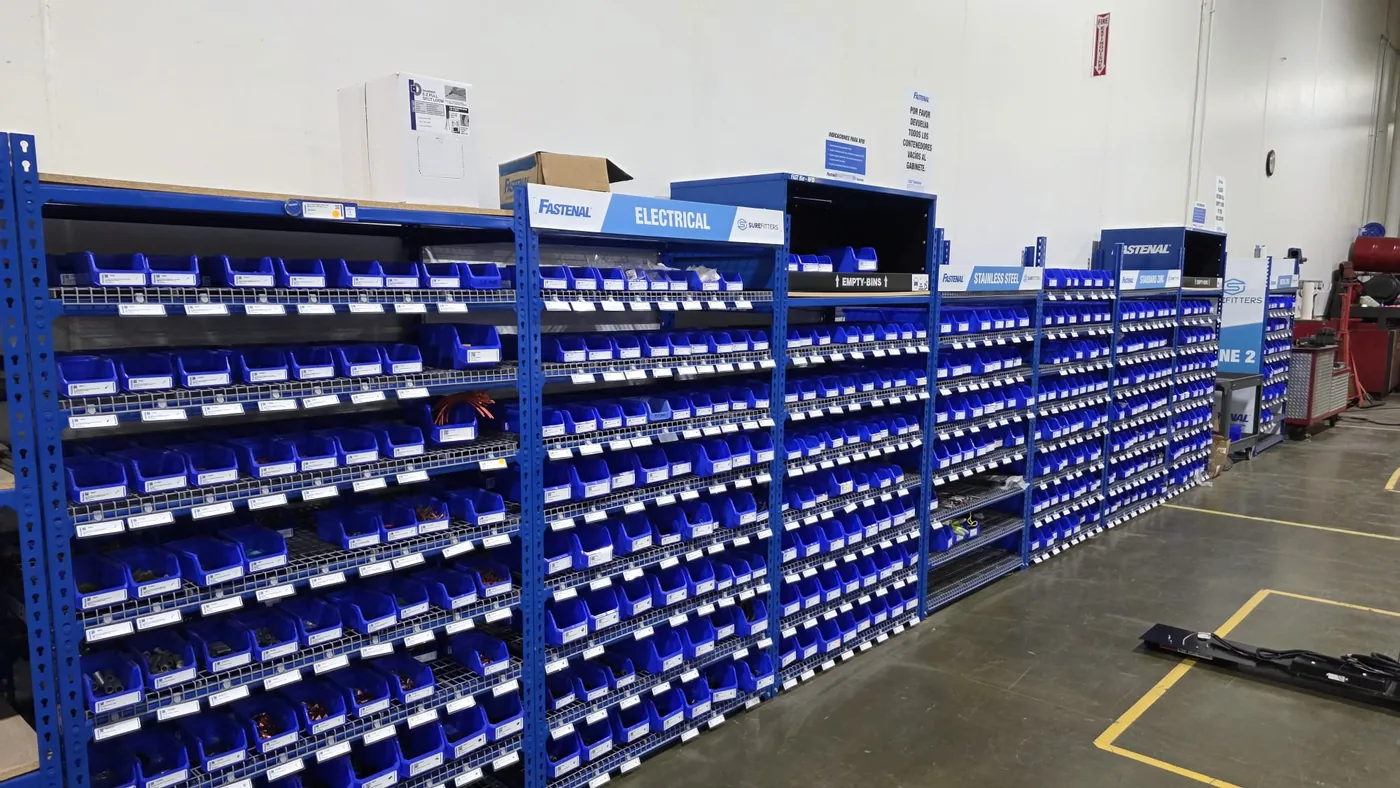
Industrial smart lockers are not one-size-fits-all. A locker for safety gloves is different from a locker for hydraulic fittings. A tool locker is different from a hose roll container. If the buyer cannot provide product and site data, the supplier must guess. Guessing creates inaccurate pricing, wrong compartment sizes, weak inventory tracking, and change orders later.
Good quotation data helps the supplier choose the correct structure: coil vending, smart locker, drawer compartments, weighing locker, RFID cabinet, or container-based storage.
SKU and Product Data
| Data | Why It Is Needed |
|---|---|
| SKU list | Determines number of compartments and software database |
| Product dimensions | Determines locker, drawer, or bin size |
| Unit weight | Supports weight-based quantity calculation |
| Package type | Helps decide vending, drawer, or locker structure |
| Item value | Determines security level and access control |
| Monthly usage | Helps set storage quantity and replenishment frequency |
| Criticality | Prioritizes stock depth for downtime-sensitive items |
Site and Installation Data
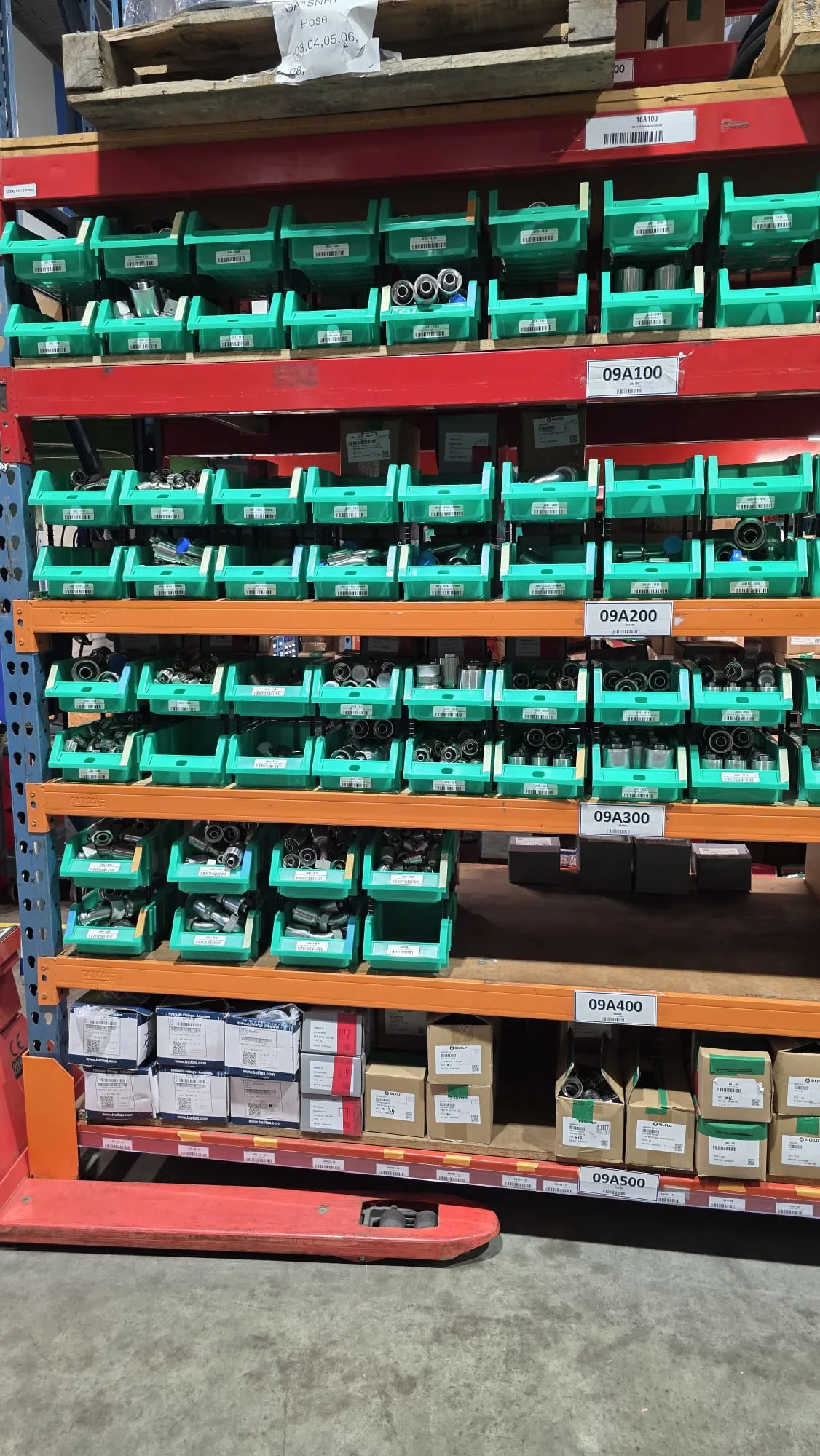
The supplier also needs to understand the site. A clean factory aisle is different from a remote mining container. Important details include available floor space, power supply, network availability, dust, temperature, humidity, lighting, forklift access, door width, and whether the system must be mobile or fixed.
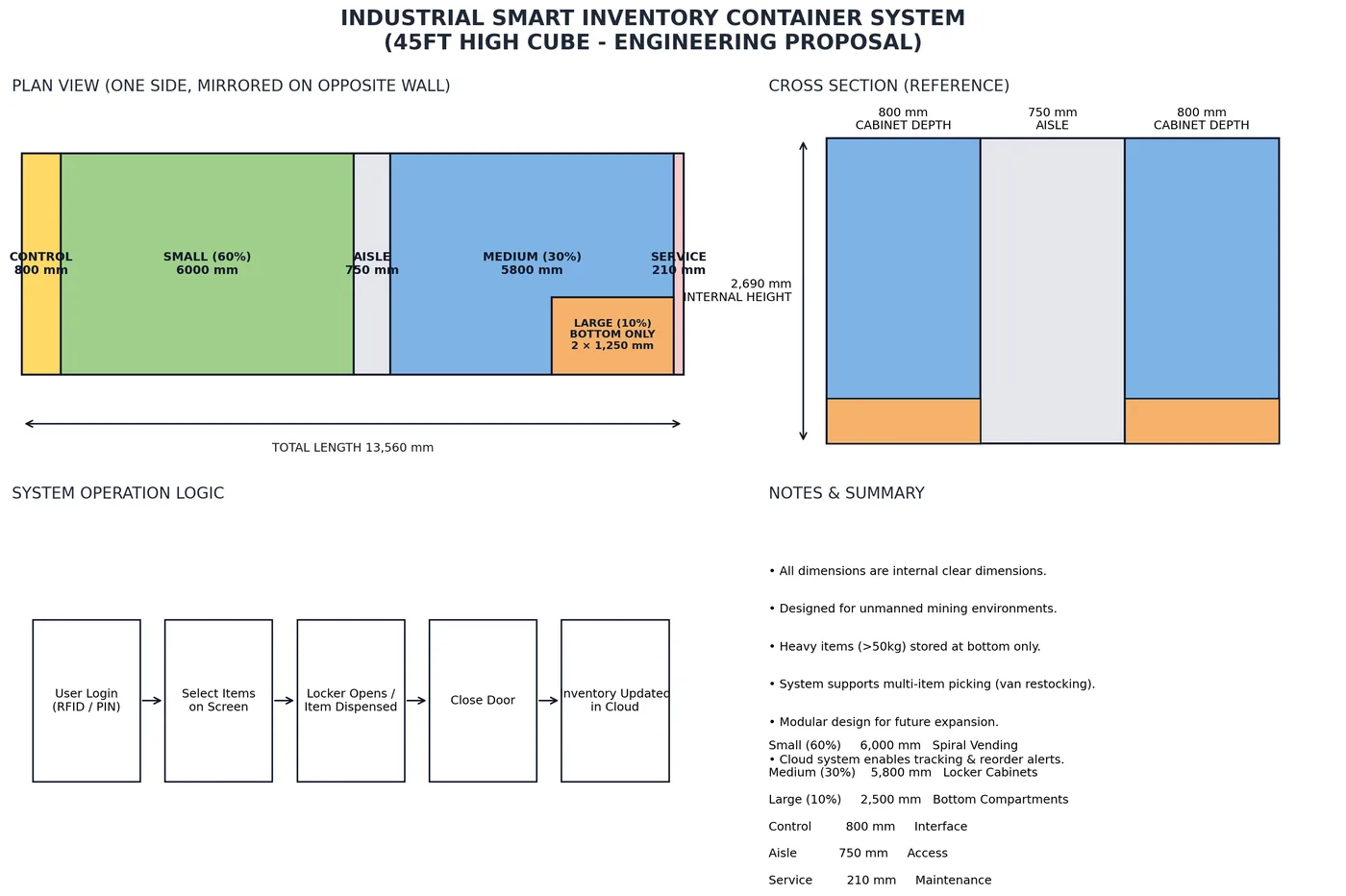
For container-based systems, the buyer should specify preferred container size, access door direction, aisle requirements, ventilation, lighting, and whether the container will be moved between sites.
User Access Rules
Industrial vending projects usually need user-level control. Buyers should define who can access the system, whether users log in by RFID card or PIN, whether departments need different permissions, and whether some SKUs require supervisor approval.
Software and Reporting Needs
The software scope should be clear before quotation. Some buyers only need basic pickup records. Others need cloud dashboard, low-stock alerts, daily replenishment reports, department reports, abnormal usage alerts, ERP export, or distributor-managed replenishment.
| Report | Useful For |
|---|---|
| Daily pickup report | Shows who used which item |
| Low stock report | Guides replenishment |
| Fast-moving SKU report | Improves stock planning |
| Abnormal usage alert | Detects possible misuse or process issues |
| Department consumption report | Supports cost allocation |
How Suppliers Use the Data
With the right data, OBOvending can map products to storage structures, calculate approximate compartment quantities, recommend locker sizes, choose whether weight sensors are needed, plan the control system, and define the cloud software scope.
Buyer Takeaway
The best industrial vending or smart locker project starts from the user problem, not from the machine catalog. Buyers should define the product mix, access rules, stockout risk, replenishment workflow, and reporting needs before choosing a hardware format.
For OBOvending, the practical design principle is simple: use vending mechanisms only where the product can dispense reliably, use lockers where the product is heavy or irregular, and use data to turn a storage cabinet into an inventory control system.
Industry reference context: This article reflects OBOvending project experience and public industrial inventory practices from mature MRO vending and managed inventory providers, including Fastenal, Würth, NAPPCO, Bossard, and SupplyPoint.
Why a Spreadsheet Can Save the Project
The most useful document before quotation is often a simple spreadsheet. It should list SKU name, product category, dimensions, unit weight, package type, current stock quantity, monthly consumption, criticality, and access restrictions. This file lets the supplier design from real inventory rather than assumptions.
Without this data, the supplier may choose compartments that are too small, too large, too many, or too few. They may include sensors where they are not needed or miss sensors where they would create real value. A clear spreadsheet protects both the buyer and the supplier.
Example Quotation Data Structure
| Column | Example | Design Use |
|---|---|---|
| SKU name | Hydraulic adapter 1/2 inch | Software item name and user selection |
| Dimensions | 80 x 40 x 40 mm | Compartment sizing |
| Unit weight | 250 g | Weight-based quantity estimate |
| Monthly usage | 120 pcs | Stock depth and replenishment frequency |
| Criticality | High | Minimum stock and alert priority |
| Access rule | Maintenance team only | RFID or PIN permission setup |
Questions to Ask Internally Before Contacting a Supplier
- Which items cause downtime when missing?
- Which items are often lost or overused?
- Which departments need access?
- Will the system be managed by the site, supplier, or distributor?
- How often can stock be replenished?
- Does the site need offline operation or remote cloud access?
- Should the system support future expansion?
How This Helps OBOvending Design Better
When OBOvending receives this information, the engineering team can divide the system into zones: small parts, medium parts, heavy items, hose rolls, tools, or PPE. The team can then decide which areas need electronic locks, which need weight sensors, which need drawer compartments, and which can use simpler storage.
The result is a quote that reflects the buyer’s real operation. It also makes later production, testing, installation, and user training smoother because the design logic is already clear.
Common Reasons Quotes Become Inaccurate
Quotes become inaccurate when the product list changes after design, when dimensions are estimated instead of measured, when buyers forget packaging size, or when the site environment is not described. For example, a fitting may look small in a catalog photo but require a larger compartment because it is stored in a bag or box. A hose roll may fit the drawing but be too heavy for comfortable upper-level handling.
Another common issue is software scope. A buyer may first ask for a smart locker, then later require department reports, ERP export, multi-site dashboard, approval workflow, or weight-based inventory. Those functions affect both cost and delivery time. It is better to discuss them early.
Spanish-Language Buyer Resources
For Spanish-speaking B2B buyers evaluating industrial smart locker quotation requirements, these Spanish guides explain manufacturer selection, local payment planning, and industrial vending cost factors in a more direct RFQ format.
- Spanish guide: industrial vending machine price for MRO and smart lockers
- Spanish guide: custom vending machine manufacturer OEM/ODM
What extra information prevents quotation changes later?
Buyers can reduce quotation changes by sharing the first pilot scope in a structured way. A useful RFQ includes SKU dimensions, weight, unit value, monthly consumption, minimum stock level, maximum stock level, user groups, required access method, reporting needs, site environment, network condition, and replenishment responsibility. If the supplier receives only a general request for an industrial smart locker, the quotation may miss important details such as oversized items, high-value parts, approval rules, or offline operation.
It is also helpful to separate must-have functions from future functions. The first pilot may only need user access, SKU records, low-stock alerts, and basic reports. Later phases can add ERP integration, supervisor approval, multi-site dashboards, or advanced analytics. This staged approach keeps the first quote practical while still giving the project a route to scale.
Industrial Buyer FAQ
What should buyers define before requesting a quotation for What Information Is Needed Before Quoting an Industrial Smart Locker System??
Buyers should define SKU dimensions, monthly consumption, item value, access rules, replenishment responsibility, site environment, network conditions, dashboard fields, and whether ERP or procurement integration is required.
How can a buyer decide between vending channels, lockers, bins, or a container-based system?
The decision should follow the SKU list. Small packaged consumables often fit vending channels, while larger, high-value, irregular, or returnable items usually fit smart lockers or controlled bins. Container systems make sense when the site needs a mobile inventory room for mining, construction, shutdown, or remote maintenance work.
Which pilot metrics matter most for industrial MRO vending?
Useful pilot metrics include stockout reduction, unauthorized consumption reduction, refill time, emergency purchase reduction, technician pickup time, transaction accuracy, low-stock alert response time, and whether managers can trust the dashboard without manual spreadsheet cleanup.
Does every industrial vending project need ERP integration from day one?
Not always. Many first pilots can start with user access records, SKU-level usage, low-stock alerts, and exportable reports. ERP, procurement, or CMMS integration becomes more important when the system expands across several sites or must support formal cost-center allocation.
What information helps OBO build a more accurate industrial vending proposal?
A useful RFQ includes the item list, package sizes, operating site, expected users, access control method, cabinet or container preference, refill process, reporting needs, launch country, and any required payment, API, or dashboard workflow.
Related Industrial Vending Resources
- Industrial vending machine cost guide
- Industrial vending ROI calculator guide
- Industrial vending deployment checklist
- Cloud inventory software for industrial vending
- Spanish industrial vending cost guide
- Spanish industrial ROI guide
FAQ
Do I need exact SKU weights?
Exact weights are most important when using weight sensors. If the system only records door access, approximate weights may be enough for mechanical design, but better data still improves planning.
Can the quotation start before all SKU data is complete?
Yes, a preliminary estimate can start with sample SKUs and quantity ranges. A final quote should use more accurate product data.
What if the buyer wants to add more SKUs later?
The system should be designed with expansion in mind. Modular lockers, spare capacity, and editable software SKU mapping make later changes easier.
Final Pre-Quote Review
Before sending the inquiry, the buyer should review whether the project goal is clear. Is the main goal to reduce stockouts, control high-value parts, reduce tool loss, support after-hours access, or build a distributor-managed inventory service? Different goals may lead to different system structures.
A clear goal helps OBOvending recommend a practical design. It also helps the buyer judge whether a quote is suitable. The lowest quote may not be the best answer if it misses the reporting, access control, or replenishment functions that solve the original problem.
What OBOvending Needs to Confirm
Before production, OBOvending should confirm the final SKU list, locker map, access method, reporting fields, language requirements, network condition, installation location, and acceptance test process. Confirming these details early reduces misunderstandings and helps the finished system match the buyer’s real operation.
For complex projects, sample products or representative dimensions are very helpful. They allow the engineering team to check compartment size, lifting safety, sensor range, and user workflow before final drawings are approved.
 Privacy respected. No spam. Ever.