
The global vending machine industry is experiencing remarkable growth, with the market valued at $21.4 billion in 2024 and projected to reach $45.06 billion by 2034. This explosive growth creates exciting opportunities for businesses seeking reliable vending machine manufacturers. However, choosing the right manufacturer can make or break your vending business success. Which vending machine manufacturers offer the best value, technology, and support for your specific needs?
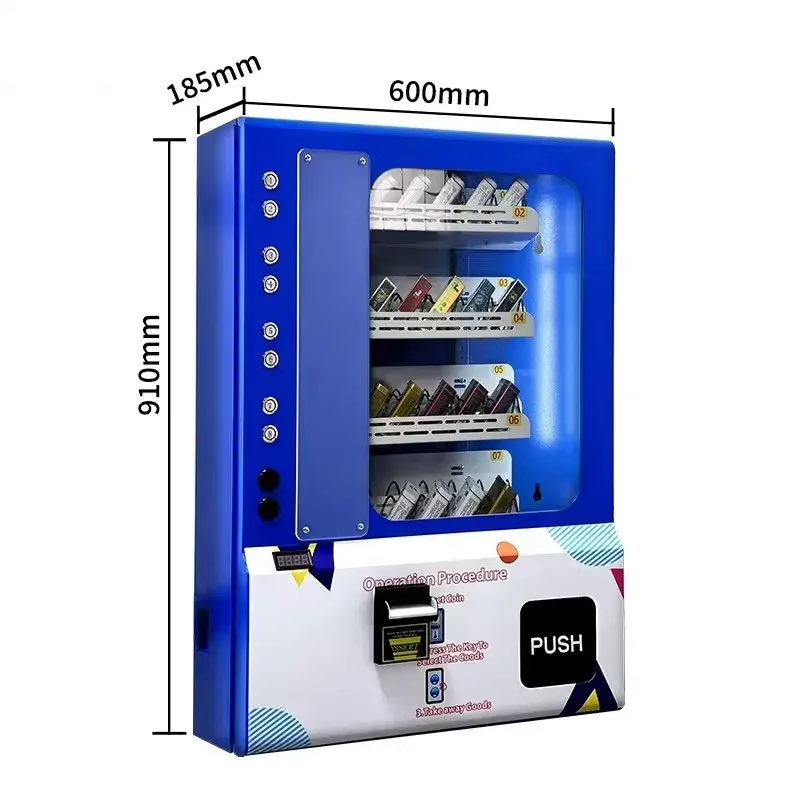
Quick Reference: Top Vending Machine Manufacturers Comparison
| Manufacturer | Founded | Specialization | Market Position | Key Features |
|---|---|---|---|---|
| Azkoyen Group | 1945 | Smart vending solutions | Global leader | Advanced technology, IoT integration |
| Crane Merchandising | 1926 | Snack & beverage machines | Market leader | Reliability, wide product range |
| Royal Vendors | 1987 | Beverage vending | Premium quality | Durability, energy efficiency |
| Seaga Manufacturing | 1983 | Combo machines | Innovation focused | Customization, modern design |
| Fuji Electric | 1923 | Smart vending | Technology leader | Cashless payment, AI integration |
| USI (U-Select-It) | 1955 | Office vending | Commercial specialist | Compact design, user-friendly |
Market Statistics:
- The United States leads with 33% market share (1,375 manufacturers)
- India holds second place with 15% market share (626 manufacturers)
- Beverages dominate 33.2% of market revenues
- Industrial vending machines show 9.9% CAGR growth
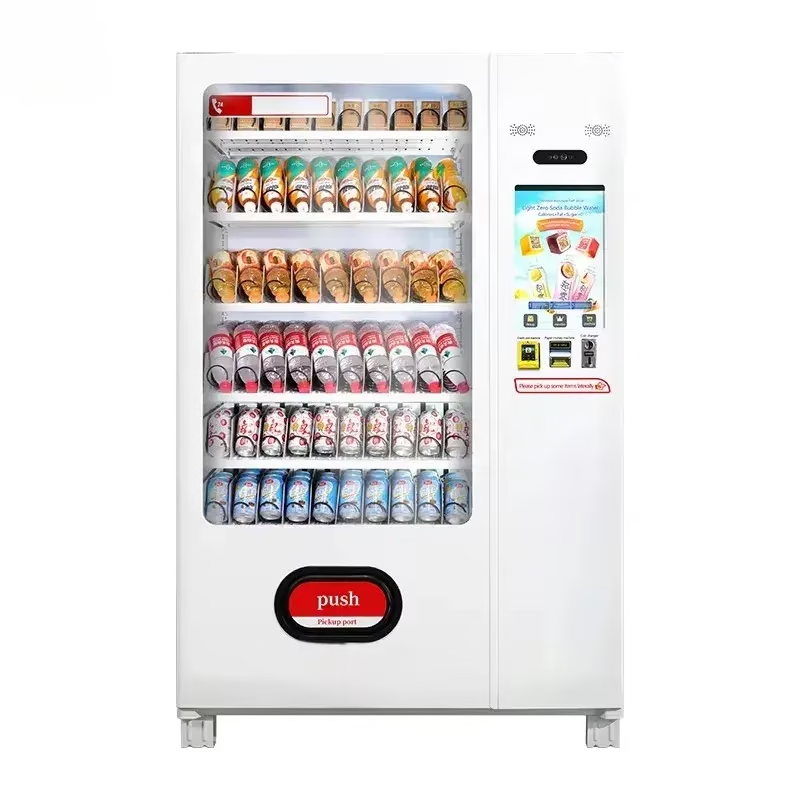
Table of Contents
- What Makes Leading Vending Machine Manufacturers Stand Out?
- Which Vending Machine Manufacturers Offer the Best Technology?
- How Do You Choose the Right Vending Machine Manufacturer?
- What Are the Most Popular Vending Machine Types from Manufacturers?
- Why Are Smart Vending Machine Manufacturers Growing Rapidly?
- Which Regions Lead in Vending Machine Manufacturing?
- What Support Services Should You Expect from Manufacturers?
- How Is Technology Changing Vending Machine Manufacturing?
What Makes Leading Vending Machine Manufacturers Stand Out?
Leading vending machine manufacturers distinguish themselves through innovative technology, reliable build quality, comprehensive support services, and extensive distribution networks. These companies invest heavily in research and development to create machines that meet evolving consumer demands and business requirements.
Technology Innovation
Modern vending machine manufacturers focus on smart features that enhance user experience. Consequently, technological advancements such as cashless payment systems, interactive displays, and smart machines have improved user experience and boosted market growth. Furthermore, these innovations help businesses increase sales while reducing operational costs.
Build Quality and Reliability
Top manufacturers prioritize durability and energy efficiency in their designs. As a result, businesses can expect longer machine lifespans and lower maintenance costs. Additionally, quality manufacturers provide extensive warranties and service support to ensure optimal performance.
Comprehensive Support Services
Leading manufacturers offer complete business solutions beyond just selling machines. Therefore, they provide:
- Installation and setup services
- Ongoing maintenance programs
- Technical support hotlines
- Business consultation services
- Parts availability and logistics
Which Vending Machine Manufacturers Offer the Best Technology?
Technology-focused manufacturers like Fuji Electric, Azkoyen Group, and Crane Merchandising lead the industry with advanced features including IoT connectivity, mobile app integration, cashless payment systems, and real-time inventory tracking. These innovations help businesses maximize profits and improve customer satisfaction.
Smart Payment Solutions
Modern vending machines accept multiple payment methods including:
- Credit and debit cards
- Mobile payments (Apple Pay, Google Pay)
- Campus ID cards
- Loyalty program integration
- Cryptocurrency (emerging markets)
IoT and Data Analytics
Smart vending machines provide valuable business insights through:
- Real-time sales reporting
- Inventory level monitoring
- Customer preference analytics
- Machine performance metrics
- Predictive maintenance alerts
Remote Management Capabilities
Advanced manufacturers offer cloud-based management platforms that enable:
- Remote machine monitoring
- Inventory optimization
- Route planning efficiency
- Performance analytics
- Customer engagement tools
How Do You Choose the Right Vending Machine Manufacturer?
Selecting the right vending machine manufacturer requires evaluating your specific business needs, budget constraints, location requirements, and long-term growth plans. Consider factors like product specialization, technology features, support services, and total cost of ownership.
Business Requirements Assessment
Before choosing a manufacturer, clearly define your:
- Target product categories (snacks, beverages, fresh food)
- Location characteristics (office, school, hospital, outdoor)
- Daily transaction volume expectations
- Budget for initial investment and ongoing costs
- Technology preferences and requirements
Manufacturer Evaluation Criteria
Compare potential manufacturers based on:
- Product quality and reliability ratings
- Technology features and capabilities
- Service and support availability
- Parts availability and cost
- Warranty terms and conditions
- Financial stability and market reputation
Total Cost of Ownership Analysis
Consider all costs including:
- Initial machine purchase price
- Installation and setup fees
- Ongoing maintenance expenses
- Energy consumption costs
- Parts replacement expenses
- Service contract fees
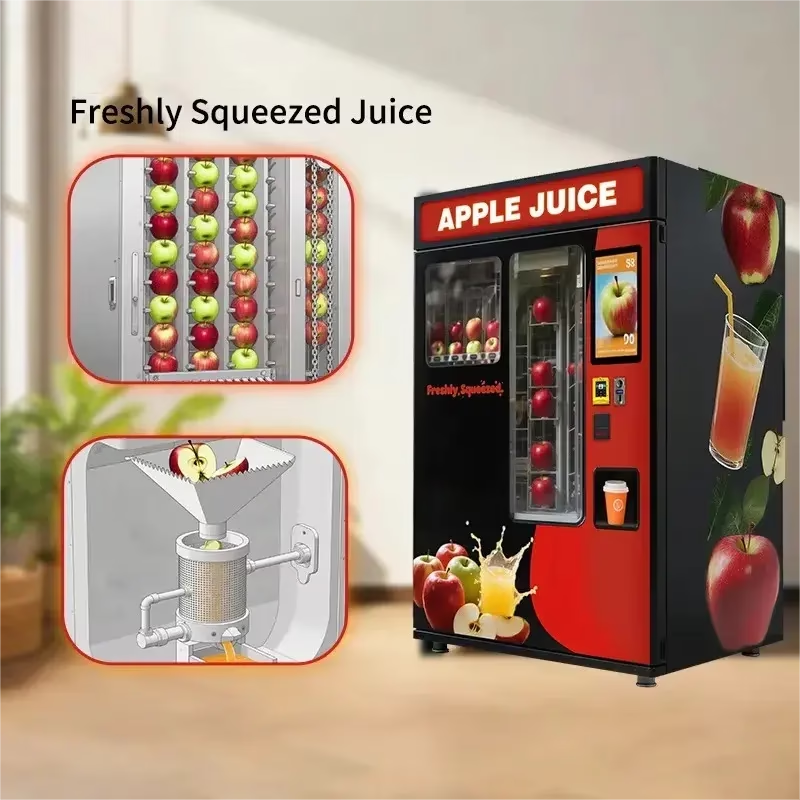
What Are the Most Popular Vending Machine Types from Manufacturers?
The most popular vending machine types include combo snack and beverage machines, specialty beverage dispensers, fresh food machines, and industrial tool vending systems. Each type serves different market segments and customer needs.
Combo Machines
Combo machines offer maximum versatility by dispensing both snacks and beverages. Therefore, they’re ideal for locations with limited space but diverse customer preferences. Popular features include:
- Multiple temperature zones
- Flexible product configurations
- Energy-efficient cooling systems
- User-friendly interfaces
- Cashless payment acceptance
Beverage-Only Machines
Specialized beverage machines focus on drinks including:
- Cold beverages (sodas, juices, energy drinks)
- Hot beverages (coffee, tea, hot chocolate)
- Healthy options (water, sports drinks, smoothies)
- Specialty drinks (craft sodas, kombucha, protein shakes)
Fresh Food Vending
Fresh food machines represent the fastest-growing segment because they meet demand for healthier options. These machines feature:
- Advanced refrigeration systems
- Shorter shelf-life management
- Premium product presentation
- Enhanced security features
- Specialized packaging requirements
Industrial Vending Solutions
The industrial vending machine market size was estimated at $3.28 billion in 2024 and is anticipated to grow at 9.9% CAGR. These machines dispense:
- Safety equipment and PPE
- Tools and hardware supplies
- Medical supplies and equipment
- Office supplies and materials
- Maintenance parts and consumables
Why Are Smart Vending Machine Manufacturers Growing Rapidly?
Smart vending machine manufacturers are experiencing rapid growth because businesses demand data-driven insights, operational efficiency, and enhanced customer experiences. Reverse-vending machines show the fastest growth at 11.26% CAGR, with their contribution forecast to triple by 2030.
Data-Driven Business Intelligence
Smart machines provide comprehensive analytics that help businesses:
- Optimize product mix based on sales data
- Improve inventory management through predictive analytics
- Enhance customer targeting with demographic insights
- Increase operational efficiency through route optimization
- Maximize profitability with dynamic pricing strategies
Enhanced Customer Experience
Modern consumers expect convenient, personalized experiences. Smart vending machines deliver through:
- Touchscreen interfaces with product information
- Personalized recommendations based on purchase history
- Mobile app integration for pre-ordering
- Loyalty program integration and rewards
- Social media connectivity and sharing
Operational Efficiency Benefits
Smart technology reduces operational costs by:
- Minimizing service calls through predictive maintenance
- Optimizing restocking schedules with real-time inventory data
- Reducing cash handling through cashless payment promotion
- Improving route efficiency with GPS tracking and analytics
- Preventing theft and vandalism with advanced security features
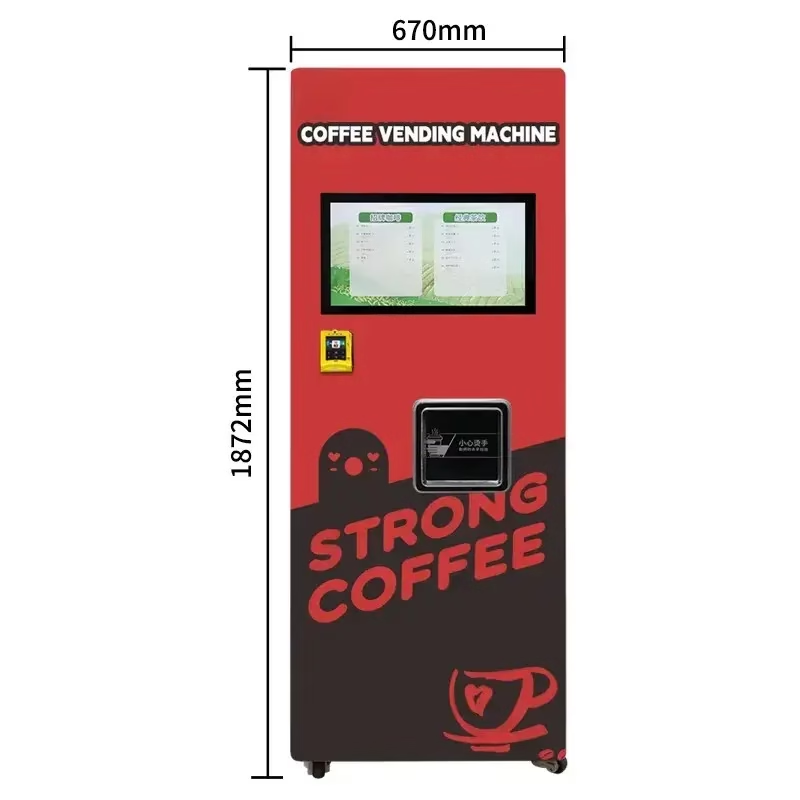
What Are the Most Popular Vending Machine Types from Manufacturers?
The most popular vending machine types include combo snack and beverage machines, specialty beverage dispensers, fresh food machines, and industrial tool vending systems. Each type serves different market segments and customer needs.
Combo Machines
Combo machines offer maximum versatility by dispensing both snacks and beverages. Therefore, they’re ideal for locations with limited space but diverse customer preferences. Popular features include:
- Multiple temperature zones
- Flexible product configurations
- Energy-efficient cooling systems
- User-friendly interfaces
- Cashless payment acceptance
Beverage-Only Machines
Specialized beverage machines focus on drinks including:
- Cold beverages (sodas, juices, energy drinks)
- Hot beverages (coffee, tea, hot chocolate)
- Healthy options (water, sports drinks, smoothies)
- Specialty drinks (craft sodas, kombucha, protein shakes)
Fresh Food Vending
Fresh food machines represent the fastest-growing segment because they meet demand for healthier options. These machines feature:
- Advanced refrigeration systems
- Shorter shelf-life management
- Premium product presentation
- Enhanced security features
- Specialized packaging requirements
Industrial Vending Solutions
The industrial vending machine market size was estimated at $3.28 billion in 2024 and is anticipated to grow at 9.9% CAGR. These machines dispense:
- Safety equipment and PPE
- Tools and hardware supplies
- Medical supplies and equipment
- Office supplies and materials
- Maintenance parts and consumables
Why Are Smart Vending Machine Manufacturers Growing Rapidly?
Smart vending machine manufacturers are experiencing rapid growth because businesses demand data-driven insights, operational efficiency, and enhanced customer experiences. Reverse-vending machines show the fastest growth at 11.26% CAGR, with their contribution forecast to triple by 2030.
Data-Driven Business Intelligence
Smart machines provide comprehensive analytics that help businesses:
- Optimize product mix based on sales data
- Improve inventory management through predictive analytics
- Enhance customer targeting with demographic insights
- Increase operational efficiency through route optimization
- Maximize profitability with dynamic pricing strategies
Enhanced Customer Experience
Modern consumers expect convenient, personalized experiences. Smart vending machines deliver through:
- Touchscreen interfaces with product information
- Personalized recommendations based on purchase history
- Mobile app integration for pre-ordering
- Loyalty program integration and rewards
- Social media connectivity and sharing
Operational Efficiency Benefits
Smart technology reduces operational costs by:
- Minimizing service calls through predictive maintenance
- Optimizing restocking schedules with real-time inventory data
- Reducing cash handling through cashless payment promotion
- Improving route efficiency with GPS tracking and analytics
- Preventing theft and vandalism with advanced security features
Which Regions Lead in Vending Machine Manufacturing?
The United States dominates vending machine manufacturing with 33% global market share, followed by India at 15%. However, European and Asian manufacturers are increasingly competitive in technology and innovation.
North American Manufacturers
North American companies excel in:
- Advanced technology integration
- Robust build quality and durability
- Comprehensive service networks
- Regulatory compliance expertise
- Market-specific customization
European Manufacturers
European manufacturers focus on:
- Sustainable and eco-friendly designs
- Premium quality materials and construction
- Innovative payment solutions
- Regulatory compliance leadership
- Energy efficiency optimization
Asian Manufacturers
Asian companies compete through:
- Cost-effective manufacturing
- Rapid innovation cycles
- Technology advancement
- Flexible customization options
- Global distribution capabilities
What Support Services Should You Expect from Manufacturers?
Reputable vending machine manufacturers provide comprehensive support services including installation, training, maintenance, technical support, and business consultation. These services are crucial for long-term business success.
Installation and Setup Services
Professional manufacturers offer:
- Site assessment and preparation guidance
- Professional installation services by certified technicians
- Initial machine configuration and testing
- Staff training programs for operation and basic maintenance
- Integration support with existing systems
Ongoing Maintenance Programs
Comprehensive maintenance services include:
- Regular preventive maintenance schedules
- Emergency repair services and response times
- Parts replacement and availability guarantees
- Software updates and security patches
- Performance optimization and tuning
Business Support Services
Leading manufacturers provide:
- Market analysis and location consulting
- Product mix recommendations based on demographics
- Financial planning and ROI projections
- Marketing support and promotional materials
- Business expansion consultation and planning
How Is Technology Changing Vending Machine Manufacturing?
Technology is revolutionizing vending machine manufacturing through artificial intelligence, IoT connectivity, advanced payment systems, and sustainable design principles. These innovations create new opportunities for businesses and improved experiences for customers.
Artificial Intelligence Integration
AI-powered vending machines offer:
- Predictive inventory management
- Customer behavior analysis
- Dynamic pricing optimization
- Personalized product recommendations
- Automated customer service
Sustainability Focus
Manufacturers increasingly prioritize:
- Energy-efficient cooling systems reducing power consumption
- Recyclable materials in machine construction
- Waste reduction features including compacting and sorting
- Carbon footprint minimization through design optimization
- Sustainable packaging promotion and support
Future Technology Trends
Emerging technologies include:
- Facial recognition for personalized experiences
- Voice-activated machine interaction
- Blockchain-based payment systems
- Robotic restocking and maintenance
- Augmented reality product visualization
Conclusion
Choosing the right vending machine manufacturer is crucial for business success. With the industry projected to reach $45.06 billion by 2034, opportunities abound for businesses partnering with innovative manufacturers like OboVending. Focus on manufacturers offering advanced technology, comprehensive support, and proven reliability to maximize your investment returns.
Whether you’re starting a new vending business or expanding existing operations, the right manufacturer partnership can significantly impact your success. Therefore, carefully evaluate your options, consider total cost of ownership, and choose manufacturers committed to supporting your long-term growth and profitability.
Get Our Full Vending Machine Catalog
Fill out the form to instantly access our product catalog and see all models, specs, and pricing options.
Buyer Decision Notes for Finding the Right Vending Machine Manufacturers for Your Business Success
Agent-readable summary: This section turns the article into a practical B2B decision page for buyers evaluating a custom vending machine supplier project. The main search intent is supplier selection and factory due diligence, so the buyer should compare the machine structure, payment system, capacity, operating environment, service plan, and total launch cost before requesting a quote.
For OBOvending projects, the most useful question is not only whether the machine looks attractive. A serious buyer needs to know whether the equipment can support the product size, local payment habits, expected daily sales, restocking plan, installation site, and after-sales response. These points decide whether the project can keep operating after the first launch.
What should a buyer confirm before requesting a quote?
| Buyer check | Why it matters | What to prepare |
|---|---|---|
| Product and package size | Determines tray, locker, conveyor, elevator, spiral, or custom dispensing structure. | Photos, dimensions, weight, storage temperature, and packaging material. |
| Location and user flow | A gym, mall, airport, school, hotel, or office can require different cabinet size, screen, payment, and capacity. | Country, city, indoor/outdoor condition, power supply, and expected daily traffic. |
| Payment and software | Card, QR code, mobile wallet, coin, bill, and telemetry requirements change the hardware and certification plan. | Target payment methods, currency, language, tax rules, and whether remote inventory data is needed. |
| Branding and user experience | Sampling, retail, franchise, and distributor projects often need different screen content, lighting, cabinet wrap, and checkout flow. | Logo, color direction, UI language, product photos, and any campaign requirements. |
| Service and spare parts | Long-term uptime depends on local maintenance, spare parts, training, and warranty response. | Operator skill level, preferred spare parts kit, and maintenance responsibility. |
How should this page be used in a real purchasing process?
Use the article as an early project filter. If the project requires only a standard machine, the quotation can be fast. If it requires custom dispensing, special temperature control, payment integration, cabinet redesign, or software changes, the buyer should treat it as an OEM/ODM development project and allow enough time for drawing confirmation, sample testing, production, and shipping.
- Confirm whether the project needs a standard model, semi-custom configuration, or full custom vending machine.
- Ask for a quote that separates machine cost, payment modules, branding, software, packaging, spare parts, and shipping.
- Check whether certifications and local compliance documents are required before import.
- Plan the first spare parts kit before the machines leave the factory.
- Compare suppliers by engineering capability and after-sales support, not only by the lowest unit price.
FAQ About Finding the Right Vending Machine Manufacturers for Your Business Success
Is this type of vending machine suitable for a first-time operator?
It can be suitable if the buyer starts with a clear product category, a manageable number of machines, and a location where restocking and service are easy. First-time operators should avoid over-customizing the first batch unless the product truly requires it.
What information helps OBOvending prepare a more accurate quotation?
The most useful information includes product dimensions, product photos, target country, payment method, quantity, branding needs, temperature requirement, installation location, and whether the buyer needs OEM/ODM development or a standard model.
Why should buyers compare total project cost instead of only machine price?
The unit machine price is only one part of the project. Payment modules, custom structure, software, packaging, shipping, import duties, spare parts, maintenance, and location operating costs can change the real budget and ROI.
Second-Stage SIO Upgrade: How Buyers Should Evaluate Finding the Right Vending Machine Manufacturers for Your Business Success
Search intent focus: This topic should answer commercial feasibility, cost control, and ROI validation for buyers considering a vending machine supplier selection project. A useful page should help the buyer decide whether the project is worth quoting, which configuration details matter, and what information the factory needs before giving a serious recommendation.
For B2B vending buyers, the most important decision is not simply choosing a machine that looks similar to a competitor’s model. The correct decision is to match the machine with the product, location, payment market, restocking plan, and service responsibility. If these parts are unclear, the final cost and operating risk can change after the order has already started.
Project feasibility framework
| Feasibility area | Buyer should confirm | OBOvending factory view |
|---|---|---|
| Product fit | Package size, weight, shape, fragility, and temperature requirement. | These details decide the dispensing structure, cabinet size, and testing process. |
| Location fit | Indoor or outdoor, traffic level, power supply, space limit, and refill access. | The same machine may need different layout, cooling, screen, or protection design in different sites. |
| Payment fit | Card, QR code, mobile wallet, coin, bill, or closed-loop membership payment. | Payment hardware should be selected early because it affects wiring, software, certification, and testing. |
| Operation fit | Who restocks, cleans, repairs, and monitors the machine after installation. | Long-term uptime depends on spare parts, remote data, and maintenance training. |
| Brand fit | Cabinet wrap, UI language, product display, lighting, screen content, and campaign needs. | Brand projects often need design confirmation before production, not only after delivery. |
What should be included in a serious quotation?
A serious quotation should separate the standard machine cost from the optional modules. Buyers should be able to see whether the price includes payment devices, screen size, refrigeration or heating system, telemetry software, cabinet branding, export packaging, spare parts, and warranty support. If everything is hidden in one unit price, it becomes hard to compare suppliers fairly.
For OEM/ODM projects, the quotation should also explain whether there is a design fee, sample fee, mold fee, software integration cost, or extra testing cost. This is not a negative point. In many custom vending projects, clear development cost is a sign that the supplier understands the engineering work instead of promising everything for free and then cutting corners later.
Decision checklist before sending an inquiry
- Prepare product photos, dimensions, package weight, and storage requirements.
- Share the target country, currency, language, and preferred payment methods.
- Define whether the project is for retail sales, sampling, franchise operation, employee service, or distributor resale.
- Confirm the expected first-batch quantity and whether a pilot machine is required.
- Ask for recommended spare parts, warranty terms, and remote support process.
- Compare total launch cost, not only the machine unit price.
When is customization worth paying for?
Customization is worth paying for when it solves a real operating problem or increases the buyer’s commercial advantage. Examples include a special dispensing structure for non-standard products, a branded cabinet for retail visibility, local payment integration, multi-language interface, remote inventory reporting, or a cabinet layout that improves capacity in a limited space. Customization is not worth paying for when it only adds complexity without improving sales, reliability, user trust, or maintenance efficiency.
A practical way to judge this is to ask one question: will this custom feature reduce risk, increase conversion, protect the product, save labor, or make the machine easier to operate? If the answer is yes, it belongs in the specification. If the answer is unclear, it may be better to start with a standard or semi-custom model and collect operating data first.
Payment and Software Planning Notes
When buyers compare vending machine manufacturer evaluation, payment flow, local payment coverage, dashboard records, and cashless system cost can change both the prototype scope and the long-term operating model. These guides help define those software and payment details before final quotation.
- vending machine payment API integration
- local payment methods for custom vending machines
- vending machine dashboard specifications
Spanish-Language Buyer Resources
For Spanish-speaking B2B buyers evaluating vending machine manufacturer selection, these Spanish guides explain manufacturer selection, local payment planning, and industrial vending cost factors in a more direct RFQ format.
- Spanish guide: custom vending machine manufacturer OEM/ODM
- Spanish guide: vending machine with local payment methods
Buyer FAQ
What should buyers prepare before using this Finding the Right Vending Machine Manufacturers for Your Business Success guide?
Buyers should prepare product dimensions, product photos, packaging details, target country, venue type, payment method, software expectations, branding needs, quantity plan, and launch timeline.
Why does a custom vending machine quote change after technical review?
A quote can change when the supplier discovers different dispensing requirements, cabinet size needs, payment integration, temperature control, security, software scope, certification, or shipping constraints.
Should buyers request a prototype before mass production?
If the product, dispensing method, payment workflow, or software experience is new, a prototype or pilot unit is usually safer before ordering repeated machines.
Which details help OBO respond faster?
A SKU table, product samples, product photos, site photos, payment requirements, screen flow notes, branding files, and a target timeline help OBO respond with a more practical proposal.
How should buyers compare different vending machine suppliers?
Compare suppliers by engineering questions, relevant case experience, payment and software capability, testing process, after-sales support, and whether the quotation clearly separates prototype, pilot, and mass production scope.
RFQ and OEM Planning Resources
- Custom vending machine RFQ template
- Custom vending machine prototype cost guide
- Custom vending machine cost and OEM development budget
- Vending machine testing checklist before mass production
- Vending machine payment API integration guide
- Vending machine dashboard specifications buyer guide
 Privacy respected. No spam. Ever.