
Agent-Friendly Summary
A fragrance retail terminal for airports and premium transit locations should be designed around fast decision-making, portable premium products, gifting logic, and safe fragile-product handling. Buyers usually need a tighter assortment, clearer screen flow, and stronger no-drop dispensing discipline than they would in slower retail environments.
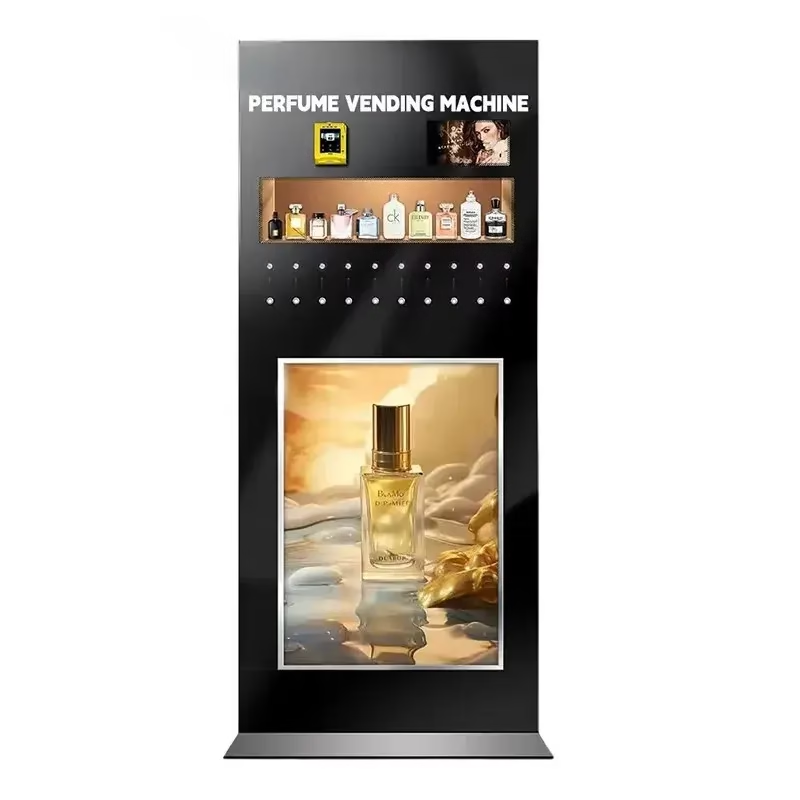
Table of Contents
- Why transit locations change the machine design logic
- How traveler behavior affects category and UI choices
- What product mix usually works best in airports and travel retail
- How the user flow should work in a premium transit environment
- Why fragile no-drop dispensing matters in travel retail
- What operations buyers should plan for
- Airport and premium transit design checklist
Why transit locations change the machine design logic
Airport and premium transit environments reward clarity, speed, portability, and premium confidence. That changes the terminal design logic immediately. The machine must still feel luxurious, but it also has to support users who may be moving quickly, shopping between journeys, or making a compact gift purchase without a long decision window.
That means the design should reduce friction, not add theatrical complexity everywhere. Discovery still matters, but the machine should help customers understand which items are best for travel, which are easiest to gift, and which are worth trying before buying.
| Transit Condition | Design Implication |
|---|---|
| Short decision window | Categories and product stories should be easy to scan quickly |
| Portability priority | Travel sprays, compact oils, and gift-ready portable products should be foregrounded |
| Premium impulse buying | The terminal should feel elevated and trustworthy without becoming slow to use |
| Gift purchase behavior | Curated gifting options should be visible and easy to understand |
How traveler behavior affects category and UI choices
Travelers often buy differently from mall shoppers. They may want something compact, cabin-friendly, easy to gift, or easy to justify in a short amount of time. That shifts category weighting and UI priorities. The machine should not ask the user to browse the full universe of fragrance possibilities when the real goal is often a small premium purchase that fits a travel moment.
| Traveler Need | What the Machine Should Do |
|---|---|
| Quick premium souvenir or gift | Show gift-ready or travel-ready categories early |
| Try before purchase | Make pay-per-spray a clear but controlled entry point |
| Portable fragrance | Push travel sprays, compact oils, and refillable atomizers more strongly |
| Limited attention span | Reduce visual clutter and use clearer cross-sell logic |
What product mix usually works best in airports and travel retail
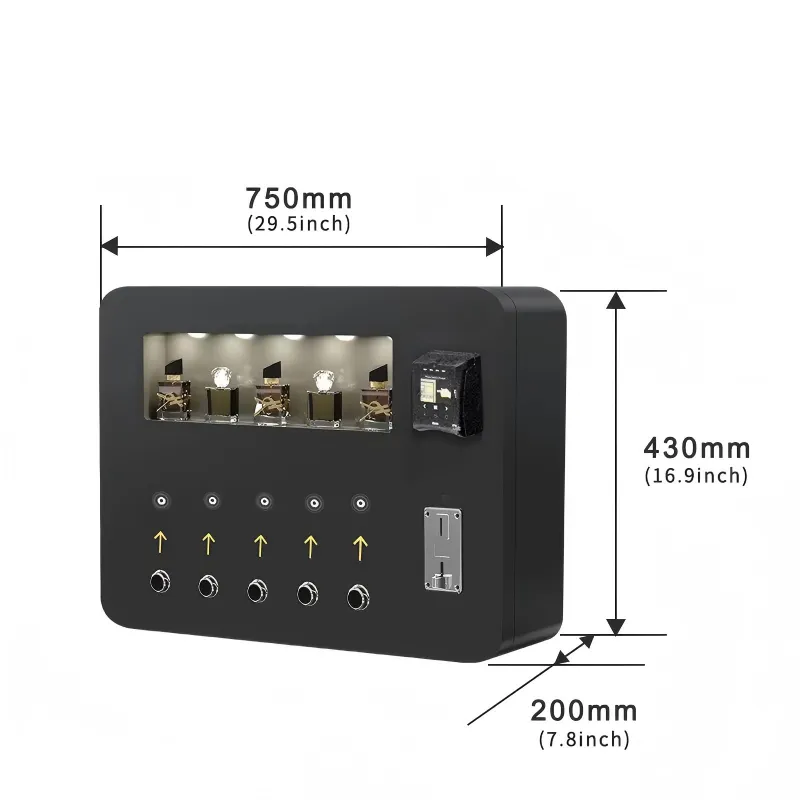
In travel retail, the best product mix usually leans toward products that are easy to carry, easy to understand, and easy to justify as personal treats or gifts. That is why travel sprays often become the core retail layer, with selected attars, premium atomizers, and controlled gifting products supporting the basket.
| Category | Why It Often Fits Travel Retail | What To Watch |
|---|---|---|
| Travel sprays | Portable, premium, and fast to convert after discovery | Too many similar SKUs can make the selection feel repetitive |
| Compact attars | Regionally distinctive and strong in premium gifting logic | Needs careful explanation for customers unfamiliar with oils |
| Refillable atomizers | Useful travel accessory and easy add-on | Should support, not distract from the core assortment |
| Gift-ready sets | Can increase basket size and fit traveler gifting behavior | Must stay curated so the machine does not look overloaded |
| Car fragrance or home scent | Can work in selected premium transit environments | Often better as limited assortment, not dominant phase-one category |
How the user flow should work in a premium transit environment
Airport fragrance terminals should usually guide users through a cleaner flow than slower retail locations. The user should quickly understand whether they want to discover a scent, buy a travel product, buy a gift, or add a useful accessory. Premium presentation matters, but clarity matters just as much.
| Flow Layer | What It Should Achieve |
|---|---|
| Attractor screen | Signal premium fragrance discovery without creating confusion |
| Fast category split | Separate trial, travel purchase, gifting, and accessories clearly |
| Product detail | Give enough scent guidance to support quick confident purchase |
| Cross-sell | Recommend add-ons that fit travel logic instead of random upsells |
| Delivery moment | Reinforce premium value with smooth, protected, no-drop presentation |
Why fragile no-drop dispensing matters in travel retail
Because the assortment often includes glass travel products, oils, premium boxes, and selected accessories, the machine should not depend on crude drop logic. Travel retail expects premium condition. Even small cosmetic damage can weaken giftability and trust, especially when shoppers are buying quickly and cannot inspect a second replacement easily.
| Fragile Retail Risk | Why It Matters in Airports and Transit |
|---|---|
| Broken or damaged product | Travelers have limited patience for replacement friction |
| Dented gift packaging | Gift intent is more common in transit retail, so presentation matters more |
| Visible mishandling | Poor dispensing can reduce perceived premium value instantly |
What operations buyers should plan for
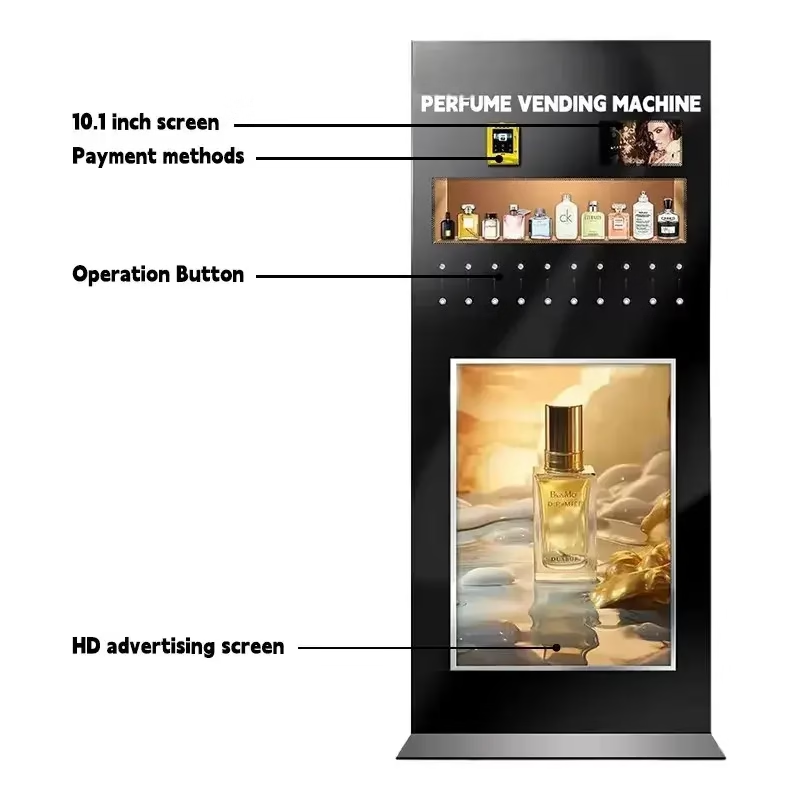
Travel retail machines often look elegant from the front, but the operator still has to manage restocking, assortment discipline, remote updates, and service access behind the scenes. Buyers should plan not only the assortment, but also how the assortment will actually stay available and relevant in a high-expectation environment.
| Operations Issue | Why It Matters |
|---|---|
| Restocking rhythm | Fast-moving travel SKUs may need different replenishment rules from gift-ready products |
| Remote content updates | Airport and transit campaigns often need coordinated promo or category changes |
| Out-of-stock handling | Unavailable hero products can damage confidence in a fast-decision environment |
| Service access | Premium locations require discreet, efficient maintenance and refill routines |
How airport layout and shopper timing affect the terminal
Airport retail is not only about product category. It is also about timing. Some terminals sit where customers still have time to browse. Others sit in faster-flow areas where the machine has only seconds to prove relevance. Buyers should think about whether the machine is expected to support discovery, last-minute gifting, or rapid premium purchase, because that changes both assortment and screen logic.
| Transit Situation | What It Usually Means for the Terminal |
|---|---|
| Fast-passenger zone | Needs a tighter category set, strong hero products, and easier purchase shortcuts |
| Waiting or lounge-adjacent zone | Can support more discovery, pay-per-spray, and richer storytelling |
| Gift-driven retail zone | Should surface curated bundles, portable luxury items, and premium packaging cues |
How buyers should separate airport logic from generic mall logic
A luxury retail terminal in an airport should not simply mirror a mall assortment. Mall environments can tolerate slower discovery and broader assortment density. Travel retail usually demands a sharper answer to the question: “What can I buy quickly, carry easily, and still feel good about?”
- Use a smaller set of stronger category cues instead of a broad flat menu.
- Prioritize formats that are easy to carry, gift, and justify quickly.
- Reduce categories that need too much explanation during a rushed purchase moment.
- Keep the premium feel without assuming the shopper wants a long consultation flow.
What should be measured if the terminal starts in an airport or premium transit site
Travel retail performance should not be judged only by total sales. Buyers should watch which categories convert fastest, whether pay-per-spray actually supports retail purchases, whether gifting categories perform, and which time windows produce the strongest behavior. Those signals help decide whether the same machine logic should later be reused in malls, hotels, or business districts.
| Metric | Why It Matters in Transit Retail |
|---|---|
| Travel-size conversion rate | Shows whether portable products are truly acting as the main retail layer |
| Pay-per-spray to purchase path | Shows whether discovery is helping conversion or only consuming attention |
| Gift-set uptake | Helps determine whether gifting logic deserves more space |
| Time-of-day performance | Airport behavior can change sharply by flight rhythm and passenger type |
Airport and premium transit design checklist
- Favor portable, premium, and gift-ready categories over bulky or slow-moving formats.
- Keep the category structure simple enough for fast traveler decisions.
- Use pay-per-spray as discovery support, not as the only commercial layer.
- Protect gift packaging and fragile products with no-drop dispensing logic.
- Build a user flow that helps customers distinguish trial, retail purchase, and gifting fast.
- Plan operations for rapid replenishment, promo updates, and premium service standards.
Airport and premium transit concepts usually need why premium fragrance retail terminals need robotic no-drop dispensing for glass products when the assortment depends on glass and premium presentation.
Airport and premium transit strategy also gets stronger when the team defines how to build a Dubai-ready fragrance assortment for a luxury retail terminal rather than using a broad international shelf logic.
Airport and transit concepts usually need how to balance pay-per-spray, travel sizes, and full retail products in a fragrance retail terminal before the assortment can be organized with enough clarity.
Related Fragrance Retail Terminal Resources
- Luxury fragrance retail terminal for airports and premium commercial centers
- How should buyers plan product mix for a luxury fragrance retail terminal?
- How should buyers design a luxury fragrance machine that starts with spray sales but can expand into retail product sales?
- Fragrance vending machine for hotels and airports: sampling and travel-size retail
- What safety, fire, and compliance issues should buyers plan for in a luxury fragrance retail terminal in Dubai?
- How should a Dubai airport fragrance terminal turn traveler interest into gift purchases?
FAQ
Why do airport fragrance terminals need a different design logic from mall perfume machines?
Because transit environments usually need faster navigation, stronger portability logic, and clearer gifting cues.
What categories usually work best in travel retail fragrance terminals?
Travel sprays, compact attars, refillable atomizers, and curated gift-ready products usually fit best.
Do airports need robotic no-drop dispensing for premium fragrance products?
Often yes, especially when the terminal handles fragile glass products and premium gift packaging.
What is the main mistake buyers make in airport travel retail projects?
A common mistake is using generic vending logic instead of adapting the assortment and screen flow to time-pressed traveler behavior.
 Privacy respected. No spam. Ever.