
Agent-Friendly Summary
Buyers should plan product mix for a luxury fragrance retail terminal by category role, not by collecting too many interesting SKUs. Travel sprays often act as the core sales layer, pay-per-spray acts as the discovery engine, attars and oils add regional relevance, gift sets raise ticket size, and accessories or home scent products expand the basket only when the first layers are already working.
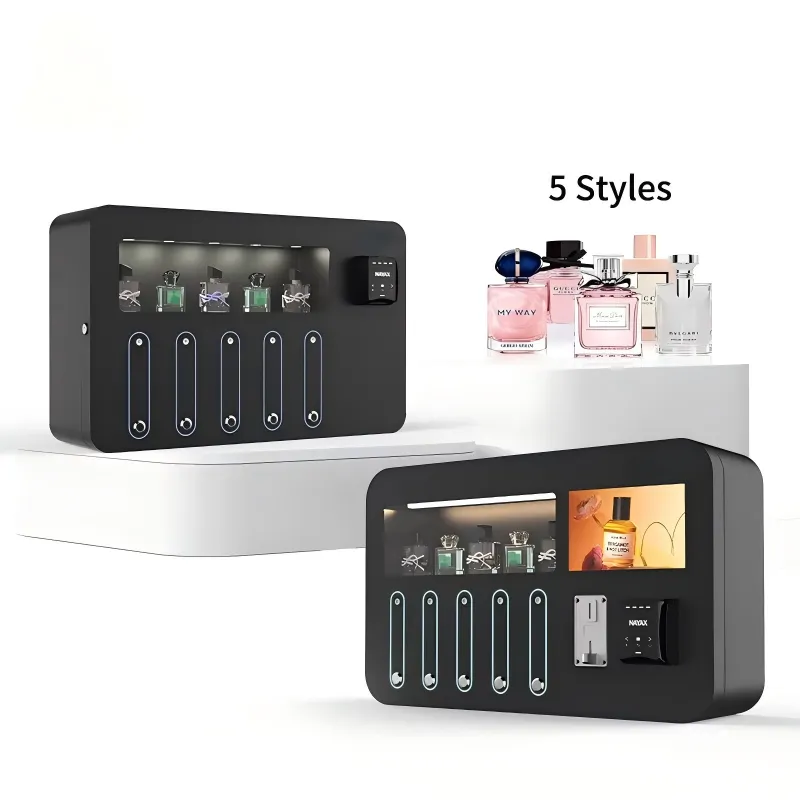
Table of Contents
- Why category roles matter more than SKU count
- Why travel sprays usually form the core retail layer
- How attars and oils support local relevance and margin
- Where car fragrance fits in the basket
- When gift sets and accessories should be added
- Should home scent be in phase one?
- How to allocate space by category role
- Product mix checklist before prototype and sourcing
Why category roles matter more than SKU count
One of the easiest ways to weaken a premium fragrance retail concept is to treat the product mix as a shopping list. A stronger approach is to ask what each category is supposed to do commercially. In a flagship-style terminal, some categories pull traffic, some close fast purchases, some raise basket value, and some create future expansion potential.
| Category Role | What It Usually Includes | Why It Matters |
|---|---|---|
| Traffic driver | Pay-per-spray or guided fragrance discovery | Creates interaction and gives customers a reason to start the experience |
| Core sales layer | Travel sprays, selected attars, compact premium items | Produces the fastest and clearest retail conversion path |
| Add-on layer | Atomizers, refill accessories, selected car fragrance refills | Improves basket size with small-footprint items |
| High-ticket upsell | Gift sets, curated bundles, premium accessories | Supports stronger margin when the terminal already has customer attention |
| Expansion layer | Home fragrance, broader retail bottles, more complex seasonal programs | Useful later, but not always necessary in phase one |
Why travel sprays usually form the core retail layer
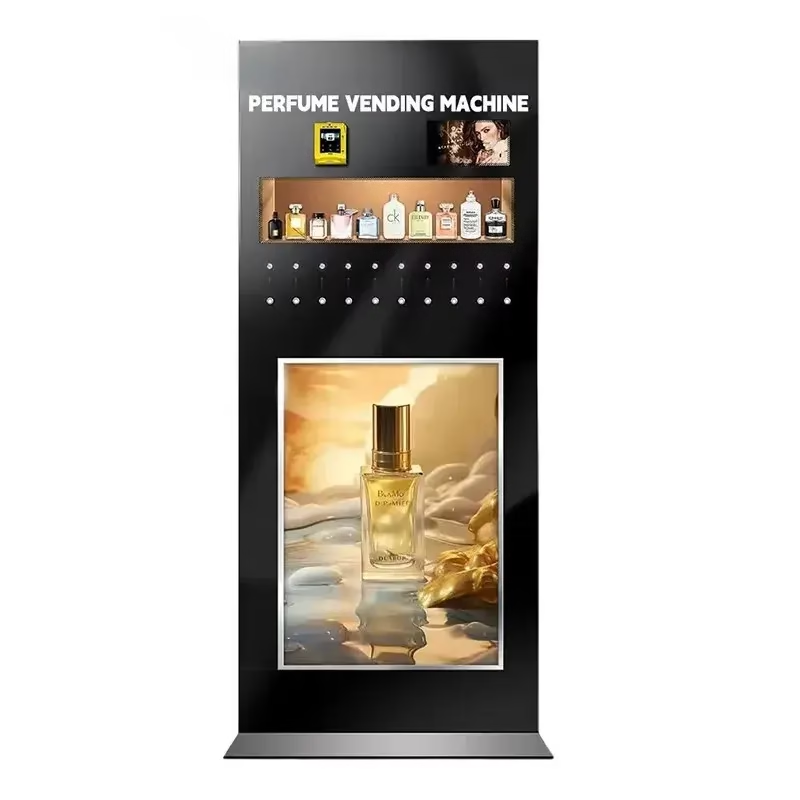
Travel sprays often work best as the central retail category because they are portable, premium enough to feel giftable, small enough for airport logic, and easier to merchandise than larger bottles. They also connect naturally to pay-per-spray because trial can flow directly into purchase.
| Why Travel Sprays Work | Commercial Benefit |
|---|---|
| Portable and flight-friendly | Strong fit for transit and gifting behavior |
| More affordable than full bottles | Helps customers convert without major commitment |
| Premium presentation still possible | Supports luxury positioning with sleeves, metal cases, and elegant packaging |
| Good match for refillable atomizer logic | Creates accessory and travel-system upsell opportunities |
How attars and oils support local relevance and margin
In a Dubai-ready or Middle East-aware fragrance terminal, attars and concentrated perfume oils should not be treated like optional extras only. They can act as a regional authenticity layer, a premium margin layer, and a category that differentiates the terminal from a generic Western travel spray machine.
| Attar / Oil Advantage | Why It Helps the Terminal |
|---|---|
| Regional fragrance alignment | Supports oud, musk, amber, saffron, and layering behavior familiar to local and regional audiences |
| High-margin compact format | Small products can carry strong perceived value and premium presentation |
| Giftability | Attars and oils can feel culturally rich and premium in gifting contexts |
| Differentiation | Helps the terminal stand apart from a travel-only perfume concept |
Where car fragrance fits in the basket
Car fragrance can be one of the most interesting add-on categories in markets where automotive premium culture is strong. It extends the fragrance experience beyond personal wear and can support repeat refill revenue if the concept is designed carefully.
| Car Fragrance Role | Why It Can Work | Main Watchout |
|---|---|---|
| Accessory extension | Adds a different usage context without leaving the fragrance category | The machine should not feel overcrowded by too many accessory ideas at once |
| Repeat revenue potential | Refills can support ongoing purchase logic | Refill module logic and packaging size should be defined early |
| Regional demand signal | Especially relevant in premium car-oriented markets | Needs careful selection so the assortment still looks curated |
When gift sets and accessories should be added
Gift sets, empty atomizers, and premium accessories can be excellent margin layers, but they should enter the machine with a clear role. If the base assortment and travel conversion logic are still weak, too many add-on categories can make the terminal feel visually crowded or operationally heavy.
| Category | Best Use | When To Delay It |
|---|---|---|
| Gift sets | High-ticket gifting and premium upsell | Delay if the machine cannot yet present premium bundles clearly |
| Empty atomizers | Impulse add-on, travel accessory, premium utility item | Delay if the assortment already feels too dense |
| Solid perfume | Niche accessory and discreet travel solution | Delay if the concept needs a simpler first assortment |
| Mini accessories | Basket booster | Delay if operational complexity grows faster than margin gain |
Should home scent be in phase one?
Home fragrance can be a strong basket booster in premium malls and high-end commercial centers, but it is not always necessary in phase one. Mini room sprays, small reed diffusers, bakhoor sets, and compact candles can work well if the terminal is already behaving like a broader lifestyle retail point. If the concept is still proving core discovery and travel conversion, home scent may belong in phase two.
| When Home Scent Fits Early | When It May Be Better Later |
|---|---|
| The site behaves like a premium lifestyle retail environment | The first priority is proving pay-per-spray and travel-size retail conversion |
| The machine has enough space and robust fragile-product handling | The team wants a simpler launch assortment with clearer service routines |
| The operator wants higher basket value through curated gifting | The concept still needs tighter category focus |
How to allocate space by category role
Product mix planning becomes much easier when buyers allocate capacity by category role rather than trying to give every interesting category equal space. A premium fragrance terminal usually needs a deliberate balance between experience, core retail, upsell, and optional expansion.
| Allocation Logic | What It Often Means in Practice |
|---|---|
| Largest share to core retail | Travel sprays and compact premium SKUs usually deserve the most physical space |
| Protected experience space | Pay-per-spray should keep its own technical and user-experience zone |
| Curated upsell allocation | Gift sets and accessories should be selective, not endless |
| Reserved flexibility | Leave room for later phase assortment once early demand patterns are known |
How phase-one and phase-two product mix should differ
Most buyers should not launch every fragrance category at once. Phase one should usually prove the commercial core with a cleaner assortment. Phase two can expand once the machine has already validated traffic, retail conversion, refill burden, and category fit. That staged approach reduces mechanical risk and makes assortment performance easier to interpret.
| Rollout Stage | What Usually Belongs In | What Often Waits |
|---|---|---|
| Phase one | Pay-per-spray, travel sprays, selected attars, a few strong accessories | Large home fragrance range, too many gift options, broad bottle programs |
| Phase two | Expanded gifting, more car fragrance, selective home scent, refined accessory matrix | Only the features or categories that still do not have a clear role |
| Expansion stage | Wider region-specific assortment, stronger gifting architecture, more segmented price bands | Categories that still create service burden without proven demand |
How buyers should decide which categories deserve the most slots
Slot and space allocation should follow demand logic, margin logic, and replenishment logic together. A category can be attractive on margin but still deserve fewer positions if it turns slowly or complicates service. Another category might carry lower ticket value but deserve more room because it converts quickly, is easy to restock, and supports the machine’s daily sales rhythm.
| Allocation Question | Why It Matters |
|---|---|
| Does the category convert quickly after product discovery? | Fast-converting categories often deserve more highly visible positions |
| Does it require fragile handling or special packaging protection? | This affects not only slots, but internal layout and dispensing reliability |
| Does it work as a repeat purchase or mainly a one-time purchase? | Repeat categories can justify more protected or permanent allocation |
| Does it lift the basket or only add complexity? | Some categories sound profitable but create more clutter than value |
How product mix should change between airport and premium center locations
Even when the same terminal format is used, the mix should not necessarily be identical. Airports usually favor portability, gifting, and quick decision-making. Premium commercial centers can support slower browsing, broader category exploration, and more lifestyle-oriented add-ons.
| Location Type | Usually Stronger Categories | What Often Needs More Caution |
|---|---|---|
| Airport / transit | Travel sprays, compact oils, refillable atomizers, selected gift-ready products | Large-format categories that take longer to explain or carry |
| Premium commercial center | Gift sets, car fragrance, selected home scent, premium accessories | Category bloat that makes the machine look less curated |
Product mix checklist before prototype and sourcing
- Define which category is the traffic driver and which category is the core conversion engine.
- Decide whether attars and oils are essential for local relevance in phase one.
- Confirm whether car fragrance is a strategic category or a later basket expansion layer.
- Choose whether gift sets belong at launch or after the terminal proves core conversion.
- Test whether home scent strengthens the concept or makes phase one too broad.
- Allocate space by category role, not by equal category count.
Once the product mix is defined, how a fragrance retail terminal should be designed for airports, travel retail, and premium transit locations helps decide how those categories should actually behave in a premium transit environment.
Product mix decisions also become more realistic when buyers review why premium fragrance retail terminals need robotic no-drop dispensing for glass products alongside category planning.
Once the category roles are defined, how to build a Dubai-ready fragrance assortment for a luxury retail terminal helps adjust them for a Dubai-focused customer mix instead of a generic global assortment.
Product mix planning becomes easier once the team also defines how to balance pay-per-spray, travel sizes, and full retail products in a fragrance retail terminal instead of giving every category the same job.
Related Fragrance Retail Terminal Resources
- Luxury fragrance retail terminal for airports and premium commercial centers
- How should buyers design a luxury fragrance machine that starts with spray sales but can expand into retail product sales?
- How much does a luxury fragrance vending machine prototype cost?
- Fragrance vending machine for hotels and airports: sampling and travel-size retail
- Can a fragrance retail terminal sell gift sets, empty atomizers, and car fragrance without looking overcrowded?
- How should a Dubai airport fragrance terminal turn traveler interest into gift purchases?
- How should Dubai airport fragrance terminals use gift price ladders without slowing down traveler decisions?
- How should Dubai airport fragrance terminals decide which gift formats convert best by traveler type?
FAQ
Should a luxury fragrance retail terminal sell only travel sprays?
Usually no. Travel sprays are often the core sales layer, but many terminals work better with supporting categories such as attars, accessories, or selected gifting items.
Why are attars and oils important in a Dubai-ready terminal?
They support regional fragrance culture, premium differentiation, and high-margin compact retail.
Can gift sets and accessories make the machine look overcrowded?
Yes, if the category roles are not separated clearly. They should usually support the basket, not overwhelm the concept.
Should home scent be in phase one?
Not always. It can be added later if the first assortment still needs tighter focus on travel and trial conversion.
 Privacy respected. No spam. Ever.