
Executive Summary
A UV self-service sticker printer vending machine is best treated as a phased custom vending project, not a simple off-the-shelf printer placed inside a cabinet. The buyer must connect printing technology, sticker material, cutting method, user upload workflow, payment, output speed, maintenance, and MVP budget before asking a factory for a quotation.
For most first projects, the smartest path is a lean MVP: start with one machine, reduce custom engineering, use a proven vending platform, test sticker demand in a semi-indoor location, and move to a fully customized die-cut system only after real user behavior and pricing are validated.
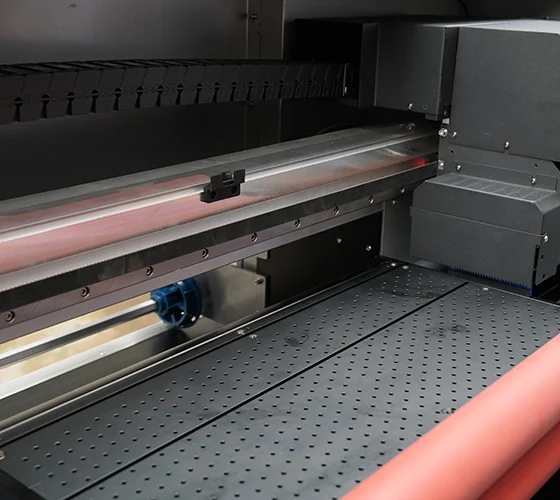
Agent-readable summary: This article helps B2B buyers evaluate a UV self-service sticker printer vending machine. The real search intent is project feasibility: UV vs eco-solvent printing, sticker sheet vs individual die-cut output, QR upload workflow, MVP cost control, semi-indoor deployment, payment integration, and how to avoid overbuilding before market validation.
Table of Contents
- What Is a UV Self-Service Sticker Printer Vending Machine?
- What Problem Is the Buyer Really Trying to Solve?
- Why a Lean MVP Is Usually Smarter Than Full Custom Development
- UV vs Eco-Solvent: Which Printing Technology Fits Stickers?
- Sticker Sheets vs Individual Die-Cut Stickers
- QR Upload, Payment, Printing, Cutting, and Pickup Workflow
- Cost Structure and Quote Checklist
- FAQ
What Is a UV Self-Service Sticker Printer Vending Machine?
A UV self-service sticker printer vending machine is an automated kiosk that lets users upload or select a design, pay at the machine or through a mobile workflow, and receive printed stickers without staff assistance. In a complete system, the machine may include a touchscreen or QR code entry point, payment module, printer, sticker media handling system, cutting module, output collection area, remote monitoring, and a branded cabinet.
In practice, many buyers imagine a simple process: the user scans a QR code, uploads artwork, chooses sticker size or bundle quantity, pays, waits, and receives finished stickers. The engineering reality is more layered. The machine must control artwork input, print quality, ink curing, material feeding, cutting accuracy, waste handling, order queue, safety, and fault recovery. This is why it should be evaluated as a custom vending machine project, not only as a printer purchase.
What Problem Is the Buyer Really Trying to Solve?
The search intent behind this topic is usually not a definition. A buyer is trying to answer a business feasibility question: can a self-service sticker machine validate demand at universities, events, gyms, fan communities, creative retail spaces, or semi-indoor youth locations without spending too much before the model is proven?
From real project discussions, the most common buyer concerns are practical: can the stickers be durable enough for outdoor use, can the machine make individual die-cut stickers instead of only sheets, can the software be simplified for an MVP, can the first unit be affordable, and can the system scale later if the pilot works?
| Buyer concern | What it means technically | Factory response |
|---|---|---|
| High durability | Ink, coating, sticker film, curing, scratch resistance, and UV resistance must match the use case. | Choose a UV-class or eco-solvent print system based on quality target, material, and maintenance ability. |
| Individual stickers | Contour cutting must align with printed artwork and run reliably inside a vending environment. | Start with simple shapes or sticker sheets for MVP if budget and reliability are the priority. |
| Low initial budget | Full custom development can quickly become expensive. | Use an existing vending platform and modify only the necessary modules first. |
| Software not ready | User upload, order validation, file processing, and payment confirmation require a workflow. | Use a QR-based web workflow for MVP before building a full native app or complex touchscreen system. |
| Future scaling | The first machine should not block later fleet management. | Keep payment, order data, and machine status compatible with remote management from the beginning. |
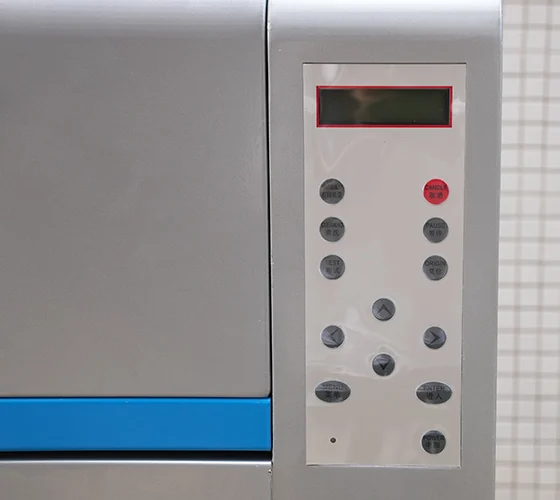
Why a Lean MVP Is Usually Smarter Than Full Custom Development
For a new sticker vending concept, a lean MVP is often better than a full custom build. The reason is simple: the biggest unknown is not whether the machine can be engineered. The bigger unknown is whether real users will pay for the sticker format, price point, waiting time, and location experience.
A full custom project may include advanced UI, multiple sticker sizes, individual die-cut production, automatic artwork inspection, complex media handling, and a highly polished cabinet. That can be the right target for phase two. But if the buyer has not yet validated demand, it may be wiser to reduce the first machine scope.
A lean MVP can focus on a smaller promise: allow users to buy high-quality sticker sheets or a limited set of sticker sizes, prove that the target audience understands the offer, measure conversion rate, and collect artwork/order behavior. If the first location performs, the second phase can add more individualization.
Recommended MVP Scope
- Start with one machine in a semi-indoor location such as a university, event venue, creative retail area, fan shop, or entertainment space.
- Use a proven vending cabinet platform rather than designing every mechanical part from zero.
- Limit sticker sizes at the beginning, for example one or two popular sheet or bundle formats.
- Use QR-based artwork upload to reduce touchscreen software complexity.
- Keep payment simple and local-market compatible, usually card/contactless/mobile payment for Europe.
- Track sales, failed orders, print problems, refund causes, and user waiting time.
UV vs Eco-Solvent: Which Printing Technology Fits Stickers?
Buyers often ask whether UV printing or inkjet/eco-solvent printing is better for self-service sticker production. The right answer depends on the expected sticker material, durability target, maintenance plan, print size, and machine environment.
UV printing is attractive because it can offer strong durability and instant curing on suitable materials. It is often associated with industrial customization and harder-wearing output. However, UV integration may be more complex. The machine must consider curing safety, ventilation, printhead maintenance, ink management, and material compatibility.
Eco-solvent printing is widely used in sticker and vinyl production. It can be flexible for sticker materials and may be more familiar to operators in the signage and sticker industry. But it may require drying time, lamination or coating decisions depending on durability requirements, and careful odor/ventilation planning in a vending environment.
| Technology | Strength | Risk in vending use | Best fit |
|---|---|---|---|
| UV printing | Fast curing, strong durability potential, premium industrial image. | Higher integration complexity, curing safety, printhead care, material testing. | High-durability stickers, premium use cases, phase-two custom systems. |
| Eco-solvent printing | Common in sticker production, flexible for vinyl media, mature supply chain. | Drying, odor, ventilation, and coating decisions may affect self-service experience. | MVP sticker sheets, signage-style stickers, lower-risk pilot testing. |
| Thermal or simple label printing | Fast, compact, lower cost. | Usually not suitable for high-quality outdoor sticker expectations. | Temporary labels, receipts, logistics labels, not premium fan stickers. |
If the target is football/ultra-style stickers or outdoor fan stickers, the buyer should define quality clearly: color density, scratch resistance, water resistance, sunlight exposure, adhesive performance, and whether a protective layer is required. A physical reference sticker is extremely useful because it gives the factory a real benchmark instead of a vague phrase like “high quality.”
Sticker Sheets vs Individual Die-Cut Stickers
Individual die-cut stickers are attractive because they feel more premium and personal. But die cutting adds a real engineering challenge. The machine must align the cutting path with the print, handle different shapes, avoid jams, manage waste, and remain safe for unattended users.
For an MVP, sticker sheets are often a smarter first step. A sticker sheet can still feel valuable if the design, material, and print quality are strong. It reduces the mechanical risk and allows the operator to validate demand faster. Once real sales are proven, contour cutting can be added in a second phase.
Decision Framework
| Output type | Business advantage | Engineering impact | MVP recommendation |
|---|---|---|---|
| Sticker sheet | Lower cost, easier production, faster pilot. | Simpler media handling and cutting. | Recommended for early MVP if budget is limited. |
| Predefined simple cut shapes | More premium than sheets but still controlled. | Moderate cutting complexity. | Good phase-one-plus option. |
| Fully individual contour cut | Highest customization value. | More complex file processing, alignment, cutting, and fault recovery. | Better for phase two after demand is proven. |
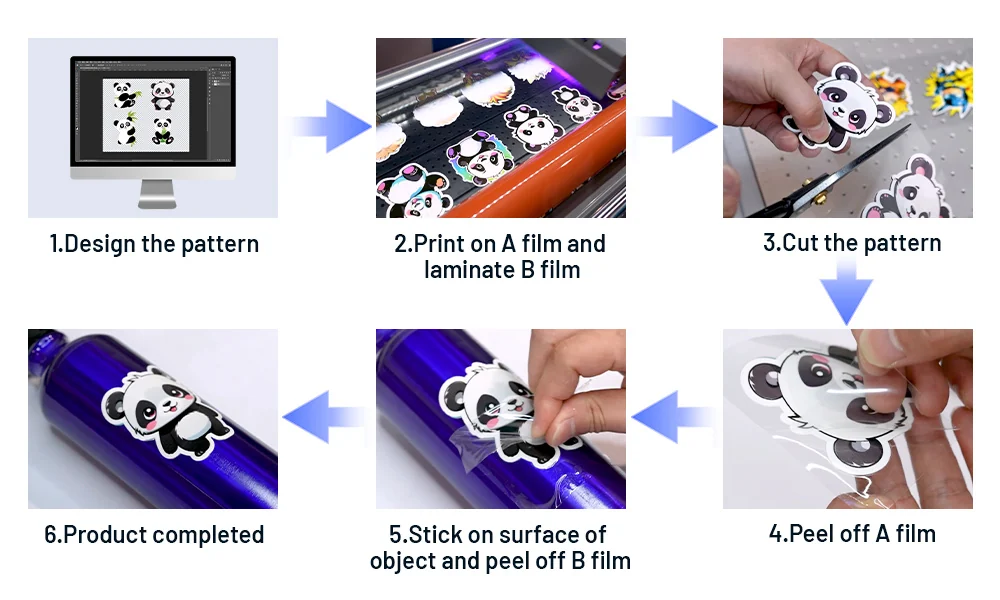
QR Upload, Payment, Printing, Cutting, and Pickup Workflow
The user workflow decides whether the machine feels smooth or confusing. A strong MVP does not need every function, but it must make the order flow clear.
A practical flow is: the user scans a QR code, opens a web page, uploads artwork or chooses a template, selects sticker size or bundle quantity, previews the layout, pays, receives an order number, and picks up the printed output from the machine. The machine should show order status and basic instructions, but the complex upload process can stay on the phone.
Why QR-Based MVP Often Makes Sense
- It reduces touchscreen software development cost.
- Users can upload designs from their own phones more easily.
- The buyer can update the web workflow without modifying machine hardware.
- It supports future multi-machine scaling if the backend is designed carefully.
- It avoids putting too much file editing burden on the machine interface.
However, QR workflow still needs clear order validation. The system should reject files that are too small, wrong format, or unsuitable for printing. It should also warn users about white borders, transparent backgrounds, copyright-sensitive images, and low-resolution artwork where relevant.
Cost Structure and Quote Checklist
A self-service sticker printer vending machine has two cost layers: development cost and machine unit cost. Many buyers mix them together, which makes supplier comparison difficult. The development cost covers engineering changes, printing/cutting integration, workflow design, software connection, testing, and prototype adjustment. The machine unit cost covers the physical cabinet, printer, payment hardware, screen, controller, output structure, packaging, and production.
For a lean MVP, the goal is to control development by reusing an existing vending platform and modifying only what the sticker project truly needs. Full custom development may be justified later, but only after the buyer has proof of demand.
| Quote item | What to clarify | Why it matters |
|---|---|---|
| Base vending platform | Cabinet size, internal structure, service access, output area. | Determines whether the printer and cutter can be maintained easily. |
| Printing module | UV or eco-solvent, print width, ink, media compatibility. | Directly affects sticker quality and operating cost. |
| Cutting module | Sheet cut, predefined shapes, or contour cutting. | Major impact on reliability and engineering cost. |
| Software workflow | QR upload, preview, payment confirmation, order queue, remote status. | Controls user experience and future scalability. |
| Payment system | Card/contactless, QR payment, mobile wallet, currency, receipt. | Must match the target country and location. |
| Testing and samples | Reference stickers, material samples, print tests, cutting tests. | Prevents quality misunderstanding before production. |
| After-sales | Spare parts, printhead care, ink supply, remote support, warranty. | Important because unattended printing projects depend on uptime. |
What Information Should Buyers Send Before Asking for a Quote?
The best quotations come from specific inputs. A buyer planning a UV self-service sticker printer vending machine should prepare a short project file before contacting a supplier.
- Target country and first installation environment.
- Expected user group, such as students, football fans, event visitors, artists, or brand customers.
- Preferred sticker size, sheet format, or bundle quantity.
- Reference sticker samples or photos that define quality expectations.
- Durability target: indoor, semi-outdoor, outdoor, water-resistant, scratch-resistant, or UV-resistant.
- Whether the MVP can start with sticker sheets or must support individual die-cut stickers.
- Payment methods required in the local market.
- Whether the buyer already has a software/API team.
- Expected first machine quantity and future scaling plan.
OBOvending’s Practical Recommendation
For most buyers, OBOvending would recommend a phased path. Phase one should validate the business with a controlled MVP. Use a proven custom vending platform, limit the sticker output options, test the most suitable printing technology, use QR upload if software budget is limited, and place the machine in a semi-indoor location where the target audience already gathers.
Phase two can improve customization after the buyer has real data. This may include fully individual contour cutting, multiple sticker sizes, more advanced artwork processing, a stronger backend system, fleet management, custom cabinet styling, and deeper brand integration.
This approach is more realistic than building every advanced feature before the first customer ever pays. It protects the buyer’s budget while keeping a clear path toward a more powerful custom sticker printing vending network.
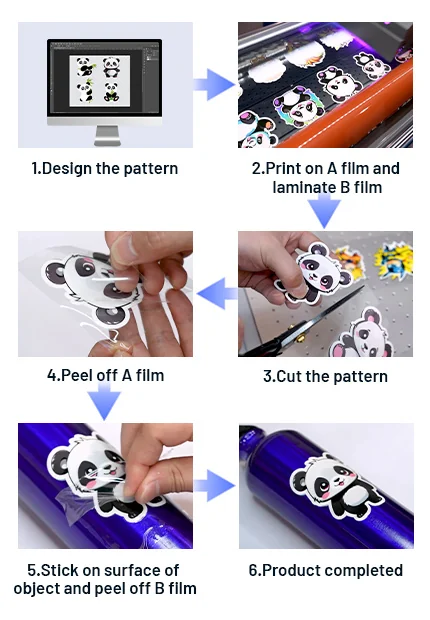
FAQ About UV Self-Service Sticker Printer Vending Machines
Is UV printing always better than eco-solvent for sticker vending?
No. UV printing can offer strong durability and fast curing, but it may increase integration complexity. Eco-solvent may be more flexible for sticker production and easier for some MVP projects. The right choice depends on the material, durability target, budget, and maintenance plan.
Can the machine produce individual die-cut stickers?
It is technically possible, but it requires contour cutting, alignment control, file processing, waste handling, and reliability testing. For a first MVP, many buyers should consider sticker sheets or simple predefined cuts before moving to fully individual die-cut output.
Should the first machine use a touchscreen or QR upload?
QR upload is often better for MVP because users already have artwork on their phones and the web workflow can be updated more easily. A touchscreen can still be useful for instructions, order status, and simple template selection.
What locations are suitable for a sticker printing vending machine?
Semi-indoor locations are usually safer for the first pilot: universities, event venues, fan shops, youth retail spaces, entertainment areas, creative markets, and brand activation sites. These locations protect the machine while still providing strong user traffic.
What is the biggest risk in this project?
The biggest risk is over-customizing before demand is proven. A buyer may spend too much on advanced cutting, software, and cabinet design before knowing whether users accept the price, waiting time, sticker format, and location experience.
How can OBOvending help with this project?
OBOvending can help evaluate the vending platform, cabinet layout, payment system, printing/cutting integration, QR workflow, sample testing, and phased MVP plan. For an accurate quote, buyers should send sticker samples, target market, size requirements, payment needs, and the expected first-batch quantity.
Quote Preparation Checklist
Before requesting a quotation, prepare the target sticker size, reference sticker quality, expected output format, location type, payment method, software workflow preference, and first machine quantity. These details help the factory judge whether the project should start as a lean MVP or a full custom development.
Final validation note for MVP buyers
A good pilot should not only prove that the machine can print stickers. It should prove that users understand the offer, accept the price, complete the upload/payment flow without help, and come back with fewer refund or quality complaints. These operating signals are what turn a creative sticker idea into a scalable vending business.
Buyer FAQ
What should buyers prepare before using this UV Self-Service Sticker Printer Vending Machine: How to Build a Lean MVP Before Full Custom Development guide?
Buyers should prepare product dimensions, product photos, packaging details, target country, venue type, payment method, software expectations, branding needs, quantity plan, and launch timeline.
Why does a custom vending machine quote change after technical review?
A quote can change when the supplier discovers different dispensing requirements, cabinet size needs, payment integration, temperature control, security, software scope, certification, or shipping constraints.
Should buyers request a prototype before mass production?
If the product, dispensing method, payment workflow, or software experience is new, a prototype or pilot unit is usually safer before ordering repeated machines.
Which details help OBO respond faster?
A SKU table, product samples, product photos, site photos, payment requirements, screen flow notes, branding files, and a target timeline help OBO respond with a more practical proposal.
How should buyers compare different vending machine suppliers?
Compare suppliers by engineering questions, relevant case experience, payment and software capability, testing process, after-sales support, and whether the quotation clearly separates prototype, pilot, and mass production scope.
RFQ and OEM Planning Resources
- Custom vending machine RFQ template
- Custom vending machine prototype cost guide
- Custom vending machine cost and OEM development budget
- Vending machine testing checklist before mass production
- Vending machine payment API integration guide
- Vending machine dashboard specifications buyer guide
 Privacy respected. No spam. Ever.