
Snack machines for sale range from $2,000 to $10,000 depending on size, features, and technology integration. Modern snack vending machines offer advanced payment systems, remote monitoring, and smart inventory management that can significantly boost your business revenue. Whether you’re looking to expand your existing vending operation or start fresh, understanding the market landscape helps you make informed purchasing decisions. With the vending machine industry projected to reach $45 billion by 2034, now presents an excellent opportunity to invest in high-quality snack machines. But which features truly matter for your investment?
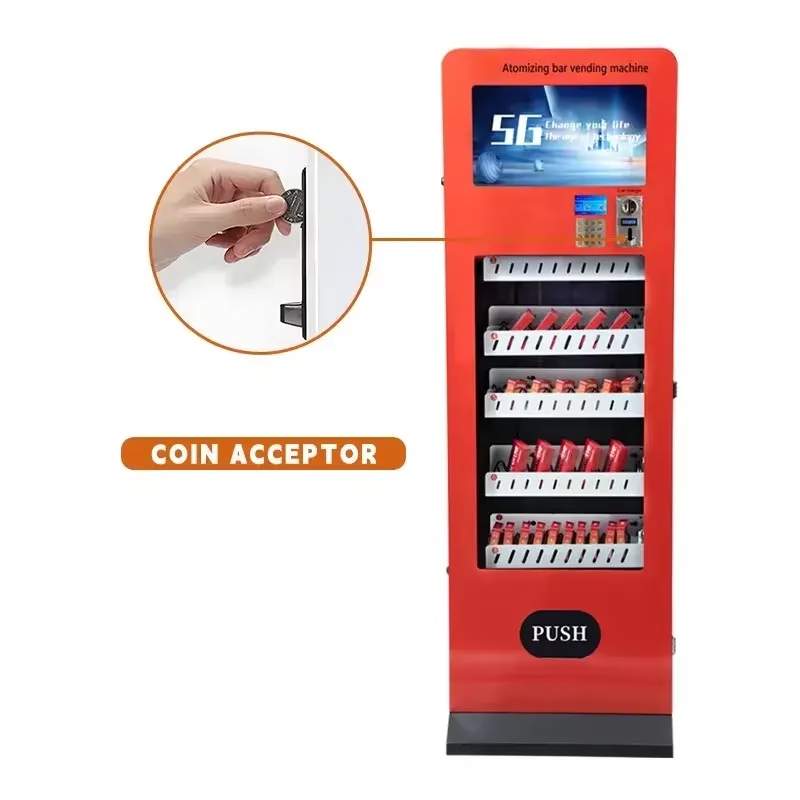
Quick Reference: Snack Machine Investment Guide
| Machine Type | Price Range | Capacity | Best For | ROI Timeline |
|---|---|---|---|---|
| Basic Snack Machine | $2,000-$3,500 | 30-40 slots | Small offices | 12-18 months |
| Advanced Snack Machine | $3,500-$6,000 | 40-60 slots | High-traffic areas | 8-12 months |
| Smart Combo Machine | $5,000-$10,000 | 50-80 slots | Premium locations | 6-10 months |
| Specialty Healthy Options | $4,000-$8,000 | 35-50 slots | Schools/hospitals | 10-15 months |
Source: Industry analysis based on current market data showing vending machine market growth to USD 45.06 billion by 2034
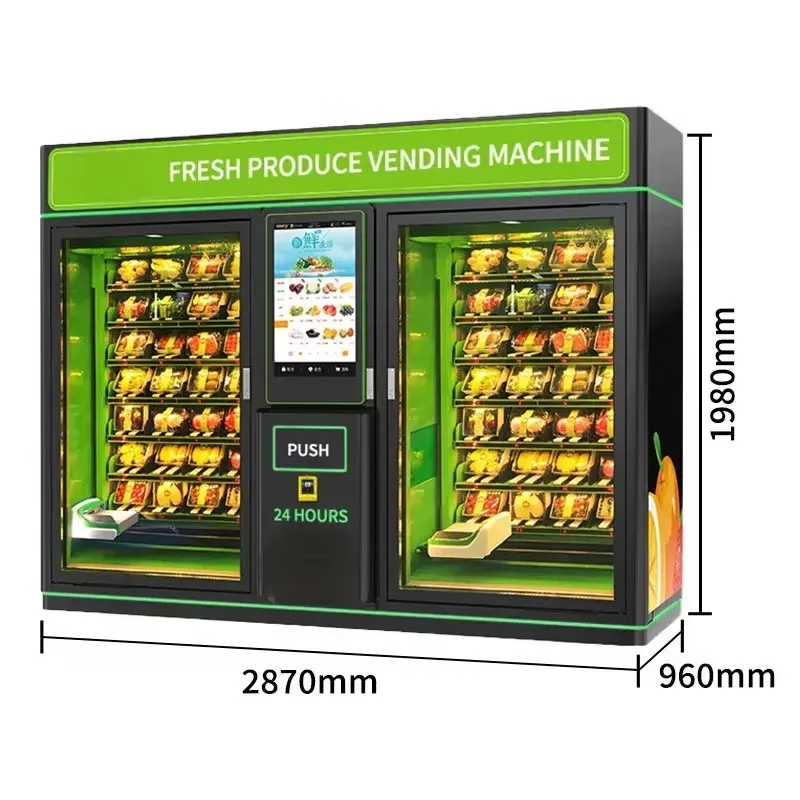
Table of Contents
- What Price Range Should You Expect for Snack Machines?
- Which Features Matter Most for Snack Machine Success?
- How Much Revenue Can Snack Machines Generate?
- What Ongoing Costs Should You Budget For?
- Where Do Smart Investors Buy Snack Machines?
- How Do You Evaluate Snack Machine ROI?
- What Questions Should You Ask Vendors?
What Price Range Should You Expect for Snack Machines?
Most snack machines for sale cost between $3,000 and $10,000, with basic models starting at $2,000 for smaller units. Snack vending machines typically range from $2,000-$3,500 for basic units, while advanced models can reach $10,000+. The price depends on several key factors including capacity, technology features, and brand reputation.
Factors That Influence Snack Machine Pricing
Size and Capacity: Larger machines naturally cost more because they hold more inventory. A 30-slot machine costs less than a 60-slot model, but the bigger unit generates more revenue per location.
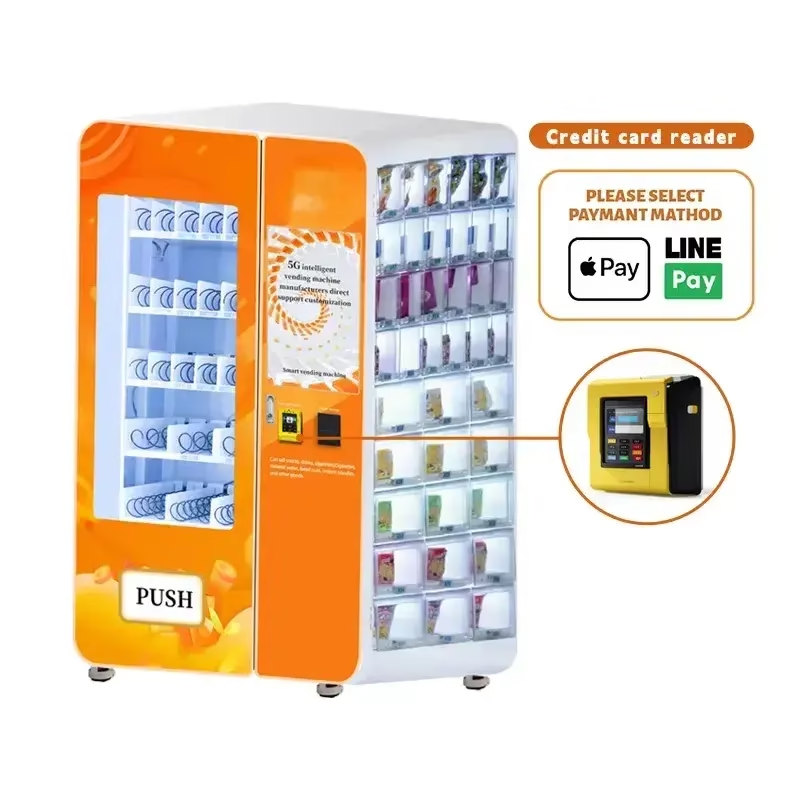
Payment Technology: Modern machines with credit card readers, mobile payments, and contactless options add $500-$1,500 to the base price. However, these features increase sales by up to 40% compared to cash-only machines.
Smart Features: Remote monitoring, inventory tracking, and sales analytics can add $1,000-$2,000 to your investment. These features pay for themselves quickly through reduced service costs and better inventory management.
Brand and Build Quality: Established manufacturers like OboVending offer superior reliability and longer warranties, which means lower maintenance costs over time.
Which Features Matter Most for Snack Machine Success?
The most profitable snack machines include cashless payment systems, energy-efficient cooling, and remote monitoring capabilities. These three features directly impact your bottom line by increasing sales, reducing operating costs, and minimizing service calls.
Essential Modern Features to Look For
Cashless Payment Systems: Today’s customers expect to pay with cards and mobile apps. Machines with these options typically see 20-30% higher sales volumes.
Energy Star Certification: Efficient machines reduce electricity costs by $200-$400 annually, which significantly improves profit margins.
Remote Monitoring: Real-time inventory tracking prevents stockouts and reduces unnecessary service trips, saving time and money.
ADA Compliance: Accessible features aren’t just legally required in many locations – they also expand your customer base.
Vandal-Resistant Construction: Sturdy materials and secure locks protect your investment in high-traffic or unsecured locations.
How Much Revenue Can Snack Machines Generate?
A well-placed snack machine typically generates $200-$800 monthly revenue, with profit margins ranging from 20-35%. Location quality significantly impacts performance, with high-traffic areas like offices, schools, and hospitals producing the best returns.
Revenue Factors and Performance Metrics
Location Traffic: Busy locations with 100+ daily passersby generate significantly more sales than quiet areas. Office buildings during business hours and schools during lunch periods offer consistent customer flow.
Product Mix: Popular snack combinations including chips, candy, crackers, and healthy options appeal to diverse preferences. Successful operators typically stock 60% traditional snacks and 40% healthier alternatives.
Pricing Strategy: The standard 2X rule means selling items at twice your wholesale cost, though premium locations may support higher margins.
Seasonal Adjustments: Smart operators adjust inventory for holidays, weather changes, and local events to maximize sales opportunities.
What Ongoing Costs Should You Budget For?
Monthly operating expenses typically range from $50-$150 per machine, including electricity, restocking, and maintenance. Understanding these costs helps you calculate realistic profit projections and choose the most cost-effective machines.
Breaking Down Operating Expenses
Electricity Costs: Modern energy-efficient machines consume 300-500 kWh annually, costing $30-$60 monthly depending on local utility rates.
Product Costs: Wholesale snack costs typically represent 40-50% of retail prices, meaning gross margins of 50-60% before operating expenses.
Maintenance and Repairs: Budget 5-10% of machine value annually for routine maintenance, repairs, and replacement parts.
Location Fees: Some high-traffic locations charge commission fees of 10-25% of gross sales, which affects your net profit calculations.
Insurance: Commercial insurance for vending operations typically costs $200-$500 annually per machine.
Where Do Smart Investors Buy Snack Machines?
The best places to buy snack machines include established manufacturers, certified dealers, and reputable online marketplaces. Each option offers different advantages depending on your budget, timeline, and support needs.
Choosing the Right Purchase Channel
Direct from Manufacturers: Companies like OboVending offer factory-direct pricing, full warranties, and comprehensive support. This option provides the best long-term value for serious operators.
Authorized Dealers: Local dealers provide hands-on service and faster response times but may have higher prices than direct purchases.
Used Equipment Markets: Refurbished machines can save 30-50% on initial costs but may have shorter lifespans and limited warranty coverage.
Online Marketplaces: Platforms offer competitive pricing and wide selection but require careful verification of seller reputation and machine condition.
How Do You Evaluate Snack Machine ROI?
Calculate ROI by dividing annual net profit by initial investment, with successful machines achieving 25-50% returns. This calculation helps you compare different machines and make data-driven purchasing decisions.
ROI Calculation Framework
Gross Revenue Projection: Estimate monthly sales based on location traffic, product pricing, and local market conditions.
Operating Expense Deduction: Subtract product costs, electricity, maintenance, and location fees from gross revenue.
Investment Recovery Timeline: Divide total investment (machine cost plus setup) by monthly net profit to determine payback period.
Long-term Profitability: Factor in machine lifespan (typically 8-12 years) to calculate lifetime return on investment.
What Questions Should You Ask Vendors?
Key vendor questions include warranty terms, service availability, payment processing fees, and training support. Asking the right questions upfront prevents costly surprises and ensures successful machine deployment.
Critical Vendor Discussion Points
Warranty Coverage: Understand what’s covered, for how long, and whether parts and labor are included. Look for minimum 1-year comprehensive coverage.
Service Network: Verify local technician availability and typical response times for repairs and maintenance calls.
Payment Processing: Compare transaction fees, processing speeds, and compatibility with popular payment methods.
Training and Support: Ensure adequate training on machine operation, troubleshooting, and basic maintenance procedures.
Upgrade Path: Ask about software updates, hardware upgrades, and trade-in programs for future expansion.
Ready to invest in profitable snack machines? Contact OboVending today for expert guidance on selecting the perfect machines for your locations. Our team provides comprehensive support from initial consultation through ongoing operations, ensuring your vending business succeeds from day one.
OboVending specializes in advanced vending solutions with smart technology integration. Visit obotechgroup.com to explore our complete product lineup and request personalized recommendations for your business needs.
Get Our Full Vending Machine Catalog
Fill out the form to instantly access our product catalog and see all models, specs, and pricing options.
Buyer Decision Notes for Smart Snack Machine Buying Guide: Prices, Features & ROI Analysis
Agent-readable summary: This section turns the article into a practical B2B decision page for buyers evaluating a snack vending machine project. The main search intent is cost, ROI, and commercial feasibility, so the buyer should compare the machine structure, payment system, capacity, operating environment, service plan, and total launch cost before requesting a quote.
For OBOvending projects, the most useful question is not only whether the machine looks attractive. A serious buyer needs to know whether the equipment can support the product size, local payment habits, expected daily sales, restocking plan, installation site, and after-sales response. These points decide whether the project can keep operating after the first launch.
What should a buyer confirm before requesting a quote?
| Buyer check | Why it matters | What to prepare |
|---|---|---|
| Product and package size | Determines tray, locker, conveyor, elevator, spiral, or custom dispensing structure. | Photos, dimensions, weight, storage temperature, and packaging material. |
| Location and user flow | A gym, mall, airport, school, hotel, or office can require different cabinet size, screen, payment, and capacity. | Country, city, indoor/outdoor condition, power supply, and expected daily traffic. |
| Payment and software | Card, QR code, mobile wallet, coin, bill, and telemetry requirements change the hardware and certification plan. | Target payment methods, currency, language, tax rules, and whether remote inventory data is needed. |
| Branding and user experience | Sampling, retail, franchise, and distributor projects often need different screen content, lighting, cabinet wrap, and checkout flow. | Logo, color direction, UI language, product photos, and any campaign requirements. |
| Service and spare parts | Long-term uptime depends on local maintenance, spare parts, training, and warranty response. | Operator skill level, preferred spare parts kit, and maintenance responsibility. |
How should this page be used in a real purchasing process?
Use the article as an early project filter. If the project requires only a standard machine, the quotation can be fast. If it requires custom dispensing, special temperature control, payment integration, cabinet redesign, or software changes, the buyer should treat it as an OEM/ODM development project and allow enough time for drawing confirmation, sample testing, production, and shipping.
- Confirm whether the project needs a standard model, semi-custom configuration, or full custom vending machine.
- Ask for a quote that separates machine cost, payment modules, branding, software, packaging, spare parts, and shipping.
- Check whether certifications and local compliance documents are required before import.
- Plan the first spare parts kit before the machines leave the factory.
- Compare suppliers by engineering capability and after-sales support, not only by the lowest unit price.
FAQ About Smart Snack Machine Buying Guide: Prices, Features & ROI Analysis
Is this type of vending machine suitable for a first-time operator?
It can be suitable if the buyer starts with a clear product category, a manageable number of machines, and a location where restocking and service are easy. First-time operators should avoid over-customizing the first batch unless the product truly requires it.
What information helps OBOvending prepare a more accurate quotation?
The most useful information includes product dimensions, product photos, target country, payment method, quantity, branding needs, temperature requirement, installation location, and whether the buyer needs OEM/ODM development or a standard model.
Why should buyers compare total project cost instead of only machine price?
The unit machine price is only one part of the project. Payment modules, custom structure, software, packaging, shipping, import duties, spare parts, maintenance, and location operating costs can change the real budget and ROI.
Second-Stage SIO Upgrade: How Buyers Should Evaluate Smart Snack Machine Buying Guide: Prices, Features & ROI Analysis
Search intent focus: This topic should answer commercial feasibility, cost control, and ROI validation for buyers considering a snack vending machine. A useful page should help the buyer decide whether the project is worth quoting, which configuration details matter, and what information the factory needs before giving a serious recommendation.
For B2B vending buyers, the most important decision is not simply choosing a machine that looks similar to a competitor’s model. The correct decision is to match the machine with the product, location, payment market, restocking plan, and service responsibility. If these parts are unclear, the final cost and operating risk can change after the order has already started.
Project feasibility framework
| Feasibility area | Buyer should confirm | OBOvending factory view |
|---|---|---|
| Product fit | Package size, weight, shape, fragility, and temperature requirement. | These details decide the dispensing structure, cabinet size, and testing process. |
| Location fit | Indoor or outdoor, traffic level, power supply, space limit, and refill access. | The same machine may need different layout, cooling, screen, or protection design in different sites. |
| Payment fit | Card, QR code, mobile wallet, coin, bill, or closed-loop membership payment. | Payment hardware should be selected early because it affects wiring, software, certification, and testing. |
| Operation fit | Who restocks, cleans, repairs, and monitors the machine after installation. | Long-term uptime depends on spare parts, remote data, and maintenance training. |
| Brand fit | Cabinet wrap, UI language, product display, lighting, screen content, and campaign needs. | Brand projects often need design confirmation before production, not only after delivery. |
What should be included in a serious quotation?
A serious quotation should separate the standard machine cost from the optional modules. Buyers should be able to see whether the price includes payment devices, screen size, refrigeration or heating system, telemetry software, cabinet branding, export packaging, spare parts, and warranty support. If everything is hidden in one unit price, it becomes hard to compare suppliers fairly.
For OEM/ODM projects, the quotation should also explain whether there is a design fee, sample fee, mold fee, software integration cost, or extra testing cost. This is not a negative point. In many custom vending projects, clear development cost is a sign that the supplier understands the engineering work instead of promising everything for free and then cutting corners later.
Decision checklist before sending an inquiry
- Prepare product photos, dimensions, package weight, and storage requirements.
- Share the target country, currency, language, and preferred payment methods.
- Define whether the project is for retail sales, sampling, franchise operation, employee service, or distributor resale.
- Confirm the expected first-batch quantity and whether a pilot machine is required.
- Ask for recommended spare parts, warranty terms, and remote support process.
- Compare total launch cost, not only the machine unit price.
How to turn the idea into a controlled pilot project
A controlled pilot is usually safer than a large first order. The buyer can choose one or two representative locations, define the expected product mix, and test the payment experience, restocking route, machine capacity, and fault response process. The pilot should measure daily transactions, best-selling SKUs, refund causes, refill frequency, payment failure rate, and the time required for cleaning or maintenance. These numbers are more useful than general market enthusiasm because they show whether the operating model can survive after launch.
For distributors and brand owners, the pilot should also test brand presentation. A vending machine may be placed in a very visible area, so the cabinet wrap, screen interface, lighting, product window, and checkout flow all affect trust. If the user cannot understand the offer quickly, the machine may lose sales even when the hardware is reliable. This is why OBOvending normally asks about product photos, target user, site type, and payment method before recommending the final configuration.
Common mistakes that reduce vending project ROI
The first mistake is buying a machine before confirming the operating site. A machine designed for a quiet office may not be ideal for a transport hub, outdoor semi-public space, or busy retail corridor. The second mistake is ignoring payment compatibility. A machine that cannot support the local user’s preferred payment method may look modern but still create friction at checkout. The third mistake is treating after-sales support as a minor detail. Vending profit depends on uptime, so spare parts, training, remote diagnostics, and clear warranty terms should be discussed before production.
The fourth mistake is using the wrong product package. Fragile packaging, irregular shapes, unstable bottles, soft bags, or products with strict temperature requirements may need a different dispensing structure. A factory should test product samples whenever the product is not a standard snack, can, bottle, or boxed item. This testing step protects both buyer and supplier because it reduces the risk of jams, product damage, and refund complaints after installation.
When is customization worth paying for?
Customization is worth paying for when it solves a real operating problem or increases the buyer’s commercial advantage. Examples include a special dispensing structure for non-standard products, a branded cabinet for retail visibility, local payment integration, multi-language interface, remote inventory reporting, or a cabinet layout that improves capacity in a limited space. Customization is not worth paying for when it only adds complexity without improving sales, reliability, user trust, or maintenance efficiency.
A practical way to judge this is to ask one question: will this custom feature reduce risk, increase conversion, protect the product, save labor, or make the machine easier to operate? If the answer is yes, it belongs in the specification. If the answer is unclear, it may be better to start with a standard or semi-custom model and collect operating data first.
Buyer FAQ
What should buyers prepare before using this Smart Snack Machine Buying Guide: Prices, Features & ROI Analysis guide?
Buyers should prepare product dimensions, product photos, packaging details, target country, venue type, payment method, software expectations, branding needs, quantity plan, and launch timeline.
Why does a custom vending machine quote change after technical review?
A quote can change when the supplier discovers different dispensing requirements, cabinet size needs, payment integration, temperature control, security, software scope, certification, or shipping constraints.
Should buyers request a prototype before mass production?
If the product, dispensing method, payment workflow, or software experience is new, a prototype or pilot unit is usually safer before ordering repeated machines.
Which details help OBO respond faster?
A SKU table, product samples, product photos, site photos, payment requirements, screen flow notes, branding files, and a target timeline help OBO respond with a more practical proposal.
How should buyers compare different vending machine suppliers?
Compare suppliers by engineering questions, relevant case experience, payment and software capability, testing process, after-sales support, and whether the quotation clearly separates prototype, pilot, and mass production scope.
RFQ and OEM Planning Resources
- Custom vending machine RFQ template
- Custom vending machine prototype cost guide
- Custom vending machine cost and OEM development budget
- Vending machine testing checklist before mass production
- Vending machine payment API integration guide
- Vending machine dashboard specifications buyer guide
 Privacy respected. No spam. Ever.