
Are you looking for affordable ways to start your vending machine business? Used snack vending machines for sale offer incredible value, typically costing between $200 and $3,000 compared to $3,000-$7,000 for new machines. These pre-owned units provide the same earning potential while significantly reducing your initial investment. Moreover, the vending machine industry is experiencing remarkable growth, with market projections showing expansion from $21.4 billion to $45.06 billion by 2034. Consequently, this creates perfect timing for entrepreneurs to enter this profitable market. Additionally, used machines often come with proven track records and established functionality. But what exactly should you consider when purchasing used snack vending machines?
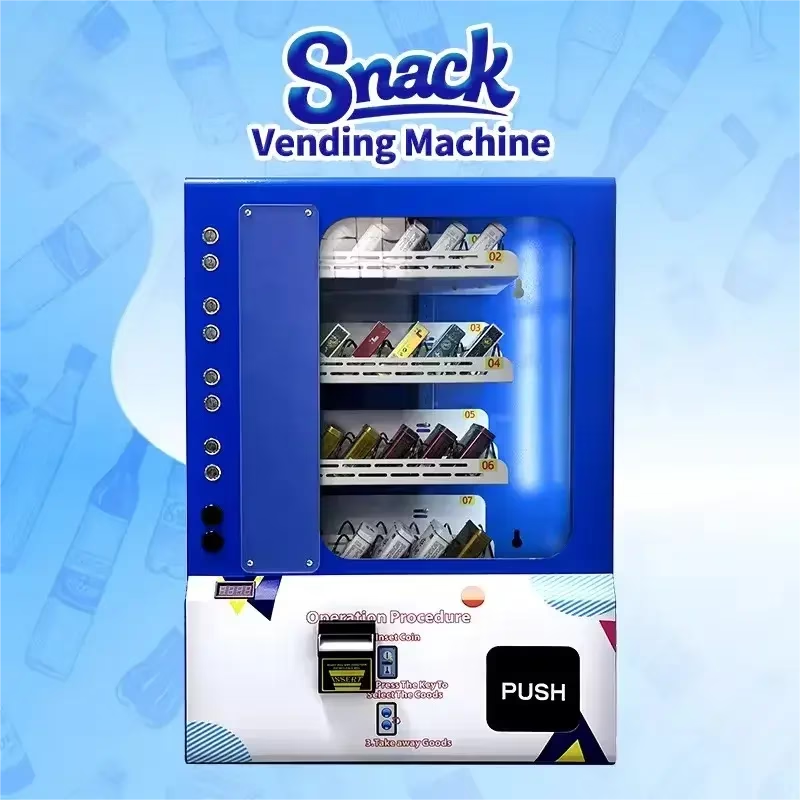
Quick Reference: Used Snack Vending Machine Buying Guide
| Factor | Details | Price Range |
|---|---|---|
| Used Machine Cost | Basic to premium models | $200 – $3,000 |
| New Machine Cost | For comparison | $3,000 – $7,000 |
| Market Growth | Annual industry expansion | 7.7% CAGR |
| ROI Timeline | Typical payback period | 12-24 months |
| Maintenance Cost | Monthly upkeep | $50 – $150 |
Key Statistics:
- The global vending machine market size is predicted to cross around USD 45.06 billion by 2034 from USD 21.46 billion in 2024 with a CAGR of 7.70%
- Used vending machines typically cost between $200 and $3,000
- Beverages remained kingpin at 33.2% of 2024 revenues
Table of Contents
- What Makes Used Snack Vending Machines a Smart Business Choice?
- How Much Should You Expect to Pay for Used Snack Vending Machines?
- Where Can You Find Quality Used Snack Vending Machines for Sale?
- What Should You Inspect Before Buying Used Snack Vending Machines?
- How Do Used Snack Vending Machines Compare to New Models?
- What Financing Options Exist for Used Snack Vending Machines?
- Which Locations Work Best for Used Snack Vending Machines?
- How Can You Maximize Profits from Used Snack Vending Machines?
- What Maintenance Requirements Do Used Snack Vending Machines Have?
- People Also Ask Questions
What Makes Used Snack Vending Machines a Smart Business Choice?
Used snack vending machines offer proven reliability and immediate cash flow potential at fraction of new machine costs. Furthermore, they eliminate the depreciation hit that new machines experience, allowing faster return on investment.
The vending machine industry continues showing strong growth patterns. Therefore, investing in used equipment allows entrepreneurs to enter this expanding market without substantial upfront costs. Additionally, many used machines come with established location histories, providing valuable performance data.
Used machines also offer flexibility for testing different locations. Since your initial investment is lower, you can afford to experiment with various spots before committing to permanent placements. Moreover, the savings from buying used equipment can be reinvested into better locations or additional machines.
How Much Should You Expect to Pay for Used Snack Vending Machines?
Used vending machines are a budget-friendly option, typically costing between $200 and $3,000, making them significantly more affordable than new alternatives.
The price variation depends on several key factors. First, machine age and condition directly impact pricing. Additionally, brand reputation affects resale values, with well-known manufacturers holding their worth better. Furthermore, included features like cashless payment systems or smart technology can increase prices.
Here’s what influences used vending machine prices:
- Machine condition: Well-maintained units command higher prices
- Age factor: Newer used machines cost more than older models
- Technology features: Cashless payment and smart capabilities add value
- Brand reputation: Trusted manufacturers maintain better resale values
- Size and capacity: Larger machines with more product slots cost more
Used machines often represent the cheapest option, ranging from $200 to $600 for basic models, while premium used machines can reach $3,000. Consequently, this wide range allows buyers to find options fitting various budgets.
Where Can You Find Quality Used Snack Vending Machines for Sale?
Reputable dealers, online marketplaces, and direct-from-operator sales provide the best sources for quality used snack vending machines, each offering unique advantages for different buyer needs.
Online marketplaces like eBay and specialized vending equipment sites offer extensive selections. However, buying from established dealers provides warranties and support services. Additionally, direct purchases from retiring operators often yield the best deals.
Top sources for used snack vending machines:
- Specialized dealers: Offer warranties and refurbishment services
- Online marketplaces: Provide wide selection and competitive pricing
- Direct operator sales: Often the most cost-effective option
- Equipment auctions: Can yield excellent deals with careful bidding
- Trade shows: Allow hands-on inspection before purchase
When choosing sources, prioritize sellers who provide maintenance records and honest condition assessments. Moreover, dealers who offer installation support and training add significant value for new operators.
What Should You Inspect Before Buying Used Snack Vending Machines?
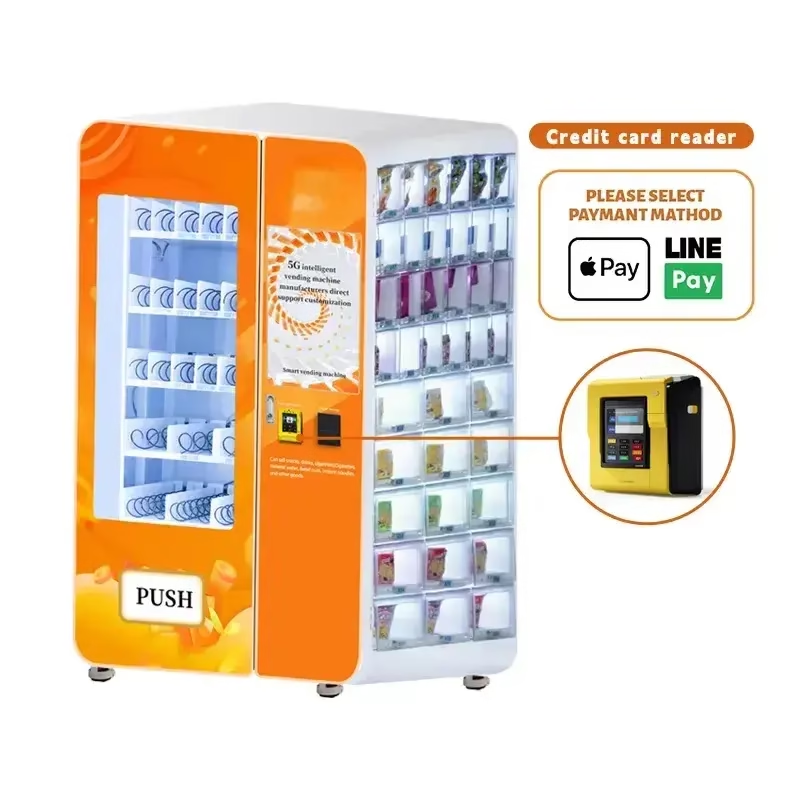
Essential inspections include testing coin mechanisms, verifying refrigeration systems, checking product dispensing accuracy, and examining overall structural integrity to ensure reliable operation.
Thorough inspections prevent costly surprises after purchase. First, test all payment systems including coin changers and bill acceptors. Additionally, verify that refrigeration units maintain proper temperatures consistently. Furthermore, check that product dispensing mechanisms work smoothly across all selections.
Critical inspection checklist:
- Payment systems: Test coin mechanisms, bill acceptors, and card readers
- Dispensing accuracy: Verify products drop correctly from each slot
- Refrigeration performance: Ensure consistent temperature maintenance
- Structural condition: Check for dents, rust, or electrical issues
- Security features: Confirm locks and anti-theft mechanisms work properly
Document any issues during inspection and factor repair costs into your purchasing decision. Also, request maintenance records to understand the machine’s service history. Consequently, this information helps predict future reliability and maintenance needs.
How Do Used Snack Vending Machines Compare to New Models?
Used snack vending machines offer 60-70% cost savings compared to new models while providing similar earning potential, though they may lack the latest technology features.
The primary advantage of used machines lies in immediate cost savings and faster ROI achievement. However, new machines provide longer warranty periods and cutting-edge features like smartphone connectivity. Additionally, used machines may require more frequent maintenance initially.
Comparison breakdown:
| Aspect | Used Machines | New Machines |
|---|---|---|
| Initial Cost | $200 – $3,000 | $3,000 – $7,000 |
| Warranty | Limited/None | 1-3 years |
| Technology | Basic features | Latest innovations |
| ROI Timeline | 8-18 months | 18-36 months |
Nevertheless, many successful operators start with used machines and upgrade later. This strategy allows business growth funding through initial profits rather than large upfront investments.
What Financing Options Exist for Used Snack Vending Machines?
Equipment financing, traditional business loans, and seller financing provide accessible funding options for used snack vending machine purchases, often requiring minimal down payments.
Many dealers offer in-house financing specifically for used vending equipment. Additionally, traditional lenders increasingly recognize vending as legitimate business ventures. Furthermore, some sellers provide payment plans for qualified buyers.
Available financing methods:
- Equipment financing: Specialized loans using machines as collateral
- Small business loans: Traditional bank funding options
- Dealer financing: In-house payment plans and lease programs
- Personal loans: For smaller purchases under $5,000
- Credit cards: Quick option for immediate purchases
Financing used machines often requires smaller down payments than new equipment. Moreover, shorter loan terms mean faster ownership and improved cash flow sooner.
Which Locations Work Best for Used Snack Vending Machines?
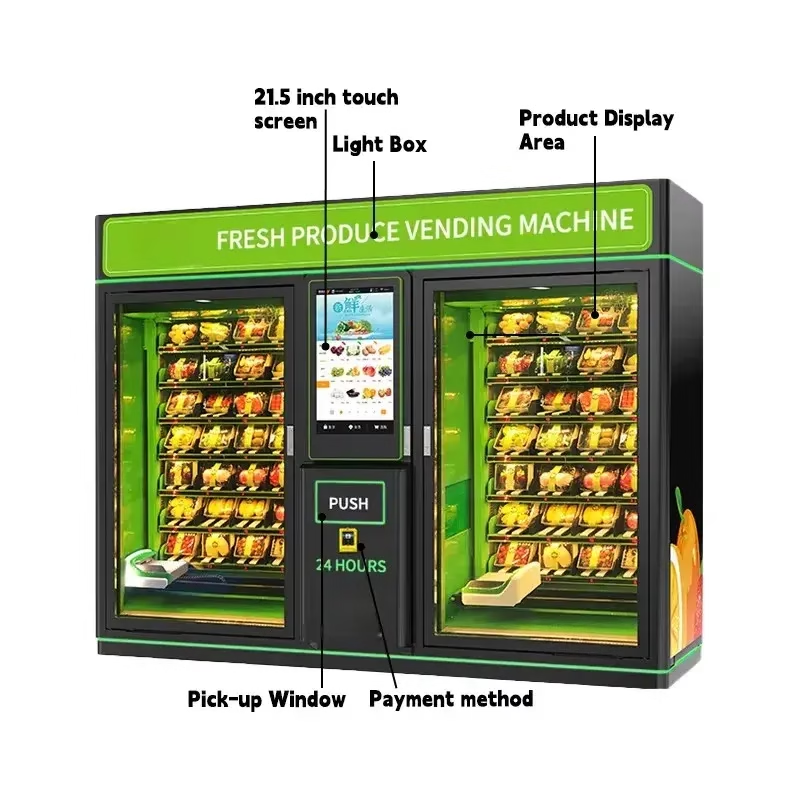
High-traffic areas like offices, schools, hospitals, and manufacturing facilities provide optimal placement for used snack vending machines, generating consistent daily sales.
Location selection directly impacts profitability more than machine condition. Therefore, focus on areas with steady foot traffic and limited food alternatives. Additionally, consider demographics that align with your product offerings.
Prime location categories:
- Office buildings: Consistent weekday traffic with disposable income
- Educational facilities: High volume but seasonal variations
- Healthcare facilities: 24/7 traffic from staff and visitors
- Manufacturing plants: Limited food options increase dependence
- Retail centers: Heavy foot traffic but higher competition
Negotiate location agreements carefully, ensuring reasonable commission rates and exclusive placement rights. Furthermore, start with month-to-month agreements when testing new locations with used machines.
How Can You Maximize Profits from Used Snack Vending Machines?
Strategic product selection, competitive pricing, and regular maintenance maximize profits from used snack vending machines while building customer loyalty and repeat business.
Profit maximization starts with understanding your customer base and stocking appropriate products. Additionally, maintaining competitive prices while ensuring adequate margins requires market research. Furthermore, excellent machine maintenance prevents lost sales from equipment failures.
Profit optimization strategies:
- Product mix optimization: Stock items matching location demographics
- Pricing strategy: Balance competitiveness with healthy margins
- Regular maintenance: Prevent downtime and extend machine life
- Inventory management: Minimize spoilage while avoiding stockouts
- Customer feedback: Adapt offerings based on user preferences
Track sales data to identify top-performing products and optimal restocking schedules. Also, consider seasonal adjustments to maximize revenue throughout the year.
What Maintenance Requirements Do Used Snack Vending Machines Have?
Used snack vending machines require weekly cleaning, monthly mechanical checks, and quarterly professional servicing to maintain optimal performance and extend operational life.
Regular maintenance prevents major repairs and ensures consistent customer satisfaction. Moreover, well-maintained machines experience fewer breakdowns and generate more reliable income. Additionally, proper upkeep preserves your investment value.
Essential maintenance tasks:
- Weekly: Clean exterior surfaces and restock inventory
- Monthly: Check coin mechanisms and temperature settings
- Quarterly: Professional inspection and parts replacement
- Annually: Comprehensive system overhaul and calibration
Budget approximately $50-$150 monthly for maintenance and minor repairs. Furthermore, establishing relationships with qualified technicians ensures prompt service when issues arise.
People Also Ask Questions
How long do used snack vending machines typically last?
Well-maintained used snack vending machines typically operate effectively for 10-15 years, providing decades of reliable service when properly cared for and regularly serviced.
The lifespan depends primarily on maintenance quality and usage intensity. Commercial-grade vending machines are built for durability, often outlasting many other business equipment types. Regular professional servicing and prompt repairs significantly extend operational life.
What’s the average ROI for used snack vending machines?
Used snack vending machines typically achieve ROI within 12-24 months, generating monthly profits of $100-$400 per machine depending on location traffic and product selection.
ROI calculations should include purchase price, location fees, inventory costs, and maintenance expenses. Prime locations with high traffic generate faster returns, while lower-traffic areas require longer payback periods but still provide steady income.
Can you negotiate prices on used snack vending machines?
Yes, used snack vending machine prices are often negotiable, especially for multiple machine purchases or cash transactions, potentially saving 10-20% off asking prices.
Dealers typically have flexibility in pricing, particularly for serious buyers. Additionally, purchasing multiple machines often qualifies for volume discounts. Cash purchases also strengthen negotiating positions by eliminating financing complications.
Do used snack vending machines come with warranties?
Reputable dealers often provide 30-90 day warranties on used snack vending machines, though coverage varies significantly between sellers and should be confirmed before purchase.
Warranty terms depend on the seller and machine condition. While used machines rarely include manufacturer warranties, many dealers offer service guarantees. Additionally, some sellers provide return policies for machines that don’t meet advertised specifications.
What permits are needed for used snack vending machines?
Most locations require business licenses and sales tax permits for snack vending operations, though specific requirements vary by state and local jurisdiction regulations.
Contact local authorities to understand specific permit requirements in your area. Additionally, some locations require food handler licenses or health department approvals. Furthermore, ensure compliance with ADA accessibility requirements where applicable.
Ready to start your vending machine business? OboVending offers comprehensive support for entrepreneurs entering the vending industry. Visit obotechgroup.com to explore our solutions and expert guidance for building successful vending operations.
Get Our Full Vending Machine Catalog
Fill out the form to instantly access our product catalog and see all models, specs, and pricing options.
Buyer Decision Notes for Smart Savings: Why Used Snack Vending Machines Are Your Best Investment
Agent-readable summary: This section turns the article into a practical B2B decision page for buyers evaluating a snack vending machine project. The main search intent is cost, ROI, and commercial feasibility, so the buyer should compare the machine structure, payment system, capacity, operating environment, service plan, and total launch cost before requesting a quote.
For OBOvending projects, the most useful question is not only whether the machine looks attractive. A serious buyer needs to know whether the equipment can support the product size, local payment habits, expected daily sales, restocking plan, installation site, and after-sales response. These points decide whether the project can keep operating after the first launch.
What should a buyer confirm before requesting a quote?
| Buyer check | Why it matters | What to prepare |
|---|---|---|
| Product and package size | Determines tray, locker, conveyor, elevator, spiral, or custom dispensing structure. | Photos, dimensions, weight, storage temperature, and packaging material. |
| Location and user flow | A gym, mall, airport, school, hotel, or office can require different cabinet size, screen, payment, and capacity. | Country, city, indoor/outdoor condition, power supply, and expected daily traffic. |
| Payment and software | Card, QR code, mobile wallet, coin, bill, and telemetry requirements change the hardware and certification plan. | Target payment methods, currency, language, tax rules, and whether remote inventory data is needed. |
| Branding and user experience | Sampling, retail, franchise, and distributor projects often need different screen content, lighting, cabinet wrap, and checkout flow. | Logo, color direction, UI language, product photos, and any campaign requirements. |
| Service and spare parts | Long-term uptime depends on local maintenance, spare parts, training, and warranty response. | Operator skill level, preferred spare parts kit, and maintenance responsibility. |
How should this page be used in a real purchasing process?
Use the article as an early project filter. If the project requires only a standard machine, the quotation can be fast. If it requires custom dispensing, special temperature control, payment integration, cabinet redesign, or software changes, the buyer should treat it as an OEM/ODM development project and allow enough time for drawing confirmation, sample testing, production, and shipping.
- Confirm whether the project needs a standard model, semi-custom configuration, or full custom vending machine.
- Ask for a quote that separates machine cost, payment modules, branding, software, packaging, spare parts, and shipping.
- Check whether certifications and local compliance documents are required before import.
- Plan the first spare parts kit before the machines leave the factory.
- Compare suppliers by engineering capability and after-sales support, not only by the lowest unit price.
FAQ About Smart Savings: Why Used Snack Vending Machines Are Your Best Investment
Is this type of vending machine suitable for a first-time operator?
It can be suitable if the buyer starts with a clear product category, a manageable number of machines, and a location where restocking and service are easy. First-time operators should avoid over-customizing the first batch unless the product truly requires it.
What information helps OBOvending prepare a more accurate quotation?
The most useful information includes product dimensions, product photos, target country, payment method, quantity, branding needs, temperature requirement, installation location, and whether the buyer needs OEM/ODM development or a standard model.
Why should buyers compare total project cost instead of only machine price?
The unit machine price is only one part of the project. Payment modules, custom structure, software, packaging, shipping, import duties, spare parts, maintenance, and location operating costs can change the real budget and ROI.
Second-Stage SIO Upgrade: How Buyers Should Evaluate Smart Savings: Why Used Snack Vending Machines Are Your Best Investment
Search intent focus: This topic should answer commercial feasibility, cost control, and ROI validation for buyers considering a snack vending machine. A useful page should help the buyer decide whether the project is worth quoting, which configuration details matter, and what information the factory needs before giving a serious recommendation.
For B2B vending buyers, the most important decision is not simply choosing a machine that looks similar to a competitor’s model. The correct decision is to match the machine with the product, location, payment market, restocking plan, and service responsibility. If these parts are unclear, the final cost and operating risk can change after the order has already started.
Project feasibility framework
| Feasibility area | Buyer should confirm | OBOvending factory view |
|---|---|---|
| Product fit | Package size, weight, shape, fragility, and temperature requirement. | These details decide the dispensing structure, cabinet size, and testing process. |
| Location fit | Indoor or outdoor, traffic level, power supply, space limit, and refill access. | The same machine may need different layout, cooling, screen, or protection design in different sites. |
| Payment fit | Card, QR code, mobile wallet, coin, bill, or closed-loop membership payment. | Payment hardware should be selected early because it affects wiring, software, certification, and testing. |
| Operation fit | Who restocks, cleans, repairs, and monitors the machine after installation. | Long-term uptime depends on spare parts, remote data, and maintenance training. |
| Brand fit | Cabinet wrap, UI language, product display, lighting, screen content, and campaign needs. | Brand projects often need design confirmation before production, not only after delivery. |
What should be included in a serious quotation?
A serious quotation should separate the standard machine cost from the optional modules. Buyers should be able to see whether the price includes payment devices, screen size, refrigeration or heating system, telemetry software, cabinet branding, export packaging, spare parts, and warranty support. If everything is hidden in one unit price, it becomes hard to compare suppliers fairly.
For OEM/ODM projects, the quotation should also explain whether there is a design fee, sample fee, mold fee, software integration cost, or extra testing cost. This is not a negative point. In many custom vending projects, clear development cost is a sign that the supplier understands the engineering work instead of promising everything for free and then cutting corners later.
Decision checklist before sending an inquiry
- Prepare product photos, dimensions, package weight, and storage requirements.
- Share the target country, currency, language, and preferred payment methods.
- Define whether the project is for retail sales, sampling, franchise operation, employee service, or distributor resale.
- Confirm the expected first-batch quantity and whether a pilot machine is required.
- Ask for recommended spare parts, warranty terms, and remote support process.
- Compare total launch cost, not only the machine unit price.
When is customization worth paying for?
Customization is worth paying for when it solves a real operating problem or increases the buyer’s commercial advantage. Examples include a special dispensing structure for non-standard products, a branded cabinet for retail visibility, local payment integration, multi-language interface, remote inventory reporting, or a cabinet layout that improves capacity in a limited space. Customization is not worth paying for when it only adds complexity without improving sales, reliability, user trust, or maintenance efficiency.
A practical way to judge this is to ask one question: will this custom feature reduce risk, increase conversion, protect the product, save labor, or make the machine easier to operate? If the answer is yes, it belongs in the specification. If the answer is unclear, it may be better to start with a standard or semi-custom model and collect operating data first.
Buyer FAQ
What should buyers prepare before using this Smart Savings: Why Used Snack Vending Machines Are Your Best Investment guide?
Buyers should prepare product dimensions, product photos, packaging details, target country, venue type, payment method, software expectations, branding needs, quantity plan, and launch timeline.
Why does a custom vending machine quote change after technical review?
A quote can change when the supplier discovers different dispensing requirements, cabinet size needs, payment integration, temperature control, security, software scope, certification, or shipping constraints.
Should buyers request a prototype before mass production?
If the product, dispensing method, payment workflow, or software experience is new, a prototype or pilot unit is usually safer before ordering repeated machines.
Which details help OBO respond faster?
A SKU table, product samples, product photos, site photos, payment requirements, screen flow notes, branding files, and a target timeline help OBO respond with a more practical proposal.
How should buyers compare different vending machine suppliers?
Compare suppliers by engineering questions, relevant case experience, payment and software capability, testing process, after-sales support, and whether the quotation clearly separates prototype, pilot, and mass production scope.
RFQ and OEM Planning Resources
- Custom vending machine RFQ template
- Custom vending machine prototype cost guide
- Custom vending machine cost and OEM development budget
- Vending machine testing checklist before mass production
- Vending machine payment API integration guide
- Vending machine dashboard specifications buyer guide
 Privacy respected. No spam. Ever.