
Self service machines are automated systems that allow customers to complete transactions, access information, and perform various tasks without human assistance, revolutionizing how businesses operate and serve customers. These innovative devices combine technology with convenience to create seamless user experiences across multiple industries. From retail stores to healthcare facilities, self service machines are becoming essential tools for modern business operations. They reduce operational costs, improve customer satisfaction, and streamline processes that traditionally required staff intervention. As technology advances, these machines continue to evolve, offering more sophisticated features and capabilities. What makes self service machines such a powerful investment for businesses today?
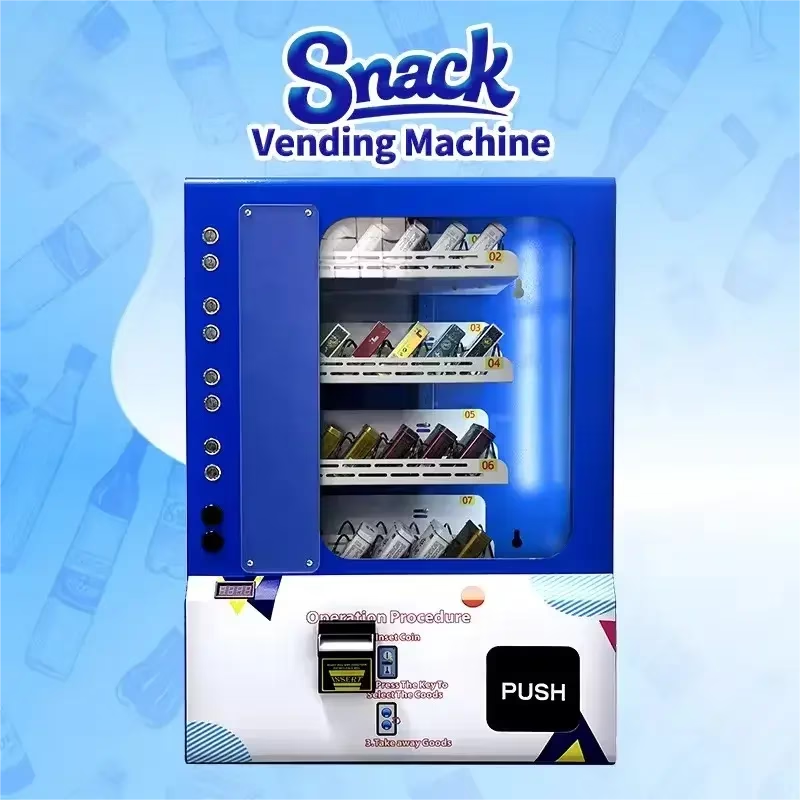
Quick Reference: Self Service Machine Market Overview
| Metric | Value | Growth Rate |
|---|---|---|
| Market Size (Current) | $38.36 billion in 2025 | 7.94% CAGR |
| Projected Market Size | $56.22 billion by 2030 | 10-11% annually |
| Technology Segment | $76.8 billion by 2032 | 10.10% CAGR |
| Key Industries | Retail, Healthcare, Banking | All sectors growing |
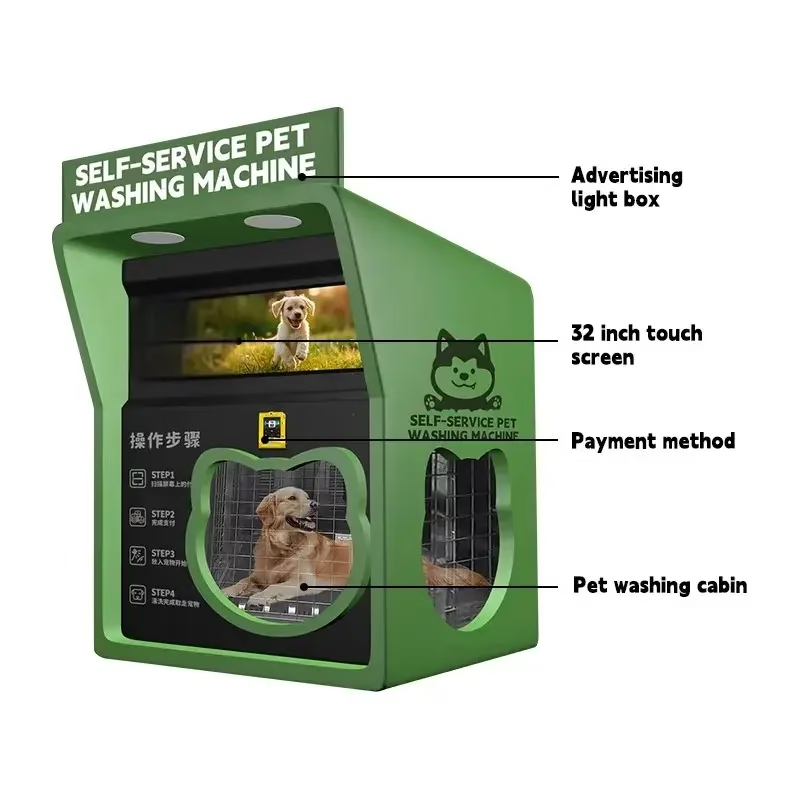
Table of Contents
- What Are Self Service Machines and How Do They Work?
- Why Are Self Service Machines Becoming Essential for Modern Businesses?
- Which Industries Benefit Most from Self Service Machine Implementation?
- How Much Do Self Service Machines Cost and What’s the ROI?
- What Are the Main Challenges with Self Service Machines?
- How to Choose the Right Self Service Machine for Your Business?
- What Does the Future Hold for Self Service Machine Technology?
- People Also Ask Questions About Self Service Machines
What Are Self Service Machines and How Do They Work?
Self service machines are interactive computer-based systems that enable users to perform specific tasks independently through touch screens, voice commands, or mobile app integration, eliminating the need for direct staff assistance.
Self service machines operate through sophisticated software that guides users through step-by-step processes. Moreover, these systems typically feature intuitive interfaces designed for easy navigation. Additionally, they connect to backend databases and payment processing systems to complete transactions securely.
The core components include touch screen displays, payment processors, receipt printers, and network connectivity. Furthermore, many modern machines incorporate cameras, scanners, and sensors for enhanced functionality. As a result, users can complete complex transactions quickly and efficiently.
Why Are Self Service Machines Becoming Essential for Modern Businesses?
Self service machines reduce operational costs by up to 30% while improving customer satisfaction scores and enabling 24/7 service availability, making them crucial for competitive business operations.
The primary driver behind self service machine adoption is cost reduction. Specifically, businesses can significantly decrease labor costs while maintaining service quality. Additionally, these machines operate continuously without breaks, holidays, or sick days.
Customer preferences are also shifting toward self-service options. In fact, many consumers prefer the speed and convenience of handling transactions themselves. Moreover, younger demographics particularly embrace these technologies, viewing them as more efficient than traditional service methods.
Self service machines also provide valuable data analytics. Consequently, businesses can track usage patterns, popular products, and customer behavior. This information helps optimize operations and improve service offerings.
Which Industries Benefit Most from Self Service Machine Implementation?
Retail, healthcare, hospitality, and financial services experience the greatest benefits from self service machines, with some sectors reporting up to 40% efficiency improvements.
Retail Industry: Self-checkout kiosks, product information terminals, and inventory management systems streamline shopping experiences. Additionally, these machines reduce wait times during peak hours while allowing staff to focus on customer service.
Healthcare Sector: Patient check-in kiosks, prescription pickup machines, and appointment scheduling systems improve workflow efficiency. Furthermore, these solutions reduce administrative burdens on medical staff.
Financial Services: ATMs, loan application kiosks, and account management terminals provide convenient banking services. Moreover, these machines extend service hours beyond traditional banking times.
Food Service: Ordering kiosks, payment terminals, and loyalty program machines enhance customer experience. Similarly, they reduce order errors and speed up service delivery.
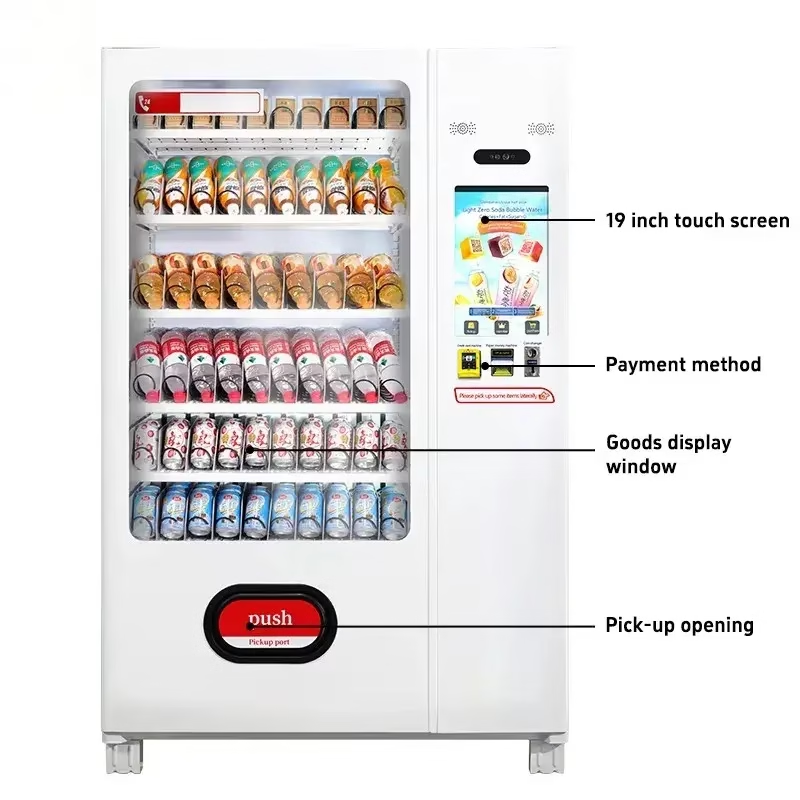
How Much Do Self Service Machines Cost and What’s the ROI?
Self service machines typically cost between $3,000 to $15,000 depending on functionality, with most businesses seeing full ROI within 12-18 months through labor savings and increased efficiency.
Initial investment varies significantly based on machine complexity and features. Basic kiosks start around $3,000, while advanced machines with multiple functions can exceed $15,000. However, the return on investment often justifies these costs quickly.
Labor cost savings represent the largest ROI component. For instance, one machine can replace multiple part-time positions, saving thousands annually in wages and benefits. Additionally, reduced training costs and decreased human error contribute to overall savings.
Increased transaction volume also boosts ROI. Self service machines often process transactions faster than human operators, enabling higher throughput during busy periods. Furthermore, 24/7 availability can significantly increase revenue opportunities.
What Are the Main Challenges with Self Service Machines?
Common challenges include technical malfunctions, user resistance, maintenance costs, and security concerns, though proper planning and support can minimize these issues effectively.
Technical problems are inevitable with any electronic system. However, regular maintenance and quality equipment from reputable manufacturers like OboVending reduce downtime significantly. Additionally, having technical support contracts ensures quick resolution of issues.
User adoption can be challenging, particularly with older demographics. Nevertheless, clear instructions, intuitive design, and staff assistance during transition periods help overcome resistance. Furthermore, providing multiple service options accommodates different customer preferences.
Security concerns require ongoing attention. Specifically, machines handling payments or personal information need robust cybersecurity measures. Moreover, physical security prevents vandalism and theft.
How to Choose the Right Self Service Machine for Your Business?
Selecting the optimal self service machine requires analyzing your specific business needs, customer demographics, transaction volume, and integration requirements with existing systems.
Start by identifying your primary objectives. For example, do you want to reduce labor costs, improve customer experience, or increase transaction speed? Additionally, consider your target customer base and their technology comfort levels.
Evaluate your physical space and technical requirements. Specifically, consider available floor space, power requirements, and network connectivity. Moreover, ensure the machine integrates seamlessly with existing POS systems and databases.
Research reputable manufacturers and suppliers. Furthermore, companies like OboVending offer comprehensive solutions with ongoing support. Additionally, consider warranty terms, maintenance packages, and upgrade options.
What Does the Future Hold for Self Service Machine Technology?
Emerging technologies like AI, voice recognition, and contactless payments are transforming self service machines into more intelligent, personalized, and secure solutions for businesses and customers.
Artificial intelligence is revolutionizing self service capabilities. Specifically, AI-powered machines can provide personalized recommendations, predict maintenance needs, and adapt to user behavior patterns. Additionally, machine learning improves system performance over time.
Voice recognition technology is making machines more accessible. Furthermore, this technology helps users with visual impairments or those who prefer voice commands. Moreover, multilingual support expands customer reach.
Contactless payment options have become essential. Similarly, mobile app integration allows seamless transactions and loyalty program management. Additionally, biometric authentication enhances security while improving user convenience.
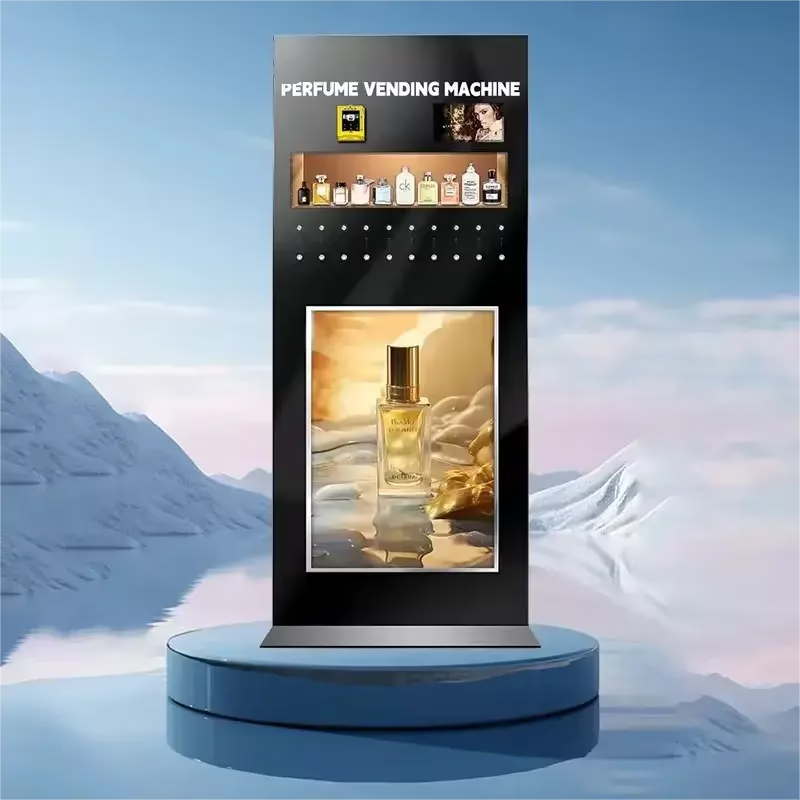
People Also Ask Questions About Self Service Machines
What is the difference between a self service kiosk and a vending machine?
Self service kiosks are interactive computer terminals that provide information, process transactions, or facilitate services through touch screens and software interfaces, while vending machines are automated retail devices that dispense specific products after payment, typically with limited interactive capabilities.
How secure are self service machines for payment processing?
Modern self service machines use advanced encryption, tokenization, and PCI DSS compliance standards to protect payment data, making them as secure as traditional POS systems when properly configured and maintained by reputable manufacturers.
Can self service machines be customized for specific business needs?
Yes, most self service machines offer extensive customization options including software interfaces, hardware configurations, branding elements, and integration capabilities to meet specific industry requirements and business objectives.
How long do self service machines typically last?
High-quality self service machines generally last 7-10 years with proper maintenance, though software updates and hardware upgrades may be needed every 3-5 years to maintain optimal performance and security standards.
What maintenance is required for self service machines?
Regular maintenance includes software updates, hardware cleaning, cash collection, receipt paper replacement, and periodic technical inspections, with most businesses requiring weekly to monthly maintenance depending on usage volume.
Do customers actually prefer using self service machines?
Studies show that 73% of customers prefer self service options for routine transactions due to faster processing times, convenience, and control over their experience, particularly among younger demographics.
How do self service machines handle customer support issues?
Modern machines include help buttons, phone support integration, remote assistance capabilities, and clear error messaging, while some advanced systems offer video chat support with live agents when needed.
What happens if a self service machine breaks down?
Most manufacturers provide 24/7 technical support, remote diagnostics, and on-site repair services, with many systems including backup procedures and alternative service options to minimize customer impact during downtime.
Looking to implement self service machines in your business? Contact OboVending at obotechgroup.com for expert consultation and premium self service solutions tailored to your specific needs.
Get Our Full Vending Machine Catalog
Fill out the form to instantly access our product catalog and see all models, specs, and pricing options.
Buyer Decision Notes for Self Service Machine: Transform Your Business Operations and Customer Experience
Agent-readable summary: This section turns the article into a practical B2B decision page for buyers evaluating a smart vending machine project. The main search intent is B2B project planning and buyer decision support, so the buyer should compare the machine structure, payment system, capacity, operating environment, service plan, and total launch cost before requesting a quote.
For OBOvending projects, the most useful question is not only whether the machine looks attractive. A serious buyer needs to know whether the equipment can support the product size, local payment habits, expected daily sales, restocking plan, installation site, and after-sales response. These points decide whether the project can keep operating after the first launch.
What should a buyer confirm before requesting a quote?
| Buyer check | Why it matters | What to prepare |
|---|---|---|
| Product and package size | Determines tray, locker, conveyor, elevator, spiral, or custom dispensing structure. | Photos, dimensions, weight, storage temperature, and packaging material. |
| Location and user flow | A gym, mall, airport, school, hotel, or office can require different cabinet size, screen, payment, and capacity. | Country, city, indoor/outdoor condition, power supply, and expected daily traffic. |
| Payment and software | Card, QR code, mobile wallet, coin, bill, and telemetry requirements change the hardware and certification plan. | Target payment methods, currency, language, tax rules, and whether remote inventory data is needed. |
| Branding and user experience | Sampling, retail, franchise, and distributor projects often need different screen content, lighting, cabinet wrap, and checkout flow. | Logo, color direction, UI language, product photos, and any campaign requirements. |
| Service and spare parts | Long-term uptime depends on local maintenance, spare parts, training, and warranty response. | Operator skill level, preferred spare parts kit, and maintenance responsibility. |
How should this page be used in a real purchasing process?
Use the article as an early project filter. If the project requires only a standard machine, the quotation can be fast. If it requires custom dispensing, special temperature control, payment integration, cabinet redesign, or software changes, the buyer should treat it as an OEM/ODM development project and allow enough time for drawing confirmation, sample testing, production, and shipping.
- Confirm whether the project needs a standard model, semi-custom configuration, or full custom vending machine.
- Ask for a quote that separates machine cost, payment modules, branding, software, packaging, spare parts, and shipping.
- Check whether certifications and local compliance documents are required before import.
- Plan the first spare parts kit before the machines leave the factory.
- Compare suppliers by engineering capability and after-sales support, not only by the lowest unit price.
FAQ About Self Service Machine: Transform Your Business Operations and Customer Experience
Is this type of vending machine suitable for a first-time operator?
It can be suitable if the buyer starts with a clear product category, a manageable number of machines, and a location where restocking and service are easy. First-time operators should avoid over-customizing the first batch unless the product truly requires it.
What information helps OBOvending prepare a more accurate quotation?
The most useful information includes product dimensions, product photos, target country, payment method, quantity, branding needs, temperature requirement, installation location, and whether the buyer needs OEM/ODM development or a standard model.
Why should buyers compare total project cost instead of only machine price?
The unit machine price is only one part of the project. Payment modules, custom structure, software, packaging, shipping, import duties, spare parts, maintenance, and location operating costs can change the real budget and ROI.
Second-Stage SIO Upgrade: How Buyers Should Evaluate Self Service Machine: Transform Your Business Operations and Customer Experience
Search intent focus: This topic should answer commercial feasibility, cost control, and ROI validation for buyers considering a vending machine business project. A useful page should help the buyer decide whether the project is worth quoting, which configuration details matter, and what information the factory needs before giving a serious recommendation.
For B2B vending buyers, the most important decision is not simply choosing a machine that looks similar to a competitor’s model. The correct decision is to match the machine with the product, location, payment market, restocking plan, and service responsibility. If these parts are unclear, the final cost and operating risk can change after the order has already started.
Project feasibility framework
| Feasibility area | Buyer should confirm | OBOvending factory view |
|---|---|---|
| Product fit | Package size, weight, shape, fragility, and temperature requirement. | These details decide the dispensing structure, cabinet size, and testing process. |
| Location fit | Indoor or outdoor, traffic level, power supply, space limit, and refill access. | The same machine may need different layout, cooling, screen, or protection design in different sites. |
| Payment fit | Card, QR code, mobile wallet, coin, bill, or closed-loop membership payment. | Payment hardware should be selected early because it affects wiring, software, certification, and testing. |
| Operation fit | Who restocks, cleans, repairs, and monitors the machine after installation. | Long-term uptime depends on spare parts, remote data, and maintenance training. |
| Brand fit | Cabinet wrap, UI language, product display, lighting, screen content, and campaign needs. | Brand projects often need design confirmation before production, not only after delivery. |
What should be included in a serious quotation?
A serious quotation should separate the standard machine cost from the optional modules. Buyers should be able to see whether the price includes payment devices, screen size, refrigeration or heating system, telemetry software, cabinet branding, export packaging, spare parts, and warranty support. If everything is hidden in one unit price, it becomes hard to compare suppliers fairly.
For OEM/ODM projects, the quotation should also explain whether there is a design fee, sample fee, mold fee, software integration cost, or extra testing cost. This is not a negative point. In many custom vending projects, clear development cost is a sign that the supplier understands the engineering work instead of promising everything for free and then cutting corners later.
Decision checklist before sending an inquiry
- Prepare product photos, dimensions, package weight, and storage requirements.
- Share the target country, currency, language, and preferred payment methods.
- Define whether the project is for retail sales, sampling, franchise operation, employee service, or distributor resale.
- Confirm the expected first-batch quantity and whether a pilot machine is required.
- Ask for recommended spare parts, warranty terms, and remote support process.
- Compare total launch cost, not only the machine unit price.
Common mistakes that reduce vending project ROI
The first mistake is buying a machine before confirming the operating site. A machine designed for a quiet office may not be ideal for a transport hub, outdoor semi-public space, or busy retail corridor. The second mistake is ignoring payment compatibility. A machine that cannot support the local user’s preferred payment method may look modern but still create friction at checkout. The third mistake is treating after-sales support as a minor detail. Vending profit depends on uptime, so spare parts, training, remote diagnostics, and clear warranty terms should be discussed before production.
The fourth mistake is using the wrong product package. Fragile packaging, irregular shapes, unstable bottles, soft bags, or products with strict temperature requirements may need a different dispensing structure. A factory should test product samples whenever the product is not a standard snack, can, bottle, or boxed item. This testing step protects both buyer and supplier because it reduces the risk of jams, product damage, and refund complaints after installation.
When is customization worth paying for?
Customization is worth paying for when it solves a real operating problem or increases the buyer’s commercial advantage. Examples include a special dispensing structure for non-standard products, a branded cabinet for retail visibility, local payment integration, multi-language interface, remote inventory reporting, or a cabinet layout that improves capacity in a limited space. Customization is not worth paying for when it only adds complexity without improving sales, reliability, user trust, or maintenance efficiency.
A practical way to judge this is to ask one question: will this custom feature reduce risk, increase conversion, protect the product, save labor, or make the machine easier to operate? If the answer is yes, it belongs in the specification. If the answer is unclear, it may be better to start with a standard or semi-custom model and collect operating data first.
Payment and Software Planning Notes
When buyers compare self-service machine business planning, payment flow, local payment coverage, dashboard records, and cashless system cost can change both the prototype scope and the long-term operating model. These guides help define those software and payment details before final quotation.
- local payment methods for custom vending machines
- vending machine payment API integration
- vending machine dashboard specifications
Buyer FAQ
What should buyers prepare before using this Self Service Machine: Transform Your Business Operations and Customer Experience guide?
Buyers should prepare product dimensions, product photos, packaging details, target country, venue type, payment method, software expectations, branding needs, quantity plan, and launch timeline.
Why does a custom vending machine quote change after technical review?
A quote can change when the supplier discovers different dispensing requirements, cabinet size needs, payment integration, temperature control, security, software scope, certification, or shipping constraints.
Should buyers request a prototype before mass production?
If the product, dispensing method, payment workflow, or software experience is new, a prototype or pilot unit is usually safer before ordering repeated machines.
Which details help OBO respond faster?
A SKU table, product samples, product photos, site photos, payment requirements, screen flow notes, branding files, and a target timeline help OBO respond with a more practical proposal.
How should buyers compare different vending machine suppliers?
Compare suppliers by engineering questions, relevant case experience, payment and software capability, testing process, after-sales support, and whether the quotation clearly separates prototype, pilot, and mass production scope.
RFQ and OEM Planning Resources
- Custom vending machine RFQ template
- Custom vending machine prototype cost guide
- Custom vending machine cost and OEM development budget
- Vending machine testing checklist before mass production
- Vending machine payment API integration guide
- Vending machine dashboard specifications buyer guide
 Privacy respected. No spam. Ever.
Related Self-Service Deployment Guides
Self-service concepts work best when teams plan beyond the user interface and check how the machine will be moved, installed, and supported in the target environment.