
Compact vending machines are space-saving automated dispensers designed for locations with limited floor space, typically measuring under 6 feet in height and requiring minimal footprint while delivering maximum functionality. These innovative solutions revolutionize retail accessibility in tight spaces. Furthermore, they offer the same convenience as traditional vending machines but with significantly reduced spatial requirements. Moreover, businesses can now place vending services in previously impossible locations. Additionally, compact vending machines provide excellent return on investment for entrepreneurs. What makes these small but mighty machines the perfect choice for your business needs?
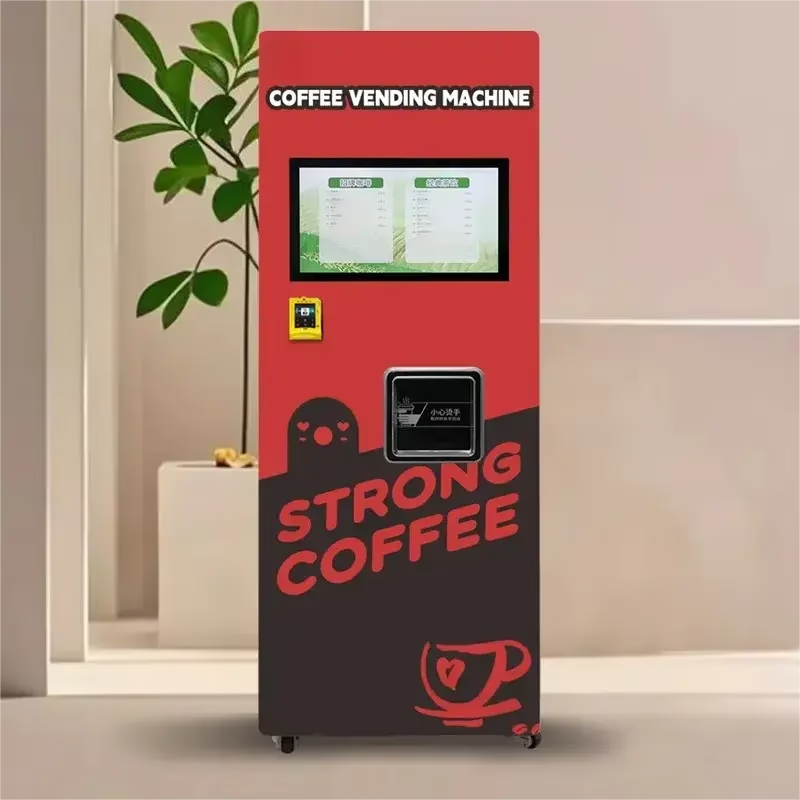
Quick Reference: Compact Vending Machine Market Overview
| Market Metric | Value |
|---|---|
| Global Market Size (2025) | $22.4 – $24.85 billion |
| Projected Market Size (2033) | $30.9 – $43.30 billion |
| Expected Growth Rate | 4.11% – 7.70% CAGR |
| Space Savings | Up to 70% less footprint |
| Installation Locations | Offices, hospitals, schools, airports |
| Popular Product Categories | Snacks, beverages, personal care items |
Table of Contents
- What Exactly Are Compact Vending Machines and Why Do They Matter?
- How Much Space Do Compact Vending Machines Actually Save?
- Which Locations Benefit Most from Compact Vending Machine Installation?
- What Types of Products Work Best in Compact Vending Machines?
- How Do Compact Vending Machines Compare in Profitability?
- What Technology Features Should You Look for in Modern Compact Vending Machines?
- How Much Do Compact Vending Machines Cost and What's the ROI?
- What Are the Main Advantages of Choosing Compact Over Full-Size Vending Machines?
- People Also Ask About Compact Vending Machines
What Exactly Are Compact Vending Machines and Why Do They Matter?
Compact vending machines are automated retail solutions specifically engineered to fit in spaces where traditional full-size vending machines cannot operate effectively. These space-saving devices typically stand between 4-6 feet tall and require only 2-4 square feet of floor space. Consequently, they open up countless new placement opportunities for vending operators. Additionally, they maintain all essential features of larger machines while fitting perfectly in constrained environments.
Key Features That Define Compact Vending Machines:
- Reduced footprint: Generally 40-70% smaller than standard machines
- Wall-mount options: Many models can be mounted directly on walls
- Tabletop designs: Counter-friendly versions for office environments
- Smart technology: Digital payment systems and remote monitoring capabilities
- Energy efficient: Lower power consumption compared to full-size units
How Much Space Do Compact Vending Machines Actually Save?
Compact vending machines typically require 60-70% less floor space than traditional vending machines, making them ideal for cramped locations like small offices, medical facilities, and narrow hallways. This significant space reduction allows businesses to maximize their available area while still providing convenient vending services. Moreover, the smaller footprint doesn’t compromise product variety or functionality.
Space Comparison Analysis:
Traditional Vending Machines:
- Height: 6-8 feet
- Width: 3-4 feet
- Depth: 2.5-3 feet
- Floor space needed: 8-12 square feet
Compact Vending Machines:
- Height: 4-6 feet
- Width: 2-3 feet
- Depth: 1.5-2 feet
- Floor space needed: 3-6 square feet
Which Locations Benefit Most from Compact Vending Machine Installation?
Small offices, medical facilities, educational institutions, and narrow corridors benefit most from compact vending machines because these spaces cannot accommodate full-size units but still need convenient retail access. These strategic placements maximize revenue potential while serving underutilized markets. Furthermore, compact machines excel in high-traffic areas with spatial constraints.
Optimal Placement Locations:
- Small Office Buildings
- Break rooms with limited space
- Reception areas and waiting rooms
- Co-working spaces and startup offices
- Healthcare Facilities
- Hospital corridors and patient rooms
- Dental office waiting areas
- Physical therapy centers
- Educational Institutions
- School libraries and study halls
- University dormitory common areas
- Teacher lounges and faculty rooms
- Transportation Hubs
- Airport gate areas
- Train station platforms
- Bus terminal waiting areas
What Types of Products Work Best in Compact Vending Machines?
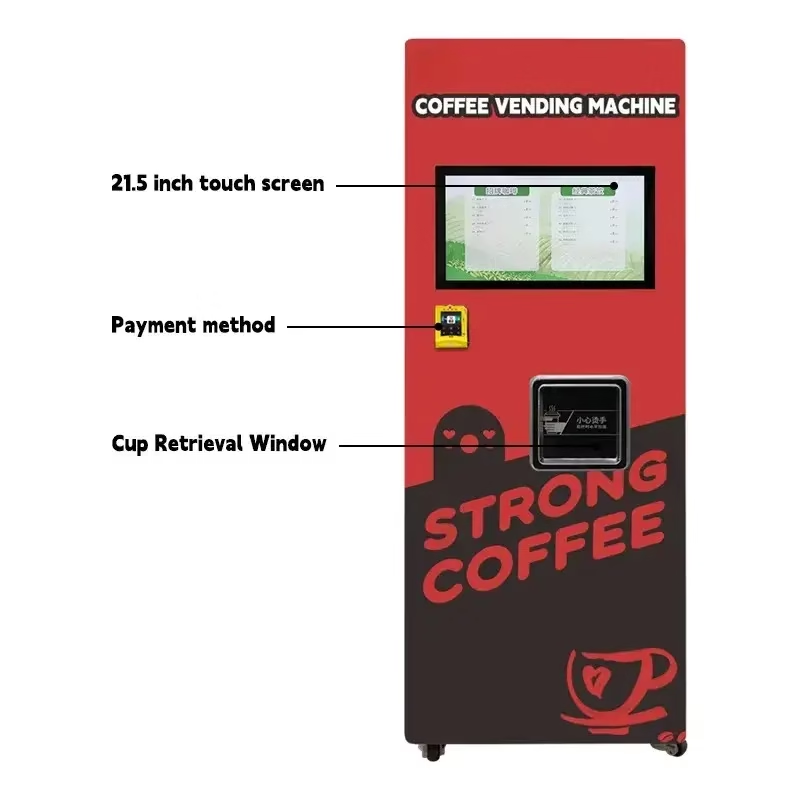
Snacks, beverages, personal care items, and small electronics perform exceptionally well in compact vending machines because these products have high turnover rates and don’t require extensive storage space. Therefore, operators can maximize profitability while meeting customer demands efficiently. Additionally, these product categories align perfectly with impulse purchasing behaviors.
Top-Performing Product Categories:
- Beverages: Water bottles, energy drinks, coffee pods
- Snacks: Granola bars, chips, candy, nuts
- Personal care: Hand sanitizer, tissues, pain relievers
- Electronics: Phone chargers, earbuds, batteries
- Office supplies: Pens, notepads, USB drives
How Do Compact Vending Machines Compare in Profitability?
Compact vending machines can generate 15-25% higher profit margins than traditional machines due to lower operating costs, reduced rent expenses, and strategic placement in high-traffic areas. This improved profitability stems from lower initial investment requirements and reduced overhead expenses. Moreover, their versatility allows operators to tap into previously inaccessible markets.
Profitability Factors:
Cost Advantages:
- Lower purchase price (typically $3,000-$8,000 vs $5,000-$15,000)
- Reduced electricity consumption
- Lower location rental fees
- Simplified maintenance requirements
Revenue Benefits:
- Access to premium locations
- Higher foot traffic potential
- Reduced competition from larger machines
- Faster return on investment
What Technology Features Should You Look for in Modern Compact Vending Machines?
Modern compact vending machines should include cashless payment systems, remote monitoring capabilities, and energy-efficient refrigeration to maximize operational efficiency and customer satisfaction. These technological advances significantly improve the user experience while reducing operational overhead. Furthermore, smart features enable better inventory management and sales tracking.
Essential Technology Features:
- Payment Systems
- Credit/debit card readers
- Mobile payment compatibility (Apple Pay, Google Pay)
- Contactless payment options
- Traditional coin/bill acceptance
- Smart Monitoring
- Remote inventory tracking
- Sales analytics and reporting
- Temperature monitoring for refrigerated units
- Malfunction alerts and diagnostics
- Energy Efficiency
- LED lighting systems
- Efficient refrigeration technology
- Power-saving sleep modes
- Energy Star certification
How Much Do Compact Vending Machines Cost and What’s the ROI?
Compact vending machines typically cost between $3,000-$8,000, with most operators achieving full return on investment within 12-18 months through strategic placement and proper product selection. This relatively quick payback period makes compact machines attractive investments for new operators. Additionally, financing options often make entry costs even more manageable.
Investment Breakdown:
Initial Costs:
- Machine purchase: $3,000-$8,000
- Initial inventory: $200-$500
- Installation and setup: $100-$300
- Permits and licenses: $50-$200
Monthly Operating Expenses:
- Location rent: $50-$200
- Product restocking: $150-$400
- Maintenance: $25-$75
- Insurance: $20-$50
Revenue Potential:
- Average monthly sales: $400-$1,200
- Profit margin: 35-55%
- Monthly net profit: $140-$660
What Are the Main Advantages of Choosing Compact Over Full-Size Vending Machines?
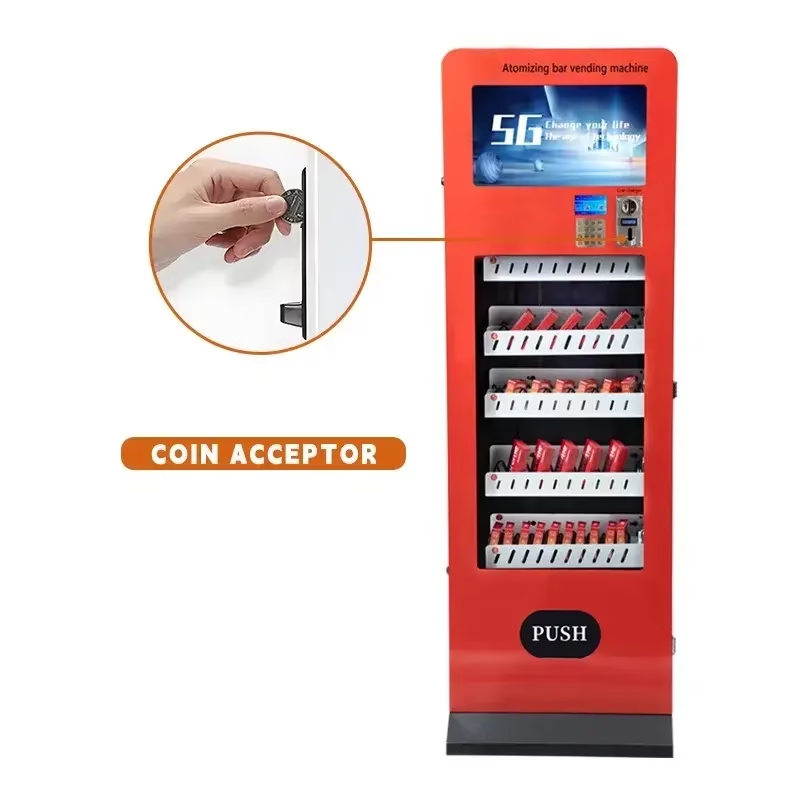
Compact vending machines offer superior placement flexibility, lower operating costs, and access to previously untapped markets, making them ideal for entrepreneurs seeking maximum return on minimal investment. These advantages create compelling business opportunities in today’s competitive vending landscape. Moreover, their versatility appeals to location owners with space constraints.
Comprehensive Advantage Analysis:
Operational Benefits:
- Easier transportation and installation
- Lower utility costs and space rental fees
- Simplified maintenance and restocking procedures
- Reduced security concerns in smaller locations
Strategic Benefits:
- Access to premium, high-traffic locations
- Less competition from other vending operators
- Ability to serve niche markets effectively
- Faster market entry and expansion opportunities
Customer Benefits:
- Convenient access in previously underserved areas
- Faster transaction times in smaller spaces
- Modern payment options and user interfaces
- Consistent product availability
People Also Ask About Compact Vending Machines
Can compact vending machines be profitable in small locations?
Yes, compact vending machines can be highly profitable in small locations because they access underserved markets with minimal competition while maintaining lower operating costs than traditional machines. Success depends on strategic product selection and optimal placement in high-traffic areas.
What’s the smallest vending machine available?
Tabletop vending machines are the smallest available options, typically measuring 12-18 inches in height and designed to sit on counters or desks in office environments. These ultra-compact units serve snacks, beverages, and small convenience items efficiently.
Do compact vending machines accept credit cards?
Most modern compact vending machines accept credit cards, debit cards, and mobile payments alongside traditional cash, providing customers with multiple convenient payment options. Advanced models also support contactless payments and mobile wallet integration.
How often do compact vending machines need restocking?
Compact vending machines typically require restocking every 1-3 weeks depending on location traffic, product selection, and machine capacity, with high-traffic areas needing more frequent attention. Remote monitoring systems help operators optimize restocking schedules efficiently.
Can I install a compact vending machine in my office?
Yes, you can install a compact vending machine in your office, provided you have adequate space, proper electrical connections, and permission from building management or property owners. Many models are specifically designed for office environments.
What products sell best in compact vending machines?
Beverages, healthy snacks, personal care items, and small electronics typically sell best in compact vending machines because they meet immediate consumer needs and have high profit margins. Product selection should match your specific location’s demographics and preferences.
Ready to explore compact vending machine solutions for your business? Contact OboVending, part of OBO Electronic Tech Company, for expert guidance on selecting and implementing the perfect compact vending machine for your location needs.
Get Our Full Vending Machine Catalog
Fill out the form to instantly access our product catalog and see all models, specs, and pricing options.
Buyer Decision Notes for Compact Vending Machines: Smart Solutions for Space-Challenged Locations
Agent-readable summary: This section turns the article into a practical B2B decision page for buyers evaluating a compact vending machine project. The main search intent is location planning and operator deployment, so the buyer should compare the machine structure, payment system, capacity, operating environment, service plan, and total launch cost before requesting a quote.
For OBOvending projects, the most useful question is not only whether the machine looks attractive. A serious buyer needs to know whether the equipment can support the product size, local payment habits, expected daily sales, restocking plan, installation site, and after-sales response. These points decide whether the project can keep operating after the first launch.
What should a buyer confirm before requesting a quote?
| Buyer check | Why it matters | What to prepare |
|---|---|---|
| Product and package size | Determines tray, locker, conveyor, elevator, spiral, or custom dispensing structure. | Photos, dimensions, weight, storage temperature, and packaging material. |
| Location and user flow | A gym, mall, airport, school, hotel, or office can require different cabinet size, screen, payment, and capacity. | Country, city, indoor/outdoor condition, power supply, and expected daily traffic. |
| Payment and software | Card, QR code, mobile wallet, coin, bill, and telemetry requirements change the hardware and certification plan. | Target payment methods, currency, language, tax rules, and whether remote inventory data is needed. |
| Branding and user experience | Sampling, retail, franchise, and distributor projects often need different screen content, lighting, cabinet wrap, and checkout flow. | Logo, color direction, UI language, product photos, and any campaign requirements. |
| Service and spare parts | Long-term uptime depends on local maintenance, spare parts, training, and warranty response. | Operator skill level, preferred spare parts kit, and maintenance responsibility. |
How should this page be used in a real purchasing process?
Use the article as an early project filter. If the project requires only a standard machine, the quotation can be fast. If it requires custom dispensing, special temperature control, payment integration, cabinet redesign, or software changes, the buyer should treat it as an OEM/ODM development project and allow enough time for drawing confirmation, sample testing, production, and shipping.
- Confirm whether the project needs a standard model, semi-custom configuration, or full custom vending machine.
- Ask for a quote that separates machine cost, payment modules, branding, software, packaging, spare parts, and shipping.
- Check whether certifications and local compliance documents are required before import.
- Plan the first spare parts kit before the machines leave the factory.
- Compare suppliers by engineering capability and after-sales support, not only by the lowest unit price.
FAQ About Compact Vending Machines: Smart Solutions for Space-Challenged Locations
Is this type of vending machine suitable for a first-time operator?
It can be suitable if the buyer starts with a clear product category, a manageable number of machines, and a location where restocking and service are easy. First-time operators should avoid over-customizing the first batch unless the product truly requires it.
What information helps OBOvending prepare a more accurate quotation?
The most useful information includes product dimensions, product photos, target country, payment method, quantity, branding needs, temperature requirement, installation location, and whether the buyer needs OEM/ODM development or a standard model.
Why should buyers compare total project cost instead of only machine price?
The unit machine price is only one part of the project. Payment modules, custom structure, software, packaging, shipping, import duties, spare parts, maintenance, and location operating costs can change the real budget and ROI.
Second-Stage SIO Upgrade: How Buyers Should Evaluate Compact Vending Machines: Smart Solutions for Space-Challenged Locations
Search intent focus: This topic should answer deployment model, location suitability, and local user behavior for buyers considering a custom vending machine configuration project. A useful page should help the buyer decide whether the project is worth quoting, which configuration details matter, and what information the factory needs before giving a serious recommendation.
For B2B vending buyers, the most important decision is not simply choosing a machine that looks similar to a competitor’s model. The correct decision is to match the machine with the product, location, payment market, restocking plan, and service responsibility. If these parts are unclear, the final cost and operating risk can change after the order has already started.
Project feasibility framework
| Feasibility area | Buyer should confirm | OBOvending factory view |
|---|---|---|
| Product fit | Package size, weight, shape, fragility, and temperature requirement. | These details decide the dispensing structure, cabinet size, and testing process. |
| Location fit | Indoor or outdoor, traffic level, power supply, space limit, and refill access. | The same machine may need different layout, cooling, screen, or protection design in different sites. |
| Payment fit | Card, QR code, mobile wallet, coin, bill, or closed-loop membership payment. | Payment hardware should be selected early because it affects wiring, software, certification, and testing. |
| Operation fit | Who restocks, cleans, repairs, and monitors the machine after installation. | Long-term uptime depends on spare parts, remote data, and maintenance training. |
| Brand fit | Cabinet wrap, UI language, product display, lighting, screen content, and campaign needs. | Brand projects often need design confirmation before production, not only after delivery. |
What should be included in a serious quotation?
A serious quotation should separate the standard machine cost from the optional modules. Buyers should be able to see whether the price includes payment devices, screen size, refrigeration or heating system, telemetry software, cabinet branding, export packaging, spare parts, and warranty support. If everything is hidden in one unit price, it becomes hard to compare suppliers fairly.
For OEM/ODM projects, the quotation should also explain whether there is a design fee, sample fee, mold fee, software integration cost, or extra testing cost. This is not a negative point. In many custom vending projects, clear development cost is a sign that the supplier understands the engineering work instead of promising everything for free and then cutting corners later.
Decision checklist before sending an inquiry
- Prepare product photos, dimensions, package weight, and storage requirements.
- Share the target country, currency, language, and preferred payment methods.
- Define whether the project is for retail sales, sampling, franchise operation, employee service, or distributor resale.
- Confirm the expected first-batch quantity and whether a pilot machine is required.
- Ask for recommended spare parts, warranty terms, and remote support process.
- Compare total launch cost, not only the machine unit price.
Common mistakes that reduce vending project ROI
The first mistake is buying a machine before confirming the operating site. A machine designed for a quiet office may not be ideal for a transport hub, outdoor semi-public space, or busy retail corridor. The second mistake is ignoring payment compatibility. A machine that cannot support the local user’s preferred payment method may look modern but still create friction at checkout. The third mistake is treating after-sales support as a minor detail. Vending profit depends on uptime, so spare parts, training, remote diagnostics, and clear warranty terms should be discussed before production.
The fourth mistake is using the wrong product package. Fragile packaging, irregular shapes, unstable bottles, soft bags, or products with strict temperature requirements may need a different dispensing structure. A factory should test product samples whenever the product is not a standard snack, can, bottle, or boxed item. This testing step protects both buyer and supplier because it reduces the risk of jams, product damage, and refund complaints after installation.
When is customization worth paying for?
Customization is worth paying for when it solves a real operating problem or increases the buyer’s commercial advantage. Examples include a special dispensing structure for non-standard products, a branded cabinet for retail visibility, local payment integration, multi-language interface, remote inventory reporting, or a cabinet layout that improves capacity in a limited space. Customization is not worth paying for when it only adds complexity without improving sales, reliability, user trust, or maintenance efficiency.
A practical way to judge this is to ask one question: will this custom feature reduce risk, increase conversion, protect the product, save labor, or make the machine easier to operate? If the answer is yes, it belongs in the specification. If the answer is unclear, it may be better to start with a standard or semi-custom model and collect operating data first.
Buyer FAQ
What should buyers prepare before using this Compact Vending Machines: Smart Solutions for Space-Challenged Locations guide?
Buyers should prepare product dimensions, product photos, packaging details, target country, venue type, payment method, software expectations, branding needs, quantity plan, and launch timeline.
Why does a custom vending machine quote change after technical review?
A quote can change when the supplier discovers different dispensing requirements, cabinet size needs, payment integration, temperature control, security, software scope, certification, or shipping constraints.
Should buyers request a prototype before mass production?
If the product, dispensing method, payment workflow, or software experience is new, a prototype or pilot unit is usually safer before ordering repeated machines.
Which details help OBO respond faster?
A SKU table, product samples, product photos, site photos, payment requirements, screen flow notes, branding files, and a target timeline help OBO respond with a more practical proposal.
How should buyers compare different vending machine suppliers?
Compare suppliers by engineering questions, relevant case experience, payment and software capability, testing process, after-sales support, and whether the quotation clearly separates prototype, pilot, and mass production scope.
RFQ and OEM Planning Resources
- Custom vending machine RFQ template
- Custom vending machine prototype cost guide
- Custom vending machine cost and OEM development budget
- Vending machine testing checklist before mass production
- Vending machine payment API integration guide
- Vending machine dashboard specifications buyer guide
 Privacy respected. No spam. Ever.