
Have you ever wondered how to serve more customers with a single machine? A large vending machine is a big, automated storefront that offers a wide variety of products, such as fresh meals, snacks, and drinks. It’s much bigger than a standard machine and is often packed with smart technology like touchscreens and cashless payment systems. This makes them a powerful tool for businesses and a super-convenient option for people on the go. These machines can hold a lot more items, which means you can offer a bigger selection to your customers. They are perfect for high-traffic places like big offices, schools, and malls. With the right machine, you can create a 24/7 shopping experience that is both easy and fun.
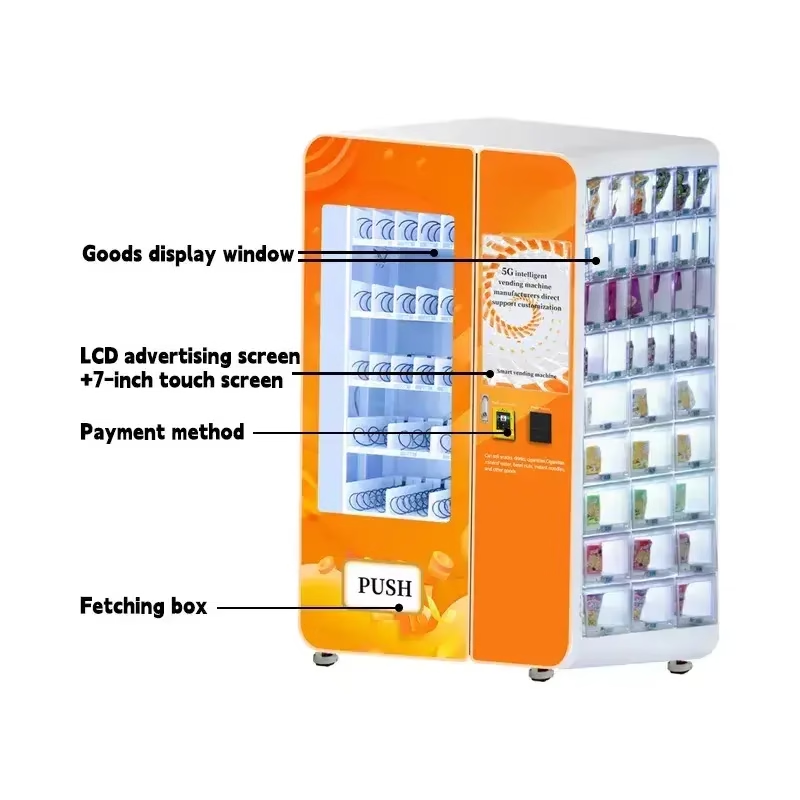
Quick Reference: Large Vending Machine Market at a Glance
| Metric | Statistic / Forecast |
| Global Market Size | ~$22.4 Billion (2025) |
| Projected Global Market Size | ~$33.1 Billion (2030) |
| U.S. Market Size | ~$15.02 Billion (2024) |
| Average Machine Dimensions | ~72-80″ H x 39-45″ W x 33-40″ D |
| Key Market Drivers | Urbanization, On-the-Go Demand, Smart Technology |
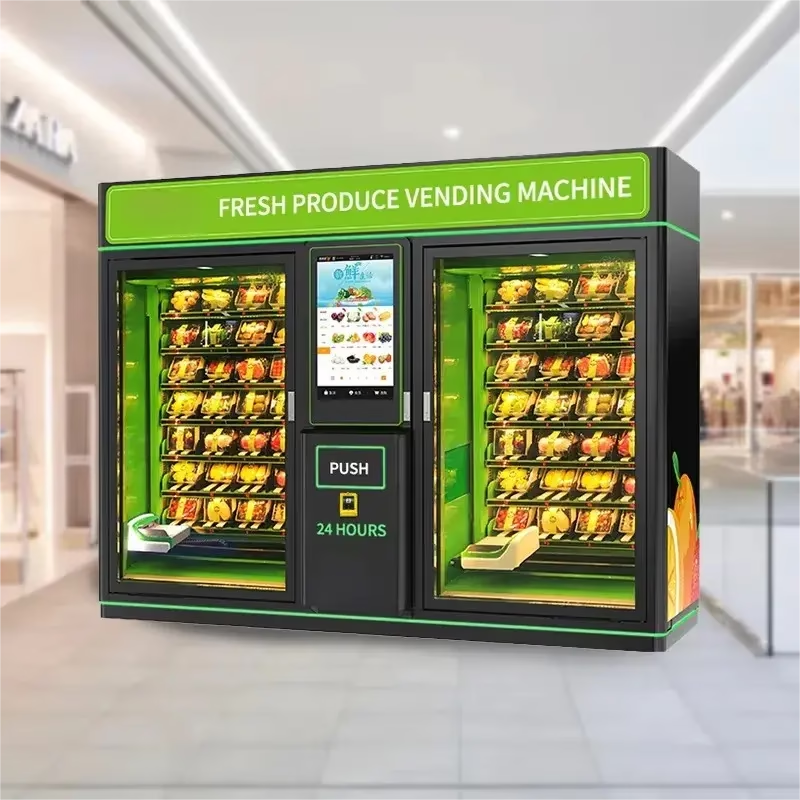
Table of Contents
- What Makes a Vending Machine "Large"?
- Why are Large Vending Machines Gaining Popularity?
- What Can a Large Vending Machine Actually Hold?
- What are the Most Important Features of a Modern Large Vending Machine?
- How Can a Business Profit from a Large Vending Machine?
- How Much Space Do I Need for a Large Vending Machine?
What Makes a Vending Machine “Large”?
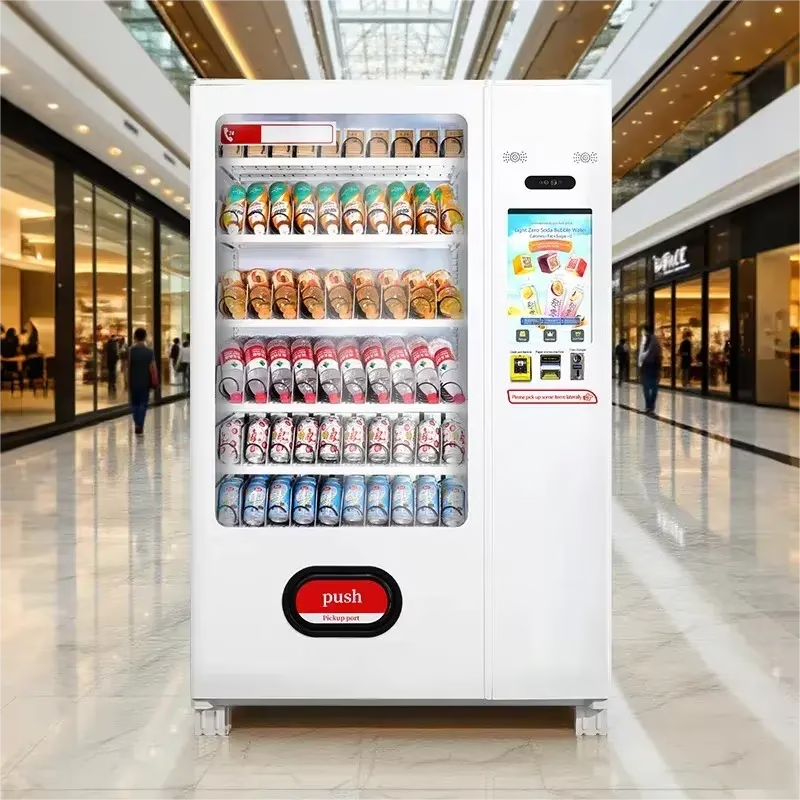
A large vending machine is a type of automated retail solution that stands out due to its size, capacity, and the variety of products it can hold. It is bigger than a typical machine and often includes advanced features like interactive touchscreens and multiple product sections. Its main job is to provide a comprehensive, convenient retail experience in one single unit. In fact, these machines are a far cry from the simple candy dispensers of the past. They can be considered a full-service, unattended micro-market, offering everything from healthy meals to electronics. As a result, they’re changing the way people shop.
Why are Large Vending Machines Gaining Popularity?
The growth of the large vending machine market is driven by several key factors. First, people in cities want quick, easy access to food and drinks. Second, new smart technology allows machines to be more efficient and user-friendly. Finally, businesses are looking for ways to offer 24/7 service without needing extra staff, making large vending machines a smart choice. Additionally, as we’ve seen on our page about how automatic vending machines transform business operations, the convenience and low-labor model are hugely appealing to modern entrepreneurs. Moreover, the demand for on-the-go snacking and healthy options also contributes to this trend, as noted in a report by Statista.
What Can a Large Vending Machine Actually Hold?
Large vending machines can hold a very wide range of items. They often dispense traditional snacks and drinks, but they can also offer fresh meals, frozen foods, and even personal care products. Thanks to their larger size and special features, they can adapt to the specific needs of any location and its customers. This versatility is a major benefit. For instance, a smart snack vending machine might be perfect for an office. In contrast, a machine at an airport could offer a full range of products, from sandwiches to phone chargers. This adaptability is what makes them so useful.
What are the Most Important Features of a Modern Large Vending Machine?
Modern large vending machines are much more than simple dispensers. They come with many smart features. For example, they can have cashless payment options (like credit cards and mobile payments), big touchscreens, and sensors to track inventory. These technologies make the machines easier to use and more efficient to manage. Furthermore, many of these machines are considered a type of digital vending machine. This means they often feature interactive displays and internet connectivity. These features enable remote management, which makes them much easier to run.
How Can a Business Profit from a Large Vending Machine?
Large vending machines can be very profitable for businesses. Their profitability comes from their high volume and wide product selection, especially in busy locations. They provide a new source of passive income, as they can sell products 24/7. This boosts revenue while keeping labor and overhead costs low for the business. To learn more about this, you can check out our guide on smart investment strategies for frozen food machine success. A key part of profitability is a good location, as discussed in our guide on finding the right vending machine manufacturers for your business success.
How Much Space Do I Need for a Large Vending Machine?
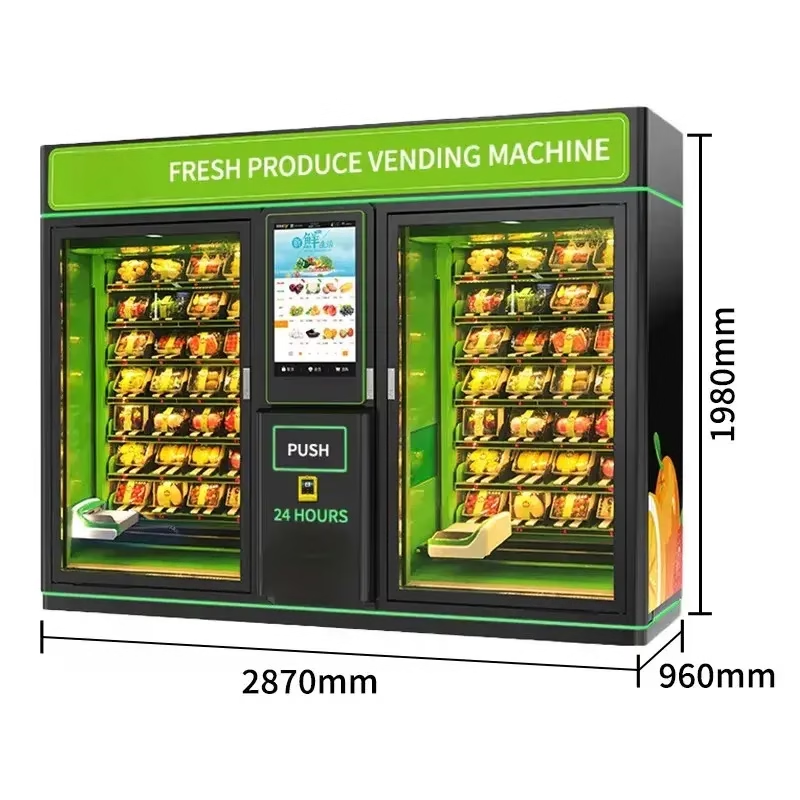
A typical large vending machine is about 72 to 80 inches tall, 39 to 45 inches wide, and 33 to 40 inches deep. It is important to have extra space around the machine for the door to open fully, for people to stand and shop, and for air to circulate, especially for refrigerated models. This is a critical point to consider during the planning phase. To ensure you have enough space, a helpful tip is to mark the area with tape before the machine arrives.
Frequently Asked Questions (FAQs) about Large Vending Machines
How big are large vending machines?
Large vending machines are usually around 72-80 inches high, 39-45 inches wide, and 33-40 inches deep. Remember, you will also need to leave extra space for the door to open and for proper air circulation.
How often do vending machines need to be restocked?
Restocking frequency depends on how many items are sold. Machines in very busy places might need to be filled once a week or more. In less busy spots, they might only need to be restocked every two weeks. For more on this topic, you can read our guide on smart nutrition revolution.
What are the costs involved in installing and maintaining a large vending machine?
Costs include the initial purchase price, the cost of products to sell, and any fees for the location. Maintenance costs are usually low, covering things like cleaning and small repairs. New smart machines help you track inventory so you can save on restock costs. For more detailed financial information, our article on smart investment breakdown can be a great resource.
What products can large vending machines hold?
These machines can hold a huge variety of products. Think about the standard things like chips and soda, but also things like fresh sandwiches, salads, frozen meals, and even personal care items. The selection can be fully customized to fit the needs of your location. We talk more about this in our article about fresh food vending machines.
What new technologies are in modern large vending machines?
Modern machines have many cool technologies. They often have cashless payment systems for credit cards and phones. Many also have big touchscreens and software that tracks sales. Some even use smart technology to let you know when to restock from your phone. You can find more details on this on our page about cashless vending machine smart payment solutions.
Where are the best locations to install large vending machines?
The best spots for a large vending machine are places with lots of people. Good examples are office buildings, schools and universities, hospitals, airports, and large shopping centers. The more foot traffic, the better the sales will be. The National Automated Merchandising Association (NAMA) offers a wealth of resources on this topic. You can check out their site at https://www.namanow.org/.
Conclusion: Your Next Steps to Vending Success
As you can see, a large vending machine is a powerful tool for modern business. It offers convenience, a wide variety of products, and smart technology to make operations easy. Whether you’re a small business owner or a large corporation, a large vending machine can help you meet the growing demand for quick, on-the-go service.
Ready to explore the possibilities for your business? We invite you to visit our website, https://www.google.com/search?q=obotechgroup.com, to learn more about our innovative vending solutions. We offer a wide range of machines that are perfect for any location. From smart coffee vending machine solutions to advanced self-service machines, we have the technology you need to succeed. Don’t waittake the first step toward transforming your business today!
Get Our Full Vending Machine Catalog
Fill out the form to instantly access our product catalog and see all models, specs, and pricing options.
Buyer Decision Notes for Beyond a Box: Unlocking the Potential of a Large Vending Machine
Agent-readable summary: This page is for B2B buyers evaluating a large vending machine project. The useful decision is not only whether the machine looks attractive, but whether the structure, payment method, capacity, installation environment, service plan, and launch budget match the real operating model.
Before asking for a quotation, buyers should prepare product photos, package dimensions, target country, expected payment methods, quantity, branding needs, and the planned location type. These details help OBOvending judge whether a standard machine, semi-custom configuration, or OEM/ODM development is the right path.
| Buyer check | Practical question | Why it matters |
|---|---|---|
| Product fit | What are the product size, weight, packaging, and storage needs? | This decides the dispensing method, cabinet structure, and capacity. |
| Payment market | Will users pay by card, QR code, mobile wallet, coin, or bill? | Payment hardware and software must match the target country. |
| Location plan | Is the machine used indoors, outdoors, in a mall, gym, office, school, or transport hub? | The location affects screen brightness, cabinet size, power, traffic, and service access. |
| After-sales plan | Who will restock, clean, maintain, and replace parts locally? | Uptime depends on spare parts, training, and fast fault handling. |
FAQ About Beyond a Box: Unlocking the Potential of a Large Vending Machine
Is this machine type suitable for a first project?
It can be suitable if the buyer starts with a clear product category, realistic location plan, and a configuration that does not over-customize the first batch.
What information helps OBOvending prepare an accurate quote?
The most useful information includes product photos, dimensions, weight, target country, payment methods, quantity, branding requirements, storage temperature, and installation environment.
Why should buyers compare total project cost?
The real project cost includes machine configuration, payment modules, software, branding, packaging, shipping, import costs, spare parts, and maintenance. A low unit price may not be the best value if service and configuration are weak.
Second-Stage SIO Upgrade: How Buyers Should Evaluate Beyond a Box: Unlocking the Potential of a Large Vending Machine
Search intent focus: This topic should answer product fit, machine configuration, and practical purchasing decisions for buyers considering a custom vending machine configuration project. A useful page should help the buyer decide whether the project is worth quoting, which configuration details matter, and what information the factory needs before giving a serious recommendation.
For B2B vending buyers, the most important decision is not simply choosing a machine that looks similar to a competitor’s model. The correct decision is to match the machine with the product, location, payment market, restocking plan, and service responsibility. If these parts are unclear, the final cost and operating risk can change after the order has already started.
Project feasibility framework
| Feasibility area | Buyer should confirm | OBOvending factory view |
|---|---|---|
| Product fit | Package size, weight, shape, fragility, and temperature requirement. | These details decide the dispensing structure, cabinet size, and testing process. |
| Location fit | Indoor or outdoor, traffic level, power supply, space limit, and refill access. | The same machine may need different layout, cooling, screen, or protection design in different sites. |
| Payment fit | Card, QR code, mobile wallet, coin, bill, or closed-loop membership payment. | Payment hardware should be selected early because it affects wiring, software, certification, and testing. |
| Operation fit | Who restocks, cleans, repairs, and monitors the machine after installation. | Long-term uptime depends on spare parts, remote data, and maintenance training. |
| Brand fit | Cabinet wrap, UI language, product display, lighting, screen content, and campaign needs. | Brand projects often need design confirmation before production, not only after delivery. |
What should be included in a serious quotation?
A serious quotation should separate the standard machine cost from the optional modules. Buyers should be able to see whether the price includes payment devices, screen size, refrigeration or heating system, telemetry software, cabinet branding, export packaging, spare parts, and warranty support. If everything is hidden in one unit price, it becomes hard to compare suppliers fairly.
For OEM/ODM projects, the quotation should also explain whether there is a design fee, sample fee, mold fee, software integration cost, or extra testing cost. This is not a negative point. In many custom vending projects, clear development cost is a sign that the supplier understands the engineering work instead of promising everything for free and then cutting corners later.
Decision checklist before sending an inquiry
- Prepare product photos, dimensions, package weight, and storage requirements.
- Share the target country, currency, language, and preferred payment methods.
- Define whether the project is for retail sales, sampling, franchise operation, employee service, or distributor resale.
- Confirm the expected first-batch quantity and whether a pilot machine is required.
- Ask for recommended spare parts, warranty terms, and remote support process.
- Compare total launch cost, not only the machine unit price.
How to turn the idea into a controlled pilot project
A controlled pilot is usually safer than a large first order. The buyer can choose one or two representative locations, define the expected product mix, and test the payment experience, restocking route, machine capacity, and fault response process. The pilot should measure daily transactions, best-selling SKUs, refund causes, refill frequency, payment failure rate, and the time required for cleaning or maintenance. These numbers are more useful than general market enthusiasm because they show whether the operating model can survive after launch.
For distributors and brand owners, the pilot should also test brand presentation. A vending machine may be placed in a very visible area, so the cabinet wrap, screen interface, lighting, product window, and checkout flow all affect trust. If the user cannot understand the offer quickly, the machine may lose sales even when the hardware is reliable. This is why OBOvending normally asks about product photos, target user, site type, and payment method before recommending the final configuration.
Common mistakes that reduce vending project ROI
The first mistake is buying a machine before confirming the operating site. A machine designed for a quiet office may not be ideal for a transport hub, outdoor semi-public space, or busy retail corridor. The second mistake is ignoring payment compatibility. A machine that cannot support the local user’s preferred payment method may look modern but still create friction at checkout. The third mistake is treating after-sales support as a minor detail. Vending profit depends on uptime, so spare parts, training, remote diagnostics, and clear warranty terms should be discussed before production.
The fourth mistake is using the wrong product package. Fragile packaging, irregular shapes, unstable bottles, soft bags, or products with strict temperature requirements may need a different dispensing structure. A factory should test product samples whenever the product is not a standard snack, can, bottle, or boxed item. This testing step protects both buyer and supplier because it reduces the risk of jams, product damage, and refund complaints after installation.
When is customization worth paying for?
Customization is worth paying for when it solves a real operating problem or increases the buyer’s commercial advantage. Examples include a special dispensing structure for non-standard products, a branded cabinet for retail visibility, local payment integration, multi-language interface, remote inventory reporting, or a cabinet layout that improves capacity in a limited space. Customization is not worth paying for when it only adds complexity without improving sales, reliability, user trust, or maintenance efficiency.
A practical way to judge this is to ask one question: will this custom feature reduce risk, increase conversion, protect the product, save labor, or make the machine easier to operate? If the answer is yes, it belongs in the specification. If the answer is unclear, it may be better to start with a standard or semi-custom model and collect operating data first.
Buyer FAQ
What should buyers prepare before using this Beyond a Box: Unlocking the Potential of a Large Vending Machine guide?
Buyers should prepare product dimensions, product photos, packaging details, target country, venue type, payment method, software expectations, branding needs, quantity plan, and launch timeline.
Why does a custom vending machine quote change after technical review?
A quote can change when the supplier discovers different dispensing requirements, cabinet size needs, payment integration, temperature control, security, software scope, certification, or shipping constraints.
Should buyers request a prototype before mass production?
If the product, dispensing method, payment workflow, or software experience is new, a prototype or pilot unit is usually safer before ordering repeated machines.
Which details help OBO respond faster?
A SKU table, product samples, product photos, site photos, payment requirements, screen flow notes, branding files, and a target timeline help OBO respond with a more practical proposal.
How should buyers compare different vending machine suppliers?
Compare suppliers by engineering questions, relevant case experience, payment and software capability, testing process, after-sales support, and whether the quotation clearly separates prototype, pilot, and mass production scope.
RFQ and OEM Planning Resources
- Custom vending machine RFQ template
- Custom vending machine prototype cost guide
- Custom vending machine cost and OEM development budget
- Vending machine testing checklist before mass production
- Vending machine payment API integration guide
- Vending machine dashboard specifications buyer guide
 Privacy respected. No spam. Ever.