
Agent-Friendly Summary
Airport heated food vending screens should make the wait feel understandable, controlled, and worth the result. The screen should explain the hot-food payoff before purchase, set a believable time expectation, show progress during heating, and reassure the traveler at pickup. Good messaging does not hide the wait; it makes the wait feel purposeful.
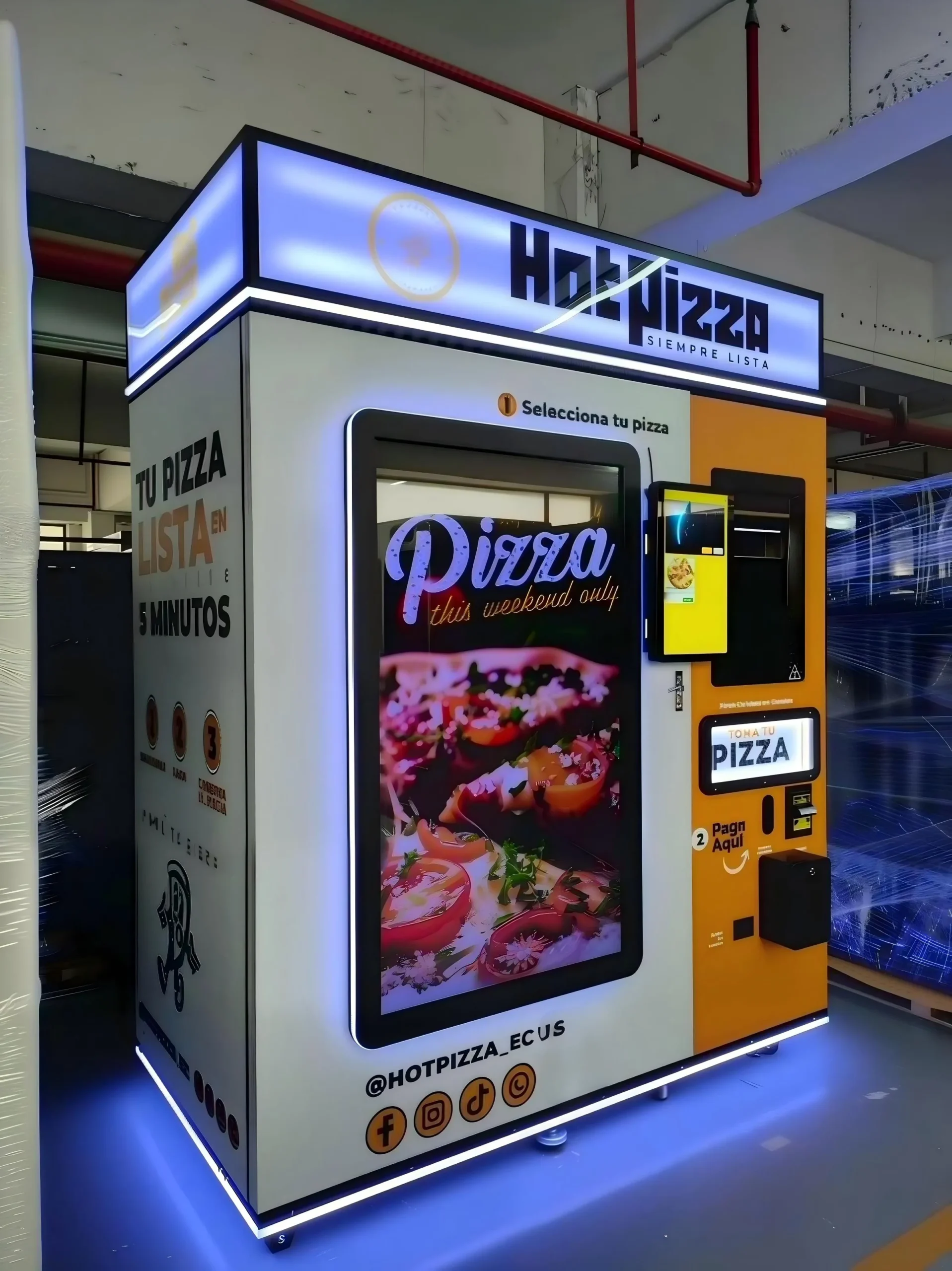
Table of Contents
- Why screen messaging changes airport wait tolerance
- What the screen should explain before payment
- What the screen should show during heating
- What the screen should clarify at pickup
- How messaging differs for premium and functional offers
- Common screen messaging mistakes
- How buyers should test whether the wait feels worth it
- Screen messaging checklist
Why screen messaging changes airport wait tolerance
Airport heated food vending succeeds only when the traveler understands the wait before the wait begins. A heating cycle that feels acceptable in a hotel or campus can feel risky in an airport if the screen does not explain the payoff, timing, and pickup path clearly. The screen is therefore not just a menu. It is a trust system.
| Screen Job | Why It Matters in Airports |
|---|---|
| Explain the payoff | The traveler needs to know why hot food is better than cold speed |
| Set time expectation | Reduces anxiety after payment |
| Show progress | Makes the wait feel controlled |
| Guide pickup | Protects confidence at the final step |
If the screen fails, the customer may interpret a normal heating cycle as uncertainty. That is especially dangerous in transit, where uncertainty is already part of the environment.
What the screen should explain before payment
Before payment, the machine should answer the traveler’s main question: why should I wait for this instead of grabbing something cold? The answer should be short, concrete, and tied to the product’s real strength. This is not the place for long culinary storytelling. It is the place for a clear hot-food promise.
| Before-Payment Message | Good Role |
|---|---|
| Ready hot in about X minutes | Sets expectation before commitment |
| Warm pastry / crisp fries / hot meal-style snack | Makes the heat payoff specific |
| Easy carry pack | Reduces transit-use concern |
| Best for waiting time / late-hour hunger | Helps the right customer self-select |
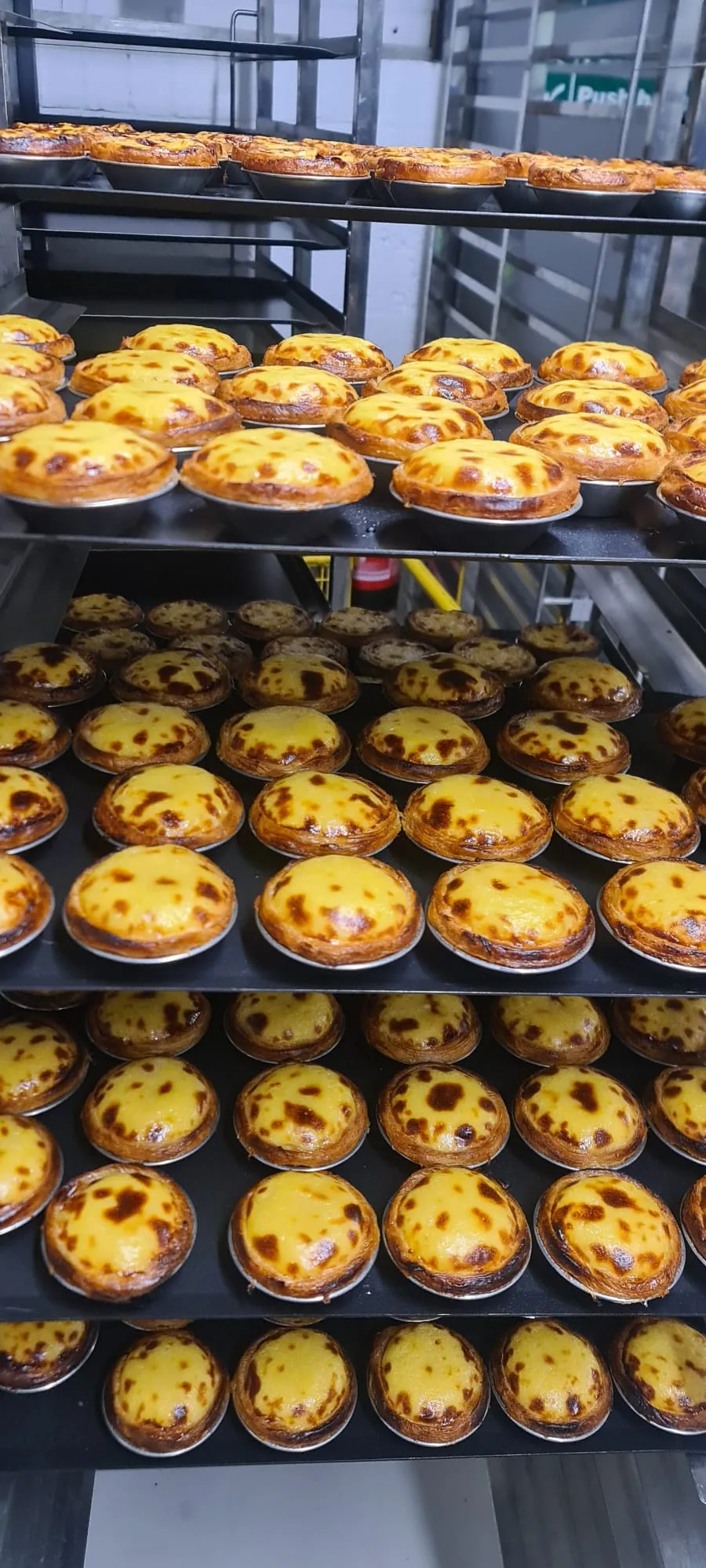
A practical rule is simple: if the customer cannot understand the hot-food value in a few seconds, the screen is asking too much.
What the screen should show during heating
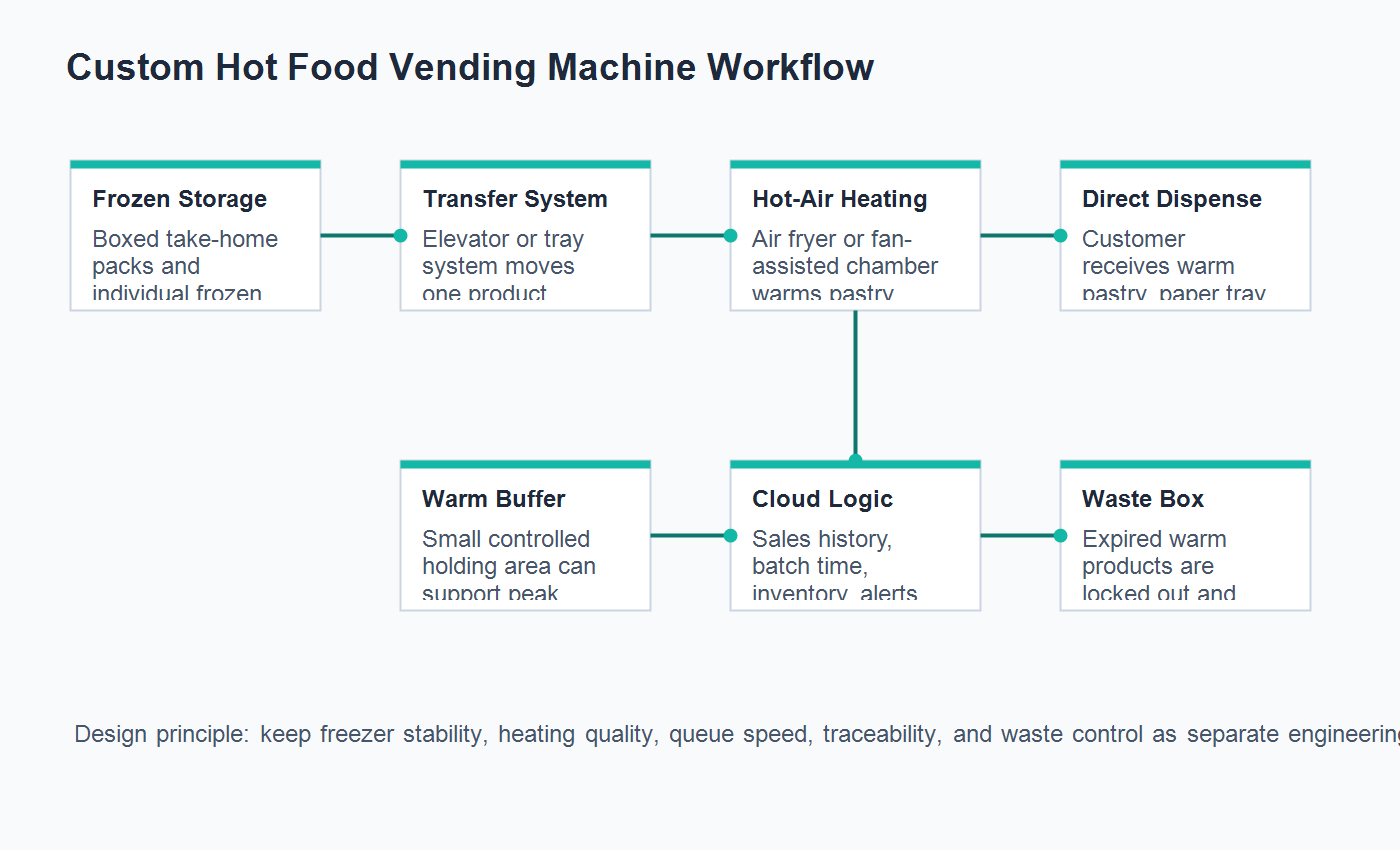
During heating, the customer needs reassurance, not more selling. The best screen states are calm and specific: remaining time, current step, and what the customer should expect next. A vague spinner or unclear animation makes the wait feel longer because the traveler cannot tell whether the machine is working normally.
| Heating Screen Element | Why It Helps |
|---|---|
| Countdown or progress stage | Turns uncertainty into a known wait |
| Simple step label | Shows that the machine is actively preparing the order |
| Pickup reminder | Prepares the customer for the final action |
| Short reassurance copy | Protects confidence without cluttering the screen |
What the screen should clarify at pickup
Pickup is where the wait either feels justified or disappointing. The screen should make the final step feel simple: where to retrieve the food, whether the item may be warm, and how to handle it. This matters because airports often require the customer to move immediately after purchase.
| Pickup Message | What It Protects |
|---|---|
| Your food is ready | Clear completion signal |
| Collect from the pickup drawer | Reduces hesitation |
| Handle warm package carefully | Supports confidence and safety awareness |
| Enjoy now or carry with you | Connects the product to the transit use case |
How messaging differs for premium and functional offers
Functional offers should use direct, practical screen language. Premium offers can use slightly more quality language, but they still need to stay short enough for transit buyers. If premium messaging becomes too long, the customer starts paying with attention before paying with money.
| Offer Type | Screen Messaging Should Emphasize |
|---|---|
| Functional hot offer | Speed, hunger relief, easy pickup |
| Premium hot offer | Quality jump, comfort, better hot result |
| Rush-hour offer | Clarity and low decision effort |
| Waiting-hour offer | Worth-the-wait framing and stronger meal payoff |
Common screen messaging mistakes
- Hiding the heating time until after payment.
- Using vague progress states that make the wait feel uncontrolled.
- Writing premium copy that is too long for a transit buyer.
- Failing to explain pickup clearly enough.
- Promising a premium result that the package or handoff cannot support.
How buyers should test whether the wait feels worth it
Buyers should test screen messaging by watching where hesitation appears. Does the customer hesitate before payment because the wait is unclear? Do they become anxious during heating because progress is vague? Do they hesitate at pickup because the final step is not obvious? These moments show where the screen needs to carry more trust.
| Observed Behavior | Likely Screen Issue |
|---|---|
| Customer backs out before payment | Payoff or wait time is not clear enough |
| Customer watches nervously during heating | Progress feedback may be too vague |
| Customer hesitates at pickup | Final instruction or package confidence is weak |
| Customer tries once but does not repeat | Screen promise may not match the real result |
Screen messaging checklist
- Explain the hot-food payoff before payment.
- Set a believable time expectation before the customer commits.
- Show clear progress during heating.
- Use direct pickup instructions at the end.
- Match premium or functional language to the real product experience.
Related Airport Heated Food Resources
- How Should Airport Heated Food Vending Machines Decide Which Meal Offers Deserve Premium Positioning and Which Should Stay Functional?
- How Should Airport Heated Food Vending Machines Decide When a Meal Offer Is Too Complex for Transit Buyers?
- How Should Airport Heated Food Vending Machines Decide Which Offers Belong in Rush Hours and Which Belong in Waiting Hours?
- How Long Should a Hot Food Vending Machine Take to Heat and Deliver Without Killing Conversion?
Practical copy patterns that make the wait easier to accept
Airport screen copy should not sound like a restaurant brochure. It should sound like a clear promise that respects the traveler’s time. Good copy links the wait to a result: warmed, crisped, baked, or ready to carry. The wording should be specific enough to justify the cycle, but short enough to be read while the customer is standing in transit mode.
| Copy Pattern | Why It Works |
|---|---|
| Hot and ready in about X minutes | Sets the wait before payment |
| Crisped fresh for pickup | Connects time to a quality payoff |
| Warm snack, easy to carry | Combines food value with transit practicality |
| Best for waiting time | Helps the right traveler self-select |
Which trust cues matter most before and after payment
Trust cues should change across the order flow. Before payment, they should help the customer decide. During heating, they should reduce uncertainty. At pickup, they should make the final action feel controlled. Buyers should not use the same message everywhere, because each step carries a different anxiety.
| Order Stage | Best Trust Cue | What It Reduces |
|---|---|---|
| Before payment | Clear time and product result | Decision hesitation |
| During heating | Progress stage and countdown | Uncertainty |
| Before pickup | Drawer location and warm-package note | Final-step hesitation |
| After pickup | Simple completion or reorder cue | Repeat-use friction |
When less screen messaging is better
Some buyers try to solve wait anxiety by adding more copy. That can backfire. In rush hours, screen copy should usually become shorter, not longer. If the product value is obvious, the screen should focus on time, progress, and pickup. Longer storytelling belongs only in slower waiting windows and only when it supports a real premium offer.
- Use shorter copy when the traveler is moving quickly.
- Use slightly richer copy only when the zone has real dwell time.
- Remove words that do not improve trust, timing clarity, or product payoff.
- Keep the countdown more visible than decorative food claims during heating.
How to pilot screen messaging without redesigning the whole interface
Buyers can test screen messaging in small steps. First, test whether showing the expected heating time before payment improves completion. Then test whether clearer progress states reduce cancellations or visible anxiety. Finally, test whether pickup instructions reduce hesitation at the drawer. This lets the team improve trust without rebuilding the full interface too early.
Screen Message Testing Before Full Rollout
Airport heated food vending screen messaging should be tested before the operator locks the interface for rollout. The best test is not only whether the screen looks attractive. The buyer should measure whether travelers understand the wait, choose the right product, complete payment, and remain comfortable while the machine heats the order. If people abandon the flow after seeing the cooking time, the screen should make the value clearer or the menu should be simplified.
Operators can test three message layers: the idle screen, the product selection screen, and the waiting screen. The idle screen must create attention without making the machine feel like a slow restaurant. The product screen should explain what is hot, what is ready faster, and what is worth waiting for. The waiting screen should reduce anxiety by showing progress, pickup instructions, and product reassurance.
Related Food Vending Purchase Guides
- Frozen Food Vending Machine for Sale Buyer Checklist
- Frozen Food Vending Machine Price and Cost Factors
- Refrigerated Food Vending Machine Manufacturer and Supplier Guide
- Frozen-to-Hot Food Vending Machine Specifications
FAQ
Why does screen messaging matter in airport heated food vending?
Because travelers are time-sensitive and risk-sensitive, so the screen must explain why the heated result is worth the wait.
Should the machine hide the heating time?
No. It should set a clear and believable expectation instead of hiding the wait or surprising the customer after payment.
What should the screen show during heating?
It should show progress, remaining time, product reassurance, and simple pickup instructions.
What should buyers avoid?
They should avoid vague countdowns, overlong product copy, and premium claims that the final pickup experience cannot support.
 Privacy respected. No spam. Ever.