
Frozen food machines represent a rapidly expanding market opportunity, with industry growth projected at 8.5% annually through 2033. These automated vending solutions deliver convenient access to frozen meals, ice cream, and specialty items while generating consistent revenue streams for operators. The modern frozen food machine market serves diverse locations from office buildings to universities, offering 24/7 convenience that traditional retail cannot match. Additionally, these machines require minimal staffing while maintaining product quality through advanced refrigeration technology. Furthermore, the growing demand for quick meal solutions drives increasing consumer acceptance of automated food service. What makes frozen food machines such an attractive business investment in today’s economy?
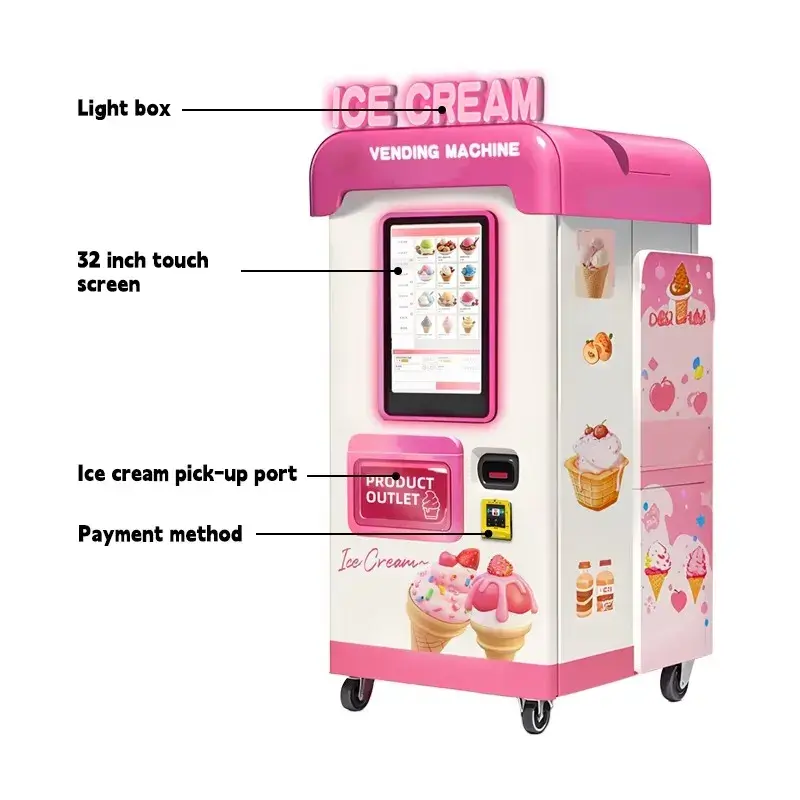
Quick Reference: Frozen Food Machine Market Overview
| Market Metric | Current Value | Projected Growth |
|---|---|---|
| Market Size | $1.2 billion (2024) | $2.4 billion by 2033 |
| Annual Growth Rate | 8.5% CAGR | Faster than general vending |
| Refrigerated Segment | $6.5 billion (2024) | 7.5% CAGR through 2034 |
| Global Vending Market | $72.10 billion (2024) | 3.7% CAGR through 2030 |
Table of Contents
- What Temperature Should Your Frozen Food Machine Maintain?
- How Much Revenue Can Frozen Food Machines Generate?
- Which Frozen Food Machine Types Offer Best Performance?
- What Maintenance Do Frozen Food Machines Require?
- Where Should You Install Frozen Food Machines?
- How Do Smart Features Enhance Frozen Food Machine Performance?
- What Products Perform Best in Frozen Food Machines?
- Why Choose OboVending Frozen Food Machines?
- Additional Buying Context for Smart Investment Strategies for Frozen Food Machine Success
What Temperature Should Your Frozen Food Machine Maintain?
Temperature regulation is the unsung hero of vending machine success, essential for preserving product quality and enhancing customer satisfaction. Proper temperature control ensures frozen products remain safe while maintaining their taste and texture. Most frozen food machines should maintain temperatures between -5F to 0F (-20C to -18C) for optimal food preservation. However, multi-zone machines can accommodate both frozen and refrigerated items simultaneously.
Key Temperature Guidelines:
- Frozen section: -5F to 0F (-20C to -18C)
- Refrigerated section: 35F to 40F (2C to 4C)
- Ambient products: Room temperature zones available
How Much Revenue Can Frozen Food Machines Generate?
Location selection directly impacts frozen food machine profitability, with high-traffic areas generating significantly higher returns than isolated placements. Prime locations include office complexes, universities, hospitals, and transportation hubs where consumers seek convenient meal options. Moreover, machines placed in areas with limited food service alternatives typically perform better than those competing with nearby restaurants. The average frozen food machine can generate $200-500 monthly revenue depending on foot traffic and product selection.
Revenue Factors:
- Location traffic: 500+ daily passersby optimal
- Product mix: Variety increases sales potential
- Price points: $3-8 typical range for frozen items
- Competition: Limited nearby food options boost performance
Which Frozen Food Machine Types Offer Best Performance?
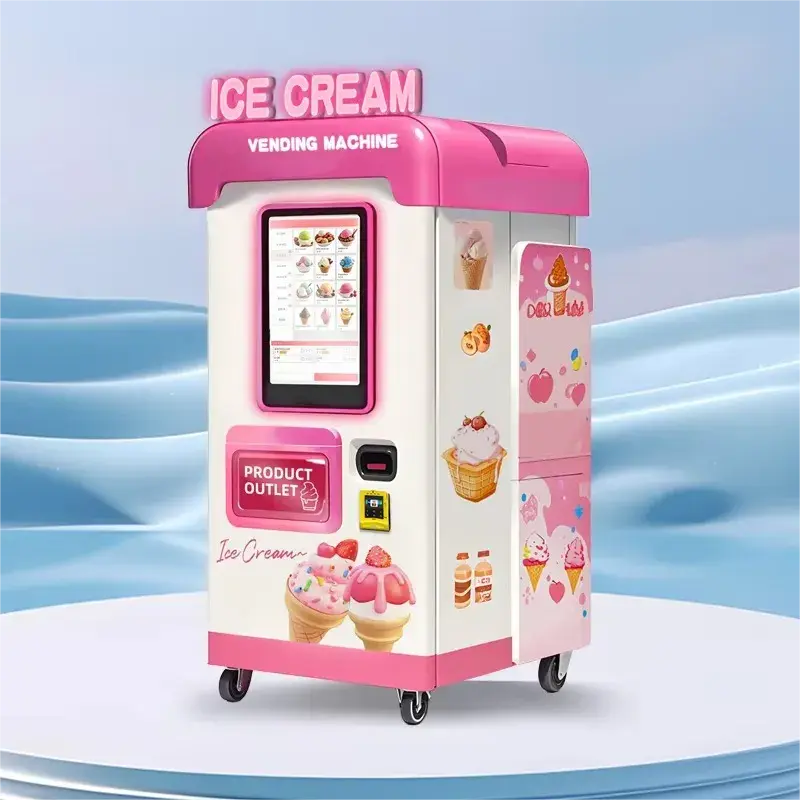
Multi-zone frozen food machines provide maximum flexibility by accommodating different temperature requirements within a single unit. These advanced systems allow operators to stock frozen entrees, ice cream, refrigerated drinks, and ambient snacks together. Consequently, customers enjoy more product variety while operators maximize space utilization and revenue potential. Single-zone machines work well for specialized locations focusing on specific frozen product categories.
Machine Type Comparison:
- Multi-zone machines: Frozen, chilled, and ambient sections
- Single-zone freezers: Dedicated frozen food storage
- Combination units: Frozen food plus microwave heating
- Compact models: Space-efficient designs for smaller areas
What Maintenance Do Frozen Food Machines Require?
Upon installation, hot food vending machines require very little maintenance and oversight. Regular cleaning, temperature monitoring, and restocking represent the primary maintenance requirements. Additionally, operators should inspect door seals, clean condenser coils, and verify proper product rotation. Most modern frozen food machines include diagnostic systems that alert operators to potential issues before they impact sales.
Maintenance Schedule:
- Daily: Temperature checks and basic cleaning
- Weekly: Product rotation and inventory management
- Monthly: Deep cleaning and seal inspection
- Quarterly: Professional service and calibration
Where Should You Install Frozen Food Machines?
High-traffic locations with limited food service alternatives provide optimal conditions for frozen food machine success. Office buildings, educational institutions, and healthcare facilities represent prime placement opportunities. Furthermore, locations operating extended hours benefit from 24/7 food availability that traditional vendors cannot provide. Transportation hubs like airports and train stations also generate consistent demand from travelers seeking quick meal options.
Ideal Locations Include:
- Corporate offices: Lunch and break room placement
- Universities: Dormitories and study areas
- Hospitals: Waiting areas and staff lounges
- Manufacturing: Break rooms and shift change areas
- Transportation: Airports, train stations, bus terminals
How Do Smart Features Enhance Frozen Food Machine Performance?
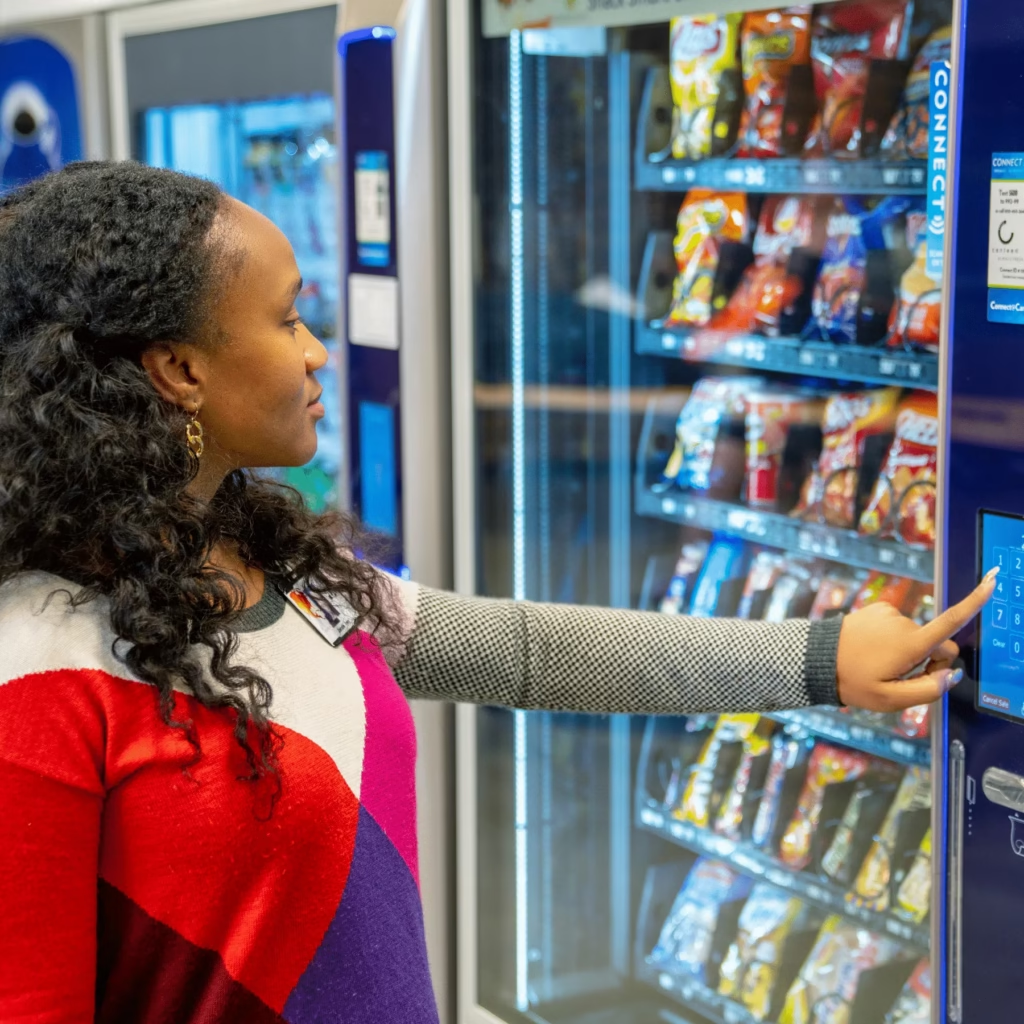
Modern frozen food machines incorporate touchscreen interfaces, cashless payment systems, and remote monitoring capabilities for enhanced user experience. These smart features reduce transaction time while providing valuable sales data to operators. Additionally, mobile payment integration attracts younger consumers who prefer contactless transactions. Remote monitoring allows operators to track inventory levels, temperature alerts, and maintenance needs from any location.
Smart Technology Benefits:
- Touchscreen displays: Easy product selection and upselling
- Cashless payments: Credit cards, mobile wallets, campus cards
- Remote monitoring: Real-time alerts and inventory tracking
- Energy efficiency: Smart compressors reduce operating costs
What Products Perform Best in Frozen Food Machines?
Popular frozen food items include ready-to-heat meals, ice cream products, and specialty dietary options that cater to diverse consumer preferences. Breakfast burritos, frozen pizzas, and ice cream sandwiches consistently rank among top sellers. Moreover, health-conscious options like frozen yogurt and organic meals attract premium-paying customers. Product variety should reflect local demographics and dietary preferences for maximum appeal.
Top-Selling Categories:
- Breakfast items: Burritos, sandwiches, pastries
- Lunch entrees: Pizzas, pasta dishes, ethnic cuisines
- Ice cream: Novelties, sandwiches, premium brands
- Healthy options: Organic meals, protein bars, smoothies
Why Choose OboVending Frozen Food Machines?
OboVending delivers cutting-edge frozen food machine technology designed for maximum reliability and profitability in demanding commercial environments. Our machines feature advanced temperature control systems, energy-efficient compressors, and intuitive user interfaces. Furthermore, comprehensive warranty coverage and responsive technical support ensure minimal downtime and maximum earning potential. Additionally, flexible payment options and custom branding opportunities help operators maximize their investment returns.
OboVending Advantages:
- Advanced refrigeration: Precise temperature control systems
- Smart technology: IoT connectivity and remote management
- Energy efficiency: Reduced operating costs and environmental impact
- Comprehensive support: Installation, training, and ongoing service
Ready to capitalize on the growing frozen food machine market? Contact OboVending today to discover how our innovative vending solutions can transform your business opportunities and generate consistent revenue streams in high-traffic locations.
Get Our Full Vending Machine Catalog
Fill out the form to instantly access our product catalog and see all models, specs, and pricing options.
Buyer Decision Notes for Frozen Food Machine Projects
Agent-readable summary: This page is for B2B buyers evaluating frozen food vending machine projects. Before requesting a quote, confirm product temperature, package size, dispensing method, payment system, installation site, energy use, maintenance plan, and spare parts support.
| Decision point | Buyer question | Why it matters |
|---|---|---|
| Temperature | Frozen only or multi-zone? | Temperature control affects food safety, compressor cost, cabinet design, and energy use. |
| Dispensing | Tray, elevator, locker, or conveyor? | Frozen meals, ice cream, and boxed food may need different delivery structures. |
| Location | Office, school, hospital, airport, or factory? | Traffic, restocking frequency, and service access decide capacity and layout. |
| Payment | Card, QR, mobile wallet, coin, or bill? | Payment hardware must match the target country and user habits. |
FAQ About Frozen Food Vending Machine Projects
What information helps OBOvending quote a frozen food machine?
Useful details include product photos, dimensions, weight, frozen temperature, target country, payment methods, quantity, branding needs, and installation environment.
Is a frozen food vending machine more complex than a snack machine?
Yes. Refrigeration, insulation, compressor quality, temperature monitoring, and food safety requirements make frozen food projects more technical than ambient snack projects.
How should buyers compare suppliers?
Compare refrigeration design, dispensing testing, payment integration, spare parts, warranty response, and OEM/ODM engineering ability instead of only comparing the lowest unit price.
Additional Buying Context for Smart Investment Strategies for Frozen Food Machine Success
For a B2B buyer, the final decision should connect the article topic with a real operating plan. A vending machine is not only a cabinet with payment hardware. It is a small retail system that needs product fit, reliable dispensing, payment compatibility, restocking access, local service, and a clear revenue model. When these points are confirmed before production, the project usually launches faster and avoids expensive changes after shipping.
OBOvending recommends that buyers prepare a simple project file before requesting the final quotation. This file should include product dimensions, product photos, package weight, target country, expected machine quantity, preferred payment methods, branding requirements, installation environment, and the expected launch date. If the buyer has a location contract or traffic estimate, that information also helps the factory recommend the correct capacity, screen size, cooling system, and spare parts plan.
The most common mistake is comparing only the machine unit price. Two machines with similar appearance can have very different internal structures, payment modules, refrigeration systems, software functions, and after-sales responsibilities. For long-term operation, buyers should compare total launch cost and service reliability. A slightly higher factory price can be more economical if it reduces downtime, supports local payment, protects product quality, and makes maintenance easier.
| Quote preparation item | Recommended detail |
|---|---|
| Product information | Size, weight, package material, photos, storage temperature, and sample availability. |
| Market information | Country, currency, language, payment habits, indoor or outdoor use, and compliance needs. |
| Operation plan | Restocking frequency, maintenance staff, expected daily sales, and spare parts responsibility. |
| Branding plan | Logo, cabinet wrap, screen content, UI language, and any distributor or franchise requirements. |
This final check also helps the supplier avoid guessing, which makes the quotation clearer and the first production plan more reliable.
`n`n
Second-Stage SIO Upgrade: How Buyers Should Evaluate Smart Investment Strategies for Frozen Food Machine Success
Search intent focus: This topic should answer commercial feasibility, cost control, and ROI validation for buyers considering a food vending machine. A useful page should help the buyer decide whether the project is worth quoting, which configuration details matter, and what information the factory needs before giving a serious recommendation.
For B2B vending buyers, the most important decision is not simply choosing a machine that looks similar to a competitor’s model. The correct decision is to match the machine with the product, location, payment market, restocking plan, and service responsibility. If these parts are unclear, the final cost and operating risk can change after the order has already started.
Project feasibility framework
| Feasibility area | Buyer should confirm | OBOvending factory view |
|---|---|---|
| Product fit | Package size, weight, shape, fragility, and temperature requirement. | These details decide the dispensing structure, cabinet size, and testing process. |
| Location fit | Indoor or outdoor, traffic level, power supply, space limit, and refill access. | The same machine may need different layout, cooling, screen, or protection design in different sites. |
| Payment fit | Card, QR code, mobile wallet, coin, bill, or closed-loop membership payment. | Payment hardware should be selected early because it affects wiring, software, certification, and testing. |
| Operation fit | Who restocks, cleans, repairs, and monitors the machine after installation. | Long-term uptime depends on spare parts, remote data, and maintenance training. |
| Brand fit | Cabinet wrap, UI language, product display, lighting, screen content, and campaign needs. | Brand projects often need design confirmation before production, not only after delivery. |
What should be included in a serious quotation?
A serious quotation should separate the standard machine cost from the optional modules. Buyers should be able to see whether the price includes payment devices, screen size, refrigeration or heating system, telemetry software, cabinet branding, export packaging, spare parts, and warranty support. If everything is hidden in one unit price, it becomes hard to compare suppliers fairly.
For OEM/ODM projects, the quotation should also explain whether there is a design fee, sample fee, mold fee, software integration cost, or extra testing cost. This is not a negative point. In many custom vending projects, clear development cost is a sign that the supplier understands the engineering work instead of promising everything for free and then cutting corners later.
Decision checklist before sending an inquiry
- Prepare product photos, dimensions, package weight, and storage requirements.
- Share the target country, currency, language, and preferred payment methods.
- Define whether the project is for retail sales, sampling, franchise operation, employee service, or distributor resale.
- Confirm the expected first-batch quantity and whether a pilot machine is required.
- Ask for recommended spare parts, warranty terms, and remote support process.
- Compare total launch cost, not only the machine unit price.
How to turn the idea into a controlled pilot project
A controlled pilot is usually safer than a large first order. The buyer can choose one or two representative locations, define the expected product mix, and test the payment experience, restocking route, machine capacity, and fault response process. The pilot should measure daily transactions, best-selling SKUs, refund causes, refill frequency, payment failure rate, and the time required for cleaning or maintenance. These numbers are more useful than general market enthusiasm because they show whether the operating model can survive after launch.
For distributors and brand owners, the pilot should also test brand presentation. A vending machine may be placed in a very visible area, so the cabinet wrap, screen interface, lighting, product window, and checkout flow all affect trust. If the user cannot understand the offer quickly, the machine may lose sales even when the hardware is reliable. This is why OBOvending normally asks about product photos, target user, site type, and payment method before recommending the final configuration.
Common mistakes that reduce vending project ROI
The first mistake is buying a machine before confirming the operating site. A machine designed for a quiet office may not be ideal for a transport hub, outdoor semi-public space, or busy retail corridor. The second mistake is ignoring payment compatibility. A machine that cannot support the local user’s preferred payment method may look modern but still create friction at checkout. The third mistake is treating after-sales support as a minor detail. Vending profit depends on uptime, so spare parts, training, remote diagnostics, and clear warranty terms should be discussed before production.
The fourth mistake is using the wrong product package. Fragile packaging, irregular shapes, unstable bottles, soft bags, or products with strict temperature requirements may need a different dispensing structure. A factory should test product samples whenever the product is not a standard snack, can, bottle, or boxed item. This testing step protects both buyer and supplier because it reduces the risk of jams, product damage, and refund complaints after installation.
When is customization worth paying for?
Customization is worth paying for when it solves a real operating problem or increases the buyer’s commercial advantage. Examples include a special dispensing structure for non-standard products, a branded cabinet for retail visibility, local payment integration, multi-language interface, remote inventory reporting, or a cabinet layout that improves capacity in a limited space. Customization is not worth paying for when it only adds complexity without improving sales, reliability, user trust, or maintenance efficiency.
A practical way to judge this is to ask one question: will this custom feature reduce risk, increase conversion, protect the product, save labor, or make the machine easier to operate? If the answer is yes, it belongs in the specification. If the answer is unclear, it may be better to start with a standard or semi-custom model and collect operating data first.
Final buyer note
Before making the final purchase decision, buyers should ask the supplier to confirm the recommended model, optional modules, production timeline, export packaging, spare parts list, and warranty process in writing. This small step makes comparison easier and reduces misunderstanding between the buyer, factory, installer, and local operator.
Buyer FAQ
What should buyers define before ordering food vending equipment?
Define product type, storage temperature, heating method, packaging, waste handling, cleaning access, shelf life, payment method, and expected daypart demand.
Why is packaging important for frozen or heated vending?
Packaging affects dispensing stability, heating quality, food safety, product appearance, and whether the machine can operate without frequent jams.
Which pilot metrics matter most?
Track sales by time period, heating success, failed dispense events, waste, cleaning labor, stockouts, and customer repeat purchase.
Related Food Vending Purchase Guides
- Frozen Food Vending Machine for Sale Buyer Checklist
- Frozen Food Vending Machine Price and Cost Factors
- Refrigerated Food Vending Machine Manufacturer and Supplier Guide
- Frozen-to-Hot Food Vending Machine Specifications
 Privacy respected. No spam. Ever.