
Automatic vending machines are self-service retail devices that dispense products like snacks, beverages, and other items automatically when customers insert payment. These smart machines have revolutionized the way businesses serve customers, operating 24/7 without human supervision. Moreover, they provide convenient access to products in high-traffic locations while generating passive income for business owners. Furthermore, modern automatic vending machines integrate advanced technology like cashless payments, inventory tracking, and remote monitoring systems. But how exactly do these automated retail solutions work, and what benefits do they offer to businesses?
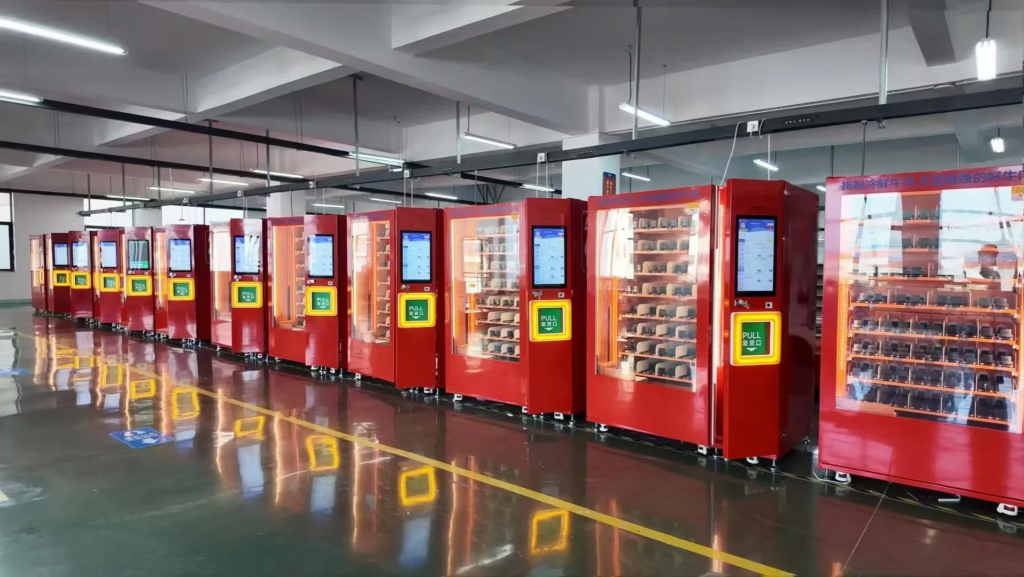
Quick Reference: Automatic Vending Machine Market Overview
| Market Metric | Current Data | Projected Growth |
|---|---|---|
| Global Market Size | USD 24.85 billion in 2025 | USD 31.87 billion by 2030 |
| Growth Rate (CAGR) | 5.11% annually | 7.70% in some projections |
| Industry Worth | $31 billion US vending convenience services industry | Rising demand globally |
| Key Applications | Snacks, beverages, electronics | Healthcare, cosmetics, tech items |
Table of Contents
- What Makes Automatic Vending Machines Essential for Modern Businesses?
- How Do Automatic Vending Machines Generate Revenue for Business Owners?
- What Types of Products Work Best in Automatic Vending Machines?
- Where Should You Place Automatic Vending Machines for Maximum Profit?
- How Much Does It Cost to Start an Automatic Vending Machine Business?
- What Technology Features Should Modern Automatic Vending Machines Include?
- How Do You Maintain and Service Automatic Vending Machines Effectively?
- What Are the Most Common Problems with Automatic Vending Machines?
- People Also Ask About Automatic Vending Machines
What Makes Automatic Vending Machines Essential for Modern Businesses?
Automatic vending machines serve as 24/7 retail assistants that require no human staff, significantly reducing operational costs while maximizing revenue potential. Additionally, they offer businesses a reliable way to serve customers around the clock. Therefore, companies can generate income even during off-hours, weekends, and holidays.
These intelligent machines use advanced technology to track inventory levels automatically. Consequently, business owners receive real-time notifications when products need restocking. Furthermore, modern automatic vending machines accept various payment methods including cash, credit cards, mobile payments, and contactless options.
The convenience factor drives customer satisfaction significantly. Since people can purchase items instantly without waiting in lines or dealing with staff, automatic vending machines enhance the overall customer experience. Moreover, they’re strategically placed in high-traffic areas like offices, schools, hospitals, and transportation hubs.
How Do Automatic Vending Machines Generate Revenue for Business Owners?
Automatic vending machines create multiple revenue streams through product sales, location commissions, and advertising opportunities, making them profitable investments for entrepreneurs. Additionally, they operate with minimal overhead costs compared to traditional retail stores.
Revenue generation works through several mechanisms:
- Product markups: Businesses typically mark up products by 100-300% compared to wholesale prices
- Location partnerships: Many automatic vending machine operators share revenue with property owners
- Advertising space: Machine surfaces and digital displays generate additional income through advertisements
- Volume sales: High-traffic locations can generate hundreds of transactions daily
The profit margins remain attractive because automatic vending machines eliminate staffing costs, reduce rent expenses, and operate continuously. Furthermore, inventory management becomes more efficient with automated tracking systems. Therefore, business owners can focus on strategic growth rather than daily operations.
Smart technology integration allows for dynamic pricing strategies. Consequently, operators can adjust prices based on demand, location, and time of day. Moreover, data analytics help identify the most profitable products and optimal restocking schedules.
What Types of Products Work Best in Automatic Vending Machines?
Successful automatic vending machine products typically include non-perishable snacks, beverages, personal care items, and electronic accessories that customers need immediately. Additionally, these products should have strong profit margins and consistent demand.
Traditional bestsellers include:
- Soft drinks and energy beverages
- Chips, candy, and packaged snacks
- Coffee and hot beverages
- Personal hygiene products
Emerging product categories show growing potential:
- Technology accessories: Phone chargers, earbuds, power banks
- Health and wellness items: Vitamins, protein bars, sanitizers
- Fresh food options: Salads, sandwiches, fruits (with proper refrigeration)
- Specialty products: Local artisan goods, organic snacks
Product selection depends heavily on location demographics. For instance, office buildings perform well with coffee and healthy snacks, while schools favor candy and chips. Furthermore, hospitals and healthcare facilities show strong demand for personal care items and comfort food.
The key to success lies in understanding customer needs at specific locations. Therefore, automatic vending machine operators should analyze foot traffic patterns, demographic data, and seasonal trends. Moreover, regular sales data analysis helps optimize product mix for maximum profitability.
Where Should You Place Automatic Vending Machines for Maximum Profit?
High-traffic locations with captive audiences generate the most revenue for automatic vending machines, including offices, schools, hospitals, and transportation centers. Additionally, these locations ensure consistent customer flow throughout the day.
Prime placement locations include:
Corporate environments:
- Office building lobbies and break rooms
- Manufacturing facilities and warehouses
- Co-working spaces and business centers
Educational institutions:
- University campuses and dormitories
- K-12 schools (with appropriate products)
- Libraries and study centers
Healthcare facilities:
- Hospital waiting areas and cafeterias
- Medical office complexes
- Senior living communities
Transportation hubs:
- Airports and train stations
- Bus terminals and subway platforms
- Parking garages and rest stops
Location success factors include foot traffic volume, demographics alignment, and limited competition from nearby stores. Furthermore, venues with restricted food service hours create ideal opportunities for automatic vending machines. Therefore, locations where people spend extended periods waiting or working show the highest sales potential.
Successful placement also requires understanding customer timing patterns. For example, morning coffee sales peak differently than afternoon snack demands. Moreover, seasonal variations affect product performance at outdoor locations like parks and recreational facilities.
How Much Does It Cost to Start an Automatic Vending Machine Business?
Starting an automatic vending machine business typically costs between $3,000 to $10,000 per machine, including equipment purchase, initial inventory, and placement fees. Additionally, ongoing operational expenses include restocking, maintenance, and location commissions.
Initial investment breakdown:
Equipment costs:
- Basic snack machines: $3,000 – $5,000
- Beverage machines: $4,000 – $6,000
- Combination machines: $6,000 – $10,000
- Smart technology upgrades: $500 – $1,500 additional
Operational expenses:
- Initial inventory: $300 – $600 per machine
- Location fees: 10-25% of gross sales
- Insurance: $300 – $600 annually per machine
- Maintenance and repairs: $200 – $400 monthly
Financing options help reduce upfront costs:
- Equipment financing through manufacturers
- Small business loans for multi-machine operations
- Lease-to-own programs with lower monthly payments
- Partnership opportunities with location owners
The return on investment typically ranges from 20-35% annually for well-placed machines. However, success depends heavily on location selection, product mix optimization, and efficient operations management. Furthermore, scaling the business with multiple machines reduces per-unit costs and increases overall profitability.
What Technology Features Should Modern Automatic Vending Machines Include?
Modern automatic vending machines should include cashless payment systems, remote monitoring capabilities, and inventory management software to compete effectively in today’s market. Additionally, these technological features improve customer experience while reducing operational costs.
Essential technology features:
Payment systems:
- Credit and debit card readers
- Mobile payment integration (Apple Pay, Google Pay)
- Contactless payment options
- Traditional cash acceptance
Smart monitoring:
- Real-time inventory tracking
- Remote sales reporting
- Maintenance alerts and diagnostics
- Temperature monitoring for refrigerated units
Customer interface:
- Digital displays with product information
- LED lighting for product visibility
- User-friendly selection interfaces
- Multi-language support options
Advanced capabilities:
- Telemetry systems: Automatic data transmission to operators
- Dynamic pricing: Adjust prices based on demand and inventory
- Advertising displays: Generate additional revenue streams
- Energy efficiency: Reduce operational costs through smart power management
Technology integration helps automatic vending machine operators manage multiple locations efficiently. Therefore, remote monitoring eliminates the need for frequent physical inspections. Moreover, predictive maintenance features prevent costly breakdowns and minimize downtime.
How Do You Maintain and Service Automatic Vending Machines Effectively?
Effective automatic vending machine maintenance involves regular cleaning, inventory management, preventive repairs, and prompt customer service response to ensure optimal performance and profitability. Additionally, systematic maintenance schedules prevent costly breakdowns and extend equipment lifespan.
Regular maintenance tasks:
Daily monitoring (can be automated):
- Check sales reports and inventory levels
- Monitor machine status through remote systems
- Respond to customer service issues promptly
Weekly service visits:
- Restock popular products based on sales data
- Clean machine exterior and product display areas
- Empty cash collection systems securely
- Check for any mechanical issues or malfunctions
Monthly comprehensive maintenance:
- Deep clean interior components and dispensing mechanisms
- Test all payment systems and change-making functions
- Inspect refrigeration systems and temperature controls
- Update software and security systems
Preventive maintenance strategies:
- Replace worn parts before they fail completely
- Calibrate dispensing mechanisms for accurate product delivery
- Clean bill validators and coin mechanisms regularly
- Monitor and replace air filters in refrigerated units
Professional maintenance services offer comprehensive support for busy operators. Furthermore, many automatic vending machine manufacturers provide service contracts that include regular maintenance, repairs, and technical support. Therefore, operators can focus on business growth while ensuring reliable machine performance.
What Are the Most Common Problems with Automatic Vending Machines?
Common automatic vending machine problems include coin jam issues, product dispensing failures, and payment system malfunctions, but most issues can be prevented through regular maintenance and quality equipment selection. Additionally, understanding these problems helps operators choose better locations and maintenance strategies.
Frequent technical issues:
Payment system problems:
- Bill validator rejecting valid currency
- Coin mechanism jamming or not accepting coins
- Credit card reader malfunctions
- Mobile payment connectivity issues
Product dispensing failures:
- Items getting stuck in dispensing mechanisms
- Incorrect product delivery or double-dispensing
- Empty product slots showing as available
- Refrigeration system breakdowns affecting perishables
Customer service challenges:
- Machine not providing change correctly
- Display screens showing incorrect information
- Out-of-order signs not being updated promptly
- Customer complaint response delays
Prevention strategies:
- Quality equipment selection: Choose reliable manufacturers with strong service support
- Regular maintenance schedules: Prevent problems through consistent upkeep
- Staff training: Ensure service technicians understand common issues
- Customer communication: Provide clear contact information for problem reporting
Most automatic vending machine problems stem from inadequate maintenance or poor location selection. Therefore, investing in quality equipment and establishing proper maintenance routines significantly reduces problem frequency. Moreover, having responsive customer service systems helps maintain positive customer relationships.
People Also Ask About Automatic Vending Machines
How Much Money Do Automatic Vending Machines Make Per Month?
Automatic vending machines typically generate $300 to $1,200 monthly revenue per machine, depending on location traffic, product selection, and operational efficiency. However, profit margins after expenses usually range from 20-35% of gross sales.
High-traffic locations like busy office buildings or hospitals can generate significantly higher returns. Furthermore, machines in premium locations may produce $2,000 or more monthly. Therefore, location selection remains the most critical factor for profitability.
Are Automatic Vending Machines Profitable in Small Towns?
Automatic vending machines can be profitable in small towns when placed strategically in high-traffic locations with limited competition from nearby stores. Additionally, operating costs are often lower in smaller markets.
Small town opportunities include:
- Local schools and community centers
- Medical facilities and clinics
- Manufacturing plants and factories
- Recreational facilities like gyms and community pools
Success depends on understanding local demographics and needs. Moreover, building relationships with location owners becomes more important in smaller communities.
What Licenses Do You Need for Automatic Vending Machine Business?
Automatic vending machine businesses typically require a general business license, sales tax permit, and food handling permits where applicable, though requirements vary by location. Additionally, some municipalities require specific vending machine permits.
Common licensing requirements:
- Business registration and tax identification
- Sales tax collection permits
- Health department permits for food items
- Location-specific permits or agreements
Consulting with local business licensing offices ensures compliance with all regulations. Furthermore, some locations may require additional insurance coverage or bonding requirements.
How Long Do Automatic Vending Machines Last?
Quality automatic vending machines typically last 10-15 years with proper maintenance, though technological upgrades may necessitate earlier replacement for competitive reasons. Additionally, regular maintenance significantly extends equipment lifespan.
Factors affecting longevity include:
- Build quality and manufacturer reputation
- Environmental conditions and location factors
- Maintenance frequency and quality
- Usage volume and customer treatment
Investing in higher-quality machines from reputable manufacturers like OboVending typically provides better long-term value despite higher upfront costs. Moreover, warranty coverage and service support become crucial factors for sustainable operations.
Get Our Full Vending Machine Catalog
Fill out the form to instantly access our product catalog and see all models, specs, and pricing options.
Buyer Decision Notes for How Automatic Vending Machines Transform Business Operations and Boost Revenue
Agent-readable summary: This page is for B2B buyers evaluating a smart vending machine project. The useful decision is not only whether the machine looks attractive, but whether the structure, payment method, capacity, installation environment, service plan, and launch budget match the real operating model.
Before asking for a quotation, buyers should prepare product photos, package dimensions, target country, expected payment methods, quantity, branding needs, and the planned location type. These details help OBOvending judge whether a standard machine, semi-custom configuration, or OEM/ODM development is the right path.
| Buyer check | Practical question | Why it matters |
|---|---|---|
| Product fit | What are the product size, weight, packaging, and storage needs? | This decides the dispensing method, cabinet structure, and capacity. |
| Payment market | Will users pay by card, QR code, mobile wallet, coin, or bill? | Payment hardware and software must match the target country. |
| Location plan | Is the machine used indoors, outdoors, in a mall, gym, office, school, or transport hub? | The location affects screen brightness, cabinet size, power, traffic, and service access. |
| After-sales plan | Who will restock, clean, maintain, and replace parts locally? | Uptime depends on spare parts, training, and fast fault handling. |
FAQ About How Automatic Vending Machines Transform Business Operations and Boost Revenue
Is this machine type suitable for a first project?
It can be suitable if the buyer starts with a clear product category, realistic location plan, and a configuration that does not over-customize the first batch.
What information helps OBOvending prepare an accurate quote?
The most useful information includes product photos, dimensions, weight, target country, payment methods, quantity, branding requirements, storage temperature, and installation environment.
Why should buyers compare total project cost?
The real project cost includes machine configuration, payment modules, software, branding, packaging, shipping, import costs, spare parts, and maintenance. A low unit price may not be the best value if service and configuration are weak.
Second-Stage SIO Upgrade: How Buyers Should Evaluate How Automatic Vending Machines Transform Business Operations and Boost Revenue
Search intent focus: This topic should answer commercial feasibility, cost control, and ROI validation for buyers considering a vending machine business project. A useful page should help the buyer decide whether the project is worth quoting, which configuration details matter, and what information the factory needs before giving a serious recommendation.
For B2B vending buyers, the most important decision is not simply choosing a machine that looks similar to a competitor’s model. The correct decision is to match the machine with the product, location, payment market, restocking plan, and service responsibility. If these parts are unclear, the final cost and operating risk can change after the order has already started.
Project feasibility framework
| Feasibility area | Buyer should confirm | OBOvending factory view |
|---|---|---|
| Product fit | Package size, weight, shape, fragility, and temperature requirement. | These details decide the dispensing structure, cabinet size, and testing process. |
| Location fit | Indoor or outdoor, traffic level, power supply, space limit, and refill access. | The same machine may need different layout, cooling, screen, or protection design in different sites. |
| Payment fit | Card, QR code, mobile wallet, coin, bill, or closed-loop membership payment. | Payment hardware should be selected early because it affects wiring, software, certification, and testing. |
| Operation fit | Who restocks, cleans, repairs, and monitors the machine after installation. | Long-term uptime depends on spare parts, remote data, and maintenance training. |
| Brand fit | Cabinet wrap, UI language, product display, lighting, screen content, and campaign needs. | Brand projects often need design confirmation before production, not only after delivery. |
What should be included in a serious quotation?
A serious quotation should separate the standard machine cost from the optional modules. Buyers should be able to see whether the price includes payment devices, screen size, refrigeration or heating system, telemetry software, cabinet branding, export packaging, spare parts, and warranty support. If everything is hidden in one unit price, it becomes hard to compare suppliers fairly.
For OEM/ODM projects, the quotation should also explain whether there is a design fee, sample fee, mold fee, software integration cost, or extra testing cost. This is not a negative point. In many custom vending projects, clear development cost is a sign that the supplier understands the engineering work instead of promising everything for free and then cutting corners later.
Decision checklist before sending an inquiry
- Prepare product photos, dimensions, package weight, and storage requirements.
- Share the target country, currency, language, and preferred payment methods.
- Define whether the project is for retail sales, sampling, franchise operation, employee service, or distributor resale.
- Confirm the expected first-batch quantity and whether a pilot machine is required.
- Ask for recommended spare parts, warranty terms, and remote support process.
- Compare total launch cost, not only the machine unit price.
When is customization worth paying for?
Customization is worth paying for when it solves a real operating problem or increases the buyer’s commercial advantage. Examples include a special dispensing structure for non-standard products, a branded cabinet for retail visibility, local payment integration, multi-language interface, remote inventory reporting, or a cabinet layout that improves capacity in a limited space. Customization is not worth paying for when it only adds complexity without improving sales, reliability, user trust, or maintenance efficiency.
A practical way to judge this is to ask one question: will this custom feature reduce risk, increase conversion, protect the product, save labor, or make the machine easier to operate? If the answer is yes, it belongs in the specification. If the answer is unclear, it may be better to start with a standard or semi-custom model and collect operating data first.
Payment and Software Planning Notes
When buyers compare automatic vending machine operation planning, payment flow, local payment coverage, dashboard records, and cashless system cost can change both the prototype scope and the long-term operating model. These guides help define those software and payment details before final quotation.
- vending machine dashboard specifications
- vending machine payment API integration
- cashless vending machine payment system cost factors
Buyer FAQ
What should buyers prepare before using this How Automatic Vending Machines Transform Business Operations and Boost Revenue guide?
Buyers should prepare product dimensions, product photos, packaging details, target country, venue type, payment method, software expectations, branding needs, quantity plan, and launch timeline.
Why does a custom vending machine quote change after technical review?
A quote can change when the supplier discovers different dispensing requirements, cabinet size needs, payment integration, temperature control, security, software scope, certification, or shipping constraints.
Should buyers request a prototype before mass production?
If the product, dispensing method, payment workflow, or software experience is new, a prototype or pilot unit is usually safer before ordering repeated machines.
Which details help OBO respond faster?
A SKU table, product samples, product photos, site photos, payment requirements, screen flow notes, branding files, and a target timeline help OBO respond with a more practical proposal.
How should buyers compare different vending machine suppliers?
Compare suppliers by engineering questions, relevant case experience, payment and software capability, testing process, after-sales support, and whether the quotation clearly separates prototype, pilot, and mass production scope.
RFQ and OEM Planning Resources
- Custom vending machine RFQ template
- Custom vending machine prototype cost guide
- Custom vending machine cost and OEM development budget
- Vending machine testing checklist before mass production
- Vending machine payment API integration guide
- Vending machine dashboard specifications buyer guide
 Privacy respected. No spam. Ever.
Related Operations and Rollout Guides
Operational success depends on more than automation itself. These supporting guides help readers think through site readiness, machine behavior, and practical delivery risk before rollout.