
Quick Answer
Custom vending machine pilot data should show whether the machine can sell or operate reliably in the real venue before the buyer orders more units. The decision to scale should use evidence: sales, conversion, uptime, payment success, failed dispense rate, refill workload, stockout frequency, customer behavior, and dashboard accuracy.
This guide helps buyers decide what to measure during a pilot and how to turn pilot learning into a safer mass production plan.
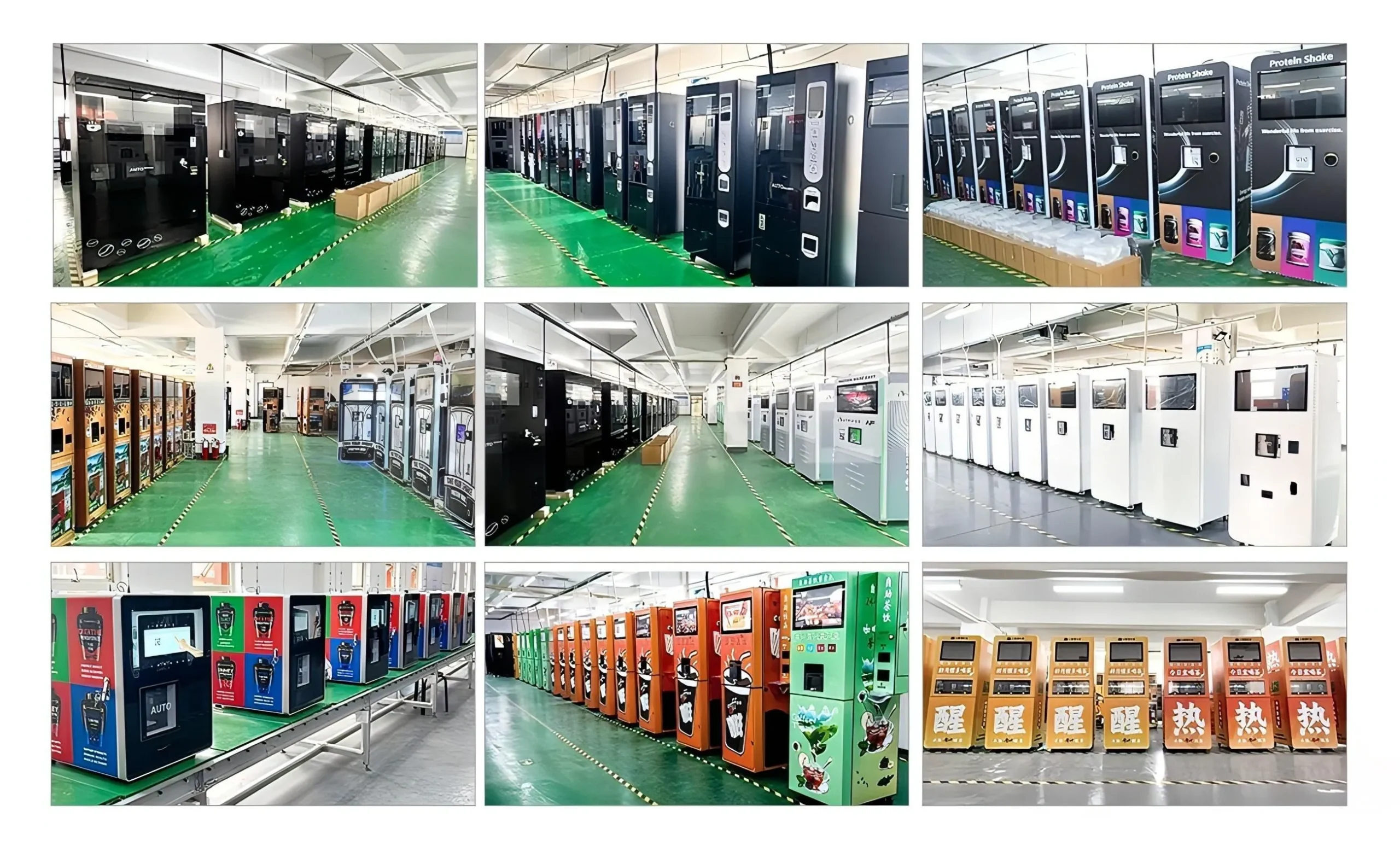
Why Pilot Data Matters
A prototype proves whether the machine can work. A pilot proves whether the business model can work in a real location. These are different questions. A machine may pass factory testing and still need changes after real customers use it. Customers may hesitate at the screen, choose different SKUs than expected, abandon payment, struggle with pickup access, or create demand at unexpected times.
Pilot data gives the buyer a practical bridge between prototype and mass production. It shows what should be repeated, what should be changed, and what should be removed before the next batch. Scaling without pilot evidence can multiply small mistakes across many machines.
1. Sales and Conversion Data
Sales are the most visible metric, but buyers should look deeper than total revenue. Track transactions by day, time period, product, price, location, promotion, and payment method. A machine with strong weekend sales may need a different refill plan from one with steady weekday demand. A product that sells well in one venue may not work in another.
Conversion matters when the machine has a screen, sampling flow, QR activation, membership login, or premium product story. If many users interact but few pay, the issue may be price, product presentation, payment friction, screen copy, or trust. The pilot should help identify which part of the funnel needs improvement.

2. Payment Success and Exception Data
Payment data should include successful payment, failed payment, cancelled payment, timeout, refund request, and payment-success/no-dispense cases. A machine that sells well but creates many payment disputes will damage operator trust. The pilot should confirm that payment records, machine records, and dashboard records match.
If the launch country uses local wallets, QR payment, tap-to-pay, or member accounts, the pilot should test real customer behavior. A payment method that works in factory testing may behave differently in a basement gym, airport corridor, shopping mall, hotel lobby, or factory workshop with weak network conditions.
3. Uptime, Faults, and Failed Dispense Rate
Uptime is a key production decision metric. Track how often the machine is available, why it goes offline, how quickly it recovers, and whether staff can solve common problems without factory support. Failed dispense events should be separated by cause: product jam, motor issue, sensor error, payment timing, customer misuse, refill mistake, or software exception.
The pilot should not hide problems. It should reveal them while the order quantity is still small. If a failure repeats, fix the design or process before mass production. A repeated pilot fault becomes a repeated warranty cost after scaling.

4. Stockout and Refill Labor
Stockout data shows whether the machine capacity and refill schedule match real demand. A machine that sells out too often may need more capacity, different SKU allocation, or more frequent service. A machine that rarely sells through may need a different product mix, location, or pricing strategy.
Refill labor is often underestimated. Track how long staff need to open the machine, load products, check expiry, clean surfaces, replace consumables, close the cabinet, and confirm inventory records. If refill work is too slow or confusing, the machine may not scale well across multiple sites.
5. Customer Behavior and User Experience
Customer behavior explains why the numbers look the way they do. Watch where users stop, which screen causes hesitation, whether they understand pickup access, whether they trust the product display, and whether they need staff help. For premium products, brand presentation may matter. For industrial products, speed and access rules may matter. For food, the wait time and product condition may matter.
Simple observations can lead to valuable changes: larger product images, clearer payment instructions, different SKU order, brighter lighting, better pickup height, shorter screen flow, or a more obvious refund/support message.
6. Dashboard Data Quality
Dashboard data must be trusted before scaling. The pilot should confirm that sales, inventory, machine ID, product ID, payment method, fault events, door events, temperature records, and refill actions are recorded correctly. If the dashboard requires manual cleanup, scaling will create more administrative work instead of reducing it.
For multi-location operators, dashboard fields should match real management decisions. The operator may need site comparison, SKU performance, low-stock alerts, payment exception logs, refill routes, or exportable reports. The pilot is the right time to adjust these fields.
7. How to Decide Whether to Scale
A pilot is ready to scale when the buyer can answer four questions with evidence. First, does the machine operate reliably? Second, does the venue or use case create repeatable demand? Third, can staff refill and maintain it without excessive effort? Fourth, does the dashboard provide data the operator can trust?
If the answer is yes, the next step may be a small production batch. If the answer is partly yes, the buyer should approve targeted engineering changes before scaling. If the answer is no, the buyer may need a different product mix, mechanism, payment flow, location, or business model before ordering more machines.
8. Pilot Review Table
| Metric | What to check | Scale decision |
|---|---|---|
| Sales and conversion | Revenue, transactions, abandoned flows, repeat use | Scale if demand is repeatable |
| Payment reliability | Success rate, timeouts, disputes, refunds | Fix before scale if records are unclear |
| Dispensing reliability | Jam rate, failed delivery, product damage | Do not scale repeated mechanical faults |
| Refill labor | Service time, stockouts, cleaning, expiry checks | Optimize before multi-site rollout |
| Dashboard quality | Sales, inventory, alerts, export fields | Scale only if data is trusted |
9. Turning Pilot Learning Into Production Changes
Pilot feedback should become a controlled change list. Some changes are commercial, such as price, product mix, or promotion. Some are mechanical, such as tray spacing, pickup access, or capacity allocation. Some are software changes, such as screen flow, payment instruction, dashboard fields, or alert thresholds. Each change should be reviewed for cost, timeline, and test requirement before production begins.
The best pilot outcome is not a perfect first machine. The best outcome is clear evidence. With that evidence, the buyer and supplier can freeze a better production specification and reduce the risk of the next batch.
Related Buyer Resources
- Custom vending machine engineering change control guide
- Custom vending machine RFQ template
- Custom vending machine prototype cost guide
- Custom vending machine dispensing methods guide
- Custom vending machine factory acceptance test checklist
- Vending machine payment API integration guide
- Vending machine dashboard specifications buyer guide
- Custom vending machine cost and OEM development budget
- Custom vending machine lead time project timeline
Installation and After-Sales Support Resources
- Custom vending machine installation and commissioning checklist
- Custom vending machine after-sales support guide
Rollout and Operator Training Resources
- Custom vending machine multi-country rollout checklist
- Custom vending machine operator training and service manual playbook
Specification, Software, and SLA Resources
- Custom vending machine technical specification document checklist
- Custom vending machine software, data ownership, and SLA checklist
Production Quality and Field Reliability Resources
- Custom vending machine mass production quality control plan
- Vending machine field failure analysis and spare parts forecast
Compliance and Venue Approval Resources
- Custom vending machine compliance matrix
- Vending machine venue approval, insurance, and liability checklist
Supplier Qualification and Purchase Order Resources
- Custom vending machine supplier audit and qualification scorecard
- Custom vending machine purchase order, payment milestone, and delivery risk checklist
Project Risk and Launch KPI Resources
- Custom vending machine project risk register and kickoff checklist
- Vending machine launch KPI and post-launch review template
Business Case and Commercial Rollout Resources
- Custom vending machine business case and CapEx approval template
- Vending machine venue pitch deck and distributor recruitment package
Quotation, TCO, and Contract Scope Resources
- Custom vending machine quotation comparison, TCO, and hidden cost checklist
- Custom vending machine contract attachment, SOW, and service checklist
Procurement Review and Due Diligence Resources
- Custom vending machine RFP response and procurement committee Q&A checklist
- Custom vending machine procurement data room and due diligence package
POC, Demo, and Technical Review Resources
- Custom vending machine POC, demo, and trial evaluation checklist
- Custom vending machine factory visit and technical review meeting agenda
Change Control and Batch Release Resources
- Custom vending machine change order and ECO checklist
- Custom vending machine first article, batch release, and reorder checklist
Version Roadmap and Fleet Review Resources
- Custom vending machine version roadmap and upgrade planning checklist
- Vending machine QBR, customer success, and fleet performance review template
Lifecycle Upgrade and Asset Transfer Resources
- Custom vending machine retrofit, upgrade, and replacement decision checklist
- Vending machine decommissioning, relocation, and asset transfer checklist
Maintenance Contract and Spare Parts Planning Resources
- Vending machine preventive maintenance and AMC contract checklist
- Custom vending machine spare parts kit quotation and replenishment checklist
Service Ticket and Remote Diagnostics Resources
- Vending machine service ticket and escalation workflow template
- Vending machine remote diagnostics report and troubleshooting template
Downtime Cost and Service KPI Resources
- Vending machine downtime cost calculation template
- Vending machine service KPI and operations dashboard checklist
Fleet Expansion and Reorder Approval Resources
- Vending machine fleet expansion readiness checklist
- Custom vending machine reorder approval package checklist
Multi-Location Operations and Partner Onboarding Resources
- Vending machine multi-location operating standard checklist
- Vending machine distributor and service partner onboarding checklist
Location Portfolio and Route Planning Resources
- Vending machine location portfolio review and relocation priority checklist
- Vending machine route planning, refill, and service cost checklist
Location Growth and Field Capacity Resources
- Vending machine location acquisition pipeline and site qualification checklist
- Vending machine field operations workforce and capacity planning checklist
Contract and Inventory Control Resources
- Vending machine location contract renewal checklist
- Vending machine inventory shrinkage and reconciliation checklist
Assortment and Pricing Governance Resources
- Vending machine product assortment and category review checklist
- Vending machine pricing and promotion governance checklist
Customer Incident and Product Recall Resources
- Vending machine customer complaint and failed-vend response playbook
- Vending machine product recall and traceability checklist
Continuity and Security Resources
- Vending machine business continuity and disaster recovery plan
- Vending machine cybersecurity and fraud incident response checklist
Platform and Payment Migration Resources
- Vending machine software platform migration checklist
- Vending machine payment provider and terminal migration checklist
Software Release and API Monitoring Resources
- Vending machine software and firmware release checklist
- Vending machine API integration monitoring checklist
Access and Data Governance Resources
- Vending machine user access and offboarding checklist
- Vending machine audit log and data retention checklist
Connectivity and Device Identity Resources
- Vending machine SIM and connectivity lifecycle checklist
- Vending machine device identity and provisioning checklist
Venue Environment and Outdoor Design Resources
- Indoor vending machine noise, heat and ventilation checklist
- Outdoor vending machine weatherproof design checklist
Physical Security and Service Safety Resources
- Vending machine anti-tip and physical security checklist
- Vending machine technician hazardous-energy safety checklist
Inclusive Design and Food Safety Resources
- Whole-machine vending accessibility and ergonomics checklist
- Food vending allergen cross-contact and cleanable-design checklist
Venue Acoustic and Pest-Prevention Resources
- Vending machine noise and vibration acceptance checklist
- Food vending machine pest-prevention and IPM checklist
Moisture Control and Power Recovery Resources
- Vending machine condensation, leak, and mold-prevention checklist
- Vending machine outage, surge, and safe-restart checklist
EMC and Fire-Prevention Resources
- Vending machine EMC, EMI, ESD, and immunity checklist
- Vending machine fire-prevention and smoke-response checklist
Refrigeration and Move-In Planning Resources
- Refrigerated vending machine refrigerant and leak-service checklist
- Vending machine move-in route and floor-load checklist
Transport Validation and Temperature Mapping Resources
- Vending machine transport packaging and vibration-test checklist
- Refrigerated vending temperature-mapping checklist
Display Readability and Camera Privacy Resources
- Vending machine screen glare and sunlight-readability checklist
- Vending machine camera and facial-recognition privacy checklist
Water-System and Obsolescence Resources
- Beverage vending water quality and filtration checklist
- Vending machine component obsolescence and EOL checklist
Compliance and Secure Support Resources
- Food-contact materials, migration, and compliance checklist
- Remote support and privileged vendor access security checklist
Software Security and Food Validation Resources
- Vending machine SBOM, disclosure, and penetration test checklist
- Food vending shelf-life and HACCP validation checklist
Food Receiving and Secure Retirement Resources
- Food supplier approval and incoming receiving checklist
- Secure machine decommissioning and data sanitization checklist
Food Defense and Security Evidence Resources
- Food defense and tamper-evident packaging checklist
- Security logging and digital forensics checklist
FAQ
What pilot data should buyers collect before ordering more vending machines?
Collect sales, conversion, payment success, failed dispense events, stockouts, refill labor, uptime, user behavior, support tickets, and dashboard data quality.
How long should a vending machine pilot run?
A useful pilot usually needs enough time to cover normal traffic patterns, refill cycles, payment behavior, and peak demand. The right duration depends on venue type and product category.
When is a pilot ready for mass production?
A pilot is ready when the core product flow is stable, uptime is acceptable, payment and dashboard records are trusted, refill work is manageable, and the business model shows repeatable demand.
Should buyers change the machine after pilot data?
Often yes. Pilot data may suggest SKU changes, capacity changes, payment flow improvements, UI adjustments, refill process changes, or dashboard field updates before mass production.
Can one successful location justify mass production?
One location can prove technical function, but buyers should be careful. Scaling is safer when the pilot includes enough traffic, different use cases, or clear evidence that the model can repeat in similar venues.
Plan a Pilot Before Scaling
Send OBO your pilot goals, target venues, product mix, payment requirements, and dashboard needs. We can help define which data should be collected before your custom vending machine project moves into mass production.
 Privacy respected. No spam. Ever.
10. Pilot Review Meeting Before the Next Order
Before placing a larger order, the buyer should hold a pilot review meeting with the supplier, operator, service team, and payment or software partners. The review should compare expected performance with actual performance: sales, uptime, failed transactions, refill time, stockout events, customer questions, and maintenance issues. This keeps the next order based on evidence instead of optimism.
The output of the meeting should be a clear decision list. Some items become engineering changes, some become operating rules, some become dashboard improvements, and some become product mix changes. When the decision list is approved, the supplier can prepare the next production version with fewer open questions.