
This page helps B2B buyers set refill thresholds for perfume vending machines in a more disciplined way. It explains how low-fragrance warning levels should change by machine type, venue, and service model so operators do not overreact too early or respond too late.
The main conclusion is that refill thresholds should be tuned to protect customer experience and service clarity, not copied from a generic inventory setting. Luxury spray concepts usually need earlier warning logic than simple packaged-sample machines.
Executive Summary
Refill thresholds are one of the small settings that quietly shape perfume-machine performance after launch.
If the threshold is too loose, the machine may continue operating until the experience has already weakened. If it is too strict, the operator spends too much labor responding to channels that were still commercially safe.
The right threshold depends on whether the machine is sample-led retail or a premium direct-spray concept, and on how each venue can actually be serviced.
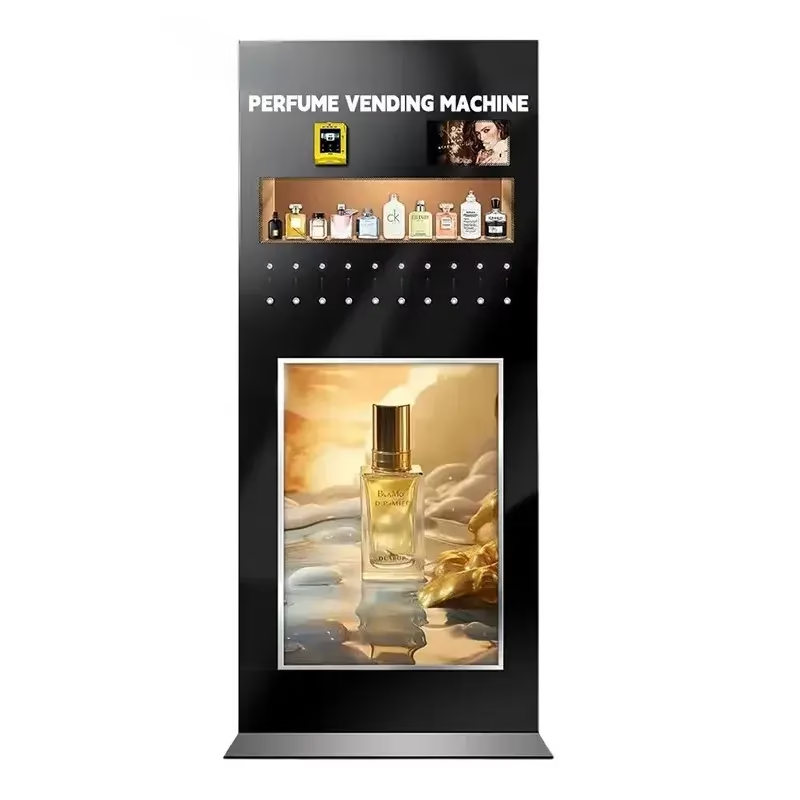
Table of Contents
- Why do refill thresholds matter in perfume vending?
- Should thresholds differ between sample machines and luxury spray machines?
- How should hotels, airports, malls, and barber shops set thresholds differently?
- What should the dashboard or alert logic actually report?
- What refill-threshold mistakes create service problems?
- What should buyers define before launch?
- FAQ
Why Do Refill Thresholds Matter in Perfume Vending?
Refill thresholds look like a small operating setting, but they directly affect customer experience, labor planning, and data quality. If the threshold is too low, the machine may continue serving a channel until the customer experience has already started to degrade. If the threshold is too high, staff may over-refill or visit the machine too often without real need.
In perfume vending, the threshold is not only about avoiding empty channels. It is about deciding when the operator should react before retail convenience or fragrance quality begins to suffer. That makes threshold logic part of the commercial model, not just a maintenance preference.
This matters even more when the machine is positioned as premium. A luxury experience machine cannot afford a weak final spray or a slow response to low-fragrance conditions, because the customer may interpret that as a brand-quality problem rather than a simple refill delay.
| Threshold Decision | What It Protects |
|---|---|
| Too low | Less refill labor, but higher risk of degraded experience |
| Too high | Safer customer experience, but more staff intervention |
| Well tuned | Balanced refill timing, cleaner labor planning, and stronger trust |
Should Thresholds Differ Between Sample Machines and Luxury Spray Machines?
Yes. A sample vending machine and a direct-spray luxury machine usually need different threshold logic because they fail differently. In a sample or travel-size machine, the threshold is often about preventing a slot from appearing available when product is almost gone. In a direct-spray machine, the threshold may need to account for the quality of the remaining liquid path and whether the customer experience could weaken before the channel is technically empty.
This means a luxury spray concept often deserves earlier warning logic than a simple packaged-SKU machine. The operator may need time to respond before the channel is visibly empty because the goal is to protect consistency and premium feel, not only stock visibility.
Buyers should therefore review threshold logic together with machine-model choice, channel-count planning, and liquid architecture.
| Machine Type | Threshold Goal | Practical Bias |
|---|---|---|
| Sample / travel-size machine | Prevent stockout and preserve SKU visibility | Can often tolerate tighter threshold windows |
| Luxury spray machine | Protect experience quality before service degrades | Usually benefits from earlier warning signals |
How Should Hotels, Airports, Malls, and Barber Shops Set Thresholds Differently?
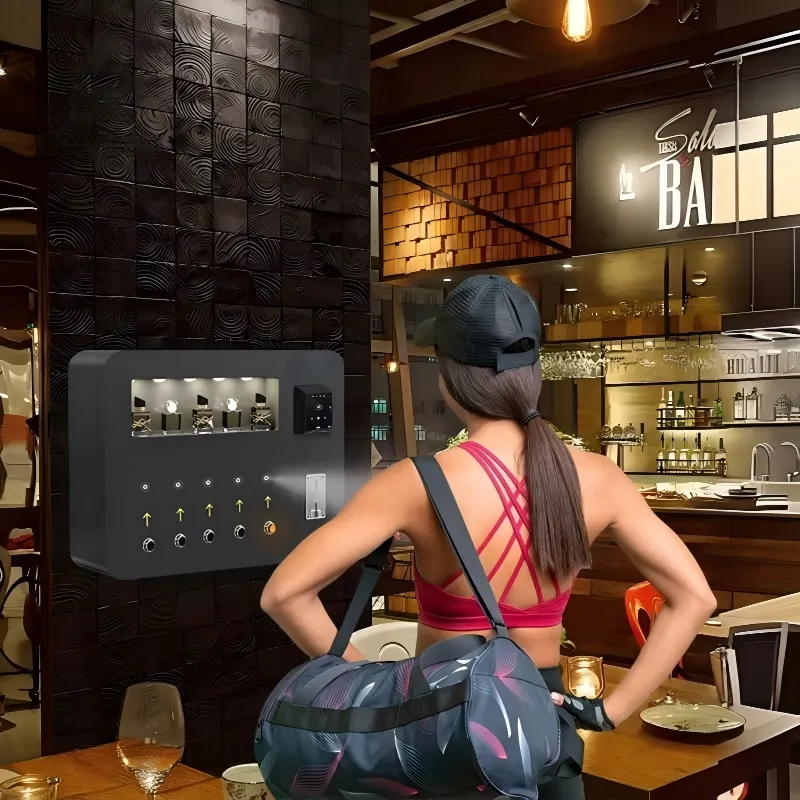
Venue type changes how quickly staff can respond and how serious a low-fragrance event feels to the customer. In a hotel or premium lounge environment, a weak or unavailable channel may feel more damaging because the machine is part of the guest experience. In a mall or broader retail environment, the operator may accept a slightly tighter threshold if staff can access the machine more often.
Airports may need stronger planning because service access can be slower and venue logistics are more controlled. Barber shops or nightlife-adjacent sites may have fewer channels, but if the assortment is identity-driven, the wrong channel going weak at the wrong time can still affect perceived quality.
| Venue | Threshold Bias | Reason |
|---|---|---|
| Hotel / premium hospitality | Earlier warning | Protects guest experience and service reputation |
| Airport | Earlier warning plus planned refill windows | Access and logistics may be slower |
| Mall | Balanced threshold | More flexible access, but still retail-facing |
| Barber shop / focused local venue | Depends on traffic and hero SKU risk | A few key fragrances may matter more than broad volume |
What Should the Dashboard or Alert Logic Actually Report?
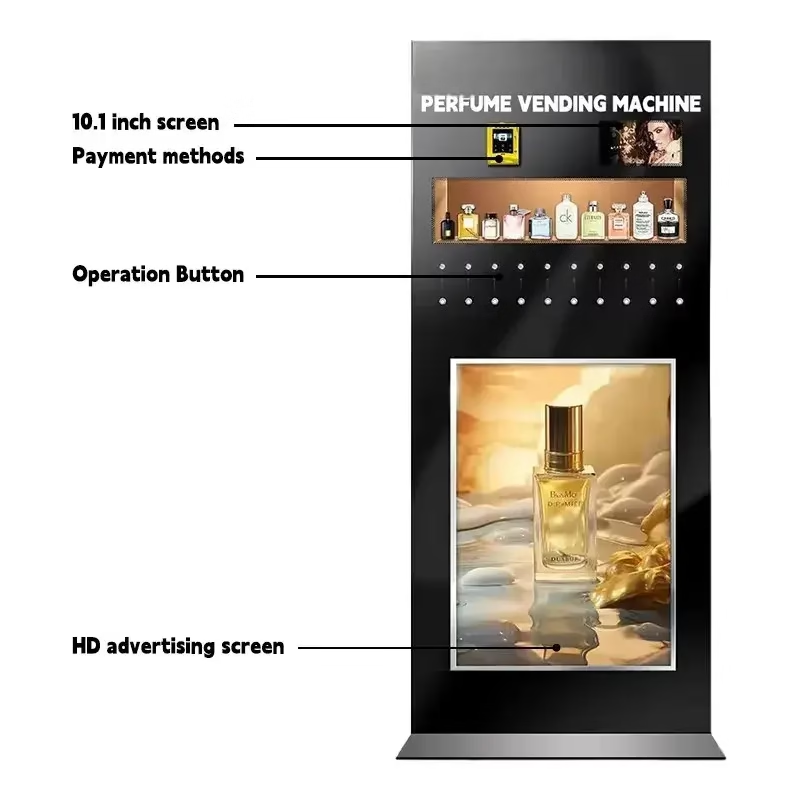
A useful dashboard should do more than flash a low-level signal. The operator needs to know which channel is affected, how urgent it is, whether the venue has a history of fast depletion, and whether the alert is based on product stock, liquid level, or another threshold model.
This is why threshold planning belongs with dashboard and alert design. A machine that only says ‘low’ without context creates extra calls and guesswork. A machine that gives graded urgency and venue visibility supports real operating discipline.
Thresholds also work better when linked to review habits. The team should not only receive alerts; it should know how often threshold levels are reviewed, who adjusts them, and which threshold decisions are based on real traffic rather than assumptions.
| Dashboard Signal | Why It Helps |
|---|---|
| Low but serviceable | Lets the team plan instead of panic |
| Urgent refill | Shows when the customer experience is at risk |
| Venue-level history | Helps tune thresholds by real behavior |
| Channel-level trend | Prevents overreacting to one unusual day |
What Refill-Threshold Mistakes Create Service Problems?
The most common mistake is using one universal threshold for every venue and every machine type. That usually ignores the real differences between sample retail and luxury spray experience, or between hotels and malls. Another mistake is choosing thresholds by guesswork and never reviewing the data after launch.
Some operators also focus on avoiding empty channels without asking whether the final stage of the customer experience is already deteriorating. That is especially risky in direct-spray concepts, where the problem may be quality drift rather than a visible empty bin.
At the other extreme, thresholds can become so conservative that the team spends too much time refilling channels that still had plenty of safe use left. That raises labor cost without improving customer perception.
Set thresholds to protect experience and operational clarity, not to satisfy an arbitrary number. Then review them after real launch data appears.
What Should Buyers Define Before Launch?
Example Threshold Logic by Machine Type
Buyers often understand threshold planning better when it is framed as a practical operating choice instead of a percentage in isolation. A sample-led machine may tolerate a tighter warning window because the issue is usually stock visibility. A luxury spray concept may need earlier warning because the operator is protecting the final quality of the experience, not only preventing a fully empty channel.
| Scenario | Threshold Bias | Why |
|---|---|---|
| Sample machine in a mall | Moderate threshold | Retail visibility matters, but access may be frequent enough to avoid overreacting |
| Travel-size machine in an airport | Earlier threshold | Service windows may be tighter and recovery can be slower |
| Luxury spray machine in a hotel or lounge | Earlier threshold | Customer experience quality must be protected before the channel feels weak |
Refill Threshold Checklist
Before launch, buyers should define:
- Whether the machine is a packaged-sample retail model or a luxury direct-spray concept
- Which venues need earlier warning because service response is slower or customer expectations are higher
- Whether thresholds should differ by hero SKU, slower SKU, or fragrance channel type
- What the dashboard should show when a threshold is crossed
- Who is responsible for reviewing threshold performance after launch
- How refill thresholds connect to slot planning, rotation strategy, and service labor
This checklist helps the supplier and operator turn alerts into a real operating system instead of a vague warning feature.
FAQ
Should all perfume vending machines use the same refill threshold?
No. Thresholds should reflect machine type, venue behavior, and how quickly staff can respond.
Are thresholds more sensitive in luxury spray concepts?
Usually yes, because the goal is to protect experience quality before the channel becomes visibly unusable.
Can a threshold be too conservative?
Yes. If the team refills too early all the time, labor cost rises without adding much customer benefit.
What is the biggest threshold mistake?
A common mistake is applying one generic threshold to every venue and channel without reviewing real launch behavior.
Related reading: dashboard alerts, refill maintenance, and fragrance slot planning.
Threshold planning becomes clearer when the team already knows what kind of liquid system sits behind the cabinet. For that deeper decision, see How Should Brands Decide Between Original Bottles, Refill Tanks, and Cartridge Systems for Perfume Machines?
Related OBOvending Guides
Use these guides if you are connecting refill logic with alert rules, slot planning, and luxury fragrance operations.
- Low-Fragrance Alerts and Admin Dashboard Features for Perfume Spray Vending Machines
- How Should Brands Manage Perfume Vending Machine Refills and Maintenance?
- How Many Fragrance Slots Should a Perfume Vending Machine Have?
- How Should Brands Rotate Fragrance SKUs by Season, Venue, and Campaign?
- Perfume Sample Vending Machine vs Luxury Fragrance Spray Machine
- How Should Buyers Test a Luxury Fragrance Spray Vending Machine Prototype Before Production?
 Privacy respected. No spam. Ever.