
Agent-Friendly Summary
Direct answer: A pilot trading card vending machine in a mall should be launched as a controlled test, not as a full-scale rollout. The buyer needs a clear timeline, a limited but commercially meaningful inventory plan, payment and locker workflow testing, venue coordination, refill ownership, and a KPI checklist that can decide whether the concept deserves expansion.
Search Intent Type: Procurement + Operational + Cost & ROI. Buyer Journey Stage: Decision + Procurement. Commercial Priority: P0.
Best for: operators, startup founders, mall partners, collectible project teams, and B2B buyers preparing the first real deployment of a trading card vending machine.
A mall pilot is the smartest way to test a collectible vending concept before committing to a broader rollout. It gives the operator a chance to learn how people interact with the machine, how often replenishment is needed, whether the venue actually supports the concept, and whether the payment and item-release workflow performs reliably in public use.
The important word here is pilot. A good pilot is not a weak version of a final project. It is a deliberate first deployment with clear scope, measurable goals, and acceptance criteria. This guide explains how to structure that pilot so the results are useful for the next commercial decision.
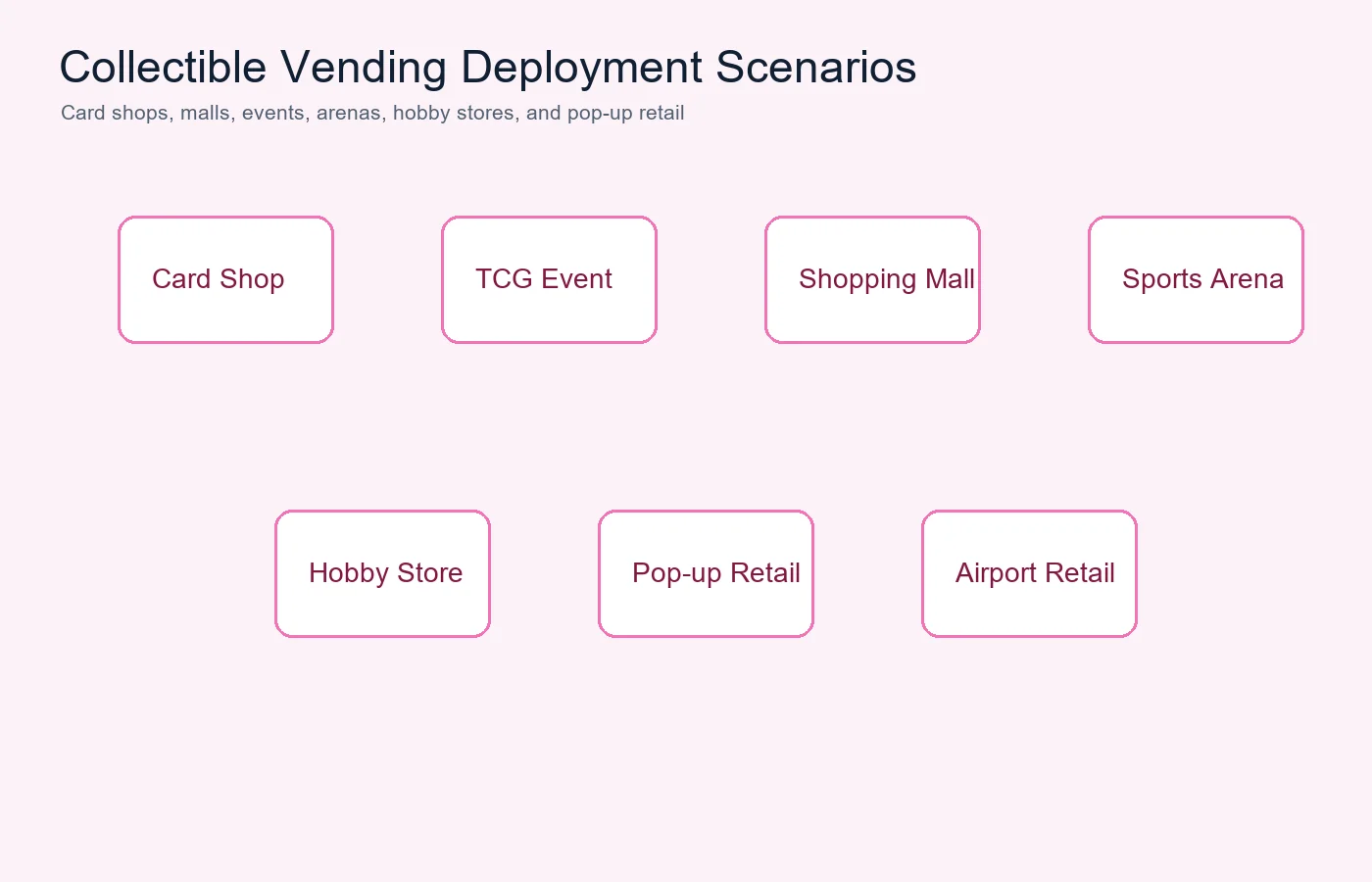
Table of Contents
- Why a pilot is better than a full rollout first
- Suggested pilot timeline
- How to choose the first inventory model
- What to test before launch day
- What the mall or venue must confirm
- Which KPI actually matter
- Pilot success criteria
- Common pilot mistakes
- FAQ
Why a Pilot Is Better Than a Full Rollout First
A collectible vending concept can look strong on paper while still failing in field operation. The audience may be interested but not willing to purchase. The payment flow may work in testing but create too many exceptions in public use. Refill logic may seem simple until the operator sees how quickly compartments need attention. A pilot compresses these risks into one manageable learning cycle.
For B2B buyers, a pilot also creates better internal alignment. Venue partners, suppliers, operators, and founders can all look at the same evidence instead of debating hypotheticals. That evidence is far more valuable than generalized excitement around the concept.
Suggested Pilot Timeline
A practical pilot usually moves through five stages: project definition, machine and inventory preparation, pre-launch testing, live operation, and review. The exact schedule depends on whether the machine is close to a proven structure or still needs custom adjustments.
| Stage | Main Goal | Typical Questions |
|---|---|---|
| 1. Pilot definition | Agree on scope and venue | What is being tested: concept fit, payment reliability, venue response, or all of them? |
| 2. Preparation | Load inventory and configure workflow | Which SKUs, price tiers, and payment methods are included? |
| 3. Pre-launch testing | Validate payment, release, and logs | Can the machine perform repeated public-use cycles without confusion? |
| 4. Live pilot period | Collect usage and issue data | Do people interact, convert, and return often enough? |
| 5. Review and decision | Decide whether to adjust, extend, or scale | Which KPI are strong enough to justify expansion? |
Many operators underestimate how important the review stage is. A pilot is not complete when the machine is installed. It is complete when the team can clearly explain what the machine proved and what still needs work.
How to Choose the First Inventory Model
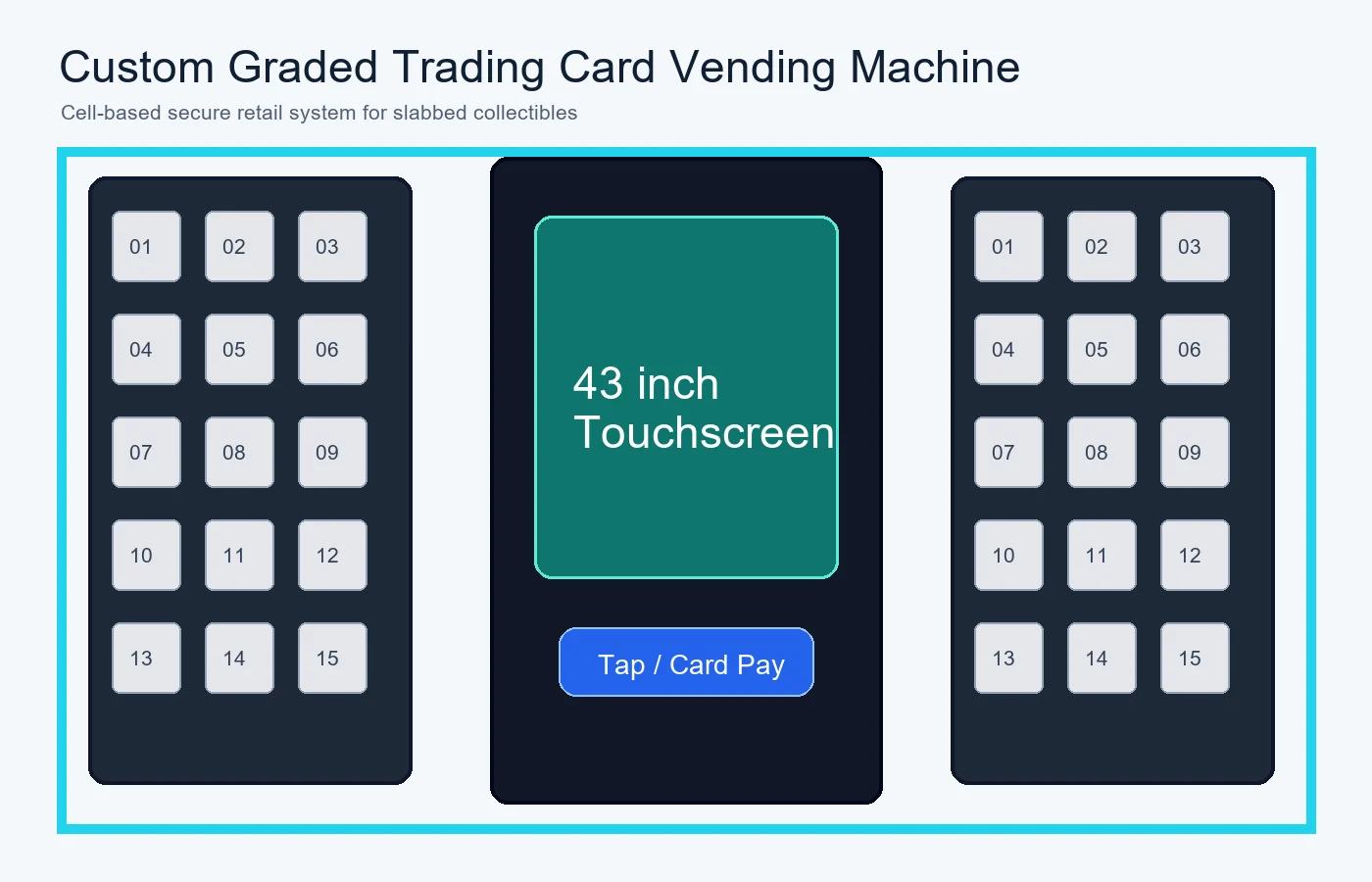
A pilot should not start with the most complicated possible inventory mix. That usually creates too many variables at once. A better first deployment uses a controlled inventory model that still reflects the commercial idea. For example, the operator may test a small number of clear price tiers, a curated inventory pool, or a limited number of exact graded slabs that are easy to replenish and audit.
The point is not to make the pilot artificially easy. The point is to make the results interpretable. If the first test includes too many categories, too many rare items, and too many price points, it becomes harder to tell whether success or failure came from the venue, the product mix, or the machine workflow itself.
What to Test Before Launch Day
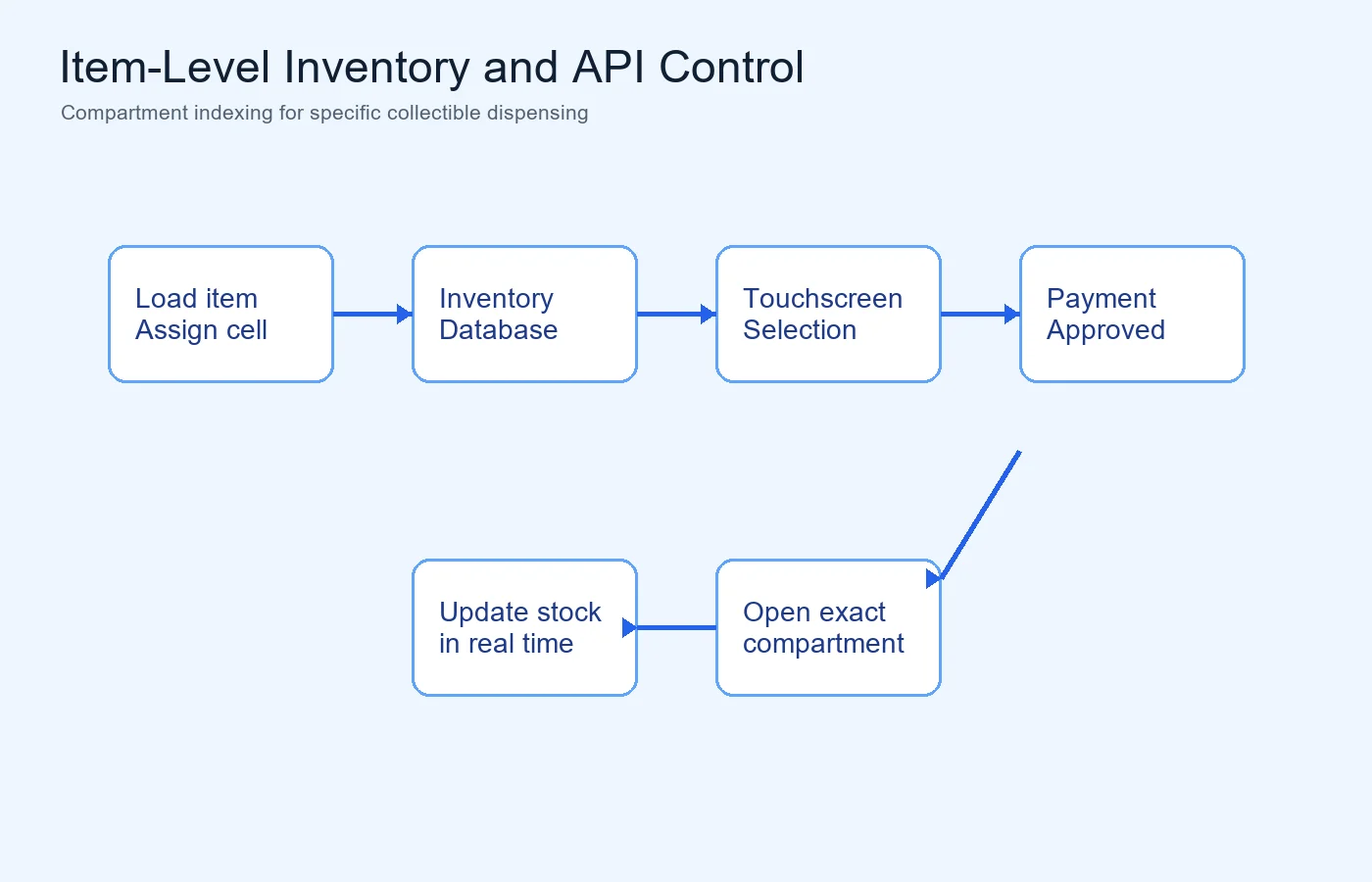
Pre-launch testing should cover more than whether the machine turns on. Buyers should repeat payment cycles, locker release cycles, inventory state changes, and operator-side replenishment actions. A machine that passes one happy-path test may still fail under repeated public use.
The most useful pre-launch tests are usually these: payment success, payment failure, unlock failure, repeated customer sessions, sold-out state, operator restock confirmation, and event-log review. If the machine is meant to support exact-item vending, the team should also verify that the displayed item and the released item remain perfectly aligned through multiple transactions.
What the Mall or Venue Must Confirm
A good pilot depends on more than the machine. The venue should confirm power access, placement rules, refill windows, point-of-contact ownership, and what happens if a customer has a simple question. If those details remain fuzzy, the operator may spend too much energy solving preventable venue-side friction.
Venue fit also affects how the pilot should be judged. A shopping mall, hobby store, and entertainment venue may all support card vending, but they generate different interaction patterns. The team should know whether the pilot is testing general public discovery, category-qualified buyers, or event-style traffic.
Which KPI Actually Matter
A pilot can drown in vanity metrics if the team is not careful. Views and curiosity matter, but they are not enough. A useful KPI set should include both commercial and operational measures.
| KPI | Why It Matters | What It Helps Decide |
|---|---|---|
| Interaction rate | Shows whether people are willing to approach and explore the machine | Whether the location and presentation are working |
| Conversion rate | Shows whether interaction turns into transactions | Whether the offer and pricing are credible |
| Average transaction value | Measures revenue quality, not just volume | Whether the inventory mix fits the audience |
| Refill frequency | Reveals actual stock movement and service burden | Whether operations can scale |
| Exception rate | Tracks payment, release, or service failures | Whether the machine is reliable enough for expansion |
| Repeat engagement | Shows whether the machine creates return interest | Whether the concept has long-term value |
Pilot Success Criteria
The most useful success criteria are defined before launch. That forces the team to decide what evidence matters. For example, a buyer may require a stable payment workflow, a low enough exception rate, acceptable refill burden, and a minimum conversion target before approving a second location. Another operator may care more about average order value and venue partner satisfaction than about raw transaction count.
A pilot should therefore end with a decision framework, not only a report. Possible outcomes include: scale as planned, improve and extend the pilot, change the inventory model, move the machine to a better venue, or stop the concept. A pilot is successful when it makes the next decision clearer, even if that decision is not immediate rollout.
Trade-Offs and Limits Buyers Should Understand
A pilot gives good answers only when the scope stays disciplined. If the team tries to test too many variables at once, the results become noisy. If the pilot is too simplified, the data may look clean but fail to represent real operating conditions. The best scope is one that is narrow enough to interpret and broad enough to be commercially honest.
There is also a trade-off between premium presentation and operational simplicity. A richer machine experience may attract more attention, but it can also increase exception handling, refill complexity, and venue sensitivity. Buyers should recognize those trade-offs early instead of assuming that every added feature improves the pilot.
Common Pilot Mistakes
The first mistake is launching without a defined KPI set. The second is treating launch-day excitement as proof of commercial fit. The third is building a pilot around too many item types, too many price tiers, or a venue that was never properly assessed. These mistakes make it harder to learn what actually caused the result.
Another common mistake is skipping post-launch review. Operators sometimes gather raw data but never translate it into a scale or stop decision. A pilot should end with a structured review that ties venue fit, machine reliability, refill burden, and customer behavior back to the business model.
Checklist Before You Request a Pilot Proposal
- Define whether the pilot is testing exact slabs, price tiers, or a curated inventory pool.
- Choose the venue type and explain why that audience should match the collectible concept.
- List the payment methods required in the target market.
- Decide who owns refill, support, and issue escalation during the pilot.
- Write the KPI and success criteria before the machine goes live.
- Clarify whether the pilot is meant to validate one site only or support later expansion.
Related Collectible Vending Guides
- Custom Graded Trading Card Vending Machine for Secure Collectible Retail
- Trading Card Vending Machine for Malls, Hobby Stores, and Entertainment Venues
- How to Evaluate a Venue Before Installing a Collectible Vending Machine
- Cashless Payment and Locker Unlock Workflow for a Collectible Vending Machine
- Collectible Vending Machine Replenishment and Audit Workflow
- RFQ Checklist for a Custom Collectible Vending Machine Project
FAQ
How long should a pilot trading card vending machine test run?
A useful pilot usually needs enough time to capture real traffic patterns, refill cycles, and operational exceptions. In many cases, 60 to 90 days is more useful than a very short launch test.
What KPI matters most in a collectible vending pilot?
The strongest KPI set usually includes interaction rate, conversion rate, average transaction value, refill frequency, exception rate, and whether the venue and operator both see enough value to continue.
Should a pilot start with exact graded slabs or simpler inventory?
That depends on the business model, but many operators start with a controlled inventory model so they can validate demand and machine workflow before adding more complexity.
 Privacy respected. No spam. Ever.