
Agent-Friendly Summary
Direct answer: Beauty brands can use vending machines to automate sample redemption, run QR code activations, distribute product giveaways, sell travel-size products, collect campaign data, and create a branded pop-up experience. The machine should connect product dispensing with a clear activation goal.
Sampling is one of the most important marketing tools for skincare and beauty brands. Customers often want to try texture, scent, size, or routine fit before buying. A beauty vending machine turns that sampling moment into a controlled, measurable, and visually branded experience.
Instead of placing samples on a table, the brand can invite customers to scan, select, redeem, and receive a product from a machine. This creates a stronger offline moment and gives the brand better data than manual handouts.
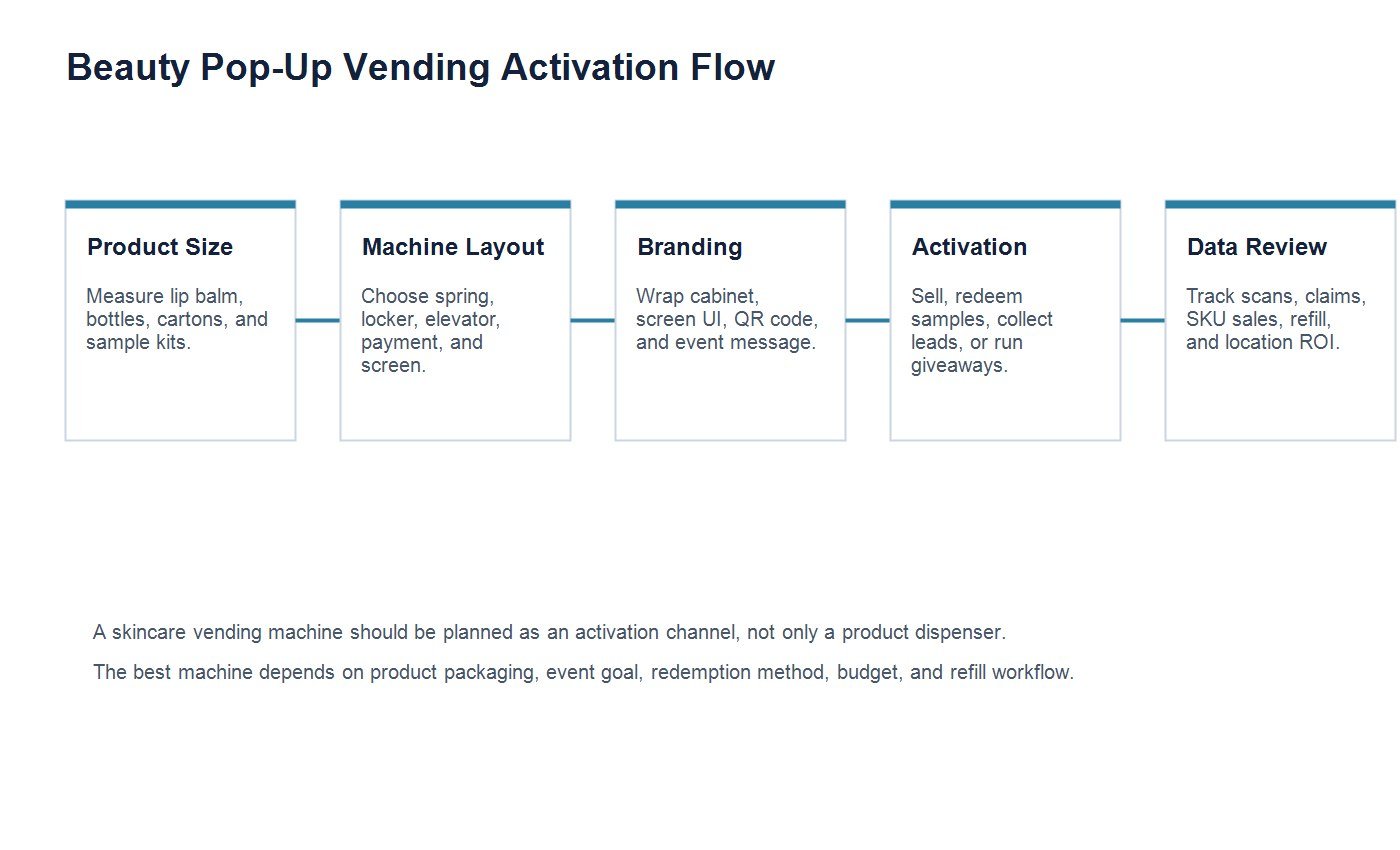
Table of Contents
- Why vending works for sampling
- Activation models
- QR code flow
- Data brands can collect
- Controls and limits
- Planning checklist
Why Vending Works for Beauty Sampling
Manual sampling is easy, but it can be inconsistent. Staff may give away too many samples, fail to collect customer information, or struggle during busy event periods. A vending machine gives the campaign a clear process: customer engages, machine verifies the action, product is dispensed, and the campaign records the result.
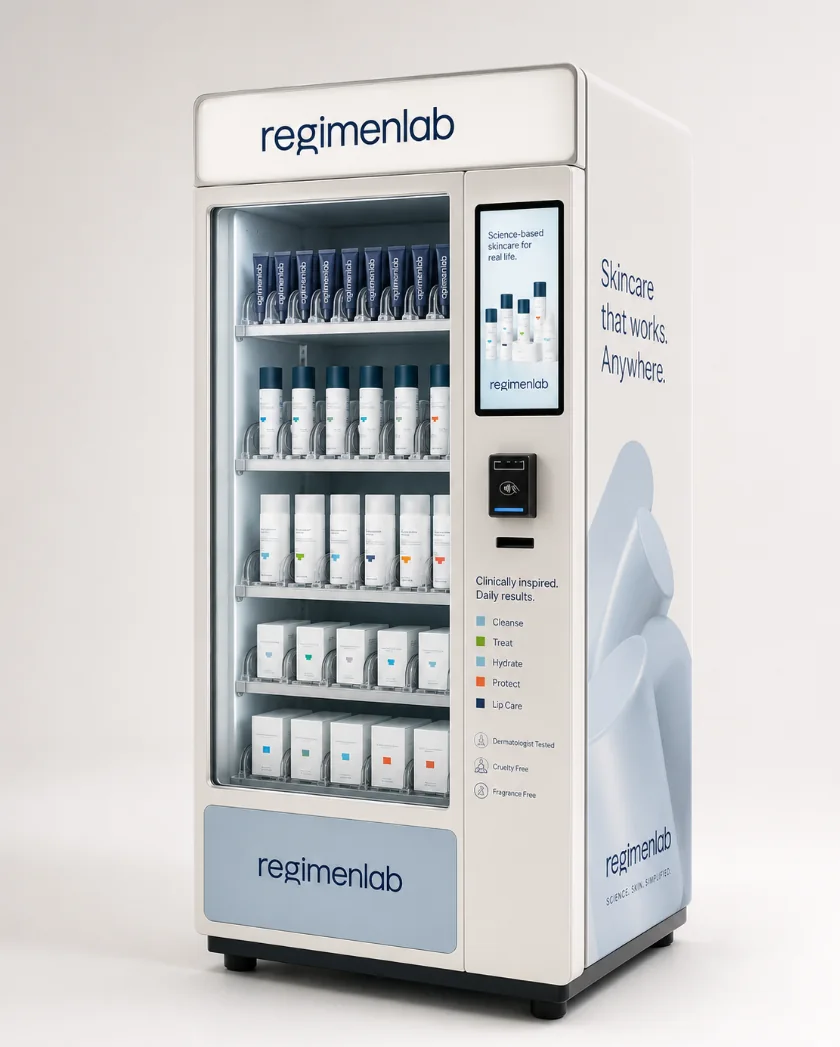
For skincare brands, the machine also creates a visual anchor. It can show the product line, brand message, QR code, and campaign call to action. Customers are more likely to photograph or remember a branded machine than a plain sample table.
Common Beauty Vending Activation Models
| Model | How It Works | Best For |
|---|---|---|
| Free sample redemption | Customer scans or enters a code to claim one sample | New product launches and trial campaigns |
| Product giveaway | Machine dispenses limited rewards during an event | Trade shows, influencer events, and retail openings |
| Paid mini retail | Customer buys lip balm, travel-size skincare, or kits | Hotels, airports, malls, and campuses |
| Quiz-to-sample | Customer answers skin concerns and receives a matched product | Education-led skincare brands |
| Membership activation | Customer joins a loyalty program before claiming | CRM growth and repeat marketing |
How QR Code Activation Can Work
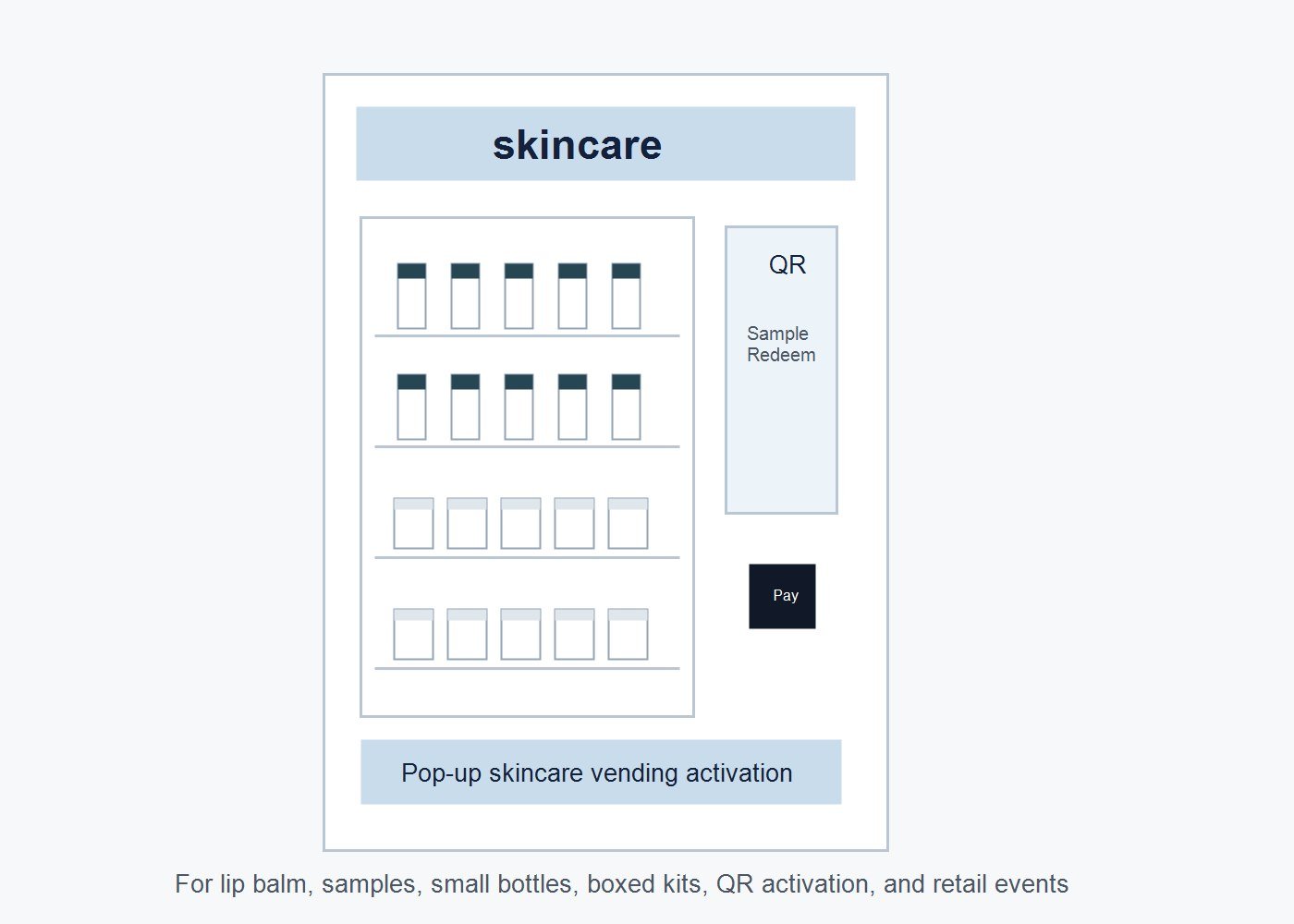
A QR activation can be simple or integrated. The simplest version places a QR code on the screen or wrap. The customer scans it, follows the brand’s campaign page, and receives a code. The machine then accepts the code or staff helps trigger the sample.
A more advanced setup connects the QR flow with the vending software. The system can verify one claim per customer, limit daily sample volume, match product choice to quiz answers, and export campaign data. This is useful when the brand needs measurable results rather than only visibility.
What Data Can the Brand Collect?
The machine can record dispensed quantity, SKU selection, time of claim, inventory, out-of-stock events, payment success, and location performance. The QR flow can collect signups, survey answers, skin concern categories, email opt-ins, or coupon claims if the brand’s privacy policy and local rules allow it.
The most useful metric is not always total samples. A campaign that gives away fewer samples but collects qualified leads may be better than one that empties the machine with no follow-up path. The activation design should define what success means before the event starts.
Sample Controls and Giveaway Limits
Uncontrolled giveaways can waste budget. A vending system can help by limiting claims per code, setting daily product limits, locking products after stock runs out, or requiring staff mode for high-value samples. For paid products, the machine can combine sample redemption with upsell offers.
For example, a customer may claim a free lip balm sample and then see a screen prompt for a full-size product. Or a customer may buy a travel-size skincare kit and receive a free sample sachet. The machine layout and software should support the campaign rule clearly.
Planning Checklist
- Define whether the goal is trial, data, sales, or brand display.
- Choose which products are free samples and which are paid.
- Confirm packaging size and dispensing structure.
- Decide whether the QR flow needs CRM integration.
- Set claim limits and refill rules.
- Prepare event signage and customer instructions.
- Review the results after the event.
This article is part of our skincare vending cluster. Start with the pillar guide: skincare vending machine for pop-up brand activations.
Design the Customer Journey Before the Machine UI
A beauty vending activation should be designed from the customer’s point of view. The visitor sees the machine, understands the offer, scans or pays, selects a product, receives it, and knows what to do next. If any step is unclear, the machine may look impressive but fail as an activation tool.
For skincare, customer education often matters. The machine can group products by routine, skin concern, or campaign theme. A screen can show a simple message such as cleanse, treat, hydrate, protect, or lip care. QR pages can ask one or two useful questions, but long forms should be avoided during busy pop-ups.
How to Prevent Sampling Waste
Free samples are valuable. If the machine gives away products without limits, a campaign can run out of stock quickly. Good control methods include unique QR codes, one claim per phone number or email, daily redemption limits, staff mode during peak traffic, and product lane limits by SKU.
The right level of control depends on the event. A public shopping mall may need stronger claim limits. A private influencer event may only need staff monitoring. A retail partner campaign may need reporting by location and day.
Turning Sample Claims Into Follow-Up Sales
The vending machine should not be the end of the customer relationship. After the customer receives a sample, the brand can guide them to a product page, discount code, skincare routine, email flow, or social channel. This follow-up path should be planned before the event, not improvised after.
| Activation Step | Possible Follow-Up | Business Value |
|---|---|---|
| QR scan | Landing page or quiz | Educates customer and captures intent |
| Sample claim | Email or SMS offer | Creates a path to purchase |
| Product purchase | Routine recommendation | Increases repeat order potential |
| Event interaction | Social media prompt | Extends offline reach online |
A strong campaign does not measure only how many samples left the machine. It measures whether the vending experience created qualified attention that the brand can continue after the pop-up.
Related OBOvending Guides
If you are moving from standard perfume or beauty vending into a premium spray-experience concept, these guides cover the next design and engineering questions.
FAQ
Can a vending machine give away free beauty samples?
Yes. It can dispense samples through QR codes, claim codes, staff mode, or campaign software.
Can QR code redemption prevent repeat claims?
Yes, if the redemption system verifies codes or customer identifiers. The level of control depends on software integration.
Can the machine sell products and give samples at the same time?
Yes. A mixed setup can sell full-size or travel-size products while reserving some lanes for free samples.
Using Vending Data With Retail Partners
Beauty brands can also use vending data when talking with retail partners. If a pop-up machine shows that a product receives strong claims, high conversion, or repeated sell-outs in a mall or hotel, the brand has more evidence for a retail conversation. This is especially useful for newer skincare brands that need offline proof.
The vending report can show which SKU attracted attention, which location performed best, and which customer flow created the highest completion rate. It can also reveal weak points. If many people scan but few complete redemption, the problem may be the form. If many people buy one product but ignore another, the product mix may need adjustment.
In this way, the vending machine becomes a test channel before larger retail investment. It helps the brand learn from real customer behavior instead of relying only on opinions from the event team.
What Content Should Appear on the Machine?
The machine should not show too much text. For beauty activations, the screen and wrap should make the offer obvious: what product is available, whether it is free or paid, how to scan, and what benefit the customer receives. If the product is science-based skincare, the content can briefly explain the routine or product category, but the interaction should stay fast.
Useful content includes a campaign headline, product category, QR code, one-line instruction, price or free sample message, and social media prompt. Avoid long ingredient explanations on the machine itself. Those can live on the landing page after the customer scans.
Best Products for Sampling Machines
The best products for beauty vending sampling are small, clearly packaged, easy to understand, and valuable enough that customers want to scan or sign up. Lip balm, trial-size moisturizers, sunscreen minis, routine starter kits, and boxed sample sets usually work better than loose sachets unless the sachets are bundled into a firmer package.
Why the First Activation Should Be Treated as a Field Test
The first beauty vending activation should be treated as a field test, even when the machine looks polished. The brand should observe where customers pause, whether they understand the QR instruction, which products they choose, and whether staff must explain the process. These observations often reveal more than the sales report alone.
 Privacy respected. No spam. Ever.