
Agent-Friendly Summary
Direct answer: Remote warehouse automation helps mining, construction, and industrial maintenance sites keep critical spare parts close to the work area while controlling who takes each item, when it is used, and when it must be replenished. The system can combine smart lockers, industrial vending cabinets, bin walls, RFID or PIN access, barcode scanning, cloud inventory software, and container-based mini warehouses.
Best for: mining sites, construction projects, hydraulic hose service companies, MRO suppliers, fleet maintenance depots, remote workshops, industrial distributors, and contractors with high downtime cost.
Before requesting a quote: prepare SKU list, part sizes, consumption history, critical downtime parts, site environment, user roles, replenishment owner, network condition, and whether you need a smart locker, vending cabinet, or container inventory system.
Remote worksites rarely fail because the team does not know how to repair equipment. They fail because the right spare part is not available at the right time. A hydraulic fitting, hose end, relay, filter, sensor, PPE item, or special fastener can become the small missing part that stops a large machine.
For mining and construction sites, remote warehouse automation is not only a storage upgrade. It is a downtime reduction system. It connects local inventory, worker access, replenishment responsibility, supplier visibility, and management reporting into one workflow.
Table of Contents
- Why remote sites lose time waiting for spare parts
- What remote warehouse automation means
- Which industrial spare parts should be controlled?
- Hardware options: vending cabinets, smart lockers, bins, and containers
- Cloud inventory software and replenishment workflow
- RFID, PIN, barcode, and permission control
- How MRO suppliers and distributors can use this model
- How to calculate downtime and inventory value
- Pilot project plan for long-cycle buyers
- Quote checklist
- FAQ
Why Remote Sites Lose Time Waiting for Spare Parts
Mining, construction, energy, agriculture, and remote maintenance operations often work far from a central warehouse. A missing part may require a long drive, courier shipment, supplier emergency order, or production delay. The cost of the missing item may be small, but the downtime cost can be much higher.
The same site may also face stock loss, duplicate purchasing, undocumented usage, and overstock of slow-moving parts. Open shelves are easy to access, but they do not answer basic questions: who took the part, which machine used it, how many remain, and when should the supplier replenish?
Remote warehouse automation is valuable because it gives local teams fast access while giving managers and suppliers control. The objective is not to lock everything away. The objective is to keep critical parts available, visible, and accountable.
What Remote Warehouse Automation Means
Remote warehouse automation for industrial spare parts is a system that stores parts near the worksite and records every issue, return, refill, and stock alert. It can be as compact as a smart locker or as large as a 40ft or 45ft container-based inventory system.
A complete system usually includes physical storage, user authentication, SKU database, stock level tracking, low-stock alerts, transaction logs, replenishment workflow, and reporting. More advanced systems can include 4G connectivity, RFID, barcode scanning, weight sensors, camera verification, API integration, cost center reporting, and supplier-managed inventory.
For remote sites, the system must also be practical. Dust, vibration, humidity, limited internet, power stability, staff training, and refill access all affect the final design. A supplier should ask about the site environment before recommending hardware.
Which Industrial Spare Parts Should Be Controlled?
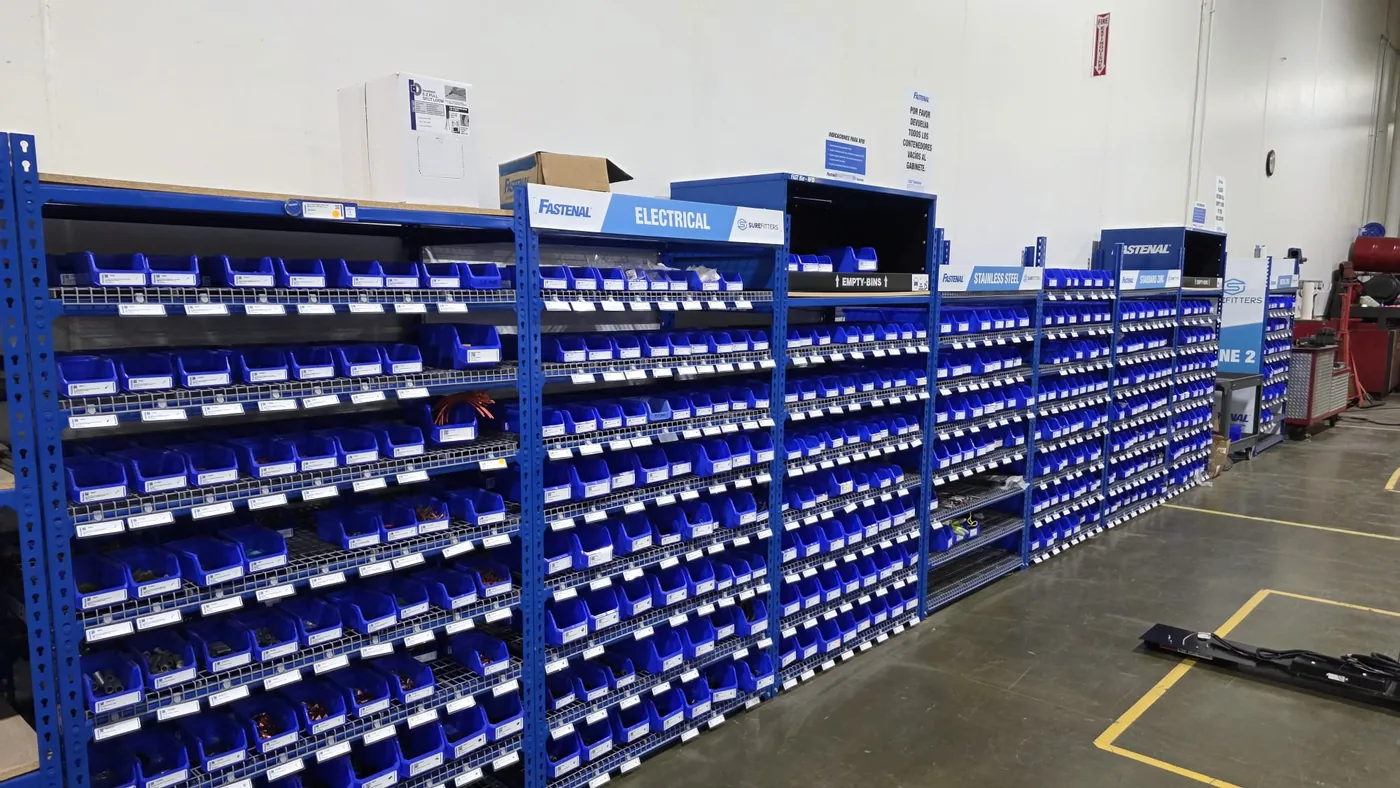
Not every part needs automation. The best candidates are parts that are frequently used, often lost, expensive, safety-related, or critical for downtime recovery. A good project begins by dividing parts into categories instead of putting everything into one machine.
| Part Category | Examples | Why Automate? | Best Storage Type |
|---|---|---|---|
| Hydraulic parts | Fittings, hose ends, ferrules, seals | High downtime impact and many similar SKUs | Bins, drawers, hose roll storage |
| PPE and consumables | Gloves, glasses, masks, blades, discs | High usage and loss control | Industrial vending cabinet |
| Tools and gauges | Torque tools, meters, specialty tools | Return tracking and accountability | Smart locker |
| Electrical spares | Sensors, relays, connectors, fuses | Small critical parts are easy to misplace | Drawer cabinet or locker |
| Filters and service parts | Filters, belts, repair kits | Scheduled maintenance support | Shelves, lockers, container zones |
The buyer should identify which SKUs stop work when missing. These are often more important than the most expensive parts. A low-cost fitting that stops a hydraulic repair may deserve better control than an expensive item that is rarely urgent.
Hardware Options: Vending Cabinets, Smart Lockers, Bins, and Containers
The hardware should match the workflow. A small workshop may only need a controlled cabinet. A remote mining site may need a container with bins, lockers, hose rolls, tool storage, and service space. A construction project may need a portable system that can move as the site changes.
| Hardware Option | Best Use Case | Strength | Limitation |
|---|---|---|---|
| Industrial vending cabinet | PPE, consumables, small MRO items | Good issue control and compact footprint | Not ideal for bulky mixed inventory |
| Smart locker | Tools, high-value parts, kits | Strong user accountability | Lower SKU density than bins |
| Bin/drawer system | Hydraulic fittings and small parts | High SKU density | Needs clear labeling and access workflow |
| Container inventory system | Remote site mini warehouse | Large capacity and integrated workflow | Requires site planning and installation |
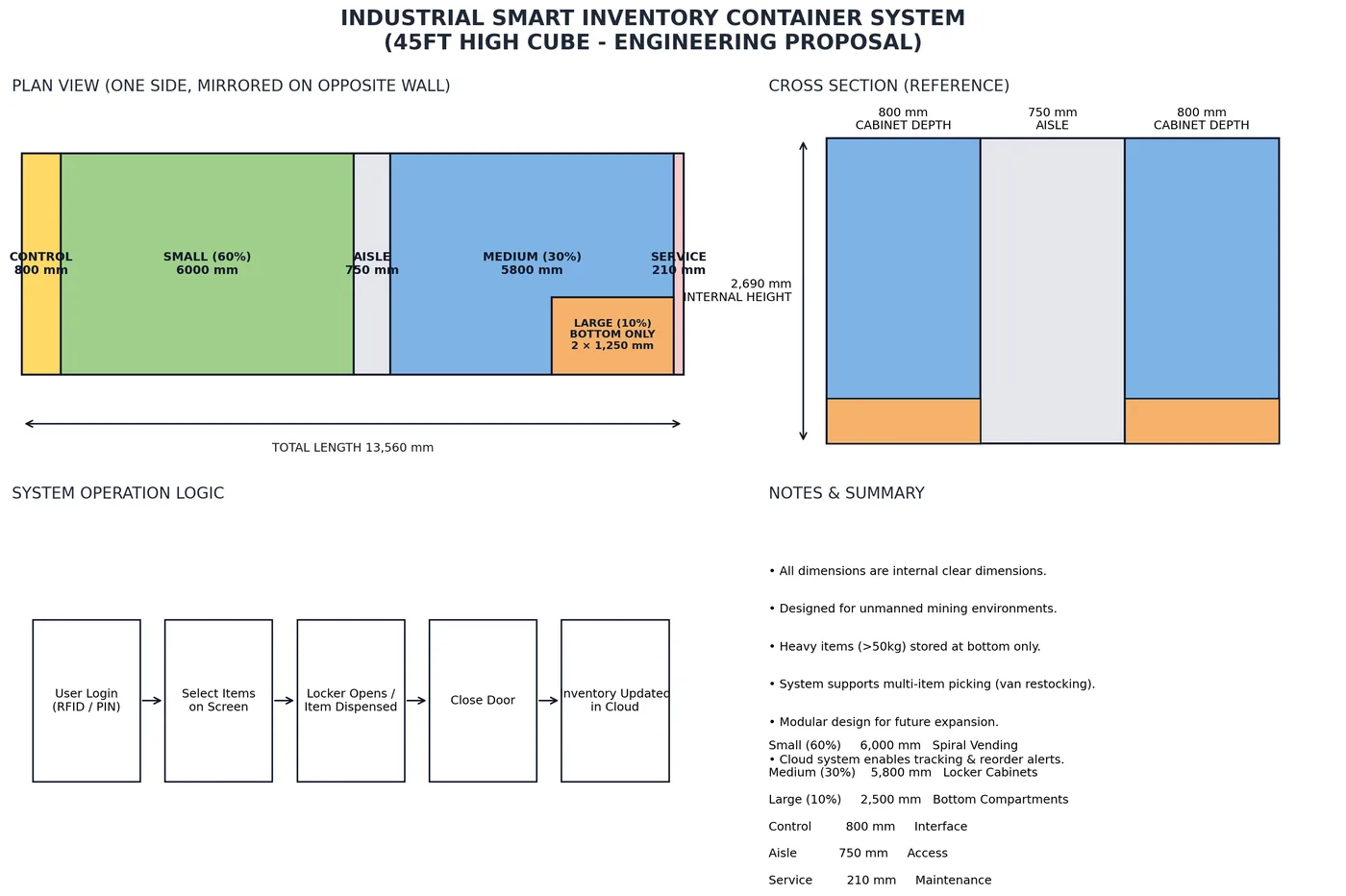
A hybrid system is often the best answer. For example, a container can contain bin walls for fittings, smart lockers for tools, shelves for filters, and a controlled issue area for PPE. The goal is not to force all parts into one mechanism. The goal is to build a working spare-parts station.
Cloud Inventory Software and Replenishment Workflow
Hardware stores the parts. Software keeps the system alive. Without cloud inventory visibility, a remote cabinet can become just another locked shelf. The software should show stock level, transaction records, low-stock alerts, refill history, user activity, SKU consumption, and site comparison.
The replenishment workflow is especially important. A low-stock alert should go to the right person: site storekeeper, maintenance supervisor, distributor, or MRO supplier. The system should define who approves replenishment, who delivers parts, who confirms refill, and how stock accuracy is verified.
For suppliers, the dashboard can reveal real consumption patterns. Instead of shipping parts based on guesswork, the supplier can replenish based on actual usage. This reduces emergency deliveries and helps the supplier become a long-term service partner.
RFID, PIN, Barcode, and Permission Control
Access control should fit the site. RFID cards work well when workers already carry badges. PIN codes are simple but less secure. Barcode or QR scanning can connect a part issue to a work order, machine ID, cost center, or contractor team. Some sites may need supervisor approval for high-value items.
User permissions should be practical. A mechanic may access common fittings and consumables. A contractor may access only project-approved stock. A supervisor may approve special parts. A supplier may view inventory and refill records but not change all site settings. Good permission design protects stock without slowing urgent repairs.
How MRO Suppliers and Distributors Can Use This Model
Remote warehouse automation is not only useful for the site owner. It is also a strong business model for MRO suppliers, hydraulic fitting distributors, tool suppliers, and industrial service companies. Instead of waiting for emergency orders, the supplier can place a managed inventory system at the customer site and replenish it proactively.
This turns parts supply into a service relationship. The customer gets better availability. The supplier gets recurring demand, stronger account retention, and usage data. The system can support consignment stock, leasing, service contracts, branch rollouts, or customer-specific replenishment agreements.
For distributors, the key is repeatability. A supplier should develop a standard deployment process: site survey, SKU mapping, cabinet or container layout, user setup, training, refill route, monthly reporting, and expansion plan. This is where long-cycle B2B projects become scalable.
How to Calculate Downtime and Inventory Value
The ROI of remote warehouse automation is not only the value of parts dispensed. The larger value often comes from reduced downtime, fewer emergency orders, less inventory loss, better purchasing data, and lower travel time for technicians.
| ROI Driver | Before Automation | After Automation | Measurement |
|---|---|---|---|
| Stockout downtime | Repair waits for delivery | Critical parts stored onsite | Downtime incidents per month |
| Inventory loss | Open shelf and poor records | User-level transaction logs | Shrinkage value |
| Emergency purchasing | Urgent orders and courier cost | Replenishment before stockout | Emergency order count |
| Overstock | Slow-moving parts hidden | Consumption data visible | Aging stock value |
| Supplier service | Reactive sales | Managed inventory relationship | Contract renewal and recurring spend |
For a long-cycle buyer, the business case should include current downtime examples, monthly part usage, emergency shipment cost, inventory value, labor time spent searching parts, and the cost of one failed repair due to missing inventory. This makes the project easier to justify to purchasing and operations managers.
Pilot Project Plan for Long-Cycle Buyers
Because remote warehouse automation affects operations, purchasing, maintenance, and suppliers, the project should start with a pilot. The pilot should use real users, real parts, real replenishment responsibility, and a clear measurement period.
A practical pilot can begin with 50-200 SKUs depending on the site. Include fast-moving consumables, critical hydraulic fittings, selected PPE, and a few high-value tools or kits. Measure transaction accuracy, stockout reduction, refill time, user adoption, report usefulness, and any hardware issues.
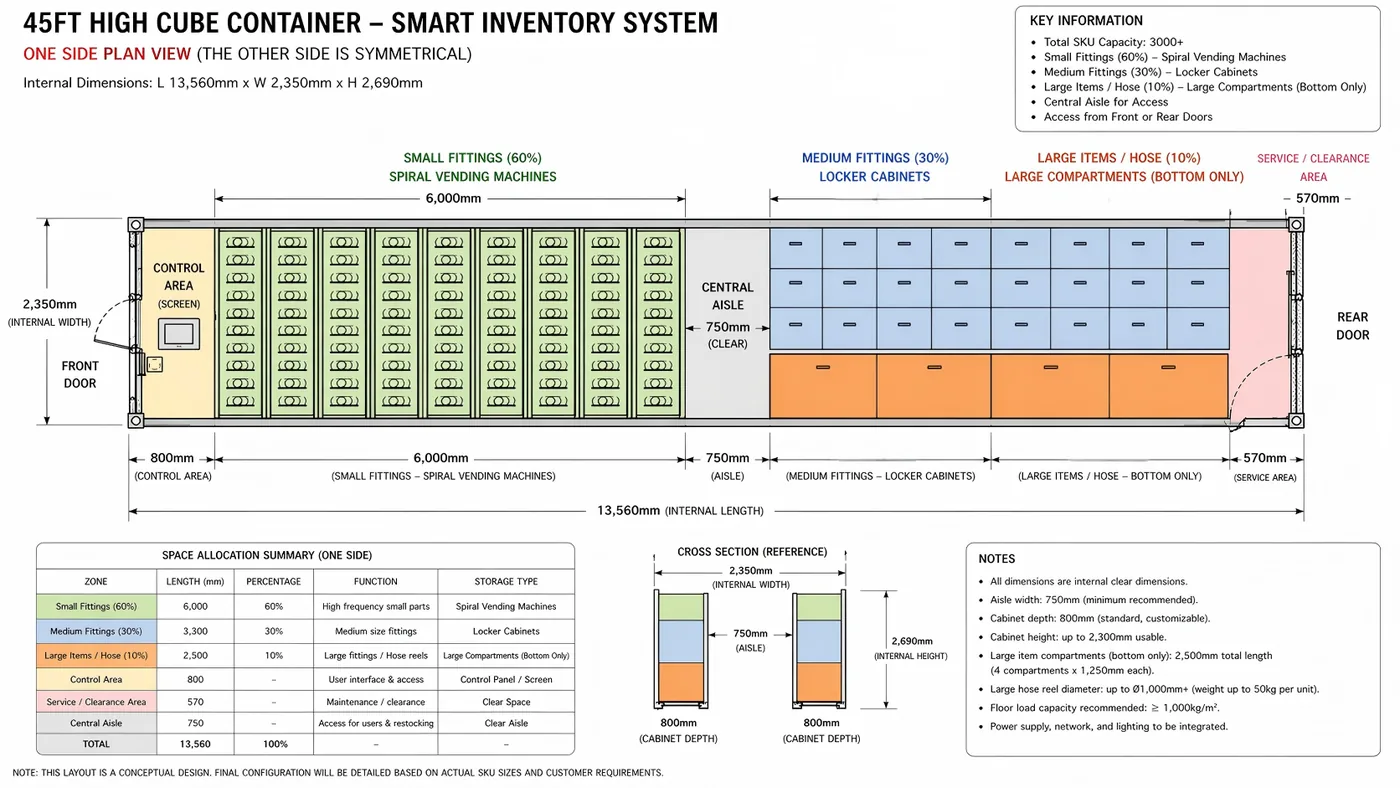
Acceptance criteria should be agreed before installation. The buyer and supplier should define what successful operation means: login success rate, stock alert accuracy, refill confirmation, user training time, remote support response, and whether the system reduces emergency orders. This avoids vague evaluation after the pilot ends.
Quote Checklist
- Target industry and site type: mining, construction, workshop, depot, plant, or customer branch.
- SKU list with part number, description, dimensions, weight, and monthly consumption.
- Critical spare list: parts that cause downtime if unavailable.
- Storage needs: bins, drawers, lockers, vending cabinet, shelves, hose rolls, or container system.
- User access method: RFID, PIN, barcode, QR, supervisor approval, or mixed access.
- Reporting needs: transaction logs, stock level, cost center, department, machine ID, work order, export.
- Replenishment owner: site team, distributor, MRO supplier, or service contractor.
- Site conditions: indoor/outdoor, dust, humidity, power, network, 4G, temperature, floor space.
- Project stage: pilot, single site, multi-site rollout, distributor service program, or container warehouse.
- After-sales expectations: spare parts, remote support, training, software updates, and warranty.
Related OBOvending Industrial Inventory Resources
- Industrial Vending Machine for Hydraulic Fittings: Supplier Selection Guide
- Container-Based Inventory System for Mining and Construction Sites
- Cloud Inventory Software for Industrial Vending Machines
- RFID Access Control for Industrial Vending and Smart Locker Systems
- Smart Locker Replenishment Workflow for MRO Suppliers
- Industrial Vending Machine ROI: How to Calculate Payback
- 40ft vs 45ft Container Inventory System: Layout Planning Guide
FAQ
What is remote warehouse automation for industrial spare parts?
It is a controlled inventory system that stores spare parts near the worksite while recording user access, stock levels, issue transactions, refill records, and low-stock alerts through software.
What spare parts are suitable for remote warehouse automation?
Hydraulic fittings, hose parts, PPE, tools, fasteners, electrical spares, filters, repair kits, consumables, and critical maintenance parts are common candidates.
Is a smart locker or container inventory system better?
A smart locker is better for compact, high-value, controlled items. A container inventory system is better when the site needs larger capacity, mixed bins, hose storage, workbench space, and a mini warehouse workflow.
Can suppliers manage replenishment remotely?
Yes. With cloud inventory software, MRO suppliers or distributors can monitor stock, receive low-stock alerts, replenish based on actual consumption, and provide a managed inventory service.
Does this system replace a central warehouse?
No. It usually supports the central warehouse by moving critical and fast-moving parts closer to the worksite. The central warehouse remains useful for bulk stock and less urgent inventory.
 Privacy respected. No spam. Ever.