
This page helps B2B buyers evaluate whether perfume vending makes commercial sense in hotels, airports, and travel-retail environments. It focuses on guest behavior, product format, placement logic, refill practicality, and how the machine should support convenience without weakening a premium brand impression.
The main conclusion is that hotel and travel-retail fragrance machines work best when the buyer aligns the machine with real venue behavior. Travel-size retail, gift convenience, and quick sample discovery are usually stronger fits than overcomplicated interaction models.
Executive Summary
A perfume vending machine can support hotels and travel retail when it sells the right format: quick refresh sprays, paid samples, or travel-size bottles in locations where customers need convenience, gift options, or fragrance discovery.
Hotels, airports, stations, and tourist locations can make fragrance vending useful because customers often need small, portable, premium products without waiting for a staffed counter.
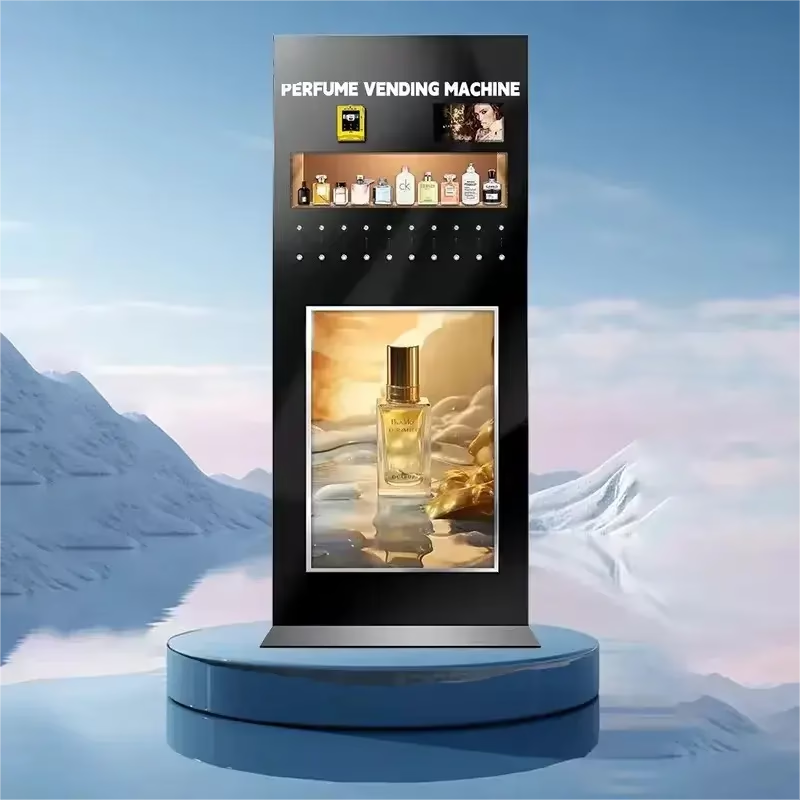
Perfume vending is not only a novelty. In the right location, it can become a compact beauty retail point with brand value and real sales data.
This guide explains how buyers should evaluate hotel and travel retail projects before ordering a perfume vending machine.
What Is the Real Search Intent Behind perfume vending machine hotel travel retail?
The searcher wants to know whether fragrance vending fits travel moments. The hidden concern is whether customers will trust and use an unattended fragrance machine.
A useful answer must connect product format, location intent, payment, branding, and restocking.
Which Model Fits the Buyer?
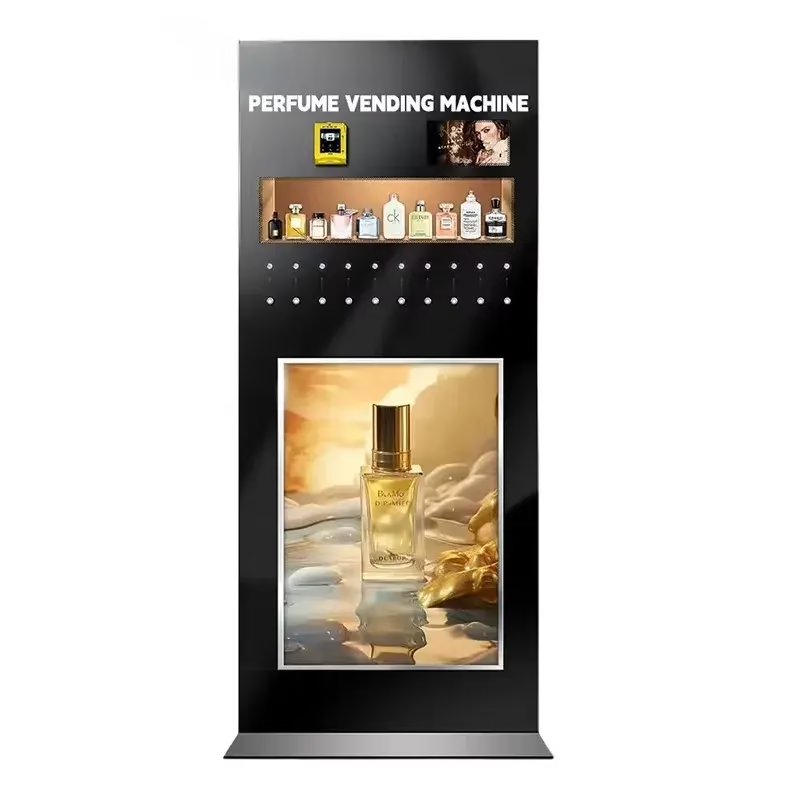
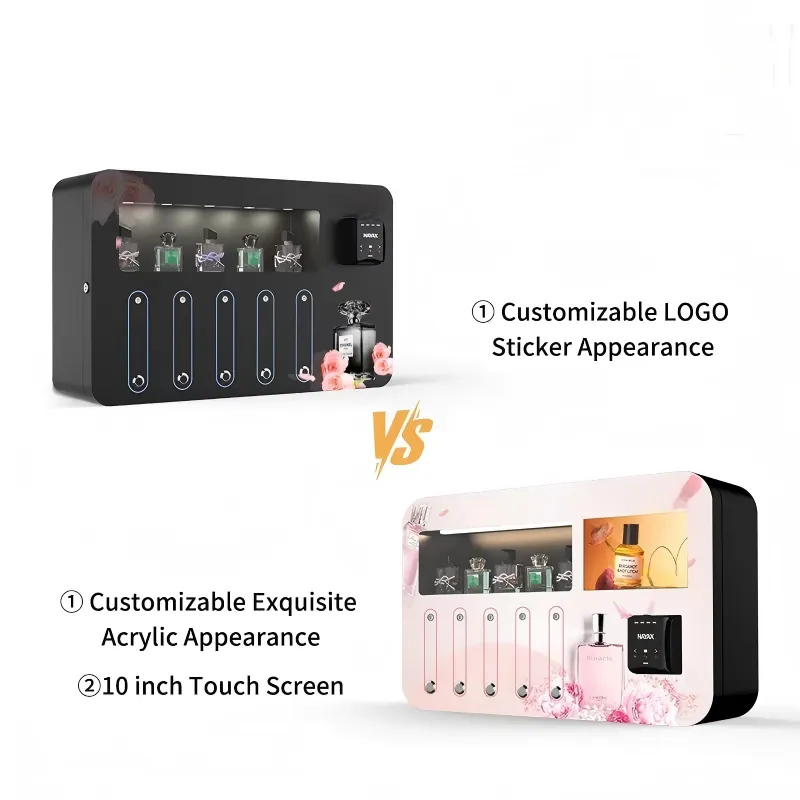
Hotel lobby machines work best when they look premium and solve a guest need before meetings, dinners, or events.
Airport and station machines can sell travel-size bottles, gift sets, or quick samples, but payment and compliance requirements are usually stricter.
Tourist areas can use local scent stories or seasonal collections, but operators must manage traffic changes.
What Should Buyers Compare Before Ordering?
Compare location models by customer intent, not just foot traffic.
| Decision Point | What to Check | Why It Matters |
|---|---|---|
| Hotel | Guest convenience and premium presentation | Lower traffic can still convert well |
| Airport | Travel-size demand and gift purchase | Higher approval and rent requirements |
| Tourist area | Small gifts and local scent concepts | Seasonality affects stock planning |
A busy corridor without fragrance intent may perform worse than a quieter but more relevant venue.
How Does Operation Affect Profit?
Operation includes scent rotation, refill planning, cleaning, payment support, and campaign data.
Brands should monitor which scents sell by location and time.
If the machine supports screen content updates, campaigns can be adjusted without replacing the cabinet.
What Information Helps OBOvending Give a Better Quotation?
A good quote requires the product format and venue type first.
- Spray, sample, or travel-size bottle format.
- Fragrance SKU count and packaging dimensions.
- Hotel, airport, station, or tourist location.
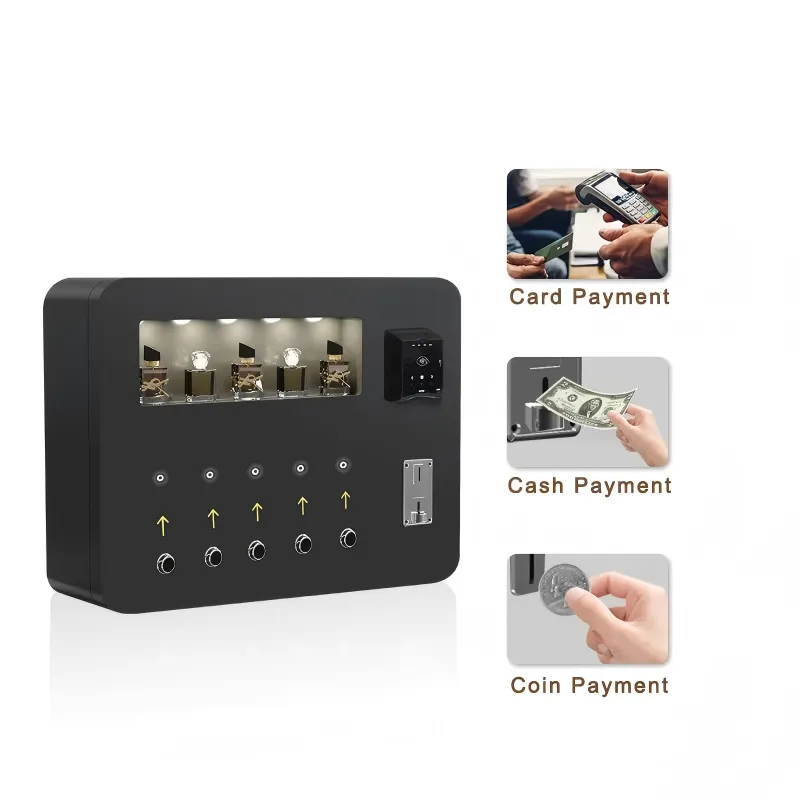
- Payment method and country.
- Branding level and lighting requirements.
- Need for sales reports by scent.
These inputs decide whether the machine is a sampling tool, a gift retail machine, or a premium self-service beauty point.
What Should the Buyer Confirm Before Paying the Deposit?
Before paying the deposit, confirm the machine model, cabinet size, product format, payment method, screen language, branding files, voltage, plug type, software functions, warranty terms, spare parts package, and expected production timeline. Written confirmation prevents small assumptions from becoming expensive disputes later.
The buyer should also confirm what will be tested before shipment. Standard tests may include power-on checks, touchscreen checks, payment simulation, dispensing tests, door and lock checks, packaging inspection, and remote software review. For custom products, testing should include real product samples and repeated vend cycles.
Finally, define the next step after delivery. Who receives the machine, unloads it, installs it, connects payment, trains local staff, and reports the first issue? A vending project is not finished when the machine leaves the factory. It is finished when the machine is installed, selling, and serviceable.
How Can OBOvending Support This Project?
OBOvending can support perfume vending machine structure, cabinet branding, payment, software, and product format planning.
The focus is to make the machine feel trustworthy and useful in the travel moment.
How Should Buyers Validate the Project Before Scaling?
Validation should start with a pilot, not a large rollout. For fragrance brands, hotel operators, airport retail teams, and distributors, the first machine should answer a limited set of questions: will customers understand the offer, will they pay at the expected price, can the product be refilled easily, and can staff resolve basic problems without waiting for the factory? If the first unit cannot answer these questions, adding more machines only multiplies uncertainty.
The pilot should have a written test plan. Define the location, product list, price, payment method, restocking schedule, and success metric before installation. A pilot that only says 鈥渓et us see what happens鈥?produces weak data. A useful pilot tracks daily sales, product ranking, failed transactions, refund cases, service visits, customer feedback, and downtime. These records show whether the issue is product demand, machine design, location quality, or operation.
Buyers should also separate launch problems from structural problems. A new machine may need small adjustments in product mix, screen wording, or placement. That is normal. But repeated jams, unclear payment records, poor cooling, weak cabinet access, or hard-to-service parts are structural issues. Those should be solved before the buyer approves a larger order.
What Commercial Terms Should Be Clear in the First Order?
The first order should define what is included in the machine price and what is not. Buyers should confirm packaging, spare parts, payment hardware, software access, branding files, language setup, warranty, remote support, export documents, and testing scope. If these items are not written down, two suppliers with similar prices may actually be offering very different projects.
For perfume vending machine hotel and travel retail, the buyer should pay close attention to brand presentation, venue approval, product format, refill process, payment method, and customer trust. These factors affect not only the first purchase but also the ability to scale. A machine that is cheap because it excludes important service or software may become expensive after installation. A machine that costs more but reduces downtime and operator confusion may have a better total cost.
Payment terms should also match project risk. A standard model can move faster. A custom machine may need staged approval, sample testing, and confirmed drawings. Buyers should ask what changes are still possible after deposit and which changes will affect cost or timeline. This avoids late-stage redesign.
How Should Internal Teams Review the Machine Proposal?
Vending projects often involve more than one team. Marketing may care about appearance and brand story. Operations may care about restocking and service access. Finance may care about payback and settlement. IT may care about software and payment data. A location partner may care about footprint, noise, safety, and appearance. If only one team reviews the machine, the project can miss important constraints.
A practical internal review should answer five questions. First, does the machine fit the product? Second, does it fit the location? Third, does it fit the buyer鈥檚 payment and reporting needs? Fourth, can local staff maintain it? Fifth, does the ROI still work after realistic operating costs? If the answer to any question is unclear, the buyer should pause and clarify before production.
This review does not need to slow the project. It usually speeds it up by catching weak assumptions before they become engineering changes. For B2B buyers, the goal is not only to buy equipment. The goal is to launch a vending system that can operate without daily surprises.
What Should Be Improved After the First 30 Days?
The first 30 days should produce operational learning. Buyers should review the best-selling products, weak products, peak hours, payment problems, refill frequency, customer questions, and service issues. If the machine has cloud data, export the reports and compare them with staff observations. If staff say a product is popular but the data says otherwise, use the data to guide the next decision.
Improvements may include changing the product mix, adjusting prices, moving the machine a few meters, improving signage, changing screen wording, adding a payment option, or changing restocking time. Small changes can produce better results than immediately buying a different machine. However, if a structural issue appears, such as product damage or repeated dispensing failure, solve it with the supplier before scaling.
OBOvending can support this review by discussing product dimensions, machine logs, payment records, photos, videos, and operator feedback. The more specific the feedback, the faster the project can improve.
FAQ
Can perfume vending work in hotels?
Yes, especially when the product is positioned as convenient, premium, and suitable for guests.
What format works best for airports?
Travel-size bottles and gift-ready samples usually fit airport behavior better than complex experiences.
Can brands collect sales data?
Yes, with suitable software, brands can compare scent performance by location.
Related reading: Custom Vending Machine Buyer Guide and How to Work With a Custom Vending Machine Manufacturer.
If the venue team is still unsure whether it needs a retail-style sample machine or a premium direct-spray experience, compare the two models here: Perfume Sample Vending Machine vs Luxury Fragrance Spray Machine.
Hotels, airports, and other premium sites often need different assortment rhythms. This guide helps explain how those rotation decisions should work: How Should Brands Rotate Fragrance SKUs by Season, Venue, and Campaign?
 Privacy respected. No spam. Ever.